
China Best Diesel Generator Set Supplier for Global Buyers
Choosing a China-based Diesel Generator Set supplier requires more than comparing prices. Global buyers need dependable engineering, clear communication, and practical support after delivery. A reliable supplier should understand different power demands, operating environments, fuel conditions, and installation requirements. It should also provide traceable production records and realistic performance data.
Experience matters in this industry. Experienced manufacturers can recommend suitable engine ratings, alternator options, control systems, and enclosure designs. They should explain standby and prime power clearly. Factory inspections, load-bank testing, component checks, and documented quality procedures add valuable confidence. Details matter here. A well-tested unit should start smoothly, hold stable voltage, and operate safely under changing loads.
Professional suppliers also recognize that every project has limits. Shipping schedules can change. Spare parts may require planning. Technical assumptions can be wrong without site information. No supplier is perfect. Honest communication is better than impressive promises. Buyers should review certifications, warranty terms, installation guidance, and remote service capabilities before making a decision. They should ask who will respond when an alarm appears at midnight. The best China Diesel Generator Set supplier combines manufacturing capability with accountable service. This article explores the qualities that help global buyers evaluate suppliers with greater confidence, reduce avoidable risks, and select equipment suited to real operating conditions. Reliable power is not created by brochures alone. It comes from verified performance, responsible engineering, and long-term cooperation.
Definition and Role of Diesel Generator Sets in Global Power Supply
China Best Diesel Generator Set Supplier for Global Buyers
Definition and Role of Diesel Generator Sets in Global Power Supply
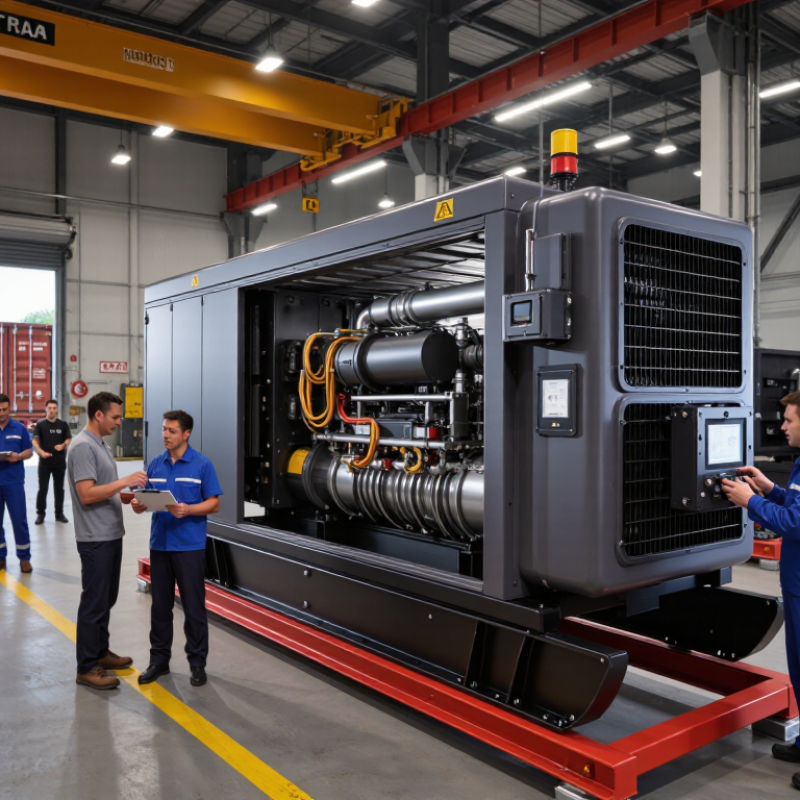
A diesel generator set combines a diesel engine, an alternator, a control panel, and protective systems. It converts fuel energy into usable electrical power. The engine creates mechanical rotation. The alternator changes that rotation into electricity.
These sets support hospitals, construction sites, data centers, farms, ports, and remote communities. They can provide standby power during grid failures. In isolated regions, they may serve as the primary electricity source. Automatic controls can start the unit within seconds after voltage loss. This response protects essential equipment and reduces operational disruption.
Sizing requires more than adding appliance wattages. Engineers should assess starting currents, continuous loads, voltage, frequency, altitude, temperature, and future expansion. A unit that is too small may overheat or trip. An oversized unit can run inefficiently and accumulate maintenance problems. This detail is often underestimated.
For global buyers, dependable supply includes load testing, documented inspections, clear wiring diagrams, spare parts planning, and compliant shipping documents. Factory testing should verify output stability, fuel consumption, noise control, and emergency shutdown functions. Local service access also matters, especially where qualified technicians are limited. Field experience shows that installation quality can affect reliability as much as generator design. No set is perfect. Maintenance schedules may be ignored, and fuel quality may vary. Buyers should review these risks honestly before selecting a diesel generator set.
China Best Diesel Generator Set Supplier for Global Buyers - Definition and Role of Diesel Generator Sets in Global Power Supply
| Data Dimension | Typical Data or Definition | Global Power Supply Relevance |
|---|---|---|
| Definition | A diesel generator set is an integrated power system consisting mainly of a diesel engine, an alternator, a control system, a cooling system, an exhaust system, and a fuel system. | It converts the chemical energy of diesel fuel into mechanical energy and then into electrical energy. |
| Common Power Range | Approximately 5 kVA to more than 3,000 kVA per generating set; actual ranges vary by configuration and application. | Supports small residential backup loads, commercial buildings, industrial facilities, infrastructure, and utility-support projects. |
| Operating Frequency | 50 Hz or 60 Hz, selected according to the electrical standard of the target market. | 50 Hz is widely used in Europe, Asia, Africa, and many other markets; 60 Hz is common in North America and selected regions. |
| Rated Voltage | Typical low-voltage outputs include 220/380 V, 230/400 V, and 277/480 V systems, depending on regional requirements. | Correct voltage selection is essential for safe connection to local loads, transfer equipment, and distribution systems. |
| Power Rating Types | Standby power is used for emergency backup; prime power is used for variable-load or extended operation; continuous power is used for constant-load operation. | Selecting the correct rating helps prevent overload, overheating, excessive wear, and shortened service life. |
| Typical Fuel Type | Diesel fuel meeting the applicable local fuel specification; ultra-low-sulfur diesel may be required in regulated emissions markets. | Fuel compatibility affects emissions compliance, maintenance intervals, storage requirements, and operating cost. |
| Typical Fuel Consumption | A modern diesel set commonly consumes about 0.24–0.30 liters per kWh at or near full load. Actual consumption depends on engine size, load factor, altitude, temperature, and maintenance condition. | Fuel planning should be based on the manufacturer’s performance curve and the expected operating load profile. |
| Voltage Regulation | Automatic voltage regulators are commonly used to maintain output voltage under changing loads; exact performance depends on the alternator and control system. | Stable voltage protects sensitive equipment and improves the reliability of emergency and prime-power operation. |
| Starting Method | Electric starting is standard for most commercial units; larger systems may include redundant batteries, air starting, or automatic starting controls. | Automatic starting enables rapid restoration of power after a utility outage when paired with an automatic transfer switch. |
| Transfer Time | A typical standby system may restore generator power within approximately 10–30 seconds, depending on detection, starting, warm-up, and transfer settings. | Critical facilities may combine diesel generators with UPS systems to cover the short interruption before generator power is available. |
| Load Acceptance | Load acceptance depends on engine design, alternator capacity, governor response, step-load size, and the use of staged load sequencing. | Good load acceptance helps reduce voltage and frequency disturbances when motors, pumps, compressors, or other large loads start. |
| Noise Level | Common enclosed sets may produce approximately 65–85 dB(A) at 7 meters, depending on power rating, enclosure design, exhaust treatment, and measurement conditions. | Low-noise enclosures and proper installation are important for hospitals, residential areas, offices, and urban construction sites. |
| Cooling Method | Air cooling is common for smaller sets; liquid cooling is widely used for medium- and high-power sets. | The cooling method affects installation space, ambient-temperature performance, service requirements, and continuous operating capability. |
| Ambient Conditions | Performance can be affected by altitude, high temperature, humidity, dust, and restricted ventilation. Derating may be required in severe conditions. | Environmental assessment is essential for reliable operation in deserts, tropical regions, high-altitude areas, mines, and remote sites. |
| Main Applications | Hospitals, data centers, factories, telecommunications sites, construction projects, farms, commercial buildings, residential communities, and remote facilities. | Diesel generator sets provide backup power, temporary power, prime power, and power for locations without dependable grid access. |
| Parallel Operation | Multiple generator sets can operate in parallel using synchronizing and load-sharing controls. | Modular capacity improves scalability, maintenance flexibility, redundancy, and efficiency during partial-load operation. |
| Emissions Considerations | Applicable limits may regulate nitrogen oxides, particulate matter, carbon monoxide, hydrocarbons, sulfur content, and visible smoke. | Emission requirements vary by country, engine category, operating mode, and site location; local approval should be confirmed before procurement. |
| Maintenance Intervals | Routine inspections are often scheduled daily or weekly for standby systems, while oil and filter service commonly follows engine-hour or calendar-based intervals specified by the equipment documentation. | Regular testing and preventive maintenance improve starting reliability and reduce the risk of failure during an outage. |
| Fuel Storage Planning | Required tank capacity depends on generator rating, expected load, fuel consumption, reserve policy, local regulations, and intended runtime. | Adequate, safe, and clean fuel storage supports longer autonomy during grid failures and remote operations. |
| Selection Priorities for Global Buyers | Power rating, frequency, voltage, duty type, emissions rules, ambient conditions, noise limits, enclosure, fuel autonomy, service support, and spare-parts availability. | A complete technical specification reduces compatibility problems and supports dependable operation across different national markets. |
Note: Performance figures are typical industry ranges for preliminary comparison. Final values should be confirmed using the selected generator set’s technical datasheet, applicable standards, and site conditions.
FAQS
It combines a diesel engine, alternator, control panel, and protection systems. The engine rotates the alternator, producing usable electricity.
They support hospitals, construction sites, data centers, farms, ports, and remote communities. Some provide backup power. Others operate as primary sources.
Automatic controls can start the unit within seconds after grid voltage disappears. This response protects essential equipment and limits downtime.
Review continuous loads, starting currents, voltage, frequency, altitude, temperature, and future expansion. Adding appliance wattages alone is not enough.
An undersized unit may overheat or trip during heavy demand. An oversized unit may waste fuel and develop maintenance problems.
Request tests for output stability, fuel consumption, noise, load response, and emergency shutdown functions. Witnessed testing can expose hidden weaknesses.
Buyers may need invoices, packing lists, origin certificates, and market-specific conformity documents. Moisture protection, desiccant packs, and shock indicators help during sea transport.
Request production records, recent factory photographs, technical drawings, and buyer references. Consider video inspections or independent audits.
Confirm spare-parts availability, remote commissioning guidance, technician response times, training, and warranty exclusions. Written promises matter.
Port delays, changing emissions requirements, unclear specifications, and variable fuel quality can create problems. No generator is perfect. Installation quality matters, too.
Conclusion
A Diesel Generator Set is a dependable power solution designed to provide continuous, standby, or emergency electricity for commercial, industrial, construction, healthcare, and infrastructure applications. When comparing suppliers, global buyers should evaluate rated power, fuel efficiency, engine and alternator performance, load capacity, noise control, operating durability, maintenance requirements, and intelligent monitoring systems. These specifications help ensure that the equipment matches the project’s power demands and operating environment.
Chinese manufacturers can offer competitive production capabilities when supported by strict manufacturing standards, systematic quality control, component testing, and reliable assembly processes. Buyers should also review export experience, product certifications, testing reports, warranty terms, spare-parts availability, installation guidance, and after-sales service. Selecting the right supplier requires careful assessment of technical expertise, customization ability, delivery capacity, communication efficiency, and compliance with the destination market’s safety and environmental requirements. A transparent supplier with consistent quality and comprehensive international support can help reduce operational risks and improve long-term power reliability.
