Industrial & Mission-Critical Generator Lineup (Tier 1)
From single high-output prime power modules to integrated sound-attenuated containerized sets, explore our certified fleet tailored for mission-critical baseload and emergency applications.
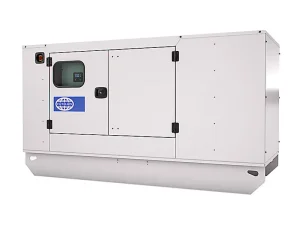
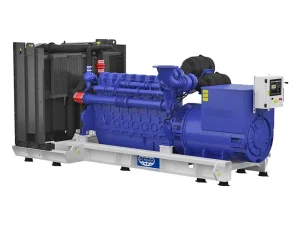
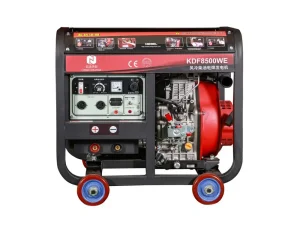
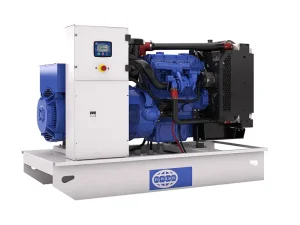
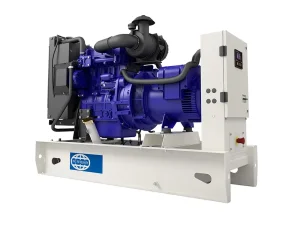
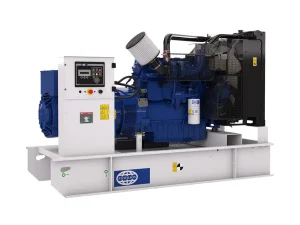
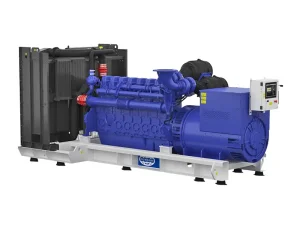
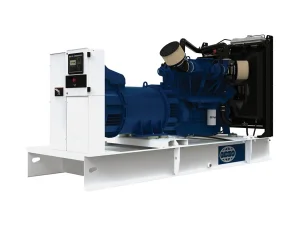
Engineering Large Range >800 kVA Power Infrastructures
As global industrial electrification accelerates and AI workloads saturate municipal grids, large-range generator sets exceeding 800 kVA have shifted from basic emergency backup into ultra-responsive, digitally orchestrated microgrid baseloads.
In high-capacity commercial, industrial, and institutional applications, power stability is directly proportional to corporate operational continuity. Generator systems above 800 kVA—ranging from the workhorse FG Wilson P1000-1 up to multi-megawatt setups like the P1375-1 and P2500-1—demand intricate mechanical harmonization. Integrating multi-cylinder heavy-duty Perkins diesel engines, permanent magnet excitation alternators, and sophisticated digital paralleling gear, these units are architected to deliver flawless electrical quality under severe non-linear harmonic loads, reactive power surges, and severe block load steps.
Macro Industry Solutions for High-Demand Operating Scenarios
A 1,000 kVA generator in an Arctic mining facility requires vastly distinct thermodynamic and electrical adaptations compared to a hyperscale data center unit operating under strict acoustic noise ordinances.
Hyperscale AI & Enterprise Data Centers
AI training clusters create severe electrical step-loads and non-linear harmonic distortion. Our >800 kVA installations feature sub-transient reactance values ($X''d < 12\%$), low Total Harmonic Distortion ($THD < 3\%$), and rapid synchronization panels configured for $N+1$ or $2N$ continuous standby redundancy.
Regional Healthcare Campuses
Hospitals require continuous operation for life-support ventilators, diagnostic imaging suites, and ultra-cold biomedical repositories. Generator sets like the FG Wilson P1375-1 provide auto-start sequencing in under 10 seconds, dual redundant starter batteries, and customized low-dBA hospital acoustic enclosures.
Heavy Mining & Deep Resource Extraction
Underground hoists, crushers, and ball mills introduce massive locked-rotor inductive surges. Outfitted with heavy-duty air filtration, oil centrifuge systems, and high motor-starting capability (skVA), our multi-megawatt systems maintain stability across high dust, high altitude, and severe vibration environments.
Petrochemical & Pipeline Transmission
As established on long-distance infrastructure projects like the 2,400-km China–Myanmar crude oil pipeline (employing 17 gas and 5 heavy diesel units), continuous pumping operations cannot tolerate a 10-millisecond drop. Custom heavy fuel treatment, explosion-proof components, and SCADA-linked modems guarantee continuous baseload flow.
Desert Infrastructure & Tropical Terminals
Standard generator sets suffer severe thermal derating above 40°C ambient temperatures. We engineer specialized high-ambient cooling packages featuring oversized core radiators, electronic variable-speed fans, and dust-separation louvers capable of delivering 100% rated kVA in ambient conditions up to 55°C.
Sub-Zero Polar & Maritime Port Logistics
Validated by over two decades of successful FG Wilson operation in Arctic exploration fields, our cold-weather configurations incorporate thermostatically controlled coolant jacket preheaters, fuel tank warming loops, and insulated motorized intake dampers preventing frost intake at -40°C.
Technology Roadmap & Future Outlook: >800 kVA Generation
The future of megawatt-class power generation is driven by deep digitization, decarbonized drop-in fuels, hybrid energy storage orchestration, and edge IoT diagnostics.
Hydrotreated Vegetable Oil (HVO) & Biodiesel
Our heavy-duty Perkins and Weichai power cores are fully validated to operate on 100% paraffinic HVO fuel without modification, reducing net life-cycle greenhouse gas emissions by up to 90% while improving cold-temperature ignition qualities.
BESS + Diesel Hybrid Microgrids
Integrating battery energy storage systems (BESS) with large diesel generators allows sub-second dynamic peak shaving. The BESS absorbs instantaneous load steps, enabling the diesel generator to ramp up smoothly, minimizing fuel consumption and soot formation.
Digital Twin & Edge Telematics
Equipped with Deep Sea Electronics (DSE) 8610 MkII or ComAp InteliGen controllers, our export units transmit 120+ engine/alternator telemetry points via Modbus TCP and 4G IoT gateways, enabling cloud predictive maintenance algorithms that forecast bearing wear and oil oxidation.
Autonomous Multi-Unit Paralleling
Modern megawatt stations require bus-level active load-sharing and phase-angle synchronization within <100 ms. Our paralleling architecture accommodates up to 32 generators on a single busbar, providing seamless dead-bus synchronization and automatic capacity shedding based on real-time kW demand.
China Factory 4.0: Supply Chain Resilience & Efficiency Advantages
From our headquarters in Tongzhou District, Beijing, Cinda Creation leverages China's hyper-dense precision industrial ecosystem to engineer, test, and deliver heavy equipment at unmatched speed and value.
In the heavy power machinery sector, global engineering contractors frequently suffer from 26 to 48-week factory lead times from traditional Western OEM assembly lines. Beijing Xinda Creation Machinery Equipment Co., Ltd. (operating since 2019) eliminates these delivery bottlenecks by combining world-class powertrain components—such as original Perkins engines and Leroy-Somer alternators—with China’s state-of-the-art Industry 4.0 manufacturing infrastructure.
Vertical Precision Component Integration
Our structural baseframes, ISO container soundproof enclosures, and high-conductivity copper busbars are fabricated utilizing automated multi-axis fiber-laser cutting, CNC press brakes, and robotic GMAW welding cells, ensuring dimensional tolerance within ±0.5 mm and corrosion resistance exceeding 1,000 salt-spray test hours.
Full-Load Dyno Test Cell Validation
Every single >800 kVA generator undergoes rigorous factory acceptance testing (FAT) on computer-controlled AVL load banks before dispatch. We validate 0%, 25%, 50%, 75%, 100%, and 110% overload conditions, capturing real-time thermal thermography, oil pressure curves, and voltage step-response graphs provided directly to procurement managers.
Lead-Time Compression to 4-8 Weeks
Through strategic Beijing buffer stocking of core Perkins 4008/4012/4016 series engine blocks and Weichai industrial platforms, Cinda Creation compresses average factory delivery cycles down to 4–8 weeks for custom containerized >800 kVA configurations, safeguarding EPC construction schedules.
Localization Support & International Compliance Assurance
Rigorous international compliance is non-negotiable. Our engineering configurations satisfy the most exacting global regulatory bodies, grid codes, and environmental standards.
| Standard / Regulation | Technical Scope & Focus | Cinda Creation Engineering Compliance | Target Region / Authority |
|---|---|---|---|
| ISO 8528-5 (G2 / G3) | Transient voltage drop, frequency recovery time, and dynamic block loading tolerances. | Class G3 compliant: Voltage recovery <1.5s, frequency dip <7% during 100% full-step block load injection. | International / IEC Global |
| NFPA 110 (Type 10) | Emergency and standby power systems for life-safety emergency infrastructure. | Equipped with high-output engine heaters and dual redundant air/electric starting systems for ≤10 second full power pickup. | North America / Middle East |
| ISO 9001 / 14001 / 45001 | Quality management, environmental emissions control, and occupational safety systems. | Fully certified management systems audited annually; comprehensive assembly line traceability on every component. | Global Enterprise Standard |
| CE / Low Voltage 2014/35/EU | Electrical safety, insulation resistance, creepage clearances, and electromagnetic compatibility. | Certified circuit breakers, reinforced insulation barriers, IP23/IP54 ingress enclosures, and EMC-suppressed control wiring. | European Union / Commonwealth |
| Acoustic Directive 2000/14/EC | Sound power emission levels for outdoor industrial and urban equipment installations. | Containerized acoustic enclosures lined with rockwool rock-fiber panels achieving 75 dBA @ 1m (or <65 dBA @ 7m). | Municipal Urban Areas Globally |
Beyond theoretical compliance, our localization program provides overseas engineering contractors with end-to-end commissioning support. This includes site altitude and temperature ambient derating recalculations, localized seismic vibration spring dampeners, custom fuel filtration systems optimized for high-sulfur diesel, and 24-hour rapid technical dispatch supported by genuine Perkins spare parts distribution.
Navigating Global Enterprise Procurement: Sizing, Siting & TCO
A strategic breakdown of how procurement teams balance upfront capital expenditure against long-term operational efficiency when evaluating megawatt-class power assets.
Accurate Prime vs. Standby Sizing
Over-sizing a large generator induces dangerous low-load "wet stacking" (unburned fuel carbonizing exhaust manifolds), while under-sizing risks tripping on electric motor starting inrushes. Our engineers analyze your connected motor schedules, variable frequency drives (VFDs), and baseline loads to prescribe optimal kW/kVA configurations.
Fuel Consumption & Total Cost of Ownership (TCO)
Over a 10-year lifecycle, diesel fuel represents over 70% of total operating expenditure. Selecting an optimized engine such as the Perkins 4012 series on the FG Wilson P1375-1 delivers specific fuel consumption as low as 198 g/kWh at 75% load, saving tens of thousands of dollars annually compared to dated mechanical-governor units.
12-Month Start-Up Warranty & SLA
Every generator supplied by Cinda Creation includes our comprehensive 12-month warranty counted from the verified on-site start-up date, supported by our Beijing engineering desk with 24-hour response windows, complete maintenance manuals, wiring schematics, and Perkins OEM component support.
Frequently Asked Questions: >800 kVA Power Architecture
Practical, engineering-grade answers addressing the core electrical, mechanical, and logistical questions raised by global EPC contractors and procurement managers.
What are the key differences between Prime Power (PRP) and Standby Power (ESP) ratings in sets >800 kVA?
According to ISO 8528-1: Emergency Standby Power (ESP) is the maximum electrical output available during a variable electrical power sequence in the event of a utility grid outage. There is no sustained overload capability; annual run hours are generally capped at 200–500 hours with an average 24-hour load factor of ≤70%. Conversely, Prime Power (PRP) is available for an unlimited number of annual operating hours in variable load applications, allowing a 10% overload capability for 1 hour in every 12-hour cycle. When procuring multi-megawatt setups for continuous industrial baseloads or continuous mining, units must be sized strictly according to the Prime rating.
How do you manage transient voltage drop when starting large electric motors on a single 1000 kVA or 1375 kVA generator?
Direct-On-Line (DOL) starting draws 600% to 700% of motor rated full-load current (FLA), inducing instantaneous dip across the alternator. For large-range sets (>800 kVA), we counter this by specifying alternators with Permanent Magnet Generator (PMG) excitation systems or AREP auxiliary windings, delivering sustained short-circuit currents up to 300% for 10 seconds. Furthermore, we employ advanced digital Automatic Voltage Regulators (AVRs like the Leroy-Somer D510) featuring adjustable Under-Frequency Roll-Off (UFRO) and soft-start ramps, maintaining transient voltage drop within 15% to 20% to prevent contactor drop-out.
Can multiple >800 kVA generator sets be paralleled with the main electrical utility grid?
Yes. Utilizing master controllers such as the Deep Sea Electronics DSE 8610 MkII or ComAp InteliGen 500, multiple >800 kVA units can operate in continuous synchronous parallel mode with one another (island mode) or with the national utility grid (mains parallel mode). The digital controllers automatically match voltage magnitude, frequency, and phase angle before closing the motorized air circuit breakers (ACBs). In grid-connected modes, they support peak shaving, base-load export, and zero-interruption closed-transition return to utility power.
What ambient temperature and altitude derating factors apply to >800 kVA generators?
Standard rating conditions are typically standardized at 25°C ambient temperature, 100 kPa barometric pressure, and 30% relative humidity at an altitude ≤1,000 meters above sea level (ISO 3046/ISO 8528). Above 1,000m, less dense combustion air reduces turbocharger mass flow, typically causing an engine derate of approximately 3.5% per 500m of additional elevation. Ambient temperatures above 40°C usually incur an engine/alternator derating of 2% to 4% per 5°C rise. For high-altitude mining or desert projects, Cinda Creation engineers custom charge-air intercooling and high-cfm radiators to minimize or eliminate thermal derating.
What documentation and inspection protocols are provided during Factory Acceptance Testing (FAT)?
Every generator order is accompanied by a certified FAT dossier containing: step-by-step load bank test records (transient step loading at 0%, 25%, 50%, 75%, 100%, and 110% overload), calibrated exhaust emissions readings, sound pressure survey logs across 8 measurement points, insulation resistance (megger) test certificates, wiring schematic diagrams, and ISO 9001 quality inspection release forms. Overseas clients are invited to observe the FAT live via real-time HD video feed with telemetry overlay or through third-party inspection agencies (SGS, BV, TÜV).
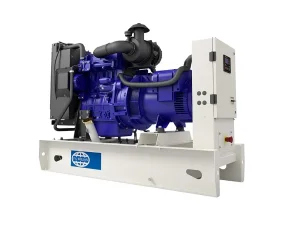
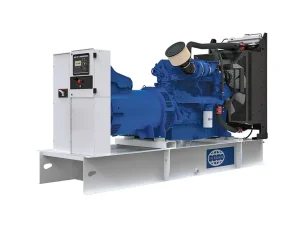
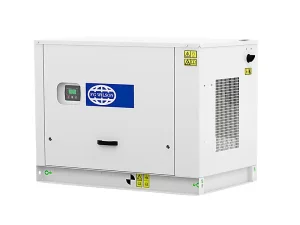
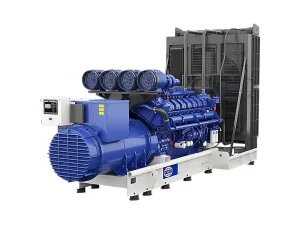
Industrial & Mission-Critical Generator Lineup (Tier 2)
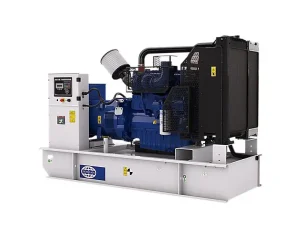
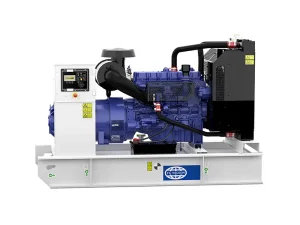
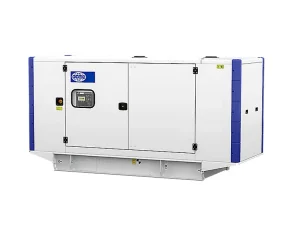
Complete fleet compatibility spanning small auxiliary sets to ultra-high capacity multi-megawatt systems. Built, balanced, and exported from Beijing Xinda Creation.
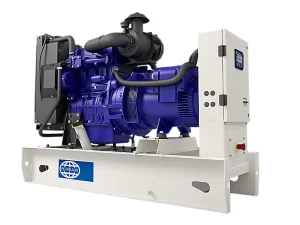
Consult with Our Senior Application Engineers in Beijing
Submit your connected load schedule, ambient elevation profile, and transient step-load requirements. Our technical sales division delivers comprehensive single-line diagrams (SLD), sizing reports, and competitive export quotations within 24 hours.