
How to Choose a Silent Generator for Global Sourcing?

Time:2026-10-27 Author:Sophia
0%

Choosing a Silent Generator for global sourcing is not simply a matter of comparing prices and advertised decibel levels. Buyers must examine operating conditions, technical documents, supplier experience, and long-term service support. A quiet machine beside a warehouse may still perform poorly in a hot construction site or remote mining area.

The right decision begins with the expected electrical load. List essential equipment, starting currents, running hours, and backup priorities. A 100 kVA generator may appear suitable, yet motors can demand much higher power during startup. Noise ratings also need careful checking. Ask whether the stated figure was measured at seven meters, under partial load, or in an open test area. Small details matter.

Supplier verification protects the project.

Request factory records, inspection reports, warranty terms, spare-parts availability, and clear product specifications. Confirm fuel consumption, enclosure materials, alternator quality, controller functions, and maintenance access. For international shipments, check packaging strength, voltage compatibility, emissions requirements, and local safety expectations. Independent inspection can reveal loose wiring, weak hinges, or insufficient ventilation before the unit leaves the factory.

Real-world experience often exposes gaps in polished quotations. A cheaper Silent Generator may create higher costs through difficult repairs, delayed parts, or unstable performance. Still, no sourcing guide can remove every uncertainty. Load calculations may change, shipping conditions may be misunderstood, and supplier claims may require verification. Careful testing, practical questions, and documented acceptance criteria help turn a promising quotation into a dependable power solution.
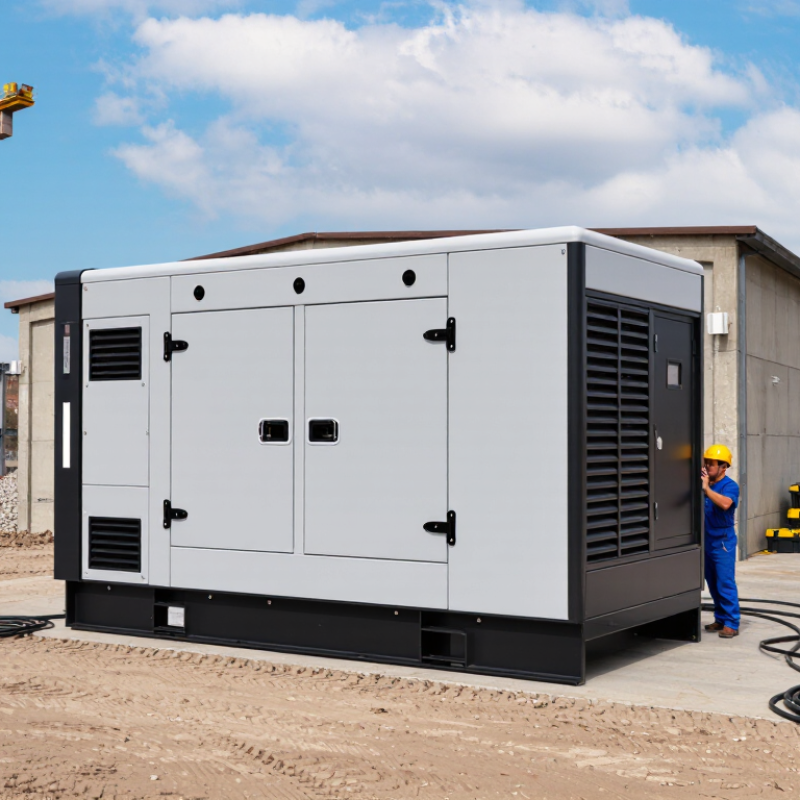
How to Choose a Silent Generator for Global Sourcing?

Define Power Needs by Load Profile: 80% Continuous Capacity and 20–30% Surge

Choosing a silent generator starts with the load profile, not the advertised maximum output. List every appliance, tool, and control system that may run together. Record running watts, starting watts, power factor, and operating hours. Pumps, compressors, and refrigeration units often demand much more during startup.

A practical sizing target keeps continuous demand near 80% of the generator’s rated capacity. Reserve another 20–30% for short surge events. For example, a site using 12 kW continuously may need a 15 kW generator. That leaves approximately 3 kW for motor starting and brief changes. Do not size only from average consumption. A quiet warehouse can still create sharp electrical peaks.

Measure real usage when possible. A portable power meter, equipment manual, and startup observation provide better evidence than estimates. Check performance at the expected altitude and temperature, because both can reduce available output. Allow space for future equipment, but avoid excessive oversizing. An oversized generator may run lightly loaded, wasting fuel and complicating maintenance.

I have seen planning sheets miss small loads. The result was unexpected tripping during startup. That mistake is easy to repeat. Recheck simultaneous operation, especially during shift changes or cold mornings. For global sourcing, request clear test data, rated and standby capacities, noise measurements, wiring details, and load-test records. Specifications should be comparable across suppliers, although documents are not always perfectly consistent. Ask questions before approval.

Match Global Electrical Standards: 50/60 Hz, 230/400 V, and ISO 8528

How to Choose a Silent Generator for Global Sourcing?

A silent generator must match the electrical standard at its destination, not merely the buyer’s preferred price. Many regions use 50 Hz, while others require 60 Hz. A 50 Hz generator connected to 60 Hz equipment may cause timing errors, overheating, or unstable motor performance. Check every load’s nameplate before requesting quotations.

For three-phase systems, 230/400 V usually means 230 V between phase and neutral, and 400 V between phases. This detail is easy to misunderstand. Confirm the required phase configuration, voltage tolerance, neutral arrangement, and grounding method with a qualified electrician. ISO 8528 provides a useful framework for generator performance, ratings, testing, and operating conditions. However, compliance documents should be verified against the actual unit, not accepted blindly. A certificate alone cannot prove field suitability.

Tips: Request a factory test report showing frequency, voltage, output stability, noise level, and load performance. Ask for tests at partial and full load. Include ambient temperature and altitude, because both can reduce available power. It is also wise to request wiring diagrams and protection settings. Small omissions create expensive delays. I would not rely on a generic 230/400 V label without checking the terminal layout and local grid requirements. Procurement decisions sometimes look complete, yet one missing frequency detail can make the generator unusable.

How to Choose a Silent Generator for Global Sourcing? - Match Global Electrical Standards: 50/60 Hz, 230/400 V, and ISO 8528

Sourcing Dimension Common Global Data Technical Meaning Recommended Verification Before Purchase
Frequency 50 Hz or 60 Hz The alternator must produce the frequency required by the connected loads. A 50 Hz generator should not be treated as interchangeable with a 60 Hz generator without confirming equipment compatibility. Specify the required frequency on the purchase order and request a factory test report showing measured frequency at rated speed and load.
Three-Phase Voltage 230/400 V, 50 Hz is a widely used IEC system arrangement In a balanced three-phase system, 230 V is typically the phase-to-neutral voltage and 400 V is the line-to-line voltage. The relationship is approximately 400 = 230 × √3. Confirm line-to-line voltage, phase-to-neutral voltage, neutral availability, wiring configuration, and whether the destination installation follows the local nominal-voltage standard.
Other Common Voltage Configurations 120/208 V, 60 Hz; 277/480 V, 60 Hz; 220/380 V, 50 Hz may be encountered in different markets These configurations are not universal substitutes. Local distribution practices, equipment ratings, and code requirements determine suitability. Obtain the destination country’s required nominal voltage and frequency from the project electrical specification rather than selecting from the generator catalogue alone.
Phase and Connection Single-phase or three-phase; common three-phase winding connections include star/wye and delta The phase arrangement affects motor starting, load balancing, neutral current, and the ability to supply single-phase and three-phase loads together. Require a wiring diagram, terminal arrangement, neutral-to-earth bonding details, and confirmation that the configuration matches the transfer switch and site grounding design.
Generator Rating Under ISO 8528-1 COP, PRP, LTP, and ESP ratings are used for different operating conditions PRP is intended for variable-load prime operation; ESP is intended for emergency standby operation with limited annual use; COP is for continuous operation at constant load; LTP is for limited-time prime operation. Ask for the exact ISO 8528-1 rating, permitted operating hours, load profile, maintenance intervals, and whether the quoted kVA is prime or standby output.
Apparent Power and Current Three-phase apparent power: S ≈ √3 × VLL × I; kVA is not the same as kW For a 400 V three-phase system, a 100 kVA load draws approximately 144 A at unity power factor before considering derating and transient conditions. Real power depends on power factor. Check rated kVA, rated kW, power factor, phase current, motor-starting requirements, and allowable voltage dip during load acceptance.
Voltage Regulation Automatic voltage regulator (AVR) is commonly used for stable output An AVR controls excitation to help maintain generator-terminal voltage as load changes. Actual regulation and transient response depend on the alternator, controller, and load type. Request the guaranteed steady-state voltage regulation, transient voltage-dip data, recovery time, and test conditions.
Speed and Frequency Relationship Synchronous speed: n = 120 × f ÷ p, where n is rpm, f is Hz, and p is the number of poles Typical synchronous speeds include 1,500 rpm for a four-pole, 50 Hz alternator and 1,800 rpm for a four-pole, 60 Hz alternator. Confirm engine speed, alternator pole count, governor performance, and whether the design supports the selected 50 Hz or 60 Hz output.
Acoustic Performance Noise is normally reported in dB(A), often at a specified distance and load A “silent” or acoustic enclosure reduces sound but does not define one universal noise level. Measurement distance, load percentage, site reflections, exhaust arrangement, and weather affect the result. Require dB(A) data with measurement distance, test load, test method, and operating mode clearly stated. Do not compare figures taken under different conditions.
Environmental Derating Altitude, ambient temperature, humidity, and cooling conditions can reduce available output Higher altitude reduces air density, while high ambient temperature reduces cooling and combustion margins. The nameplate rating may therefore exceed the site-available rating. Provide site altitude and maximum ambient temperature, then request a derating curve or guaranteed output at the actual installation conditions.
Compliance Documentation ISO 8528 performance classification; applicable local electrical, safety, emissions, and noise requirements ISO 8528 addresses generating-set performance and testing; it does not replace destination-market requirements for electrical installation, emissions, fuel systems, or workplace noise. Request the applicable declaration or test reports, wiring diagrams, factory acceptance test results, installation manual, and destination-market compliance documents.
Automatic Transfer and Controls Automatic mains failure (AMF) or automatic transfer switch (ATS) control may be required for standby applications The control system starts the generator and transfers the load when the normal supply fails, subject to the configured time delays, voltage limits, frequency limits, and interlocking. Confirm control voltage, communication protocol, start/stop logic, transfer-switch compatibility, remote monitoring requirements, and neutral switching requirements.
Selection note: Voltage and frequency must be matched to the destination electrical system. Confirm the complete site specification, applicable local regulations, and the generator’s ISO 8528-1 rating before finalizing a global sourcing order.

Compare Enclosure Noise at 7 m: ISO 8528-10 and ≤75 dB(A)

When global sourcing, compare generator noise under identical conditions. The key figure is enclosure noise at seven metres, not a vague “silent” label. ISO 8528-10:1998 defines methods for measuring airborne noise from engine-driven generating sets. It addresses operating load, microphone positions, and test conditions. However, ISO 8528-10 does not automatically require every generator to meet 75 dB(A). That limit is a procurement benchmark.

A result of 75 dB(A) at seven metres can work for many construction and commercial sites. The result changes with load, ground reflection, wind, and nearby walls. Hard surfaces may make the generator sound louder. The European Environment Agency’s Environmental Noise in Europe 2020 assessment found over 113 million people exposed to road traffic noise above 55 dB Lden. This wider evidence shows why measurement consistency matters. It is not generator-specific. Still, it gives useful context.

Ask suppliers for an ISO 8528-10 test report, rated load, distance, weather, and site layout. Request sound-pressure data, not only sound-power data. Check whether the cooling fan and exhaust were operating normally. A low showroom reading may disappoint outdoors. I would also compare readings at 50%, 75%, and 100% load. That takes more effort. It prevents an expensive mistake. Some specifications remain imperfect, so buyers should record their own acceptance measurement after installation.

Screen Emissions Compliance: EPA Tier 4 Final and EU Stage V

How to Choose a Silent Generator for Global Sourcing?

Screen Emissions Compliance: EPA Tier 4 Final and EU Stage V

A silent generator is not automatically a clean generator. Its acoustic enclosure may reduce noise, while the engine still needs strict emissions control. For global sourcing, check whether the engine is certified to EPA Tier 4 Final or EU Stage V. These standards control pollutants such as particulate matter and nitrogen oxides. They are not interchangeable labels.

Ask the supplier for the engine family, emissions certificate, test report, and production year. Match those documents with the exact engine model, not only the generator set name. In field reviews, mismatched paperwork creates expensive delays. A unit may meet one market’s requirements but fail another’s import or operating rules. Confirm the destination country before signing a purchase order.

Look closely at the after-treatment system. Diesel particulate filters can require regeneration. Selective catalytic reduction systems may need diesel exhaust fluid and reliable dosing equipment. Cold weather, high altitude, poor fuel, and low-load operation can affect performance. Maintenance access matters, too. A compact enclosure may hide filters, sensors, and service points. That is easy to underestimate.

Keep records.

For serious projects, request an emissions compliance statement from an authorized testing body or qualified engineer. Do not rely on a sales brochure alone. Requirements can change, and enforcement may differ between regions. I would also allow time for local review, because the fastest shipment is not always the most usable generator.

Verify Fuel Autonomy and Testing: 8–12 Hours at 75% Load

Choosing a silent generator for global sourcing requires more than checking its noise rating. Fuel autonomy deserves equal attention, especially where refueling access is uncertain. Ask suppliers to verify eight to twelve hours of operation at 75% load.

A reliable test should use a calibrated load bank, not only a light workshop load. Request the fuel tank capacity, measured fuel consumption, test duration, ambient temperature, and engine speed. These details reveal whether the quoted runtime is realistic. A generator may reach ten hours in mild weather, but heavy rain, high altitude, or frequent load changes can reduce autonomy. I have seen specifications look impressive until actual operating conditions exposed a shorter runtime. That gap matters.

Tips: Ask for a signed test report. Confirm whether the runtime includes a safety reserve. Check the fuel gauge during the test, not only afterward. Request a cold-start demonstration when possible. Also, compare fuel autonomy at 50%, 75%, and 100% load. The 75% figure is useful because it reflects a practical working condition, yet it should not be treated as a guarantee for every site. Leave room for error. A small reserve protects operations when delivery schedules change or refueling is delayed. Suppliers should explain their testing method clearly, including measurement tools and acceptance limits. Clear evidence builds trust across borders.

FAQS

How should I size a silent generator for continuous demand?

Keep continuous demand near 80% of rated capacity. Reserve 20–30% for short surges. A 12 kW load may need a 15 kW generator. Do not size from average consumption alone.

Which equipment creates the largest startup surge?

Pumps, compressors, refrigeration units, and motors often draw much more during startup. A quiet warehouse can still produce sharp electrical peaks. Watch cold-morning starts and shift changes.

How can I measure the real electrical load?

Use a portable power meter and inspect every equipment nameplate. Record running watts, starting watts, power factor, and operating hours. Observe equipment starting together. My planning sheets have missed small loads before.

Can an oversized generator cause problems?

Yes. Light loading may waste fuel and complicate maintenance. Leave room for future equipment, but avoid excessive capacity. This balance is easy to misjudge.

Why must frequency match the destination equipment?

Check whether the site requires 50 Hz or 60 Hz. A mismatch may cause timing errors, overheating, or unstable motor performance. Review every nameplate carefully. Frequency details are sometimes overlooked.

What voltage and phase details should I confirm?

Confirm voltage, phase configuration, voltage tolerance, neutral arrangement, and grounding method. In a three-phase system, 230/400 V usually means 230 V phase-to-neutral and 400 V phase-to-phase. Ask a qualified electrician to verify the terminal layout.

How do altitude and temperature affect generator output?

High altitude and high temperature can reduce available power. Request performance data at the expected site conditions. A rating measured in mild conditions may not reflect field performance.

Which documents should I request before approval?

Request rated and standby capacities, wiring diagrams, protection settings, and load-test records. Ask for frequency, voltage, stability, noise, partial-load, and full-load results. Test documents are useful, but they are not always perfectly consistent. Verify the actual unit, not only a certificate.

Conclusion

Choosing the right Silent Generator for global sourcing starts with a clear understanding of the intended load profile. Select a unit that can provide approximately 80% of its rated capacity for continuous operation while handling an additional 20–30% surge for motor starts and temporary peaks. The generator should also match the destination’s electrical requirements, including 50 or 60 Hz frequency, 230/400 V systems, and relevant ISO 8528 performance standards.

Noise, emissions, and operating endurance are equally important. Compare enclosure noise measured at 7 meters, using ISO 8528-10 methods, and prioritize models rated at 75 dB(A) or lower where quiet operation is required. Confirm compliance with applicable emissions regulations, such as EPA Tier 4 Final or EU Stage V, based on the target market. Finally, verify fuel autonomy through documented testing, ideally achieving 8–12 hours of operation at 75% load. These checks help ensure reliable, compliant, and practical international procurement.

Sophia

Sophia

Sophia is a dedicated marketing professional with an exceptional depth of knowledge about her company's products and services. With a keen understanding of market trends and customer needs, she crafts insightful blog posts that not only inform but also engage readers, enriching the company’s online......