
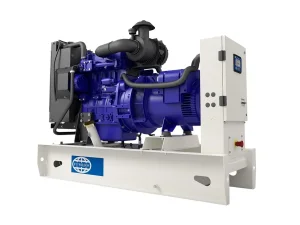
Primary Commercial Backup Generators (Series 1-8)
Heavy-duty, fuel-optimized diesel backup power stations configured with genuine Perkins engines and FG Wilson power generation assemblies.
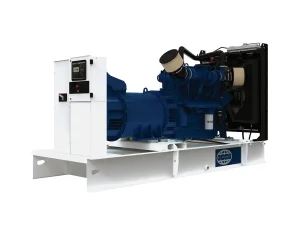
High-Quality Medium Range 225 – 938 kVA Fg Wilson Industrial-Grade Generator Set P625-3 Suppliers, Exporters
Configure Model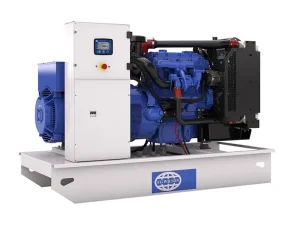
China Wilson Small Type 33KVA Reliable Energy Source P33-6 Supplier, Service
Configure Model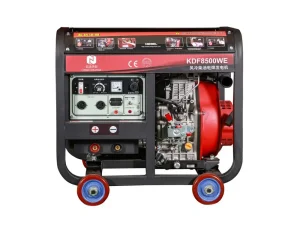
High-Quality Electric Welding High-Performance Generators Set KDF8500WE Exporters, Exporter
Configure Model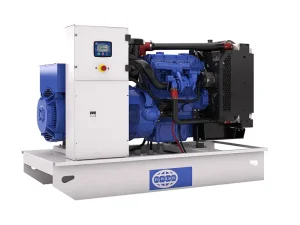
High-Quality Wilson Open Type Diesel Generator Sets Small Range <220 kVA P40-3S Suppliers, Service
Configure Model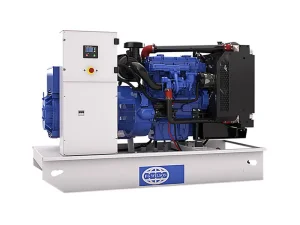
Cheap Wilson Open Type Small Diesel Generator Sets Standby26kVA/26kw P26-6S Supplier, Suppliers
Configure Model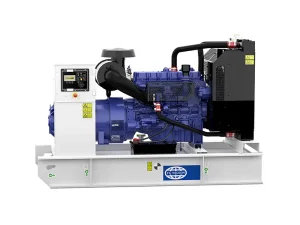
China Wilson Small Type Fuel Optimized Diesel Generator Set P175-2 Exporters, Exporter
Configure Model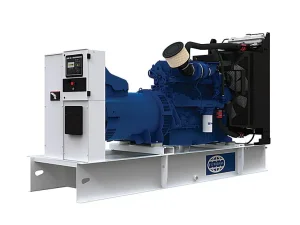
Cheap Medium Range 225 – 938 kVA Generator Set P450-2 Supplier, Exporter
Configure ModelGlobal Commercial Power Volatility & Procurement Drivers
Enterprise power supply reliability is no longer an operational contingency—it has become a direct determinant of financial solvency and brand risk.
Enterprise Procurement Reality: Total Cost of Ownership vs. "Cheap" Capex
In modern procurement engineering, searching for "cheap commercial backup power suppliers" is frequently misunderstood as pursuing low-tier, substandard equipment. However, leading global EPC contractors, data center facility directors, and manufacturing procurement managers evaluate Levelized Cost of Electricity (LCOE) and lifecycle Total Cost of Ownership (TCO). A genuinely cost-effective commercial backup power deployment balances three critical vectors: affordable initial procurement capital, ultra-reliable auto-synchronization during grid drops, and accessible high-efficiency maintenance parts.
| Evaluation Parameter | Generic / Low-Tier Gensets | Cinda Creation Industrial FG Wilson / Weichai Standards |
|---|---|---|
| Mean Time Between Failures (MTBF) | 1,200 – 2,000 Operating Hours | 8,500+ Operating Hours (Genuine Perkins / Weichai Blocks) |
| Transient Load Acceptance | Struggles beyond 40% single-step load | Meets ISO 8528-5 G2/G3 class, accepts up to 70-80% block load |
| Fuel Efficiency at 75% Prime | 235 – 255 g/kWh (Higher thermal loss) | 198 – 212 g/kWh (Electronic Governor & High-Pressure Injection) |
| Global Parts Interoperability | Non-standard custom fittings, high obsolescence | Worldwide Perkins & FG Wilson distribution footprint |
Grid Volatility & Climate Stress
Global electrical networks face intensifying instability caused by severe weather anomalies and the intermittent nature of renewable distributed energy resources (DERs). Commercial enterprises require dependable mechanical failover within 10 seconds of grid collapse.
N+1 & 2N RedundancyManufacturing & Continuous Automation
Modern precision machining, pharmaceutical batch synthesis, and automated semiconductor assembly cannot tolerate even micro-outages without millions in batch destruction. Commercial gensets safeguard industrial throughput against utility brownouts.
Uninterrupted ProductionDirect-from-Source Export Economics
By leveraging Beijing Xinda Creation's strategic supply relationships directly in China's advanced machinery ecosystem, buyers bypass 35-45% intermediary markups, securing Tier-1 engineering standards at true factory-direct procurement prices.
Direct Exporter ArbitrageMacro Industry Engineering Solutions
Custom tailored generation topologies designed to handle specific thermal, harmonic, and acoustic site requirements across five core enterprise verticals.
Healthcare & Surgical Centers
Equipped with ultra-silent canopies (<68 dB(A) at 7 meters) and Class-G3 governor response. Integrated with dual-line ATS (Automatic Transfer Switches) ensuring hospital life-support, clean rooms, and imaging systems experience zero blackout interruption.
Life-Critical Class G3Linear Infrastructure & Pipelines
Proven across harsh desert terrains and remote installations such as the 2,400-km China–Myanmar crude pipeline (17 gas units + 5 diesel units). Features remote SCADA telemetry, oversized filtration, and extended fuel autonomy basins.
Extreme AutonomyData Edge & Telecom Base Stations
High reactive-load handling for non-linear IT rectifier loads. Equipped with electronic PMG (Permanent Magnet Generator) excitation systems to maintain voltage waveform stability during large harmonic distortions.
Harmonic Defense (THD <3%)Technology Roadmap: Future of Commercial Backup Power
How cutting-edge combustion kinetics, digital telemetry, and hybrid alternative fuels are redefining commercial generation efficiency.
PHASE 01: CURRENT CORE
Common Rail & Digital AVR
Full implementation of high-pressure common rail (HPCR) injection, delivering 15% lower fuel consumption and sub-second voltage recovery via digital automatic voltage regulators.
PHASE 02: 2025 HYBRID
HVO & Biodiesel Compatibility
Engine retrofits enabling seamless switching between standard ultra-low sulfur diesel (ULSD) and 100% Hydrotreated Vegetable Oil (HVO), slashing carbon emissions by up to 90% without derating.
PHASE 03: TELEMETRY
AI-Assisted Predictive Health
Cloud-connected IoT modules monitoring vibration frequency, particulate oil degradation, and coolant cavitation to predict injector or bearing failure 200 hours before interruption.
PHASE 04: ZERO-CARBON
Microgrid BESS Integration
Turnkey hybrid synchronization where FG Wilson generators interface with industrial Battery Energy Storage Systems (BESS) for dynamic peak shaving and renewable black-start capability.
Global Regulatory Compliance & Factory Assurance
Every commercial backup unit exported from Beijing Xinda Creation adheres to exhaustive international statutory benchmarks.
ISO Tri-Certificate Management
Our operations, pre-delivery inspection bays, and testing rigs operate under certified ISO 9001 (Quality), ISO 14001 (Environmental Management), and ISO 45001 (Occupational Health & Safety) frameworks.
Audited Facilities100% Resistive & Inductive Factory Testing
No generator leaves our warehouse without passing a multi-stage load bank protocol: 0%, 25%, 50%, 75%, 100%, and 110% overload conditions. Real-time logging checks thermals, exhaust backpressure, and frequency response.
Full FAT Protocol12-Month Start-Up Warranty & Spares
Commercial protection counted from the physical start-up date. We maintain an extensive warehouse of genuine Perkins overhaul parts, filtration cartridges, digital controllers, and fuel lift pumps with 24-hour dispatch commitments.
Rapid Spares SupportHigh-Capacity & Silent Industrial Backup Sets (Series 9-16)
Explore heavy-duty 40 kVA to 938 kVA open frame and acoustic enclosure generator platforms configured for rigorous global utility failover.
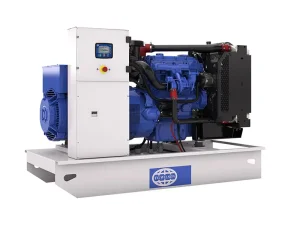
Cheap Wilson 40KVA Industrial Power Generator Small Range <220 kVA P40-4S Supplier, Exporter
Configure Model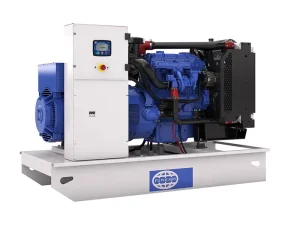
China Wilson Open Type Small Diesel Generator Sets 400/230 V, 50 Hz P88-6 Suppliers, Service
Configure Model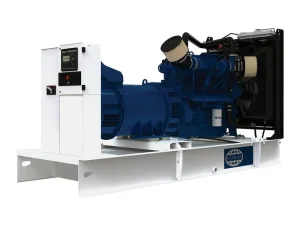
High-Quality Fg WilsonHigh-power Generator Set, 225-938KVA, Applicable To Various Scenarios P895-1 Supplier, Suppliers
Configure Model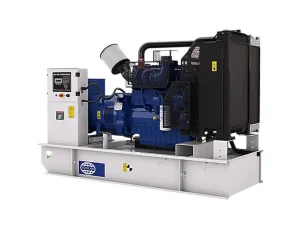
Cheap Medimu Range 225-938KVA Fg Wilson Industrial-Grade Generator Set P330-5 Exporter, Service
Configure Model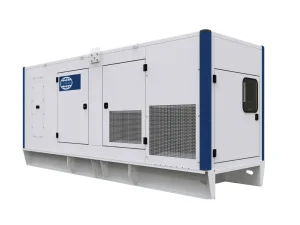
Cheap Fg Wilson Generator Set, 225-938KVA, low noise design, suitable for urban use P750-3 Supplier, Exporters
Configure Model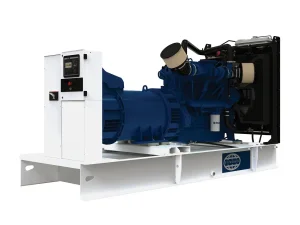
Cheap Fg Wilson 938KVA Large Capacity Generator Set Suitable For Large Facilities P938-1 Exporters, Exporter
Configure Model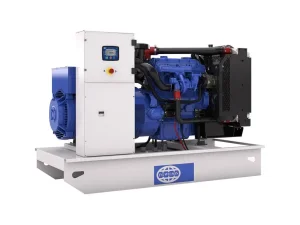
High-Quality P33-3 (skid)Fg Wilson Small Range Silent Diesel Generator Set Exporters, Exporter
Configure Model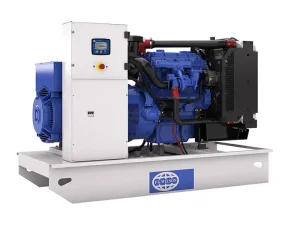
Cheap Wilson 90KVA Industrial Power Generator Small Range <220 kVA P90-3S Supplier, Suppliers
Configure ModelCommercial Generator Engineering FAQ
Comprehensive engineering insights into sizing, ratings, acoustic compliance, and export logistics.
What is the engineering distinction between Standby, Prime, and Continuous Power ratings?
Under ISO 8528 regulations, the Standby Power Rating is designated strictly for supplying emergency power for the duration of a primary utility outage, with an average 24-hour load factor not exceeding 70% and zero allowable overload. Prime Power (PRP) is suited for unlimited annual operating hours with variable electrical loads, permitting a 10% overload for 1 hour within every 12-hour window. Continuous Power (COP) serves constant 100% baseline loads continuously without grid presence. Selecting the improper duty rating will prematurely degrade cylinder liners and void manufacturer warranties.
How do I precisely calculate kVA from kW while accounting for inductive motor starts?
The standard formula is kVA = Real Power (kW) ÷ Power Factor (cos φ). Standard commercial 3-phase systems operate at a 0.8 lagging power factor (e.g., 200 kW ÷ 0.8 = 250 kVA). However, when sizing for facilities with heavy inductive equipment like chillers, pumps, or elevators, starting currents can spike 6 to 7 times the continuous full load amperes (FLA). Utilizing soft starters or Variable Frequency Drives (VFDs) significantly reduces inrush kVA spikes, preventing severe generator voltage drops below the standard 15% threshold.
When is an acoustic silent enclosure preferred over an open-frame skid generator?
An open-frame skid generator is structurally optimized for isolated internal mechanical plant rooms equipped with purpose-built air intake louvers, acoustic baffles, and external exhaust silencers. They offer lower initial equipment costs and unhindered maintenance access. In contrast, sound-attenuated silent canopy sets feature heavy-gauge galvanized steel enclosures with fire-retardant rockwool insulation, designed for outdoor installation, hospital campuses, schools, and commercial facilities requiring noise thresholds strictly below 68–75 dB(A) at 7 meters.
What export sea-freight packing and anti-corrosion protection is standard?
Every commercial backup unit undergoes rigorous multi-layer packing prior to container loading at Tianjin or Qingdao ports. Generators are vacuum-sealed with heavy industrial shrink wrap, fortified with desiccants to prevent maritime condensation corrosion on copper alternator windings, and mounted onto reinforced steel skid bases with ISPM-15 heat-treated fumigated timber framework for international maritime safety.
What parameters must buyers provide to receive an exact engineering quotation?
To avoid derating and ensure precision engineering, our applications engineering team requires: total connected load list (kW/kVA), line-to-line and line-to-neutral voltages (e.g., 380V/220V, 400V/230V, or 480V), frequency (50 Hz or 60 Hz), installation altitude above sea level, ambient temperature ranges (-20°C to +50°C), preferred enclosure layout (Open Skid vs. Silent Canopy), required fuel autonomy (8 hours, 24 hours, or external bulk fuel transfer), and whether Automatic Transfer Switch (ATS) synchronizing panels are required.