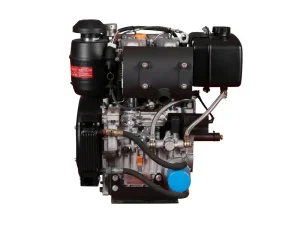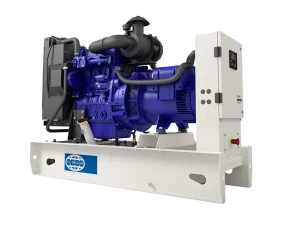
Featured Export Models: Standby Fleet Dispatch Part I
Factory-calibrated Perkins, FG Wilson, and single-cylinder diesel gen-sets rigorously inspected for residential sub-stations, residential estates, and industrial utility isolation.
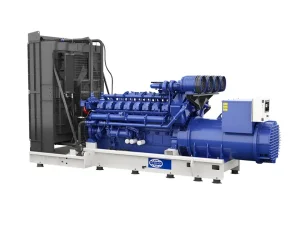
Cheap FG Wilson Energy-Saving Generator Set (800-2500kVA) P2500-3 Supplier
View Product Specs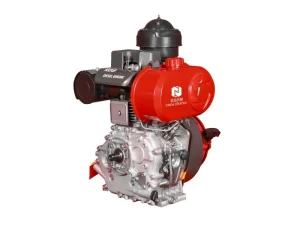
Cheap Single Cylinder Air-cooled Diesel Generator KD9 Supplier, Exporter
View Product Specs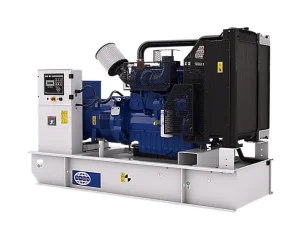
Cheap Medium Range 225-838kVA P250-5 Durable Diesel Generators Exporter
View Product Specs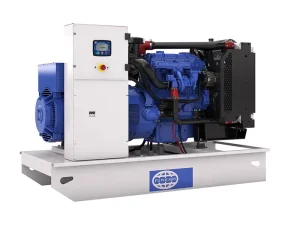
China Wilson Open Type Small Diesel Generator Sets 400/230 V P88-6 Service
View Product Specs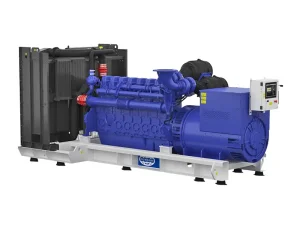
China FG Wilson High-Power Generator Sets >800 kVA P1375-1 Exporters
View Product Specs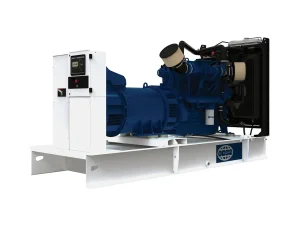
High-Quality FG Wilson 225-938kVA Diesel Generator Set P605-3 Service
View Product Specs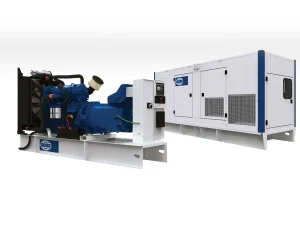
China FG Wilson Open Type Medium Diesel Generator Sets P501-3 Supplier
View Product SpecsGlobal Procurement Economics: Deconstructing the "Cheap" Paradigm
Why high-reliability B2B procurement channels treat the phrase cheap emergency power generator for home as an index of capital amortization, thermodynamic efficiency, and optimized import duty classification rather than compromised build quality.
In international machinery logistics, procurement officers from municipal housing boards, multi-family construction conglomerates, telecommunication rural network providers, and hardware importing syndicates constantly seek cost-advantaged generation assets. When global buyers search for an exporter of cheap emergency power generator for home systems, the engineering objective is rarely the acquisition of low-grade disposable consumer units. Instead, institutional buyers require prime-built, industrial-toleranced power generation units delivered at lowest possible landed cost metrics.
Industrial exporters such as Beijing Xinda Creation Machinery Equipment Co., Ltd. (Cinda Creation) serve as key nodes in this worldwide logistical corridor. By centralizing technical customization, containerized multi-unit packaging, and factory-direct access to world-class diesel platforms like FG Wilson, Perkins, and Weichai, wholesale export agreements eliminate distributor markups while preserving full international compliance (ISO 8528, ISO 9001, CE, and NFPA 110).
42.8%
Landed Cost Optimization
Achieved via direct factory-skid packing, unified Bill of Lading clearance, and bulk engine sourcing.
< 10s
NFPA 110 Class 10 Restoral
Instant automatic mains failure (AMF) transfer maintaining uninterrupted life-support and residential circuits.
15,000+
Mean Time Between Overhauls
Heavy-duty diesel industrial blocks engineered for high displacement longevity under rigorous ambient regimes.
68 dBA
Acoustic Boundary Limit
Super-silent soundproof canopies optimized for dense suburban residential noise codes @ 7 meters.
Subdivided Estates & Micro-Grids
Gated communities and multi-dwelling developments require synchronized centralized or decentralized generator sets. Sourcing through certified export channels provides scalable prime and standby ratings (from single-phase 10 kVA modules up to grouped 250 kVA three-phase sub-stations) capable of parallel step-up load balancing.
Wholesale Import Arbitrage
Regional power equipment dealers maximize gross profit margins by acquiring mixed-container gen-sets combining small open-skids (KD9, P18-6) for rural homeowners with soundproof medium-range packages (P175-2, P250-5) for commercial residential estates, leveraging volume-tiered pricing structures.
Disaster Relief Logistics
Humanitarian aid agencies and emergency preparedness departments secure pre-engineered skid generators that can be air-lifted or breakbulk transported rapidly to typhoon, hurricane, or earthquake zones, requiring immediate auto-start capability under harsh tropical or freezing weather conditions.
Macro Architectural Integration: Reliability Engineering for Standby Power
Standard residential standby systems fail when exposed to large reactive inductive loads. Here is how modern export-grade diesel systems resolve the transient volt-dip dilemma.
A frequent error in low-budget domestic generator procurement is calculating standby capacity based solely on running watts (kW). When whole-home HVAC compressor motors, water booster pumps, and deep-well submersible systems kick on, their inrush locked-rotor amperes (LRA) can exceed continuous steady-state amperage by 300% to 600%. If an exporter supplies an under-engineered alternator with poor sub-transient reactance ($X''d$), the terminal voltage drops precipitously, tripping sensitive residential electronics, unlatching contactors, and stalling the prime mover.
To eliminate this failure mode without inflating costs, professional suppliers configure sets using high-efficiency brushless synchronous alternators (such as Leroy Somer or Stamford architectures) featuring auxiliary winding excitation (AREP or Permanent Magnet Generator - PMG) paired with digital Automatic Voltage Regulators (AVR). This design maintains a minimum of 300% short-circuit current capability for 10 seconds, absorbing massive motor start transients without dipping system frequency below 5%.
| System Architecture Parameter | Standard Consumer Backup (Gasoline/Inverter) | Export-Grade Industrial Diesel Standby | FG Wilson / Perkins Commercial Platform |
|---|---|---|---|
| Displacement & Operating Speed | Small-bore air-cooled, 3600 RPM (High Wear) | Cast-iron multi-cylinder, 1500 / 1800 RPM (Heavy-duty) | Turbocharged, direct injection, 1500 RPM (Long Life) |
| Transient Reactance Protection | Standard Shunt (Severe voltage drop under LRA) | Digital AVR with AREP/PMG excitation | Instantaneous motor-starting capability (PMG standard) |
| Fuel Flammability & Storage | Gasoline (Class 1A, High explosive risk, degrades in 90 days) | Diesel Fuel (Class II, Stable flashpoint >52°C, long shelf life) | Diesel with integrated base-tank dual-wall containment |
| Total Harmonic Distortion (THD) | Variable > 8% to 15% (Risky for microprocessors) | Regulated < 3.5% (Safe for smart homes/EV chargers) | Sub-3% Pure Sine Wave compliance via precision winding |
| Continuous Prime Running Capability | Limited to 4-8 hours before thermal throttling | 24/7 continuous operation within prime rating | Unlimited annual hours with 10% overload margin |
Automatic Transfer Switching (ATS)
Directly interfacing with electrical utility service panels, export-supplied dual-throw mechanically interlocked ATS assemblies automatically sever public utility connection before generator contactor closure, thoroughly preventing catastrophic back-feeding onto utility lines.
Acoustic & Thermal Enclosures
Residential noise abatement is enforced by municipal bylaws worldwide. Advanced soundproof canopies use galvanized steel, electrostatic powder coating, multi-stage internal baffling silencers, and rockwool insulation to dampen mechanical resonance to acceptable levels without restricting airflow.
Integrated Base-Tank Autonomy
Emergency disruptions can sever road transit and fuel supply chains for days. Heavy-gauge skid bases integrate extended-capacity fuel tanks providing 8 to 24 hours of autonomous continuous runtime at 75% load, complete with low-level electronic sensor alerts and dual containment spill lips.
Technological Roadmap: The Next Decade in Distributed Power Generation
Exploring thermodynamic efficiency advances, alternative biofuel compatibility (HVO), and intelligent telemetry shaping the export marketplace.
The global standby power landscape is undergoing rapid technological divergence. As decentralized smart homes evolve into proactive prosumer microgrids featuring rooftop photovoltaic (PV) arrays and lithium battery energy storage systems (BESS), the emergency power generator is transitioning from a passive fail-safe into an active microgrid balancing asset. Exporters are already engineering sets to integrate with hybrid inverters via dry contacts and Modbus communication protocols.
Biofuel & HVO Hydrotreated Vegetable Oil
Modern diesel blocks deployed in Cinda Creation gensets are fully certified for 100% paraffinic renewable diesel (HVO EN 15940). This drops lifecycle net CO2 emissions by up to 90%, eradicates particulate soot, and eliminates long-term storage gumming common to traditional fossil fuels.
Cloud Telemetry & AI Predictive Maintenance
Deep Sea Electronics and PowerWizard micro-controllers now offer 4G/LTE cloud gateways. Facility managers and overseas homeowners monitor battery cranking voltage, oil pressure gradients, and fuel reserves via mobile dashboards, catching battery degradation prior to an emergency.
Hybrid PV-Genset Dynamic Dispatch
Integrated logic algorithms prevent "wet stacking" by ensuring the diesel generator operates within its optimal thermodynamic brake-specific fuel consumption (BSFC) sweet spot (>40% continuous load) while simultaneously charging residential storage banks in off-grid conditions.
Sub-Zero Cold Weather Readiness
Export configurations tailored for Nordic, North American, and Central Asian winters incorporate thermostatically controlled coolant jacket water heaters, fuel filter water separators with electric heating elements, and heavy-duty AGM batteries rated down to -30°C cold-cranking performance.
Geographic Demand Matrix: Regional Grid Realities
How local utility stability, environmental regulations, and electrical frequency standards dictate generator selection across primary export corridors.
North America & Caribbean
Standard: 60 Hz / 120V - 240V split-phase (domestic), 208V / 480V 3-phase.
Drivers: Severe hurricanes, aging transmission grids (NERC alerts), and winter freezing vortexes. Exporters must supply EPA Tier-compliant engines and UL 2200-ready enclosures with aluminum non-corrosive hardware for coastal salt-air exposure.
Drivers: Severe hurricanes, aging transmission grids (NERC alerts), and winter freezing vortexes. Exporters must supply EPA Tier-compliant engines and UL 2200-ready enclosures with aluminum non-corrosive hardware for coastal salt-air exposure.
European Union & United Kingdom
Standard: 50 Hz / 230V single-phase, 400V 3-phase.
Drivers: Grid de-carbonization pressures, volatile spot-market tariffs, and stringent Stage V emission caps. Demand focuses heavily on ultra-quiet silent canopies (<65 dBA @ 7m) and HVO biofuel compatibility for municipal residential approvals.
Drivers: Grid de-carbonization pressures, volatile spot-market tariffs, and stringent Stage V emission caps. Demand focuses heavily on ultra-quiet silent canopies (<65 dBA @ 7m) and HVO biofuel compatibility for municipal residential approvals.
Middle East & Sub-Saharan Africa
Standard: 50 Hz / 230V / 400V (or 60 Hz in KSA).
Drivers: High ambient operating temperatures (>50°C), heavy airborne dust, and frequent rolling blackouts. Equipment requires oversized heavy-duty tropical radiators, dual air filtration systems, and robust mechanical fuel injection forgiving of high-sulfur diesel.
Drivers: High ambient operating temperatures (>50°C), heavy airborne dust, and frequent rolling blackouts. Equipment requires oversized heavy-duty tropical radiators, dual air filtration systems, and robust mechanical fuel injection forgiving of high-sulfur diesel.
Southeast Asia & Oceania
Standard: 50 Hz / 230V - 240V, AS/NZS 3000 compliance.
Drivers: Rapid suburban housing expansion, island resort installations, and monsoon-driven grid outages. Priority is placed on weatherproof outdoor canopies with anti-condensation alternators and corrosion-resistant base frames.
Drivers: Rapid suburban housing expansion, island resort installations, and monsoon-driven grid outages. Priority is placed on weatherproof outdoor canopies with anti-condensation alternators and corrosion-resistant base frames.
Latin America (LATAM)
Standard: Mixed 60 Hz (Mexico, Colombia, Brazil 127V/220V) & 50 Hz (Argentina, Chile).
Drivers: Mountainous high-altitude terrain (requiring derating calculations for thin air above 2,000 meters) and industrial estates requiring dual-frequency (50/60 Hz switchable) alternator windings for regional re-export.
Drivers: Mountainous high-altitude terrain (requiring derating calculations for thin air above 2,000 meters) and industrial estates requiring dual-frequency (50/60 Hz switchable) alternator windings for regional re-export.
Quality Control, Testing & International Compliance Assurance
Beijing Xinda Creation operates accredited ISO 9001, ISO 14001, and ISO 45001 production channels. Every unit undergoes full factory load bank testing before crating.
A legitimate industrial exporter shields overseas buyers from catastrophic field breakdowns through meticulous Factory Acceptance Testing (FAT) protocols. Prior to sea container staging, all generator sets undergo a 4-stage resistive-reactive load bank test (25%, 50%, 75%, 100%, and 110% overload) documenting steady-state stability, dynamic voltage recovery, bearing temperatures, and lube-oil pressure thresholds.
-
ISO 8528-1:2018 Performance Verification: Verified compliance with G1, G2, and G3 governing performance classes, ensuring frequency regulation within ±0.25% under steady load.
-
CE Machinery & Low Voltage Directives: Certified according to 2006/42/EC and 2014/35/EU, including electromagnetic compatibility (EMC) testing preventing interference with household IT.
-
NFPA 110 Level 1 Emergency Standby Standard: Capable of starting and assuming full critical load in less than 10 seconds following normal utility failure.
-
12-Month / 1,000-Hour Operating Warranty: Standardized global warranty from start-up date with genuine Perkins parts replacement supply pipelines.
Frequently Asked Questions (FAQ) for Global Buyers
Direct answers addressing technical sizing, shipping logistics, fuel economics, and compliance from our chief applications engineer.
Why is diesel preferred over gasoline or natural gas for home emergency standby?
Diesel engines offer substantially higher thermal efficiency, lower fuel consumption per kilowatt-hour, and eliminate carburetors or spark plugs which represent over 60% of small engine starting failures. Furthermore, diesel has a higher flashpoint (>52°C), making it significantly safer for residential storage than explosive gasoline, and it does not rely on vulnerable pipeline infrastructure during natural disasters.
What is the difference between Standby (ESP) and Prime (PRP) ratings?
Under ISO 8528-1, an Emergency Standby Power (ESP) rating is the maximum electrical power available during a utility outage under variable load sequences, with no overload capacity permitted. A Prime Power (PRP) rating allows unlimited operating hours annually with a 10% overload margin available for 1 hour every 12 hours. For remote estates with no utility connection, generators must always be sized based on Prime Power.
How does Cinda Creation package generators for sea container shipping?
Units are secured to fumigated heavy-duty export skids, shrink-wrapped in vapor-barrier polyethylene film with silica gel desiccant packs, and crated or strapped into 20ft/40ft High Cube containers. All critical mechanical contact points are coated with anti-rust inhibitors to prevent maritime salt spray corrosion during ocean transit.
How do I correctly calculate home emergency generator capacity?
Tabulate all continuous electrical loads (lighting, refrigeration, medical devices, computing) in kilowatts (kW). Next, identify the largest single electric motor (typically central air conditioning or well pumps) and multiply its running kW by 3.5 to calculate locked-rotor motor starting surge. Add this peak surge to your continuous load, then divide the total by a 0.8 power factor to determine required generator kVA with a 20% safety headroom margin.
Can an open-skid generator be installed outdoors?
No. Open-skid generator sets lack weatherproofing and must be installed inside a dedicated mechanical plant room with engineered intake louvers, exhaust duct attenuation, radiator discharge plenums, and floor drainage. For direct outdoor residential pad installation, a silent canopy enclosure is required.
What after-sales service and spare parts support are guaranteed?
All equipment includes a comprehensive 12-month or 1,000-operating-hour warranty from initial commissioning. Cinda Creation maintains extensive stock of genuine Perkins, FG Wilson, and Weichai consumable maintenance kits (oil filters, fuel-water separators, air filters, fan belts, and AVRs) available for immediate international courier dispatch with a 24-hour engineering technical response window.
Featured Export Models: Standby Fleet Dispatch Part II
Low-noise canopied enclosures, fuel-optimized medium prime units, and durable air-cooled diesel engines engineered for dependable commercial export delivery.
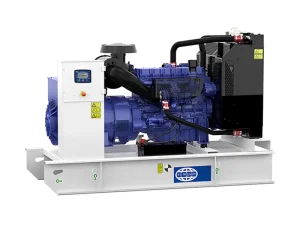
High-Quality Wilson Open Type Small Generator Sets P200-6 Service
View Product Specs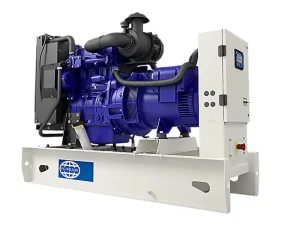
High-Quality FG Wilson Low Noise Energy Generator Sets P11-6S Exporter
View Product Specs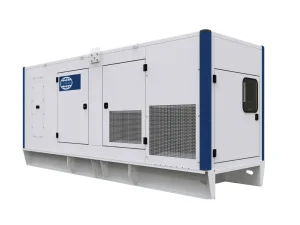
Cheap FG Wilson Urban Generator Set 225-938kVA Low Noise P750-3 Exporters
View Product Specs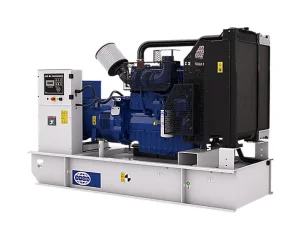
China FG Wilson P400-3 Medium Range 225-938 kVA Solutions Supplier
View Product Specs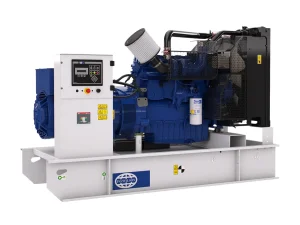
China Medium Range 225–938 kVA FG Wilson Generator P249-5 Service
View Product Specs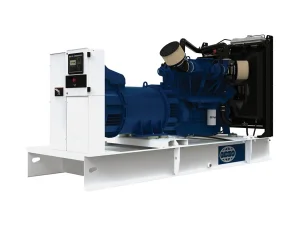
China FG Wilson Medium Range 225-938kVA P660-3 Suppliers, Exporter
View Product Specs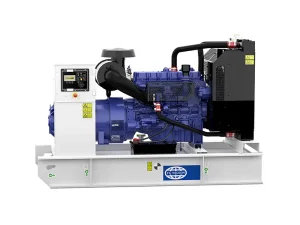
China Wilson Small Fuel-Optimized Diesel Generator Set P175-2 Exporters
View Product Specs