
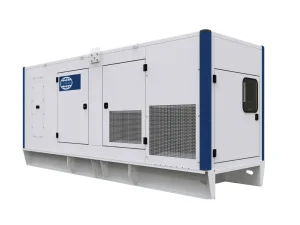
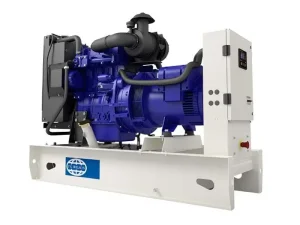
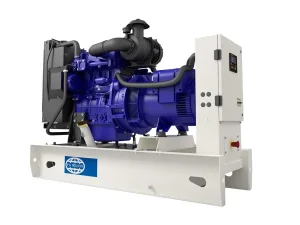
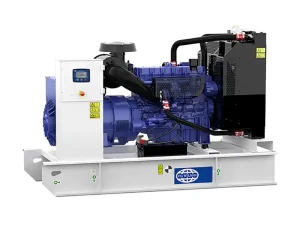
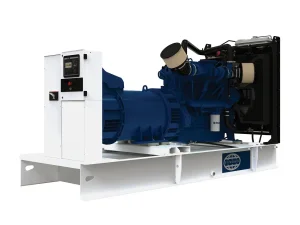
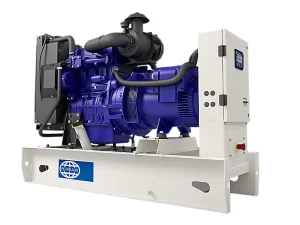
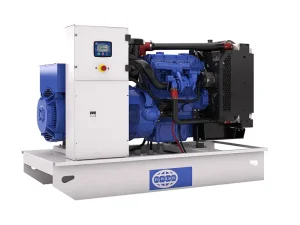
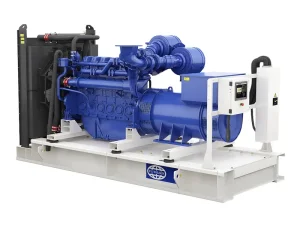
Standard Small & Medium Range Generating Sets
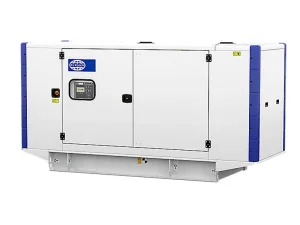
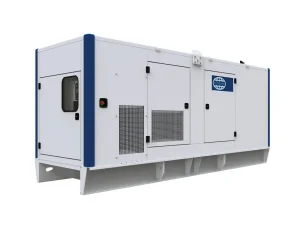
Direct-from-factory prime and standby generation units, featuring acoustic attenuation, rapid ATS integration, and certified high-efficiency alternators.
Unlocking The Economic & Mechanical Advantages of Chinese Genset Manufacturing
When global EPC contractors and procurement managers evaluate "Cheap Generating Set Suppliers & Exporters", the critical distinction lies between cost-cutting compromises and genuine manufacturing cost-efficiency derived from integrated supply ecosystems.
Supply Chain Aggregation
China’s localized heavy industrial clusters aggregate component casting, precision laser metal processing, and alternator winding within tightly contained geographic corridors. This reduces component transit expenses and raw material logistics markup by over 28% compared to Western assembly facilities.
Global Brand Tier Licensing
Strategic Sino-foreign joint ventures and certified authorized OEM channels (such as licensed FG Wilson integration and Weichai powertrain configurations) allow Chinese facilities to pair internationally recognized engine blocks with high-precision Stamford-architecture brushless copper alternators at baseline cost.
Automated Factory QA Protocols
Modern production lines utilize multi-stage resistive load bank testing, acoustic chamber sound decibel verification (achieving 65–75 dBA at 7 meters), and thermal imaging scans across 0%, 25%, 50%, 75%, 100%, and 110% overload conditions prior to crating.
Industry Macro Trends: The Next Generation of Distributed Generation
The internal combustion generation sector is experiencing a paradigm shift driven by digital telemetry, dual-fuel transitions, and extreme environmental durability benchmarks.
IoT Remote Monitoring
Modern digital gensets feature integrated Deep Sea or ComAp micro-controllers with 4G/Cloud SCADA connectivity for real-time oil pressure, cylinder temp, and fuel level telemetry.
Fuel Efficiency Optimization
High-pressure common rail injection (HPCR) and variable turbochargers trim brake-specific fuel consumption (BSFC) down to 195-205 g/kWh, reducing long-term OpEx by thousands annually.
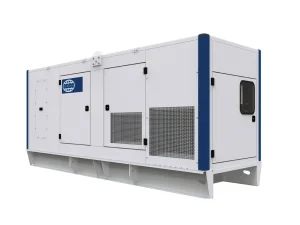
Acoustic & Weather Enclosures
Laser-cut galvannealed steel enclosures with electrostatic outdoor polyester powder coating resist coastal salt spray and desert dust storms up to 50°C ambient temperatures.
Hybrid Grid/Solar Paralleling
Controller firmware supports seamless synchronization with Battery Energy Storage Systems (BESS) and commercial photovoltaic arrays, auto-peaking during intermittent dropouts.
Standard Power Output & System Integration Range
Engineered for baseline stability, high transient reactance, and continuous duty cycles across global commercial and heavy infrastructure applications.
| Class Range | Prime Power (kVA/kWe) | Standby Power (kVA/kWe) | Cooling & Aspiration | Common Industrial Target |
|---|---|---|---|---|
| Small Range Units | 10 - 200 kVA / 8 - 160 kW | 11 - 220 kVA / 8.8 - 176 kW | Water-Cooled / Naturally / Turbocharged | Telecom towers, retail banking, remote clinics, residential |
| Medium Range Units | 225 - 750 kVA / 180 - 600 kW | 250 - 825 kVA / 200 - 660 kW | Air-to-Air Intercooled, Turbocharged | Factories, construction operations, urban utilities, commercial hubs |
| Large Heavy-Duty | 800 - 2250 kVA / 640 - 1800 kW | 900 - 2500 kVA / 720 - 2000 kW | Heavy Industrial Electronic Injection Radiator | Data centers, mining facilities, oil & gas pipeline substations |
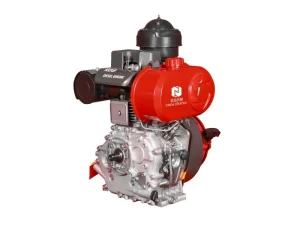
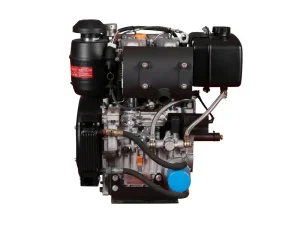
| Specialty / Portable | 5 - 20 kVA (Air-Cooled Single/Twin) | 5.5 - 22 kVA | Forced Direct Air Cooling | Field maintenance, civil works, micro-irrigation pump arrays |
Localized Solutions for Critical Infrastructure
Turnkey deployments configured to withstand harsh operational stresses, from tropical heat index zones to sub-zero high-altitude permafrost fields.
Healthcare & Emergency Power
Tier-4 hospital electrical isolation architectures require instantaneous start-up capabilities within 10 seconds of utility fault. Outfitted with dual ATS transfer panels, hospital-grade silencers (dropping output to <68 dB), and zero-fluctuation voltage regulation (+/- 0.5%).
Transcontinental Pipelines
Validated across high-profile deployments, including the 2,400 km China-Myanmar crude oil line. Generator sets are deployed with redundant paralleling arrays, oversized heavy-duty air filtration, and extended fuel base tanks to supply uninterrupted, unmanned prime energy.
Desert & Sub-Zero Conditions
Equipped with 55°C high-ambient radiators with tropical anti-fungal alternator winding insulation, or alternatively, jacket water block heaters, glow plug pre-heaters, and heavy Arctic synthetic lubricants rated down to -40°C.
Frequently Asked Questions for Global Importers
In-depth technical answers addressing sizing, customs documentation, duty cycle calculations, and operational warranty guarantees.
What is the precise engineering distinction between Prime (PRP) and Standby (ESP) ratings?
How do procurement teams calculate real kW requirements from kVA?
How do Chinese exporters maintain warranty support and Perkins/FG Wilson spare parts availability?
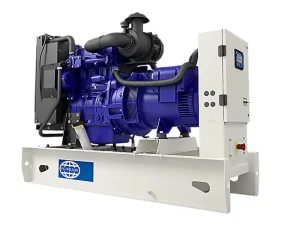
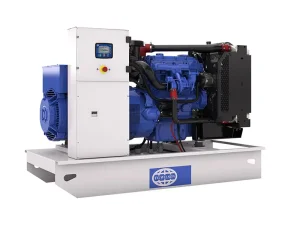
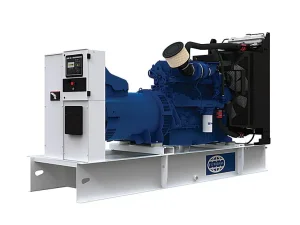
What makes open-frame generating sets preferable to silent canopy models in certain facilities?
What documentation is legally mandated for international marine customs clearance?
Heavy-Duty & Air-Cooled Generating Sets
High-capacity units over 800 kVA along with compact, rugged air-cooled systems engineered for diverse global industrial conditions.
Connect With Direct Engineering Specialists
Ensure precise electrical synchronization and maximum fuel economy for your projects. Our Beijing and factory engineering teams calculate transient thermal ratings, ambient de-rating parameters, and load profiles directly from your site specifications.