Primary Deployments
Featured Small-to-Medium Industrial Power Fleet
Explore precision-engineered diesel generating sets ranging from ultra-compact prime-power nodes to resilient medium-capacity backup units, pre-calibrated for export compliance.
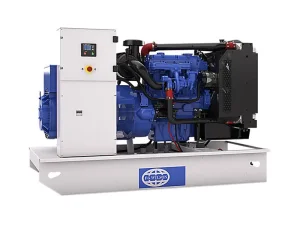
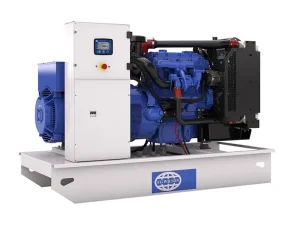
Wilson Open Type Diesel Genset P26-3S (230V/50Hz)
Explore Unit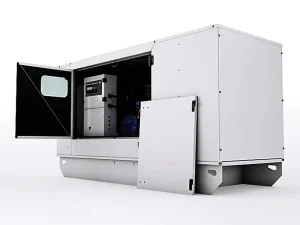
Wilson Open Type Small Diesel Genset P55-6S
Explore Unit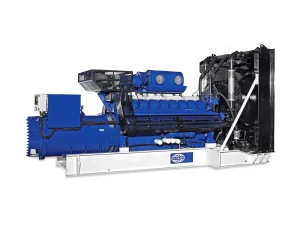
FG Wilson Heavy Industrial Genset P1875-1
Explore Unit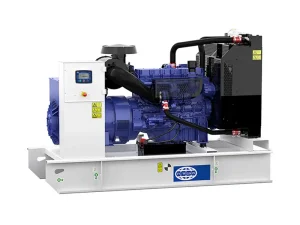
Wilson Open Type Small Diesel Genset P150-5 (400V)
Explore Unit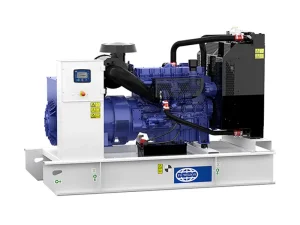
Wilson Advanced Power Generator P165-6 (<220 kVA)
Explore Unit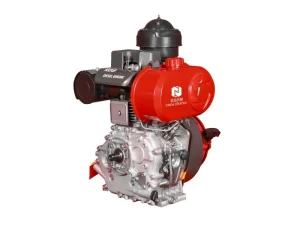
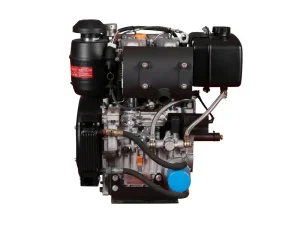
Single-Cylinder Air-Cooled Diesel Generator KD9
Explore Unit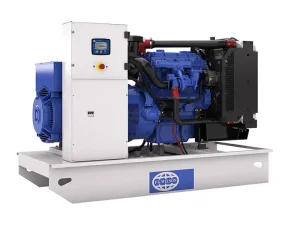
Wilson 90KVA Industrial Power Generator P90-3S
Explore Unit
Global Market Architecture
15 kVA Commercial Status & Price Dynamics
A definitive breakdown of global cost drivers, manufacturing efficiency, and procurement strategy across the international small-range generator market.
$2,800 - $6,500
Global 15 kVA FOB Price Range
6.8% CAGR
Decentralized Power Growth (2024-2032)
12.0 kW
Rated Continuous Output (PF 0.8)
>30,000 hrs
B10 Engine Life Expectancy
Deconstructing the "Cheap" 15 kVA Generator Pricing Spectrum
In B2B industrial procurement, search queries targeting "Cheap Generator 15 Kva Price" must be addressed not through component degradation, but through structural value engineering and supply chain compression. A true commercial 15 kVA (typically delivering 12 kW continuous real power at a standard 0.8 power factor) is the undisputed foundational bridge between single-phase residential emergency power and multi-phase commercial mini-grids.
Pricing across the world stage is heavily bifurcated based on structural powertrain configurations:
- Entry-Tier Air-Cooled High-Speed (3000/3600 RPM) Sets: Priced between $1,800 and $2,700 USD. These configurations utilize direct-injection single- or twin-cylinder engines. While offering the lowest CAPEX, their thermal duty cycle is inherently limited to intermittent emergency standby (maximum 100 to 200 operational hours per annum).
- Industrial-Grade Liquid-Cooled Low-Speed (1500/1800 RPM) Sets: Settling between $3,400 and $5,800 USD (open-frame configuration) and $4,200 to $7,200 USD (weatherproof sound-attenuated canopy). Driven by multi-cylinder Perkins, Weichai, or Kubota platform architecture coupled with brushless synchronous alternators (e.g., Leroy-Somer or Stamford topology), these platforms achieve prime running ratings of unlimited operational hours with 10% overload capacity.
Macro-Economic Drivers Fueling Global 15 kVA Demand
Global demand for 15 kVA generation assets is currently expanding at a validated Compound Annual Growth Rate (CAGR) exceeding 6.5%. This shift is precipitated by severe structural shifts in the global transmission infrastructure:
- Severe Climate Stress on Fragile Grids: Escalating frequencies of meteorological anomalies have destabilized overhead distribution networks across North America, Southeast Asia, and Sub-Saharan Africa. The 15 kVA unit represents the exact mathematical sweet spot required to sustain commercial cold storage, pump stations, municipal medical clinics, and branch banking nodes.
- Decentralization of Edge Computing & 5G Backhaul: Telecommunication towers and peripheral micro data hubs demand continuous autonomic electrical feeds. Operating in conjunction with ATS (Automatic Transfer Switches), a 15 kVA diesel unit provides instantaneous failover capability, shielding sensitive electronics from harmonic distortions via integrated Automatic Voltage Regulators (AVR).
- Rising Grid Parity Discrepancies: In developing manufacturing corridors, unreliable primary utilities impose steep downtime penalties. Facility owners utilize capital-optimized 15 kVA generators as baseload insurance, mitigating production shortfalls during scheduled and unscheduled load-shedding cycles.
Technical Specifications
Engineering Taxonomy: 15 kVA Architectural Matrix
Direct physical, electrical, and thermal parameters across low-speed industrial vs. high-speed economy generator configurations.
| Performance Parameter | Industrial Prime Heavy-Duty (1500 RPM) | Commercial Standby Standard (3000 RPM) | Technological Significance |
|---|---|---|---|
| Prime Power (kVA / kW) | 15.0 kVA / 12.0 kW (Continuous Duty) | 13.5 kVA / 10.8 kW (Intermittent Duty) | ISO 8528-1 baseline definition for load capacity |
| Standby Rating (ESP) | 16.5 kVA / 13.2 kW (Emergency Outage) | 15.0 kVA / 12.0 kW (Peak Non-Overload) | Maximum emergency power delivery capacity |
| Cylinder & Displacement | 3 or 4 Cylinders Inline (1.5L - 2.2L) | Single or Twin V-Cylinder (<1.0L) | Direct correlation to B10 engine longevity and torque |
| Cooling System Topology | Pressurized Water-Glycol Closed Radiator | Forced Direct Air Impeller Cooling | Determines operational stability at >40°C ambient |
| Alternator Excitation | Brushless, SX460 AVR Controlled, Pure Copper | Carbon Brush Slip-Ring, Basic Capacitive | THD (Total Harmonic Distortion) suppressed under 3% |
| Specific Fuel Consumption | ~230 g/kWh (~3.1 L/h @ 75% Load) | ~285 g/kWh (~4.2 L/h @ 75% Load) | Governs operational expense over 5,000 engine hours |
| Mean Time Between Overhauls | 15,000 to 20,000 Hours | 1,500 to 3,000 Hours | Determines true lifetime CAPEX amortization |
Deployment Profiles
Localized Industrial & Regional Use Cases
Engineered to excel in volatile site environments, ensuring uninterrupted uptime across distinct operational contexts.
Sub-Saharan Telecom Nodes
Equipped with oversized 200L-500L sub-base fuel tanks, heavy-duty cyclone air filtration, and IoT-enabled remote telemetry to manage continuous cycling in off-grid cellular base transceiver stations (BTS).
Remote Clinical Cold Chains
Delivers pure sine-wave electrical output (<3% THD) vital for vaccine cooling chillers, surgical lighting, and biometric monitoring equipment, combined with acoustic canopies maintaining ≤65 dB(A) at 7 meters.
Agricultural Irrigation & Hatcheries
Handles inductive motor inrush currents from 7.5 kW submersible pumps and automated ventilation dampers using high-torque mechanical engine governors or optional electronic governing systems.
Next-Gen Paradigms
Technology Roadmap: 2025–2035 Trajectory
Anticipating emission compliance mandates, hybrid microgrid interfaces, and AI-directed predictive asset health monitors.
HVO & Biodiesel Synthesis
Complete powertrain validation for Hydrotreated Vegetable Oil (HVO 100) compliant with EN 15940 standards, reducing net greenhouse gas emissions up to 90% without sacrificing peak kilowatt rating or cold-start reliability.
Hybrid Microgrid Integration
Factory-integrated CANbus communications protocols (SAE J1939) interface dynamically with battery energy storage systems (BESS) and photovoltaic inverters, running the generator solely at peak thermal efficiency.
Edge Predictive Maintenance
Sensors track lubricating oil dielectric breakdown, real-time coolant thermography, and alternator stator vibration signatures to forecast component degradation 200 hours before unscheduled outages occur.
System Integrations
Macro Turnkey Power Infrastructure
Cinda Creation delivers holistic power solutions encompassing switchgear synchronization, emission compliance, and acoustic containment.
Custom ATS & Synchronization
Automated transfer switchgear with motorized 4-pole breakers, programmable mains failure timers, and optional multi-genset load-sharing controllers for n+1 system redundancy.
Severe-Climate Engineering
Equipped with jacket water immersion heaters, heavy-duty fuel water separators, anti-condensation alternator heaters, and desert sand-trap louvers for operation from -30°C to +52°C.
Lifecycle Spares & Overhaul Kits
Pre-packaged routine maintenance consumables (250h, 500h, 1000h filter kits), genuine Perkins injection pumps, and rotating parts dispatched globally within 24-48 business hours.
Expert Sizing & Operations
Technical & Procurement FAQ
Authoritative guidance on generator selection, rating conversions, and lifetime operations.
What parameters differentiate a "cheap" 15 kVA generator from an industrial unit?
Lower initial purchase cost typically points to high-speed (3000 RPM) operation, single-bearing brushed alternators, and lightweight sheet metal enclosures. While adequate for occasional standby power, continuous industrial operations require a low-speed (1500 RPM) liquid-cooled engine, pure copper brushless AVR alternator, and heavy-gauge galvannealed steel enclosures. Over a 5,000-hour operational span, lower fuel consumption and reduced maintenance frequency make the industrial unit significantly more cost-effective.
How do I convert kW to kVA for motor-driven equipment?
The mathematical formula is:
kVA = Real Power (kW) ÷ Power Factor (typically 0.8). A 12 kW real electrical load requires a 15 kVA generating unit. For induction motors, compressors, and pump stations, you must also calculate inrush starting currents, which can reach 300% to 500% of steady-state amps. An appropriately sized AVR with high motor-starting capability is essential to prevent voltage collapse.
What is the functional difference between Prime Power and Standby Power?
Under ISO 8528 standards, Prime Power (PRP) represents the maximum output accessible during a variable load sequence for an unlimited number of annual operating hours, typically with a 10% overload margin for 1 hour in 12. Standby Power (ESP) is the absolute peak output allowable for the duration of a utility outage, with no overload capacity permitted.
Should I select a silent canopy unit or an open-frame unit?
Open-frame generators are suitable for dedicated indoor generator rooms with integrated intake/exhaust louvers, silencer ducting, and acoustic cladding. Silent canopy sets feature integrated weatherproofing, internal residential-grade silencers, and sound-absorbing foam lining, making them suitable for outdoor deployment near residential zones, clinics, and offices.
What site information is required for an accurate export quotation?
Please provide your required operating voltage (e.g., 230V single phase, 400V/415V three phase), frequency (50 Hz or 60 Hz), intended duty cycle (Prime or Standby), site elevation (for air density derating), maximum ambient temperature, preferred enclosure type, fuel autonomy requirements, and whether an Automatic Transfer Switch (ATS) is needed.
Expanded Inventory
Heavy Industrial & Medium Range Energy Inventory
Explore our expanded commercial and industrial generators, air-cooled compact units, and high-output continuous power nodes.
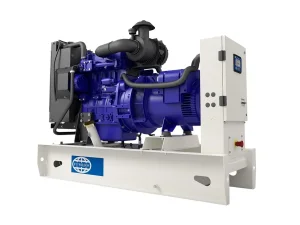
FG Wilson Small Range Genset P7.5-1S (<200kVA)
Explore Unit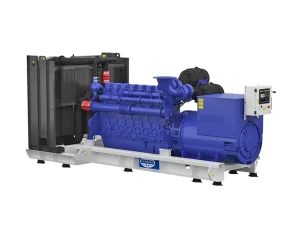
Large Range High-Performance Genset P1100-1
Explore Unit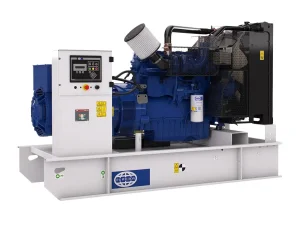
FG Wilson Medium Range High Efficiency Set P375-4
Explore Unit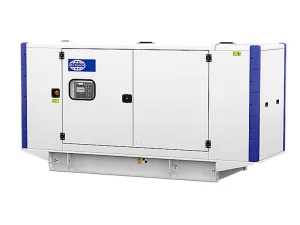
Wilson 50KVA Industrial Power Solution P50-4
Explore Unit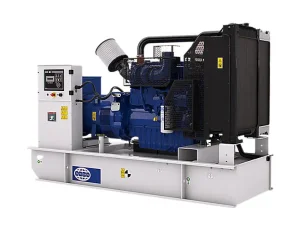
FG Wilson Medium Range Genset P375-5
Explore Unit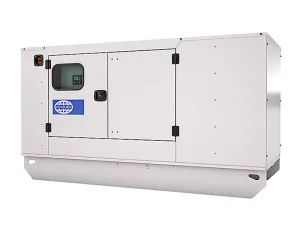
Wilson Open Type Small Diesel Genset P50-5S
Explore Unit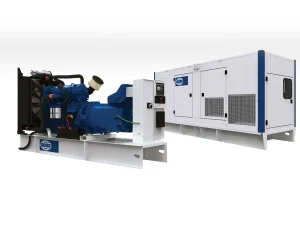
FG Wilson Open Type Medium Diesel Set P501-3
Explore Unit