
Featured Household & Compact Standby Units
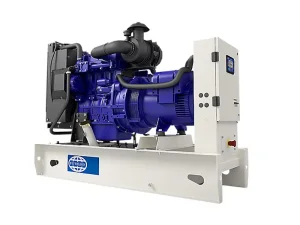
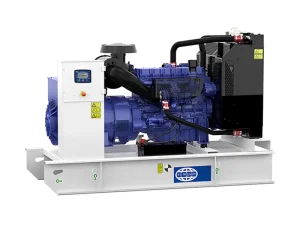
Factory-calibrated small-to-medium standby generator sets engineered by Beijing Xinda Creation Machinery Equipment Co., Ltd. for instant utility-failover and cost-efficient domestic deployment.
Engineering Metrics & Global Supply Capabilities
Delivering measurable reliability and institutional-grade validation across domestic, rural, and light commercial electrical infrastructures since 2019.
Macro Industry Dynamics: The Economics of "Cheap" Household Generation
Why high-durability Perkins-powered generators deliver lowest Total Cost of Ownership (TCO) amidst rising centralized utility vulnerability and severe environmental weather patterns.
The True Definition of "Cheap" in Household Power
Procuring a household generator based purely on rock-bottom upfront acquisition cost consistently results in disastrous long-term expenditures. Low-grade consumer generators suffer from high harmonic distortion (THD > 15%), short mean time between failures (MTBF < 500 hours), and high fuel burn. In contrast, Beijing Xinda Creation's approach optimizes Life Cycle Cost (LCC)—leveraging fuel-efficient Perkins engines, brushless alternators, and low-maintenance architectures to achieve the lowest dollar-per-kilowatt-hour delivered over a 15-year operational lifespan.
Grid Fragility & Residential Microgrid Demands
Centralized utility grids across North America, Europe, Africa, and Southeast Asia face compounding strains: aging distribution transformers, frequency instability caused by non-dispatchable renewable inputs, and localized severe weather events. Modern residential estates are no longer passive consumers; they operate sensitive electronics, server networks, climate control pumps, and EV chargers. A household generator must deliver clean sine waves with THD < 5% and instant transient step-load acceptance within 10 seconds of grid failure.
Commercial-Grade Reliability for Domestic Estates
B2B distributors and residential developers increasingly reject fragile consumer portable gasoline units in favor of industrial small-range diesel generator sets. Featuring robust cast-iron engine blocks, water-cooled radiators, and precision governor controls, our Wilson and Weichai series (from 7.5 kVA to 220 kVA) bridge the gap between residential affordability and industrial endurance, maintaining continuous 24/7 prime performance during extended multi-week utility outages.
Localization Support, Grid Compliance & Assurance Standards
Certified engineering workflows ensuring seamless regional integration, strict acoustic compliance, and verified safety protocols across worldwide electrical topologies.
Electrical Topology & Voltage Customization
Global export mandates granular adaptation to local grid requirements. A standard generator configured for a 400V/230V 50Hz utility grid cannot operate effectively in 480V/240V or 208V/120V 60Hz jurisdictions without specialized winding arrangements.
- Dual-Frequency & Multi-Voltage Configurations: Factory-wound 12-wire reconnectable alternators capable of delivering single-phase 220V/230V/240V or three-phase 380V/400V/415V/480V.
- Automatic Transfer Switch (ATS) Handshake: Pre-wired dry contacts, RS485 Modbus telemetry, and automatic mains failure (AMF) control panels ensuring safe mechanical and electrical interlocking that prevents dangerous back-feeding to utility crews.
- Surge & Fault Protection: Integrated thermal-magnetic circuit breakers, residual current protection (RCD), and electronic overspeed/oil pressure auto-shutdown protections conforming to IEC 60364 electrical installation norms.
Environmental, Acoustic & Municipal Compliance
Domestic installations are tightly constrained by local municipal noise ordinances and emissions zoning. Standard industrial open-skid generators exceed 85 dBA at 7 meters, rendering them illegal for residential suburbs.
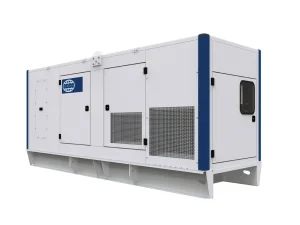
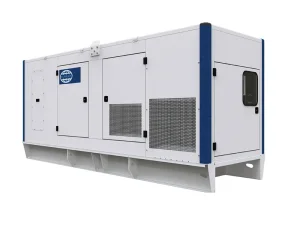
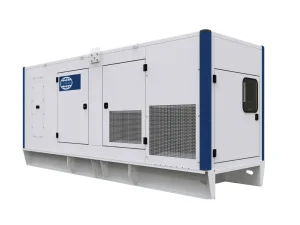
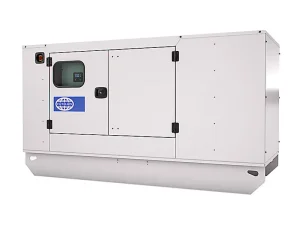
- Silent Acoustic Canopy Engineering: Weatherproof galvanized steel housing lined with high-density flame-retardant sound-absorbing rockwool, reducing operational noise to ≤65–70 dBA at 7 meters.
- ISO Certified Quality Systems: Fully certified under ISO 9001 (Quality Management), ISO 14001 (Environmental Management), and ISO 45001 (Occupational Health & Safety) systems for audited traceable manufacturing.
- Emissions & Bunded Protection: Integrated double-wall fuel tanks preventing environmental soil contamination, paired with multi-stage Perkins direct-injection combustion that cuts particulate matter and visible smoke.
Localized Application Scenarios: Where Engineering Meets Household Reality
Precision application profiling: matching generator mechanical design, cooling capacity, and control intelligence to extreme environmental and operational profiles.
Suburban Villas & Smart Compounds
High-end residential residences equipped with centralized HVAC heat pumps, geothermal circulators, and sensitive home automation systems require clean sine waves. Our silent compact sets (such as P55-4 and P90-6S) provide automatic black-start functionality with digital Deep Sea / FG Wilson controllers, restoring full villa power in under 8 seconds without tripping sensitive circuit breakers or home IT networks.
Off-Grid Homesteads & Agri-Residences
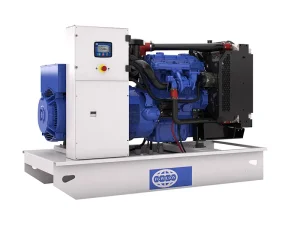
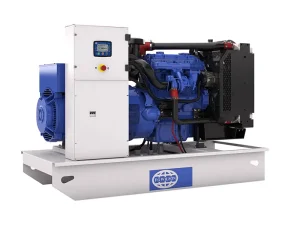
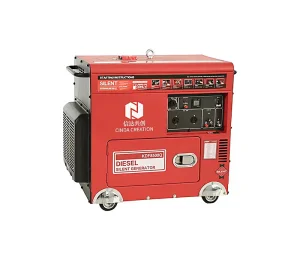
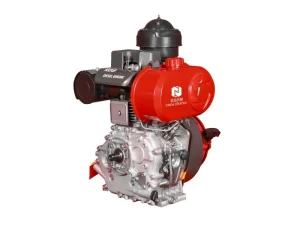
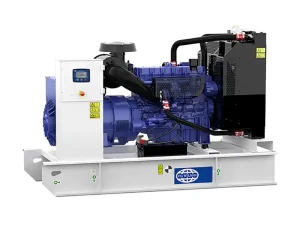
Rural estates and working agricultural homesteads frequently experience prolonged outages or operate entirely off-grid. Here, the generator acts as the prime power backbone, charging hybrid lithium storage banks and powering water borehole submersible pumps, agricultural refrigeration, and workshop welders. Models like the open-frame P16-1 and KD9 air-cooled units provide unmatched mechanical simplicity and easily serviceable Perkins architecture.
Home Healthcare & Life-Critical Systems
For households supporting family members dependent on oxygen concentrators, continuous positive airway pressure (CPAP) devices, dialysis machinery, or temperature-regulated medication refrigerators, grid outages are life-threatening emergencies. Our compact 7.5 kVA and 16 kVA diesel systems guarantee immediate cold-cranking and uninterrupted voltage regulation (±1%), ensuring clean, uncorrupted power for medical electronics.
Technology Roadmap & Engineering Outlook (2025–2030)
Anticipating energy transitions: integrating IoT telematics, low-carbon bio-diesel adaptations, and hybrid inverter coupling into household standby generation.
AI-Driven Telematics & Remote IoT
The next frontier of household generators lies in predictive maintenance and remote cloud monitoring. Future gensets will incorporate LTE/5G and Wi-Fi telematics gateways, delivering real-time telemetry on battery terminal voltage, coolant temperature, fuel levels, and oil viscosity directly to homeowners' smartphones and distributor engineering desks. Machine learning algorithms analyze cranking RPM profiles to forecast starter motor or battery degradation weeks before a failure occurs.
Hybridization & Solar Storage Coupling
Rather than running continuously during extended blackouts, modern household generators are transitioning into synchronized hybrid units. Working alongside domestic rooftop photovoltaic arrays and high-voltage lithium battery storage, the generator automatically starts only when battery state of charge (SoC) falls below 20%, running at peak thermodynamic efficiency (75–85% engine load) to recharge storage banks rapidly before shutting down, reducing fuel consumption by up to 60%.
HVO Renewable Fuels & Low-Emission Combustion
Environmental decarbonization is reshaping diesel fuel chemistries. Our engineering testing confirms complete drop-in compatibility of our Perkins and Weichai household units with Hydrotreated Vegetable Oil (HVO100) and EN 15940 paraffinic diesel. Using HVO slashes lifecycle greenhouse gas emissions by up to 90%, reduces particulate soot output, and eliminates the common fuel-gelling and microbial growth issues associated with conventional long-term stored petroleum diesel.
Procurement & Sizing FAQ: What Professional Buyers Must Know
Authoritative guidance on sizing, installation economics, sound attenuation, and electrical integration directly from our senior technical engineering team.
Diesel generators operate at 1500 or 1800 RPM (water-cooled), whereas portable gasoline units spin at a frantic 3000 or 3600 RPM. This fundamental difference gives diesel engines an operational life expectancy of 15,000 to 25,000 operating hours prior to major overhaul, compared to merely 500 to 1,500 hours for typical gasoline air-cooled sets. Furthermore, diesel is non-volatile, safe for residential storage, does not degrade or gum carburetors during long standby storage, and offers significantly lower specific fuel consumption (g/kWh).
Household loads featuring inductive electric motors—such as central air conditioning compressors, well pumps, and heat pump blowers—draw starting inrush currents (Locked Rotor Amps or LRA) of 300% to 600% of their rated running wattage. When calculating generator capacity, always divide running watts by 0.8 for power factor conversion to kVA, and verify that the alternator's motor starting capacity (measured in kVA at 30% instantaneous voltage dip) exceeds the peak surge requirements of the largest motor starting simultaneously with base lighting loads.
While a standard three-phase generator can supply single-phase power, severe phase imbalance will occur if all single-phase household circuits are placed on a single phase-leg, resulting in alternator overheating and rotor damage. It is critical to balance single-phase residential sub-panels evenly across L1, L2, and L3, or specify a generator configured with a 12-wire reconnectable alternator connected in a "Double Delta" or "Zig-Zag" winding to deliver full rated power exclusively at 230V/240V single-phase without phase balancing issues.
Under standby operating conditions, routine maintenance should be conducted every 250 operating hours or once every 12 months, whichever arrives first. Maintenance involves renewing engine lube oil, oil filters, primary and secondary fuel water separators, air filter cartridges, and conducting electrolyte/conductance testing of the 12V/24V starting battery. Standby units should also be programmed for an automated 10-minute un-loaded or loaded exercise cycle bi-weekly to circulate oil and prevent moisture accumulation in the winding insulation.
Generators experience environmental derating due to reduced air density at higher elevations and reduced thermal dissipation in extreme heat. For non-turbocharged small diesel units, derating averages approximately 3.5% per 300 meters above 1000 meters elevation, and 1% for every 5°C above standard 25°C ambient air temperature. Beijing Xinda Creation assists procurement engineers in configuring heavy-duty 50°C tropical cooling radiators and turbochargers to ensure zero derate even in high-altitude desert climates.
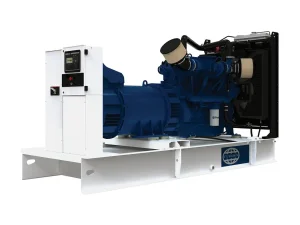
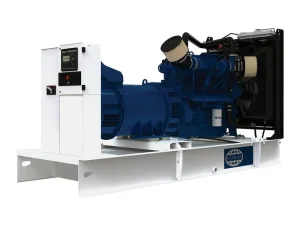
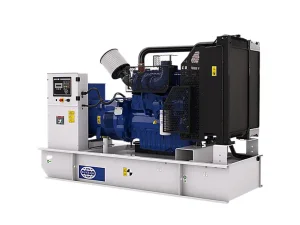
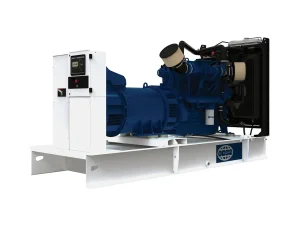
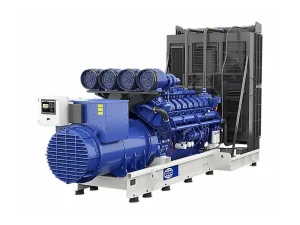
Industrial & High-Capacity Estate Generators
Explore medium-to-large prime power generation sets engineered for comprehensive estate complexes, light factories, and communal microgrids.
Initiate Your Commercial Sizing Protocol
Connect directly with the Beijing engineering office of Beijing Xinda Creation Machinery Equipment Co., Ltd. Provide your site requirements (kW/kVA target, utility voltage, 50Hz/60Hz frequency, ambient climate, ATS needs) for an exact engineering drawing and competitive factory quote.
Verified Export & Engineering Credentials
- Headquarters: Tongzhou District, Beijing, China (Est. 2019)
- International Certifications: ISO 9001 · ISO 14001 · ISO 45001
- Service Commitment: 24-Hour Engineering Response Guarantee
- Spare Parts Pipeline: Authentic Perkins & Weichai Spares
- Worldwide Logistics: Containerized, Breakbulk & Air Expedited