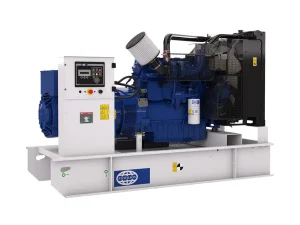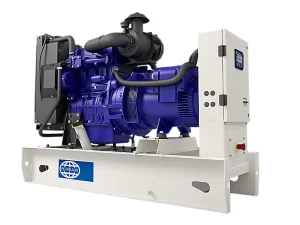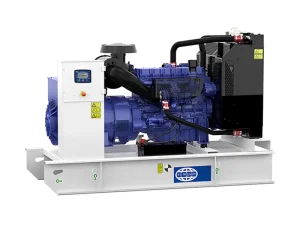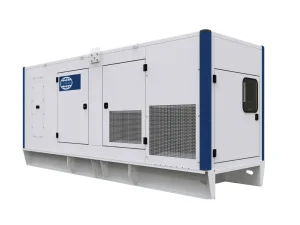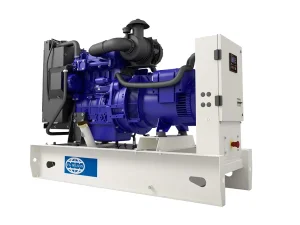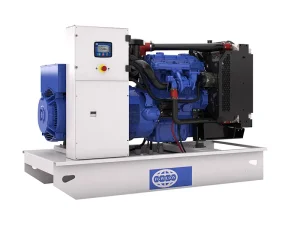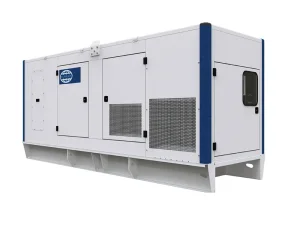
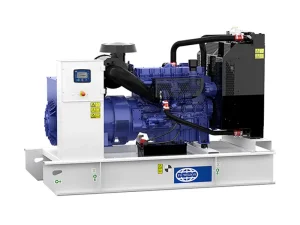
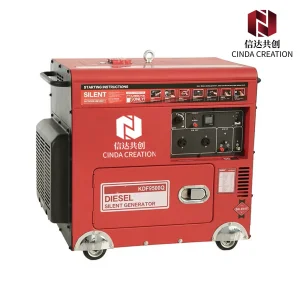
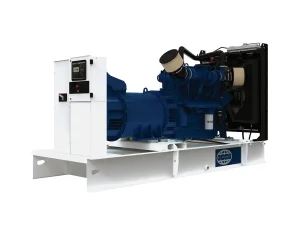
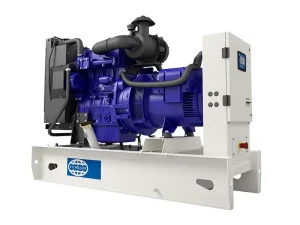
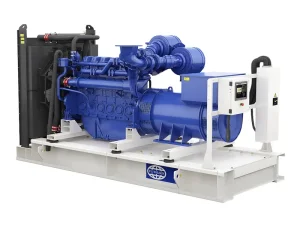
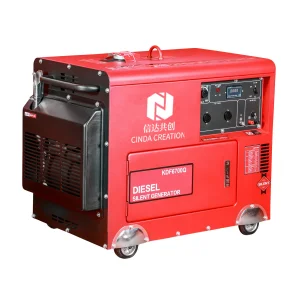
Primary Compact & Medium Range Diesel Gensets
Engineered for vehicular integration, low vibrational signatures, and stable harmonic distortion to safeguard sensitive onboard electronics.
Global B2B Sourcing Demands for Motorhome Generators
Evaluating operational constraints across recreational vehicle manufacturers, emergency response units, overland convoy operators, and specialized mobile clinics.
Procurement Realities: Why Enterprise Fleets Pivot Away From Cheap Gasoline Inverters
In the commercial RV fleet landscape—encompassing mobile command posts, broadcast studios, medical deployment vehicles, and luxury rental motorhomes—the term "cheap motorhome generator" represents an optimization of total lifecycle cost rather than substandard initial equipment. Enterprise procurement officers are acutely aware that sub-tier, portable consumer petrol generators suffer from structural deficiencies when mounted into enclosed vehicular chassis. Issues such as unmanaged thermal saturation, lack of SAE-compliant vibration isolation, vapor locking at elevation, and fuel incompatibility with primary vehicle diesel tanks lead to critical operational failures.
Industrial B2B procurement strategies prioritize heavy-duty, liquid-cooled, and high-efficiency diesel gensets (ranging from 6.6 kVA to 55 kVA and beyond) capable of tapping directly into the vehicle's primary fuel reserve. By eliminating secondary petrol handling, operators achieve significant compliance gains regarding international transport regulations for flammable fuels. Furthermore, diesel-powered units provide prolonged service intervals (often 500+ hours between oil changes versus 50–100 hours for consumer-grade counterparts), heavy winding insulation, and low total harmonic distortion (THD < 3%), which is indispensable for powering complex medical diagnostics, remote servers, and precision telecom uplinks.
Specialized Expedition & Mobile Healthcare
Overland rescue expeditions and rural mobile dental/surgical clinics require uninterrupted power supply. Duty cycles dictate continuous operation under high ambient variations (-25°C to +50°C) with pure sine wave delivery protecting life-support infrastructure.
OEM Motorhome Manufacturing Scale
Commercial RV manufacturers seek standardized sub-assembly footprints. Compact small-range units (<220 kVA configured down to chassis specs) allow drop-in underfloor installation, single-side routine servicing, and streamlined manufacturing line assembly.
Global Rental Fleets & Hospitality
Fleet operators prioritize high uptime, anti-vandalism sound attenuation canopies, simple mechanical Perkins or Weichai powertrains, and worldwide parts availability to mitigate breakdown losses across disparate operational territories.
Macro-Industry Solutions for Vehicular Power Architectures
Resolving the physical and electrical barriers inherent to motorhome, expedition, and mobile utility power engineering.
Acoustic Attenuation & Quiet Operation
Motorhome deployment requires stringent noise control (<58-65 dBA at 7 meters). Specialized acoustic canopies, labyrinthine air intakes, high-density acoustic foam, and critical-grade residential exhaust silencers attenuate both high-frequency combustion noise and low-frequency structural thrum.
Thermal Ducting & Closed Compartments
Installing an internal combustion engine into an enclosed underbody bay presents severe thermal challenges. Solutions incorporate high-static-pressure centrifugal cooling blowers, dedicated heat shields, and engineered hot-air discharge channels preventing internal re-circulation.
Vibration Isolation & Dynamic Damping
Road-going applications transfer structural shock back into the generator while generator pulses reverberate through the living quarters. Dual-stage elastomeric and hydro-mount isolation dampens harmonic resonance, protecting alternator bearings from fatigue failure.
The Next Decade of Mobile Power Generation
Strategic convergence of internal combustion gensets, lithium battery banks (ESS), solar PV arrays, and intelligent digital micro-inverters.
Hybrid Genset-ESS Topology
Modern mobile builds move toward automated hybrid topologies. The generator runs only within its peak brake-specific fuel consumption (BSFC) sweet spot, rapid-charging high-voltage LiFePO4 banks before automatically shutting down to ensure silent campsite resting periods.
Stage V & EPA Tier 4 Final
Emission boundaries are tightening globally. Export pipelines are standardizing on electronically controlled high-pressure common rail (HPCR) injection systems equipped with Diesel Oxidation Catalysts (DOC) and Diesel Particulate Filters (DPF) for zero visible smoke.
CAN-Bus & RV-C Protocol Integration
Proprietary local control panels are being succeeded by open RV-C and NMEA2000 CAN-Bus network interfaces. Centralized vehicular touchscreens and cloud telematics now monitor oil pressure, coolant temperature, fuel rates, and predictive maintenance schedules.
Alternative & Biofuel Adaptability
Future-ready platforms validate unblended Hydrotreated Vegetable Oil (HVO100) and biodiesel blends (B20). This provides export clients with drastic net-carbon reductions without compromising cold-cranking performance or shelf fuel stability.
Compliance Safeguards & Localization Architecture
Ensuring legal deployment across North American, European, Middle Eastern, and Asia-Pacific regulatory jurisdictions.
Certified Factory Quality Audits
Export units manufactured and tested under accredited ISO 9001, ISO 14001, and ISO 45001 management systems. Every genset undergoes full load-bank verification (0%, 25%, 50%, 75%, 100%, and 110% overload) before container stuffing.
Grid Voltage & Frequency Dual-Capability
Chassis destined for global deployment can be factory-wound or converted for 230V/400V 50Hz or 120V/240V/208V 60Hz. Microprocessor-based digital governors maintain frequency fluctuations within Class G2/G3 ISO 8528 compliance standards.
Genuine Perkins & Global Spares Pipeline
Unplanned downtime is catastrophic for commercial operators. Our supply chain guarantees genuine OEM filtration, injection nozzles, electronic control cards, and replacement alternators dispatched worldwide with 24-hour rapid technical dispatch.
Frequently Asked Questions for Engineering Teams
Targeting dimensional constraints, harmonic distortion, duty cycles, and exhaust routing for mobile installations.
Why are small-range diesel generators preferred over cheap portable petrol inverters for RV builders?
While portable petrol inverters offer a lower purchase price, they fail in professional duty cycles. Diesel units tap into the vehicle's primary fuel system, operate safely inside soundproof underbody compartments, offer 10x longer service intervals, and eliminate the hazard of highly flammable gasoline storage.
How does total harmonic distortion (THD) impact modern motorhome electronics?
Modern motorhomes carry air conditioners with variable frequency drives, medical diagnostic machines, induction cooktops, and lithium inverter-chargers. Generators with high THD (>5%) cause inductive motor overheating and inverter tripping. Our units provide pure sine wave generation with THD <3%.
What installation considerations prevent engine overheating in closed RV compartments?
Proper airflow engineering requires separated cold air intake and hot air exhaust plenums. Discharge air must never recirculate into the intake louvers. We supply custom duct flanges, auxiliary centrifugal fans, and heat-reflective acoustic baffling to maintain operating temperatures below derating thresholds.
What is the practical difference between Prime Power and Standby Power in vehicular applications?
Standby rating applies strictly to emergency outage supply with variable loads for limited annual hours. Prime rating is designed for unlimited running hours as the primary electrical source, typical for boondocking, mobile clinics, or expedition trucks without shore power access.
Can these diesel generators integrate with Automatic Transfer Switches (ATS) and hybrid inverters?
Yes. Equipped with digital controllers such as Deep Sea or ComAp, our generators provide dry-contact 2-wire auto-start signals compatible with Victron, Schneider, and SMA inverter-chargers, initiating automatic startup upon low battery bank voltage thresholds.
What warranty and lifecycle guarantees are supplied with export orders?
Every generator is covered by a 12-month standard warranty effective from the verified commissioning date. We maintain comprehensive spare parts depots, providing Perkins and Weichai filters, gaskets, and electronic controllers dispatched within 24 hours.
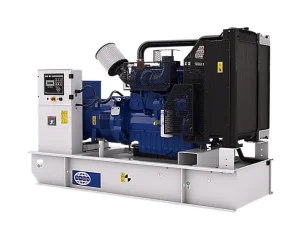
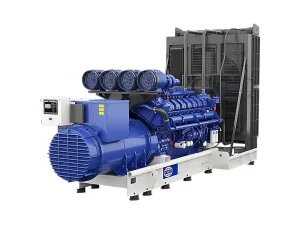
Extended Fleet, Industrial & Support Generators
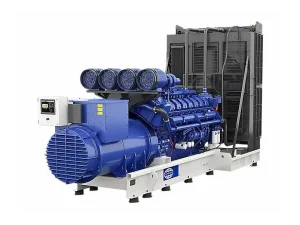
High-output diesel power generation systems for commercial chassis, mobile support commands, and mission-critical backup power.