
Featured Natural Gas & High-Efficiency Generator Models
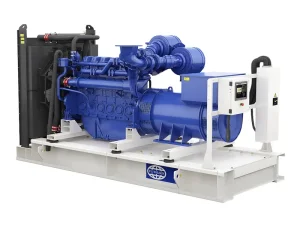
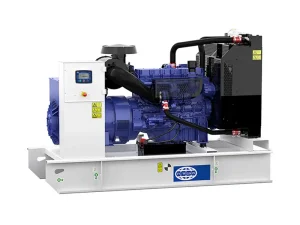
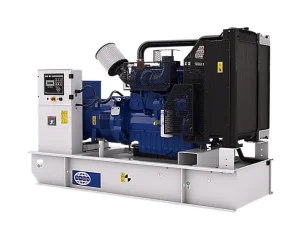
Directly factory-configured, tested against load step thresholds, and precision engineered for prime continuous utility or critical mission standby duty.
Sourcing Cheap Natural Gas Electric Generators: The China Supply Chain Edge
Achieving budget efficiency without sacrificing thermal resilience, ignition timing precision, or grid-code compliance. Explore how modern Chinese manufacturing clusters redefine the economics of distributed natural gas generation.
Vertical Component Integration
By leveraging dense cluster manufacturing in Beijing, Shandong, and Jiangsu, our equipment integrates top-tier cylinder blocks, Lean-Burn air-fuel ratio controllers, and digital governors at direct OEM pricing. This eliminates multi-tier trading markups while preserving engine longevity.
Severe Environment Engineering
Drawing from proven field installations like the 2,400-km China–Myanmar crude oil pipeline (deploying 17 gas units alongside 5 diesel units), our gas generators incorporate anti-sulfur fuel trains, pre-combustion chamber spark systems, and dual-stage air filtration that withstands dust, moisture, and variable gas calorific value.
Direct-to-Developer Logistics
Eliminate project delays with dedicated ocean freight containerization, pre-wired ATS switchgear cabinets, and synchronized paralleling panels (Woodward, Deep Sea, or ComAp). Every unit ships with factory FAT (Factory Acceptance Test) certificates, wiring schematics, and complete Perkins or Weichai mechanical parts lists.
Navigating Localization, Grid Codes, and Safety Verification
International EPC contractors require absolute technical alignment with regional emission mandates and electrical distribution guidelines. Here is how our technical team structures your supply assurance.
Emissions & Exhaust Compliance
Equipped with optional closed-loop lambda control and Selective Catalytic Reduction (SCR) catalysts to meet EU Stage V, US EPA Tier 4 equivalent standards, and strict local municipal NOx < 250 mg/Nm³ limits for urban baseload installations.
Gas Train Safety Norms
Double block-and-bleed gas valve trains conform to EN 676 and NFPA 37 codes. Integrated flame arrestors, high/low pressure switches, and combustible gas leak detectors prevent blowouts and auto-trip fuel supply within milliseconds under line anomaly.
Grid Synchronization & Power Quality
AVR (Automatic Voltage Regulator) systems maintain steady-state voltage variance under ±0.5%. Low harmonic distortion windings (THD < 3%) protect sensitive data center equipment, SCADA installations, and commercial HVAC drives from line feedback.
| Evaluation Parameter | Natural Gas Genset Platform | Standard Diesel Baseline | Operational Gain / Advantage |
|---|---|---|---|
| Levelized Fuel Cost (LCOE) | $0.07 – $0.12 / kWh (Pipeline Dependent) | $0.24 – $0.38 / kWh (Delivered Fuel) | Up to 60% operational OPEX savings |
| NOx / Carbon Footprint | < 250 mg/Nm³; Zero Particulate Matter | High PM, Soot, and HC without expensive DPF | Direct compliance with urban clean air acts |
| Cold / Hot Ambient Derating | Stable operation from -40°C to +52°C with pre-heaters | Cold gelation risk; derates above 40°C | 20+ years documented Arctic and tropical duty |
| Maintenance Cycle Overhaul | 35,000 – 48,000 operating hours | 20,000 – 25,000 operating hours | Extended runtime without engine teardown |
Emerging Paradigms in Gas Generation & Hybrid Microgrids
Distributed energy resources are evolving from pure emergency standbys into intelligent, revenue-generating microgrid assets.
Combined Heat & Power (CHP)
By routing jacket water and high-enthalpy exhaust through heat exchangers, overall energy efficiency increases from 40% up to 88%, supplying free steam or heating for hospitals and food factories.
Hydrogen-Gas Fuel Blending
Next-generation engines support up to 20% Hydrogen (H2) blending without head modification, lowering lifetime carbon intensity as regional grids transition toward net-zero hydrogen distribution.
AI Predictive Health SCADA
Real-time edge IoT monitors knock sensors, individual cylinder exhaust temps, spark plug impedance, and crankcase blowby pressure, alerting operators before unplanned mechanical stalls occur.
Renewable Black-Start Bridge
Acting as rapid-dispatch dispatchable inertia for solar photovoltaic and wind parks, natural gas engines balance sudden generation drops within seconds without storage battery degradation.
Frequently Asked Questions for Natural Gas Genset Procurement
Get immediate clarity on gas pipeline pressures, derate calculations, dual-fuel capability, and overseas warranty validation.
What gas pressure and methane number are required at the generator inlet train?
Can a cheap natural gas electric generator provide 100% block loading like a diesel genset?
How does elevation and extreme ambient temperature impact output power?
What spare parts and routine maintenance schedules should facility managers prepare for?
How does Cinda Creation support overseas commissioning and warranty claims?
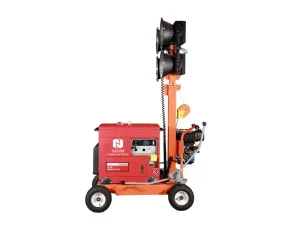
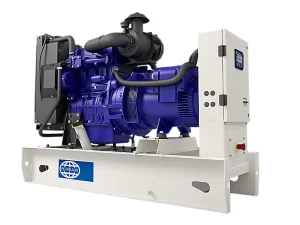
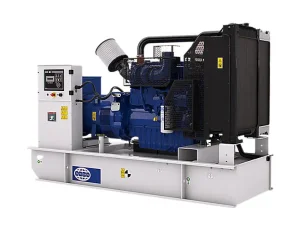
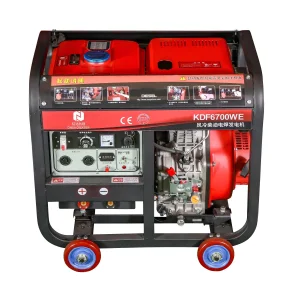
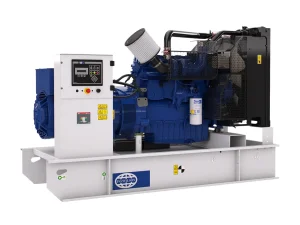
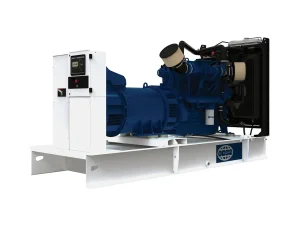
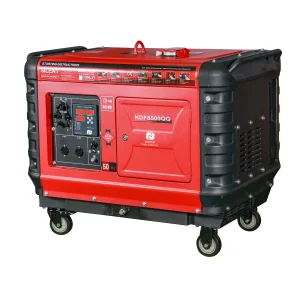
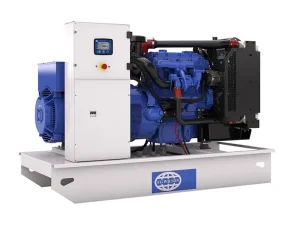
Standardized Silent, Welding & Medium Range Power Generation
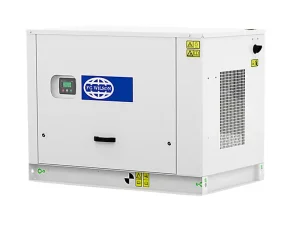
Engineered for low noise acoustic attenuation, single-side maintenance accessibility, and harsh field dependability.
Rigorous 5-Stage Factory Acceptance Protocol Before Dispatch
Every natural gas and diesel generator leaving Beijing Xinda Creation undergoes stringent automated verification certified under ISO 9001, ISO 14001, and ISO 45001 management systems.
01. Stepped Load Bank Testing
Units are placed on inductive-resistive test benches running 0%, 25%, 50%, 75%, 100%, and 110% overload conditions. Frequency transient recovery is logged to ensure full compliance with ISO 8528-G2 and G3 stability classes.
02. Gas Train Helium Leak Check
Prior to hot-fire testing, the fuel manifold, solenoid safety valves, and air-fuel zero regulators undergo helium leak testing under 1.5x nominal pipeline pressure to prevent methane micro-escapes in enclosed plant rooms.
03. Acoustic Attenuation Audit
Silent and ultra-silent generator housings undergo multi-point decibel logging at 1 meter and 7 meters. Weatherproof canopies utilize flame-retardant sound-absorbing rock wool engineered to maintain < 75 dBA @ 7m.