
High-Efficiency Portable & Standby Gensets Ready for Immediate Export
Explore field-tested silent, variable frequency, and skid-mounted industrial generators manufactured and configured to international frequency and emissions standards.
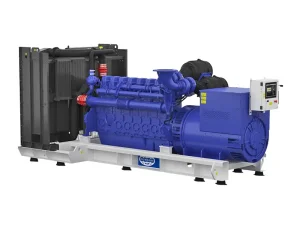
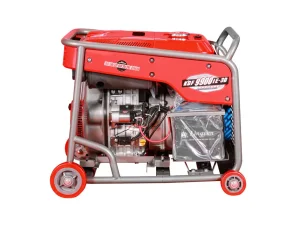
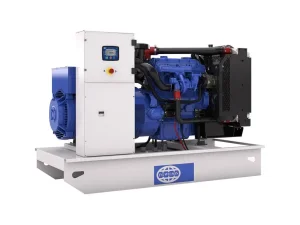
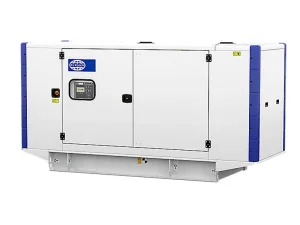
Decoding Portable Generator Pricing: Beyond the Initial Invoice Price
A rigorous examination of CapEx versus OpEx, lifecycle total cost of ownership (TCO), alternator metallurgy, and manufacturing thermodynamics.
In global industrial procurement, searching for a cheap portable generator price supplier is frequently misunderstood as a quest for the lowest immediate transaction value. However, experienced electrical procurement directors and mechanical contractors understand that true procurement efficiency is governed by the lifecycle Total Cost of Ownership (TCO). A genset purchased at a 15% discount that consumes 8% more fuel per kilowatt-hour (kWh), experiences recurrent excitation breakdown, or encounters premature alternator insulation decay rapidly transforms into an operational liability. As an established Beijing-based supplier and exporter of FG Wilson, Weichai, and customized diesel power packages, Beijing Xinda Creation Machinery Equipment Co., Ltd. (Cinda Creation) delivers genuine engineering value by aligning capital expenditure with thermodynamic efficiency and zero-downtime reliability.
Direct Capital Expenditure (CapEx)
Initial machine acquisition cost is heavily influenced by engine block metallurgy, alternator stator purity (100% electrolytic copper vs copper-clad aluminum), canopy sound-attenuation materials, and controller complexity (Deep Sea, ComAp, or FG Wilson PowerWizard).
Thermal & Fuel Efficiency (OpEx)
Over a standard 10,000-hour operational cycle, fuel accounts for 70% to 85% of total expenditure. Modern high-pressure common rail (HPCR) systems and variable frequency inverter regulation dramatically lower specific fuel consumption down to 195–210 g/kWh.
Maintenance, MTBF & Spares
Mean Time Between Failures (MTBF) determines scheduled maintenance overhead. Availability of genuine Perkins generator parts, standard lube filter geometries, and accessible single-side service layouts drastically compress field maintenance technician hours.
| Evaluation Parameter | Generic Low-Cost Portable Gensets | Cinda Creation Industrial-Grade Units | Procurement Impact Vector |
|---|---|---|---|
| Alternator Winding Material | Recycled Copper or Copper-Clad Aluminum (CCA) | 100% Class H Electrolytic Oxygen-Free Copper | Mitigates harmonic distortion, reduces heat rise by 25°C |
| Frequency Stability (THD) | Total Harmonic Distortion > 8% to 12% | Total Harmonic Distortion < 3% to 5% (Clean Sine) | Protects sensitive electronic controllers, servers, and medical sensors |
| Acoustic Canopy Build | Single-layer recycled foam, thin sheet metal (<1.2mm) | High-density acoustic rockwool, powder-coated steel (2.0mm) | Suppresses noise below 68 dB(A) at 7m, resists corrosive weather |
| Derating Threshold | Rapid derating above 30°C ambient or 800m altitude | Full prime output up to 40°C/50°C and 1,000m altitude | Prevents voltage collapse during peak industrial operations |
| Factory Load-Bank Testing | Spot checking (5-minute flash test) | 100% 4-stage load testing (25%, 50%, 75%, 110% overload) | Guarantees step-load transient response within ISO 8528 standards |
China's Manufacturing Engine: Why Direct Factory Sourcing Wins
Analyzing the concentrated industrial clusters, component scale, and vertical integration that make Chinese power generation equipment globally competitive.
The global dominance of Chinese power equipment manufacturing is not rooted simply in labor economics; it is the structural consequence of comprehensive upstream and downstream industrial clustering. Within a 150-kilometer radius across key manufacturing zones in northern and eastern China, our production and supply channels tap into world-class foundry operations, precision fuel injection machining, specialized stamping facilities for acoustic enclosures, and advanced alternator winding robotics. This tight geographic integration eliminates weeks of transatlantic lead time for raw sub-assemblies and strips away redundant intermediary markups.
Integrated Foundry & Engine Ecosystems
Strategic alignment with top-tier engine manufacturers like Weichai and Perkins license facilities provides direct access to high-rigidity cylinder blocks, balanced forged crankshafts, and advanced turbocharger units with immediate component traceability.
Tier-1 Component Modularization
By leveraging standardized industrial frames, high-precision laser-cut fuel tanks, and automated electrostatic powder coating lines, Chinese assembly operations achieve exceptional structural repeatability, corrosion resistance, and structural longevity.
Rigorous Factory Load Verification
Before any container departs for international transshipment from Tianjin, Qingdao, or Shanghai ports, every genset undergoes multi-stage resistive load bank testing to certify oil pressure stability, coolant flow rates, and voltage recovery times.
At Cinda Creation (Beijing Xinda Creation Machinery Equipment Co., Ltd.), founded in 2019 in Tongzhou District, Beijing, our engineering export desk bridges international technical standards with direct domestic factory lines. Whether configuring a small 7.5 kVA variable frequency unit or synchronizing a containerized 1,375 kVA FG Wilson installation, our technical team verifies that every dimension, exhaust pipe flange, ATS signal terminal, and phase sequence corresponds strictly to site drawings before dispatch.
Global Procurement Protocols: Grid Synchronization & Standards
Ensuring frictionless international project execution through verified ISO management systems, CE machinery compliance, and regional grid adaptability.
Procuring power generation machinery across international borders introduces severe operational risks if electrical and environmental compliance mandates are overlooked. An overseas contractor cannot afford port customs rejection, site commissioning delays, or regional grid operator penalties caused by mismatched electrical frequencies or non-certified safety controllers. Cinda Creation maintains comprehensive certifications across quality management, environmental responsibility, and occupational health protocols.
ISO 9001, 14001 & 45001 Accreditations
Audited operational procedures govern every procurement stage. From tracking the heat-treatment certifications of critical hardware to managing testing exhaust emissions, Cinda Creation's accredited systems ensure rigorous manufacturing consistency.
Dual Frequency & Universal Voltage
Global markets diverge between 50 Hz (1500 rpm) for Europe, Asia, and Africa (400V/230V) and 60 Hz (1800 rpm) for the Americas and specific industrial belts (480V/277V or 208V/120V). Our gensets offer re-connectable 12-lead alternators for rapid field adaptation.
ATS & Telemetry Compatibility
Modern commercial infrastructure requires instantaneous load transfer during main grid failure. Integrated Automatic Transfer Switch (ATS) interfaces, dry contact relays, and RS485/Modbus communication modules provide smooth integration into Building Management Systems (BMS).
Verified Metrics: Cinda Creation Track Record
Demonstrated engineering commitments backed by auditable operational benchmarks.
Core Enterprise Tenets
Emerging Trends: Variable Frequency, Inverter Diesels & Microgrids
How digital electronic control units (ECU), hybrid battery-diesel configurations, and acoustic attenuation are redefining portable generation.
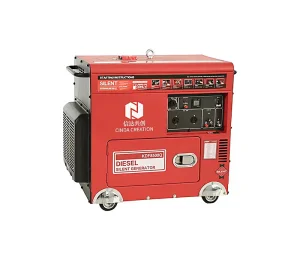
The global portable generator landscape is undergoing an unprecedented technological shift driven by emissions stringency, acoustic restrictions in dense urban centers, and the exponential rise of non-linear computing loads. Conventional mechanical governor systems that react sluggishly to sudden load steps are increasingly being superseded by Variable Frequency Inverter Diesel Generators (such as our KDF9900 series). In these advanced machines, the engine's mechanical RPM is decoupled from the electrical AC output frequency. An integrated digital inverter synthesizes an immaculate, low-THD pure sine wave directly, allowing the diesel engine to throttle down dynamically during partial load conditions.
Inverter Pure Sine Wave Synthesis
Decoupling engine speed from output frequency allows significant fuel savings during idle or low-draw intervals. Clean harmonic profiles ensure zero risk of microchip burnout in mission-critical telecommunications and IT gear.
Hybrid Battery-Diesel Integration
Modern microgrid architectures blend portable diesel gensets with lithium-ion BESS (Battery Energy Storage Systems). The genset operates strictly in its optimal fuel efficiency band (70%–85% load), charging batteries while delivering prime power.
Advanced Acoustic Aerodynamics
Urban municipal codes demand noise thresholds below 70 dB(A). Modern acoustic canopies utilize engineered sound baffles, dual-chamber industrial silencers, and aerodynamic radiator air-discharge ducts to suppress low-frequency combustion rumble.
Engineered for Real-World Scenarios: From Arctic Cold to Desert Heat
Real-world operational deployments proving Cinda Creation's power generation systems across high-stress environments.
Extreme Arctic Conditions
FG Wilson diesel generator sets supplied through our channels have operated in sub-zero Arctic environments for more than 20 years. Equipped with jacket water pre-heaters, heavy-duty glow plugs, and synthetic low-temperature lubricants, these units guarantee rapid starting within 10 seconds under -30°C conditions.
Dedicated High-Ambient Desert Housings
Standard canopies suffer severe thermal derating above 40°C. Our specialized desert configurations incorporate oversized tropical radiators, sand-trap louvered air intakes, and heavy-duty centrifugal fuel-water separators to prevent engine overheat and injector abrasion in arid Middle Eastern and North African zones.
Healthcare & Emergency Field Clinics
In rural clinics and temporary disaster-relief mobile hospitals, uninterrupted power sustains life-support ventilation, vaccine cold chains, and surgical illumination. Silent canopy gensets ensure medical operations continue seamlessly without acoustic disturbance to patients.
Long-Distance Energy Pipelines
Along the 2,400-kilometer China–Myanmar crude oil and gas pipeline, Cinda Creation provided essential technical coordination for 17 natural gas units and 5 diesel generators, delivering continuous, fail-safe prime power to remote valve chambers and pumping stations.
Technical Insights & Overseas Engineering Deliveries
Documented project deployments detailing real site constraints, installation strategies, and lifecycle reliability.
Ethiopian International Airport Terminal Project
During the construction of the new international airport terminal in Ethiopia, grid unreliability posed severe scheduling threats to high-capacity concrete pours, tower crane operations, and runway lighting installations. Cinda Creation supplied heavy-duty, high-kVA silent diesel generator sets configured with electronic governors and high-capacity dual-stage filtration systems. The equipment delivered seamless round-the-clock power, preserving the contractor's tight project schedule.
FG Wilson P250-5: Prime Urban Backup
The FG Wilson P250-5 is rated for 230 kVA (184 kW) prime and 250 kVA (200 kW) standby at 50 Hz. Implemented across sensitive commercial towers and municipal water distribution hubs, its low-noise acoustic canopy keeps external sound well within urban residential compliance zones while delivering instantaneous step-load pickup during sudden grid outages.
Single-Side Access Architecture: Wilson P150-5
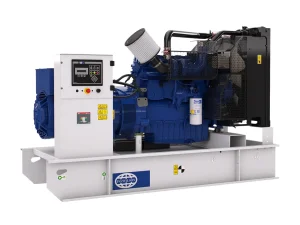
In space-constrained urban plant rooms and basement utility vaults, routine maintenance space is severely restricted. FG Wilson's single-side service layout consolidates oil dipsticks, lube filters, fuel filters, and air cleaner assemblies onto one side of the block. This deliberate engineering approach slashes technician maintenance hours and eliminates costly service clearances.
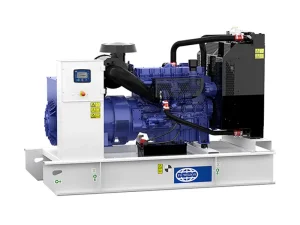
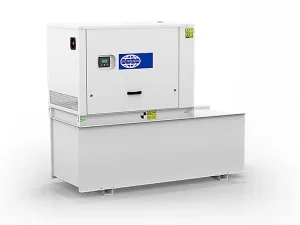
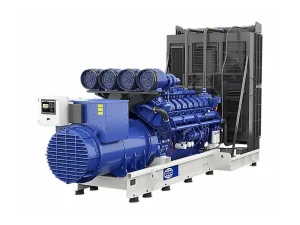
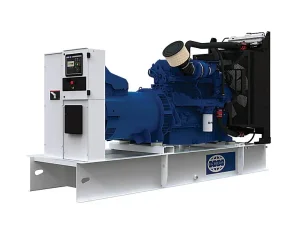
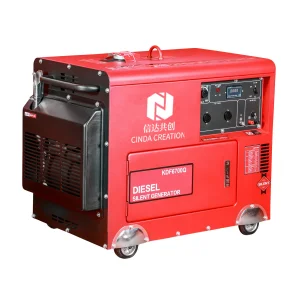
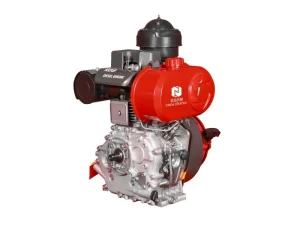
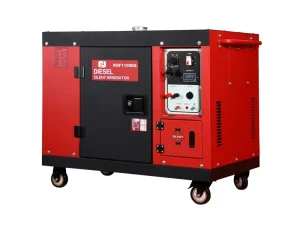
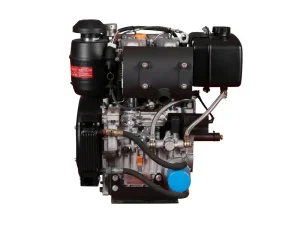
Complete Heavy-Duty, Open-Frame & Air-Cooled Export Range
From single-cylinder compact workhorses to 2,500 kVA containerized power stations, explore our full manufacturing portfolio.
Frequently Asked Questions by Global Engineering Procurement Teams
Direct answers addressing technical parameters, duty ratings, altitude derating, and international warranty execution.
What is the fundamental engineering difference between Prime and Standby ratings?
A Standby rating applies strictly to emergency situations for the duration of a utility outage, with variable loads averaging no more than 70% of standby capacity over 24 hours, and no overload capability permitted. A Prime power rating applies to continuous operation for unlimited annual running hours in prime power applications, with a 10% overload permitted for 1 hour in every 12 hours of operation (in accordance with ISO 8528-1). For example, the FG Wilson P250-5 is rated 230 kVA (184 kW) prime and 250 kVA (200 kW) standby at 50 Hz. Sizing must be anchored strictly on the prime rating if the genset serves as your primary power source.
How do electrical engineers accurately convert kW to kVA when calculating diesel generator loads?
The conversion is determined by the electrical power factor (PF), which is conventionally rated at 0.8 (lagging) for standard three-phase industrial alternating current systems: kVA = kW ÷ 0.8. For example, if a facility requires 184 kW of real electrical power, 184 ÷ 0.8 = 230 kVA. Crucially, engineering calculations must account for electric motor inrush currents (Locked Rotor kVA) which can surge to 600% of full-load amperage during direct-on-line (DOL) motor starting, alongside non-linear harmonic loads requiring deliberate generator oversizing.
Silent canopy diesel generator vs. open frame generator: which should be specified?
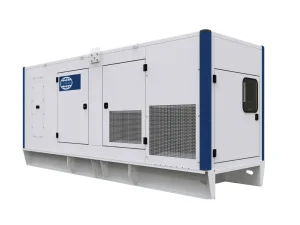
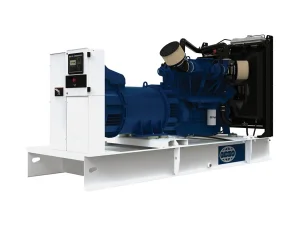
Silent diesel generators feature heavy-gauge, sound-attenuated, weatherproof canopies with integrated lifting eyes and base fuel tanks. They are purpose-built for outdoor installations, hospitals, urban construction sites, commercial hotels, and events where noise limits below 68–72 dB(A) at 7 meters and environmental protection are mandatory. Open-frame generators are engineered exclusively for indoor plant rooms or acoustic enclosures with pre-existing mechanical louvers, acoustic baffles, and dedicated overhead exhaust ductwork, offering lower initial capital cost and direct 360-degree maintenance accessibility.
What warranty structure and after-sales support does Cinda Creation provide globally?
Every generator set exported by Cinda Creation is covered by a standard 12-month warranty counted from the initial on-site commissioning date or 1,000 running hours (whichever comes first). Our engineering support desk maintains a strict 24-hour response window for diagnostic troubleshooting, electrical schematics, and controller firmware support. In addition, our Beijing parts hub maintains rapid-dispatch stock of authentic Perkins generator parts, electronic fuel lift pumps, AVR regulators, and service filter packages for urgent international courier shipping.
What exact engineering data must a buyer supply for an accurate quote and configuration?
To avoid undersizing and derating failures, submit: (1) Connected load schedule broken down by inductive motors vs resistive lighting/heating, (2) Nominal voltage and system frequency (e.g., 400V/230V 50Hz or 480V/277V 60Hz), (3) Duty cycle (Standby, Prime, or Continuous), (4) Site altitude above sea level and ambient temperature range (for air density derating calculations), (5) Enclosure preference (Open skid, Weatherproof acoustic canopy, or Containerized), (6) Fuel autonomy requirements (standard 8-hour base tank or extended external fuel feed), and (7) ATS / BMS telemetry protocol requirements.
How do altitude and ambient temperature affect generator output power?
Internal combustion diesel engines rely on ambient oxygen mass for combustion. As altitude rises above 1,000 meters (approx. 3,280 ft), atmospheric density drops, necessitating an output derating of roughly 3.5% per 300 meters of additional elevation. Similarly, ambient temperatures exceeding 40°C decrease charge-air cooling efficiency, requiring a typical derate of 1% to 2% per 5°C elevation above baseline. Cinda Creation's engineering team calculates these derating curves prior to quoting to guarantee full target output on site.
Connect with Cinda Creation's Power Engineering Desk
Consult with our technical engineers for detailed load calculations, direct wholesale quotes, technical submittals, and factory inspection arrangements.
Beijing Xinda Creation Machinery Equipment Co., Ltd.
Room 2421, 24th Floor, Building 5, Yard 2, Jiangmidian Street, Tongzhou District, Beijing, China
Direct line to export engineering
Instant technical documentation & video calls
Formal RFQ submittals & specification sheets