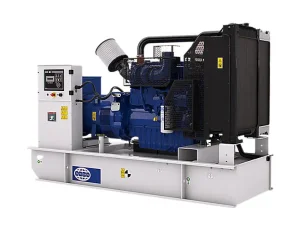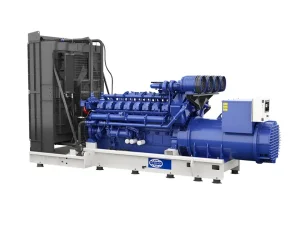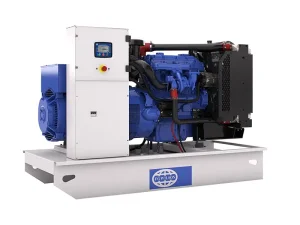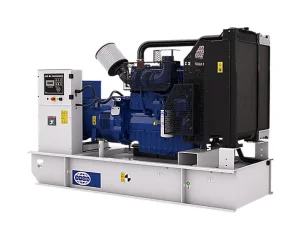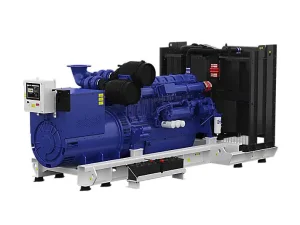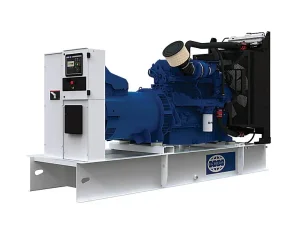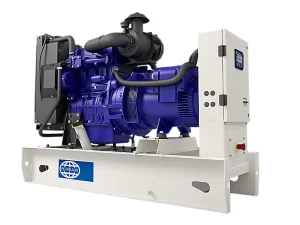
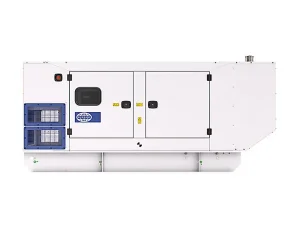
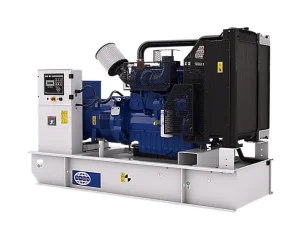
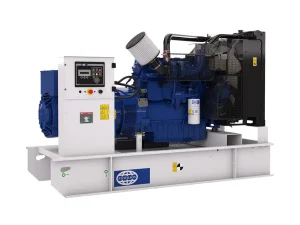
China FG Wilson Generator Set Medium Range 225 – 938 kVA P300-4 Suppliers, Exporters
Request Sourcing Price
Factory-direct procurement pricing for heavy-duty commercial standby and prime silent generators.
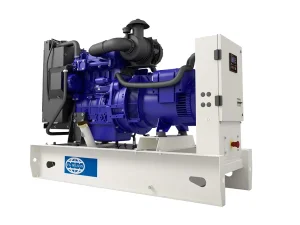
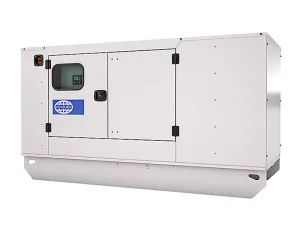
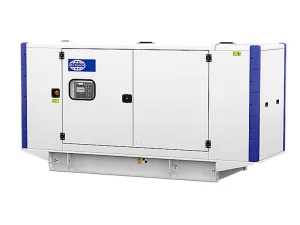
A comprehensive review of international procurement benchmarks, acoustic deration parameters, and cost-benefit trade-offs for B2B engineering decision-makers.
The total pricing baseline of an industrial silent generator is intrinsically tied to cold-rolled galvanized steel sheet volume, sound-insulating polyurethane foam densities (35-50 kg/m³), internal resonance baffling, and high-efficiency silencer fabrications. Supply chain integration directly offsets export tariffs, giving cross-border enterprises access to resilient standby power at highly competitive initial capital expenditure (CapEx).
Exporting silent power systems requires strict conformity across localized emission directives and acoustic zoning. Equipment engineered for European and North American projects must achieve CE noise limits under Directive 2000/14/EC and meet stringent Stage V/Tier 4F combustion thresholds. In contrast, emerging logistics hubs in Southeast Asia, Africa, and South America focus intensely on prime fuel economy, dust-proofing, and high-ambient heat dispersion up to 50°C.
A "cheap" acquisition cost must be balanced against maintenance intervals and parasitic cooling losses. Premium acoustic canopies are configured with advanced aerodynamic flow paths to minimize backpressure deration, ensuring the core engine (Perkins, FG Wilson, or Weichai) runs at optimal thermodynamic efficiency, reducing long-term fuel expenditure and preserving alternator stator integrity over a 15,000-hour operational lifespan.
How engineering advances in sound attenuation allow heavy-duty diesel gensets to achieve low decibel footprints while maintaining steady core cooling capacity.
| Acoustic Element | Technical Design Standard | Noise Attenuation Vector | Thermal & Operating Impact |
|---|---|---|---|
| Canopy Shell | 2.0mm - 2.5mm Galvanized Steel Plate | Low-frequency structural barrier (<250 Hz) | Weather-resistant powder coating prevents rust up to C4 maritime spec |
| Absorptive Lining | Flame-retardant rockwool / acoustic PU foam | Mid-to-high frequency airborne dissipation | Thermal insulation preserves cold-start priming performance |
| Silencer System | Dual-chamber industrial/residential exhaust silencer | 25 dBA to 35 dBA pressure-drop attenuation | Calibrated backpressure minimizes engine thermal deration |
| Vibration Isolation | High-deflection elastomeric anti-vibration mounts | Structural transmission dampening to skid base | Prevents foundation resonant degradation & shear fatigue |
Deploying high-performance silent generating sets across critical public infrastructure, harsh desert terrain, and high-density urban environments.
Hospitals, clinical laboratories, and modular triage outposts require sub-68 dBA acoustic footprints to preserve patient recovery environments while maintaining instantaneous (<10s) automatic transfer switch (ATS) recovery upon utility interruption. Clean, low-distortion alternating current protects delicate MRI and surgical instrumentation.
Municipal municipal bylaws enforce severe fines for off-hour construction noise. Silent containerized generator sets allow general contractors to power tower cranes, concrete pumps, and nighttime dewatering equipment within metropolitan cores without exceeding regulated commercial boundary sound thresholds.
Proven across severe installations like the 2,400 km China–Myanmar energy corridor and sub-zero Arctic sites, sound-attenuated enclosures double as weather envelopes. They seal critical electrical components from driving rain, sandstorms, and extreme ambient thermal swings ranging from -40°C to +50°C.
How IoT analytics, hybrid battery storage integration, and low-carbon drop-in biofuels are transforming the soundproof generator ecosystem.
Deployment of IoT gateways reading real-time vibration metrics, exhaust gas temperatures, and acoustic degradation to predict bearing wear before structural failure.
Combining silent diesel generators with Lithium Iron Phosphate (LiFePO4) battery banks, enabling silent zero-emission operation at night with automated engine charging cycles during peak demand.
Modifying common-rail injection timing to support 100% Hydrotreated Vegetable Oil (HVO) and synthetic drop-in fuels, cutting net lifecycle greenhouse gas emissions by up to 90%.
Integrating active noise cancellation (ANC) micro-transducers inside exhaust ducting to neutralize low-frequency diesel rumble without adding mechanical bulk or restricting airflow.
Everything you need to know about decibel measurement, sizing parameters, export freight logistics, and long-term warranty validation.
Noise emissions are officially measured using free-field hemispherical acoustic arrays positioned at 1 meter and 7 meters under ISO 8528-10 and ISO 3744 guidelines. Standard silent sets average between 68 and 72 dBA at 7 meters under full 100% prime electrical load.
Silent units incorporate heavy-gauge steel sheeting, multi-stage corrosion-resistant electrostatic powder coating, certified fire-retardant sound absorption rockwool, residential-grade internal exhaust silencers, and customized air duct louvers, typically adding 18% to 30% to base manufacturing costs.
Properly designed enclosures do not cause performance deration. Our engineering balances intake and radiator exhaust louvers using computational fluid dynamics (CFD) modeling, maintaining adequate internal airflow velocity and preventing thermal recirculatory throttling even in 45°C–50°C climates.
All generating sets are backed by a standardized 12-month operational warranty from the initial commissioning date or 1,000 running hours (whichever comes first). Critical spare parts—such as genuine Perkins, FG Wilson, and Weichai filters, sensors, and injectors—ship internationally with rapid 24-hour processing.
Discover proven power equipment available for global shipping, from compact utility units to heavy megawatt installations.