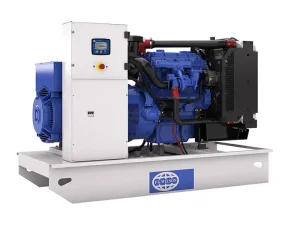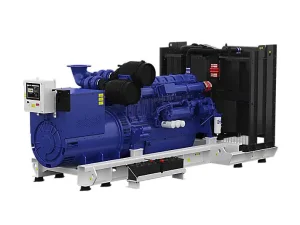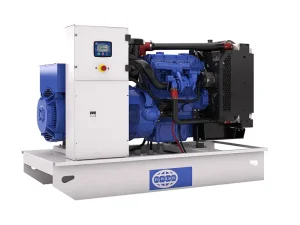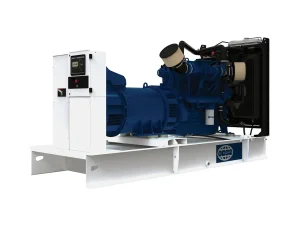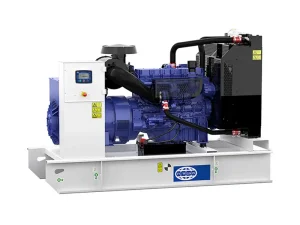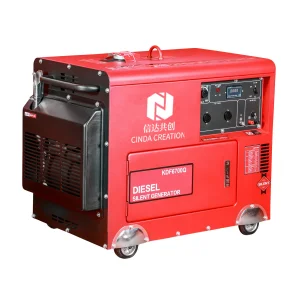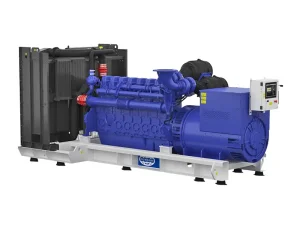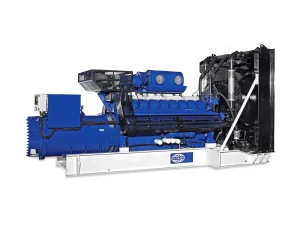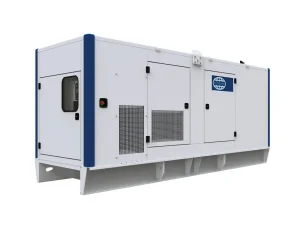
Cheap Wilson Open Type Medium Diesel Generator Sets 480/277V, 60 Hz P563-3 Supplier, Exporter
Request Technical Data
Pre-tested against ISO 8528 performance matrices before international dispatch.
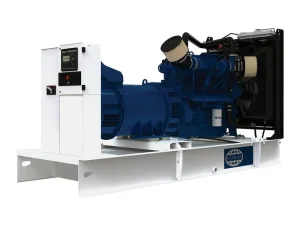
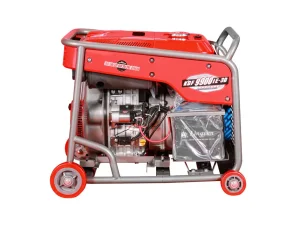
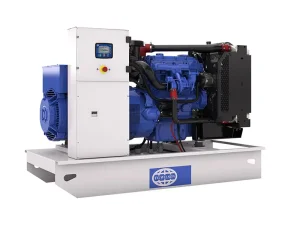
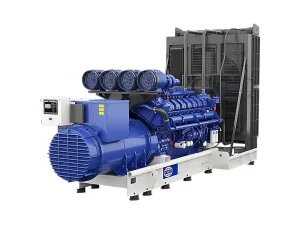
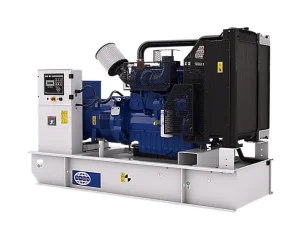
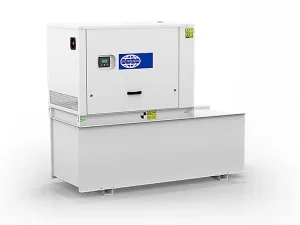
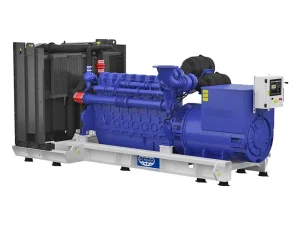
Silent power generation is not merely enclosing an engine; it is a calibrated balance between thermo-fluid ventilation, pressure differentials, and acoustic decay.
Traditional canopies reflect sound waves back into mechanical blocks, generating residual thermal buildup. Our export-grade silent enclosures employ Helmholtz multi-chamber resonance chambers paired with flame-retardant sound-absorbing microporous rock wool (density ≥65kg/m³).
Sound-proofing must never throttle combustion efficiency. Using integrated computational fluid dynamics (CFD), the intake louver angles are designed to create a laminar airflow vortex that reduces pressure drop while retaining full operational capability up to 50°C ambient temperatures without derating.
Structure-borne noise accounts for up to 40% of low-frequency rumble. Heavy-duty rubber-metal shear isolators and dual-flexible exhaust bellows isolate harmonic oscillations between the Perkins/Weichai power block and the sub-base fuel tank foundation.
Equipped with Deep Sea Electronics (DSE) or FG Wilson PowerWizard controllers, every silent generator integrates real-time harmonic distortion analysis, autonomous phase balance monitoring, and telematics-ready IoT remote diagnostics via Modbus or Ethernet interfaces.
Customized configuration blueprints matching global infrastructure requirements across harsh operational theaters.
Hospital and clinic environments require ultra-quiet standby systems with automatic transfer switches (ATS) capable of full load transfer in under 10 seconds. Silent canopies ensure recovery wards remain undisturbed while diagnostic imaging maintains pristine voltage sine waves.
As proven in the 2,400-km China–Myanmar energy corridor with 17 natural gas and 5 diesel units, pipeline pumping demands non-stop continuous prime ratings, dual fuel filtration for low-grade diesels, and heavy anti-corrosion sand-proof louver treatments.
High-altitude and polar operations necessitate block water jackets, fuel line glow heaters, and heavy-viscosity synthetic lubrication setups. FG Wilson units have logged continuous duty in Arctic mines for over two decades without structural embrittlement.
Edge data centers and remote base stations prioritize low fuel burn per kWh and extended run times. Our small-to-medium silent units (24kVA to 220kVA) incorporate oversized 24-hour base tanks, digital fuel leak sensors, and brushless class H alternators.
Achieving competitive procurement costs without compromising mechanical integrity through vertical integration and streamlined export logistics.
Acoustic canopies are manufactured using computerized CNC laser cutting and robotic seam-welding cells. Electrostatic powder coating ensures an exterior finish resistant to 1000-hour salt spray exposure, securing long field life across maritime transport and tropical ports.
Located near premier engineering manufacturing clusters in Beijing and Northern China, Cinda Creation eliminates multi-tiered tier-margin inflation. Direct procurement of original Perkins core engines and Weichai blocks lowers the buyer’s initial CAPEX by up to 25-30%.
No unit leaves our facility without progressive step-load testing (0%, 25%, 50%, 75%, 100%, and 110% overload). Thermal stability curves, oil pressure, exhaust backpressure, and voltage fluctuation margins are certified and supplied with each commercial export document package.
Operational compliance with strict international technical norms under audited management systems.
Our manufacturing and exporting workflows are certified under ISO 9001 (Quality), ISO 14001 (Environmental), and ISO 45001 (Occupational Health & Safety). These management certifications ensure traceability across every component from crankshaft to terminal lugs.
Every diesel generator is backed by a formal 12-month warranty counted from the initial start-up date (or 1,000 running hours, whichever occurs first). Engineering and technical response teams deliver remote diagnostics and dispatch genuine Perkins replacement kits within 24 hours.
Equipped with internal forklift pockets, high-capacity lifting eyes, and vapor-corrosion-inhibiting (VCI) shrink wrap, our silent generator units arrive intact across standard dry-van, flat-rack, or open-top maritime shipping setups without internal coil oxidation.
Clarifications for enterprise procurement officers, mechanical contractors, and consulting engineers.
Standby Power (ESP) represents the maximum output accessible during a utility outage for a variable load curve, with no overload capacity permitted. Prime Power (PRP) applies to installations where the genset functions as the main power station for unlimited operating hours per year, typically permitting a 10% overload margin for 1 hour within every 12-hour cycle (ISO 8528-1).
Apparent power (kVA) is calculated by dividing real active power (kW) by the operational power factor (cos φ), standardly 0.8 for industrial 3-phase alternating current generators. Thus, an active demand of 184 kW requires 184 ÷ 0.8 = 230 kVA. Always incorporate starting inductive loads (such as pump motors, chiller compressors) to account for inrush currents.
Silent canopy diesel generator sets are imperative for outdoor installations, municipal residential zones, educational facilities, healthcare institutions, and hospitality sites requiring sound pressure levels under 75 dB(A) at 7 meters. Open frame sets are selected for pre-engineered, acoustically isolated internal powerhouse vaults with integrated intake/exhaust louvers.
To provide an exact engineering proposal, submit: target active power (kW or kVA), operating voltage and phase configuration (e.g., 400V/230V, 480V/277V), operating frequency (50Hz vs 60Hz), site altitude (derating above 1000m ASL), ambient temperature parameters, canopy requirements (open, silent, containerized), and automatic transfer switch (ATS) specifications.
Engineered for high thermal tolerance, low specific fuel consumption, and long overhaul intervals.