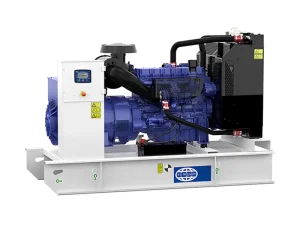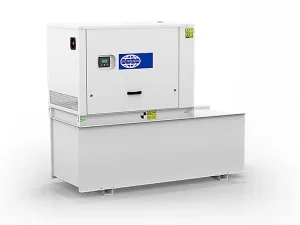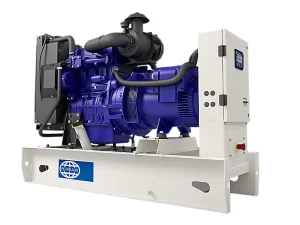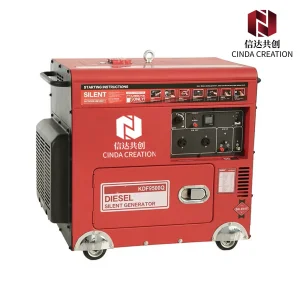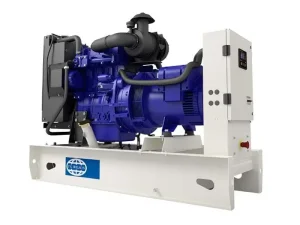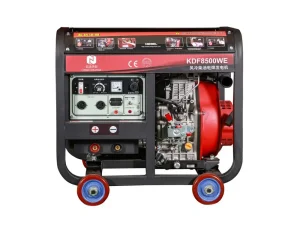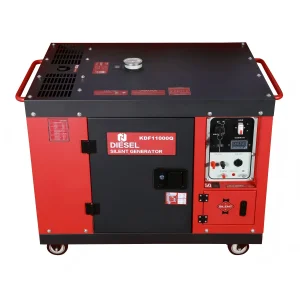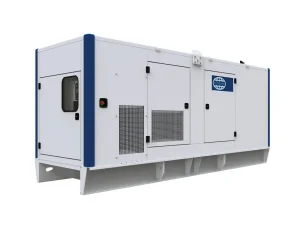
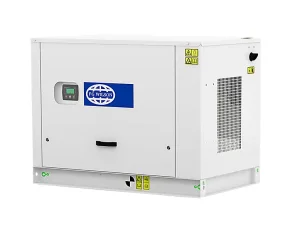
China Wilson Generator Set P16.5-6S Compact and Efficient Generator Suppliers, Exporters
View Details
Pre-configured, ISO-certified gen-sets verified for international procurement, offering high fuel economy, ultra-low acoustic signatures, and clean power generation.
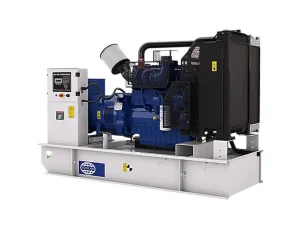
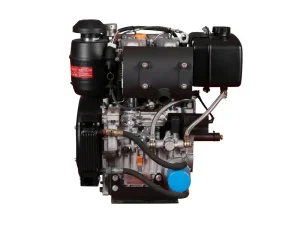
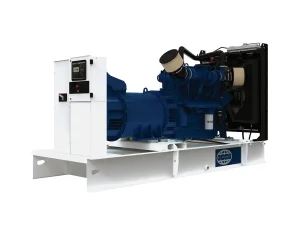
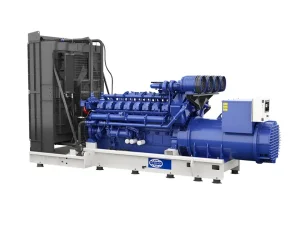
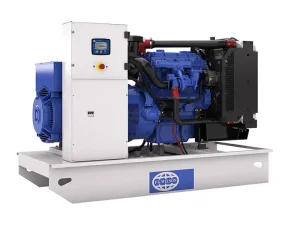
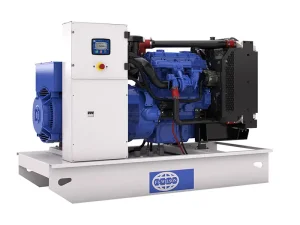
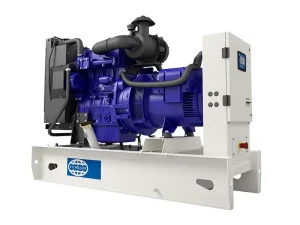
The transition from unpredictable utility grids to decentralized, localized resilience has fundamentally repositioned small portable electric generators from leisure items to critical industrial capital assets.
Global climate anomalies and grid modernization backlogs have compelled telecom base stations, micro-logistics hubs, and regional healthcare stations to install autonomous backup infrastructure. Sourcing low-cost, fuel-dense compact gensets (under 220 kVA) minimizes exposure to brownouts without inflating operational overhead.
Modern B2B procurement metrics have pivoted from upfront acquisition cost to lifetime TCO. Cheap small portable electric generator suppliers must balance competitive equipment pricing with high mechanical thermal efficiency, standardized Perkins/Weichai spare parts interchangeability, and low maintenance intervals.
International engineering contractors require verified OEMs compliant with ISO 9001, ISO 14001, and ISO 45001. Operating from Beijing, Cinda Creation acts as a single-source hub, bridging precision Perkins components and robust Chinese diesel blocks to satisfy rigorous international audit criteria.
Advanced digital excitation, smart noise attenuation canopies, and hybrid micro-grid topologies are redefining the performance envelope of compact electric power plants.
Microprocessor-driven pure sine wave inverters modulate engine RPM according to dynamic load profiles. By maintaining Total Harmonic Distortion (THD) under 3%, small portable units safely energize sensitive diagnostic machinery, field computing arrays, and telecom switches without thermal damage.
Compact silent generators utilize internal multi-chamber labyrinth air intake channels and sound-dampening flame-retardant composite insulation. This attenuates sound pressure down to 65 dB(A) at 7 meters while maintaining uncompromised airflow during ambient operations exceeding 45°C.
Next-generation small gensets feature Modbus and RS485 communication protocols. Fleet operators monitor fuel consumption, winding temperature, and oil degradation in real-time, executing automatic transfer switch (ATS) startup sequences within 10 milliseconds of utility collapse.
Comprehensive technical breakdown to assist EPC contractors and facility directors in sizing and selecting appropriate power plant units.
| Evaluation Parameter | Open-Frame Portable (P9.5 - P22) | Silent Canopy Series (P50 - P90) | Wind-Cooled Heavy Duty (KD292F) |
|---|---|---|---|
| Prime Power Rating | 7.5 kVA - 20.0 kVA | 45.0 kVA - 80.0 kVA | 8.0 kW - 12.0 kW (Continuous) |
| Acoustic Rating (at 7m) | 78 - 85 dB(A) | 62 - 68 dB(A) Soundproof Enclosure | 75 - 80 dB(A) Standard Wind-Cool |
| Cooling Topology | Direct Forced Air / Integrated Radiator | Heavy-Duty Radiator w/ Pusher Fan | High-Flow Wind-Cold Fin Ducting |
| Excitation System | Brushless, Self-Excited (AVR Regulated) | Digital AVR with ±1.0% Regulation | Standard Magnetic Induction AVR |
| Optimal Application | Ventilated Plant Rooms, Construction Yards | Hospitals, Clinics, Residential, Events | Remote Telecom, Micro-Irrigation Sites |
| Service Access Profile | 360° Unobstructed Frame Access | Single-Side Maintenance Doors | Modular Top & Side Service Ports |
Engineered to maintain continuous, stable electrical throughput across high-salinity coasts, sub-zero tundra, and hyper-arid desert basins.
Integrated engine block jacket heaters, synthetic low-viscosity lubrication packages, and heated fuel filter arrays ensure instantaneous starting at -40°C across Siberian, Nordic, and Canadian remote work environments.
Enhanced oversized cooling radiators, sand filtration pre-cleaners, and heavy-duty UV-stabilized canopy coatings prevent thermal derating and component erosion in Middle Eastern and Saharan operating zones.
Portable silent units power vital clinical preservation refrigerators, sterilization devices, and lighting arrays in disaster response corridors where utility supply lines have suffered catastrophic disruption.
Off-grid repeater masts rely on small automated diesel generators configured for deep fuel autonomy (24-48 running hours) equipped with auto-restart cycling to keep global communications active.
Bridging traditional thermodynamic generation with hybrid energy storage systems and low-carbon multi-fuel governance.
R&D allocations are actively scaling selective catalytic reduction (SCR) and diesel particulate filter (DPF) integration into sub-50 kVA architectures, drastically reducing NOx and particulate emissions without forfeiting transient load step performance.
Direct coupling of small portable diesel units with Lithium Iron Phosphate (LiFePO4) Battery Energy Storage Systems (BESS). The generator operates exclusively at peak thermodynamic efficiency to charge the cells, cutting fuel burn by up to 45% during low-load nocturnal cycles.
Engine injection matrices optimized for flexible operation across standard ultralow sulfur diesel (ULSD), HVO (Hydrotreated Vegetable Oil), and biodiesel blends, guaranteeing export compliance across stringent European and North American regulatory zones.
Expert answers addressing the sizing, configuration, and logistics inquiries managed by our engineering advisory team.
Standby power represents the maximum electrical capacity available for the duration of a utility outage with variable load profiles (annual operation capped at roughly 200-500 hours) with zero overload capability. Prime power allows for unlimited annual operating hours with a 10% overload margin accessible for 1 hour within every 12-hour operational window. If sizing a genset as the baseline power source, procure strictly on prime ratings.
Inductive electrical motors (pumps, compressors, HVAC equipment) experience inrush starting currents that demand 300% to 600% of their steady-state full-load amperage (FLA). When calculating required generator kVA, apply a Minimum Starting kVA (SkVA) coefficient. To prevent voltage dips from exceeding 20-30%, size the generator to comfortably withstand transient sub-transient reactance (X"d) spikes.
Atmospheric density decreases as altitude and ambient temperature climb. Generally, diesel internal combustion engines derate by approximately 3.5% per 300 meters above 1,000 meters elevation, and roughly 1% to 2% for every 5°C above standard ambient (25°C to 40°C depending on manufacturer baselines). Our sales engineering team calculates these factors during quotation configuration to guarantee delivered load stability.
All genset configurations carry a comprehensive 12-month international warranty commencing from initial commissioning. Operating our own export consolidation center in Beijing, Cinda Creation provides genuine Perkins, Weichai, and FG Wilson replacement consumables (injectors, AVR modules, air/oil filters, gaskets) with global air express dispatch and a 24-hour engineering diagnostic response guarantee.
Engineered for multi-voltage operation (400/230 V, 480/277 V, 50 Hz/60 Hz) across global construction, agricultural, and industrial infrastructure.