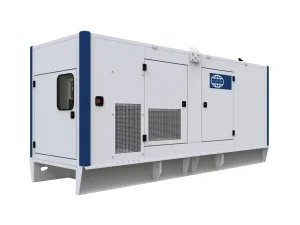
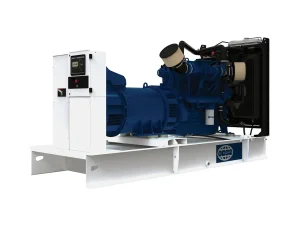
Primary Fleet Solutions
High-Efficiency Standby Generators: 10 kVA – 2500 kVA
Pre-configured and load-bank tested backup generators matching international frequency (50/60Hz) and duty requirements. Discover competitive OEM pricing with uncompromising build quality.
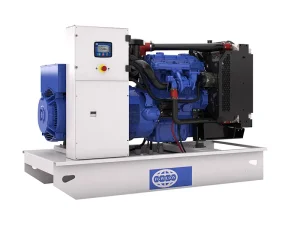
Wilson Small Type Low Noise Power System P55-4
View Specifications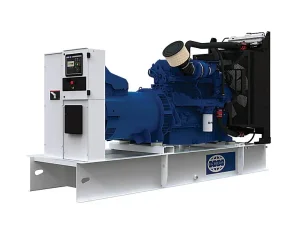
Medium Range 225 – 938 kVA FG Wilson Generator Set P500-3
View Specifications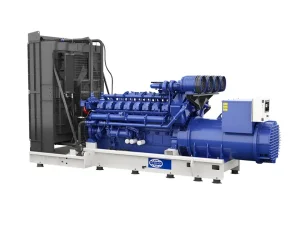
FG Wilson Energy-Saving Diesel Generator Set (800-2500kva) P2500-3
View Specifications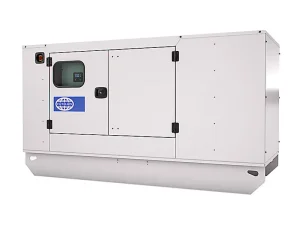
FG Wilson Silent Small Diesel Generator Sets 230 V, 50 Hz P90-6S
View Specifications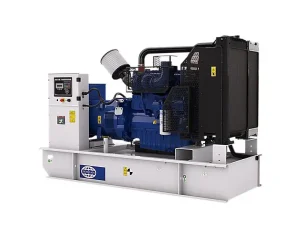
Medium Range 225 – 938 kVA P275-5 FG Wilson Generator Set
View Specifications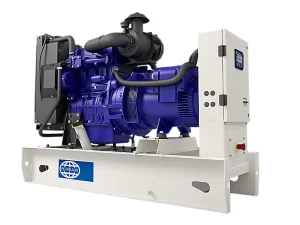
Wilson Small Range <220 kVA Silent Power Generator P12-1S
View Specifications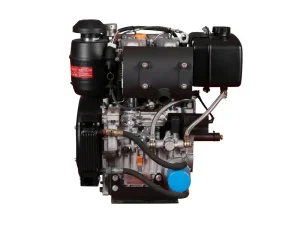
KD292F Wind-Cold Reliable Diesel Generator for Uninterrupted Power
View SpecificationsEngineering Deep Dive
Technical Roadmap: Next-Gen Standby Generator Architecture
In modern industrial topologies, standby power generation has transformed from an isolated mechanical fail-safe into an integrated, cyber-physical node of decentralised microgrids.
< 10s
Fast Automatic Transfer (ATS) & Black Start Capability
Tier 4 / Stage V
High-Efficiency Emission Control Integration
HVO / B20
Biofuel & Synthetic Hydrocarbon Readied
99.999%
Mission-Critical System Availability
Transient Load Response & Digital AVR
Modern commercial facilities generate intense non-linear harmonics through variable-speed drives (VSD), UPS inverters, and heavy inductive motor loads. Our standby generating sets integrate advanced Digital Automatic Voltage Regulators (DAVR) paired with permanent magnet generator (PMG) excitation. This architecture guarantees rapid voltage recovery under sudden 100% block-load conditions without dropping beneath critical frequency thresholds.
- Less than 1% steady-state voltage regulation
- Sub-second recovery under step-load transients
- Low total harmonic distortion (THD < 3%)
IoT Predictive Telemetry & Remote ATS
Moving beyond reactive maintenance, our units feature cloud-connected telemetry via RS485 Modbus, CAN-bus (J1939), and 4G/Ethernet communication modules. Plant supervisors and field engineers monitor oil degradation, coolant thermal gradient variations, winding temperature, and battery charge status in real-time, executing automated remote exercise cycles and diagnostic routines from a unified SCADA platform.
- Early warning of cooling system cavitation and filter blockages
- Seamless integration with Building Management Systems (BMS)
- Autonomous ATS health checks and event data logging
Fuel Flexibility & Decarbonisation Pathways
To support global Net-Zero transitions, the powertrain configurations across our Perkins and Weichai lines are rigorously validated for alternative fuels. Our diesel engines can operate with standard ultra-low sulfur diesel (ULSD) or drop-in Hydrotreated Vegetable Oil (HVO) and renewable diesel blends, instantly reducing net greenhouse gas emissions by up to 90% without necessitating structural fuel injection modifications.
- HVO100 drop-in capability with zero loss of standby power output
- Dual-fuel and natural gas hybrid conversion pathways
- Optimised combustion profiles cutting particulate matter (PM)
Macro Sector Architecture
Enterprise Power Solutions for High-Stakes Environments
A power outage is not merely an inconvenience; it represents severe financial loss, supply chain fracture, or life safety hazards. We configure robust power setups engineered to overcome severe operational challenges.
Tier III/IV Data Centers & Hyperscale Telecom
Cloud infrastructure requires continuous uptime with zero voltage sags. We configure N+1 and 2N redundant standby systems synchronised through deep-sea digital controllers. Built-in fuel polishing, double-wall sub-base fuel tanks (providing 24-48 hours of autonomous operation), and critical grade silencers allow continuous generation during primary transmission failure.
Healthcare & Emergency Clinical Complexes
Surgical suites, life support networks, and cold chain vaccine storage demand uninterruptible transition under NFPA 110 Type 10 guidelines. Our silent standby enclosures dampen acoustic resonance below 65 dBA @ 7m, isolating vibration through heavy-duty spring dampers while assuring automated generator startup in under 10 seconds.
Mining, Remote Oilfields & Offshore Projects
Operating in the Atacama Desert or Siberian permafrost demands hardened machinery. As proven by our continuous generators along the 2,400 km China-Myanmar energy corridor, our heavy-duty canopies incorporate sand filters, high-ambient tropical radiators rated to 50°C, and coolant block jackets configured for sub-zero starts down to -40°C.
Manufacturing Advantage
China Industry 4.0: Supply Chain Agility & Cost Control
Why do tier-1 EPC contractors source cheap standby generator packages from Cinda Creation? Because "cheap" in our dictionary signifies uncompromised manufacturing efficiency and vertical supply chain compression, not corner-cutting.
Direct OEM Integration
By leveraging strategic partnerships with engine titans such as Perkins and Weichai, alongside premium alternator brands like Leroy-Somer and Stamford, we bypass middlemen markups, delivering factory-direct pricing directly to global buyers.
Automated Sheet Laser Profiling
Our acoustic canopies and sub-base fuel reservoirs are fabricated utilising high-precision 3D fiber laser cutters and automated robotic bending cells. This assures flawless dimensional tolerances, enhanced structural rigidity, and IP54/IP56 weatherproofing.
Zinc-Phosphate Powder Coating
Corrosion resistance is mandatory for harsh industrial yards. Every generator canopy undergoes a rigorous 9-stage electro-cleaning and zinc phosphating pre-treatment, followed by outdoor UV-stabilized electrostatic polyester powder coating.
100% Full-Step Load Testing
No generator leaves our Beijing dispatch hub without rigorous load banking. Sets undergo continuous runs across 0%, 25%, 50%, 75%, 100%, and 110% overload conditions to audit heat balance, oil pressure, and governor responsiveness.
Compliance & Delivery
Worldwide Export Compliance & Field Support Protocols
Procuring power generation assets internationally requires verified certification, localized engineering customization, and a responsive parts pipeline.
Multi-Jurisdiction Certification
Every standby generating unit is assembled in accordance with strict international guidelines. Our facilities maintain ISO 9001 (Quality Assurance), ISO 14001 (Environmental Safety), and ISO 45001 (Occupational Health) registrations, with CE declaration documentation and factory acceptance test (FAT) certificates accompanying every shipment bill of lading.
Comprehensive Electrical Matching
Different regions mandate varied operational configurations. Our engineering office configures alternators for wide voltage ranges (from 110V dual-phase up to 480V three-phase systems), matching utility grids at both 50 Hz (1500 RPM) and 60 Hz (1800 RPM) with customizable manual, auto, or synchronizing switchboards.
Secure Maritime Logistics & Spares
We provide full container load (FCL) seaworthy packaging, including desiccants, heavy moisture-barrier vacuum bagging, and anti-vibration timber framing for maritime transit. Furthermore, our Tongzhou distribution facility stocks over 600 line items of Perkins filters, injectors, pumps, and AVRs for expedited air freight dispatch within 24 hours.
Enterprise Track Record & Field Deployments
Established in Tongzhou District, Beijing on July 17, 2019, Beijing Xinda Creation Machinery Equipment Co., Ltd. has delivered over 300 heavy generating units internationally. Notable project references include the China-Myanmar crude oil pipeline (deploying 17 gas units and 5 heavy diesel generator systems), multi-megawatt backup power for the new airport terminal project in Ethiopia, and silent units configured for sub-zero operation in Arctic field locations running reliably for over 20 years.
Procurement Knowledge Base
Frequently Asked Questions: Standby Generator Engineering & Sourcing
Essential guidance on sizing calculations, operational ratings, enclosures, maintenance, and overseas commissioning.
What is the technical distinction between Standby, Prime, and Continuous ratings?
Under ISO 8528 standards, the Emergency Standby Power (ESP) rating is the maximum power available during a variable electrical power sequence in an outage (max 200 hours per year, with no overload capacity). Prime Power (PRP) applies to infinite annual operating hours under variable load, permitting a 10% overload for 1 hour in every 12 hours. Continuous Power (COP) represents non-varying base-load generation without time limits. Choosing an ESP-rated unit for prime operation causes severe premature thermal engine wear.
How do I accurately calculate kVA and kW capacity for inductive motor starting loads?
Real power (kW) equals apparent power (kVA) multiplied by the power factor (typically 0.8 for 3-phase generators: 100 kW / 0.8 = 125 kVA). However, direct-on-line (DOL) electric motor starters demand 6 to 8 times their rated full-load current (kVA) during start-up. To prevent transient voltage dips from exceeding 15-20%, engineers must size generators considering total starting kVA (SkVA) using Star-Delta, Soft-Starters, or Variable Frequency Drives (VFDs) to prevent oversized engine procurement.
When should a facility specify an Acoustic Silent Enclosure vs. an Open-Frame set?
Silent enclosed generators are engineered for outdoor locations or noise-sensitive areas (hospitals, schools, commercial headquarters), featuring weatherproof galvanized steel canopies, sound-absorbing foam, and residential-grade mufflers reducing acoustic signatures to 68-75 dBA @ 7m. Open-frame generators are designed exclusively for indoor, purpose-built mechanical rooms equipped with dedicated louvered ventilation, acoustic baffles, and external exhaust silencers.
What parameters cause generator derating in high altitude or high ambient environments?
Standard generator output is rated at an ambient temperature of 25°C and an altitude under 1,000 meters above sea level. Above 1,000m, reduced air density impairs combustion oxygen content and alternator cooling, causing approximately a 3.5% engine derate per 300m elevation. Similarly, every 5°C increase in ambient temperature above 40°C results in roughly a 2% output reduction. We configure oversized radiators and turbocharger profiles to mitigate local climate derating.
What routine maintenance protocols are mandatory to eliminate standby start failure?
Standby failure is predominantly triggered by starting battery voltage drop (80% of field faults) or fuel degradation. Mandatory procedures include monthly unloaded test exercises (10-15 mins), semi-annual loaded runs above 60% capacity using an inductive load bank to burn off carbon deposits ("wet stacking"), periodic replacement of fuel/oil/air filters at 250 operational hours or 12 months, and deploying automated smart trickle chargers for lead-acid/lithium starting packs.
What specific electrical and site information is required to receive a fast engineering quote?
To produce an exact configuration, provide our sales engineers with: 1) Total target running load (kW or kVA) plus maximum single-step motor load; 2) Voltage, phase, and frequency requirements (e.g., 400V 50Hz 3-phase or 220V 60Hz 3-phase); 3) Duty profile (Standby or Prime); 4) Installation environment (altitude, ambient min/max temperatures); 5) Enclosure preference (Open frame, Weatherproof, Silent, or Containerized); and 6) Required fuel autonomy hours and ATS switchgear integration.
Secondary Fleet Solutions
Specialized & High-Output Commercial Power Units
Explore our wide selection of industrial-grade diesel generators, welder gensets, variable frequency systems, and open-frame packages engineered for heavy-duty export demands.
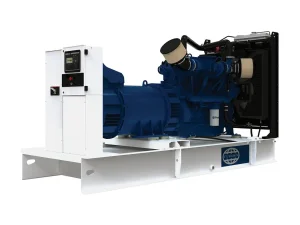
FG Wilson Medium Range 225-938KVA Diesel Generator Setn P780-1
View Specifications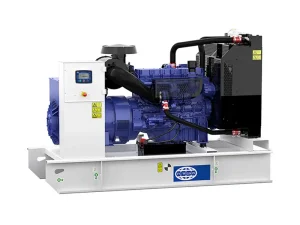
FG Wilson Small Type P200-3 Generator Set: Power You Can Trust
View Specifications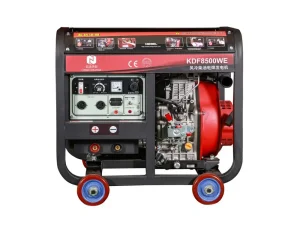
Electric Welding High-Performance Generators Set KDF8500WE
View Specifications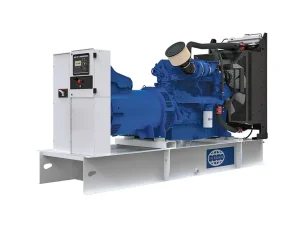
Medium Range 225 – 938 kVA P450-3-SA FG Wilson Diesel Generator
View Specifications
Wilson Open Type Small Diesel Generator Sets 230 V, 50 Hz P16-1
View Specifications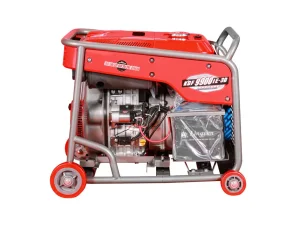
Diesel Variable Frequency Generator Set KDF9900
View Specifications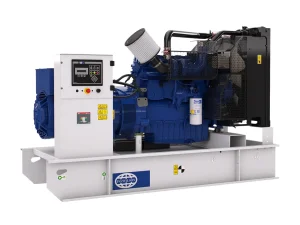
Medium Range 225 – 938 kVA FG Wilson Generator P249-5
View Specifications