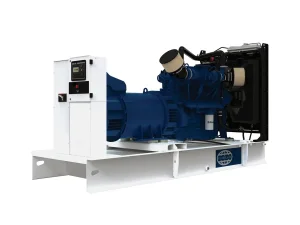
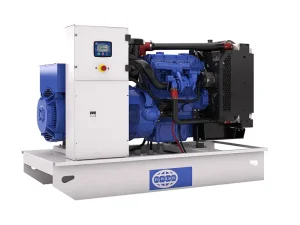
Primary Product Portfolio
High-Efficiency Export-Grade Diesel Gensets
Engineered for low maintenance downtime, high fuel efficiency, and rapid transient response across heavy industrial installations.
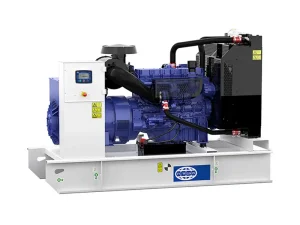
High-Quality Wilson Open Type Small Diesel Generator Sets 400V, 50 Hz P150-5
Inspect Specifications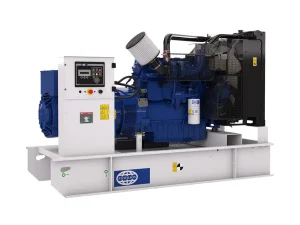
China Medium Range 225-938KVA High Efficiency Diesel Generator Set P313-5
Inspect Specifications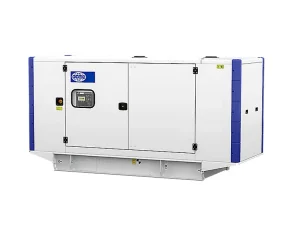
Cheap Wilson Eco-Friendly Generator Small Range <220 kVA P65-6 Exporters
Inspect Specifications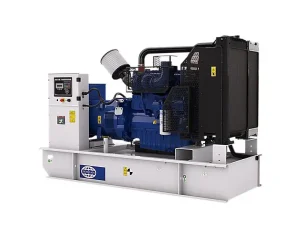
China Medium Range 225 – 938 kVA-P275-5 FG Wilson Generator Set
Inspect Specifications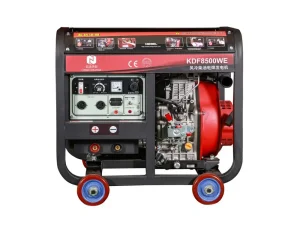
High-Quality Electric Welding High-Performance Generators Set KDF8500WE
Inspect Specifications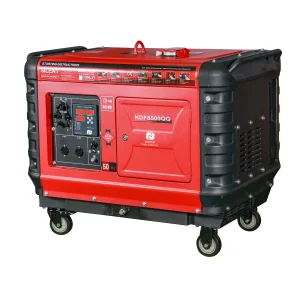
China KDF8500QQ Super Quiet Mini Diesel Power Generator Set Ultra Low Noise
Inspect Specifications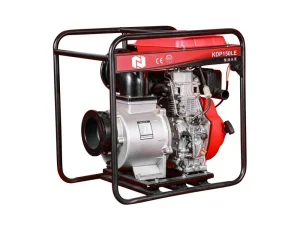
China High-Pressure Water Pumps: Versatile, Efficient, and Durable KDP150LE
Inspect Specifications
Macro Dynamics
The Global Strategic Imperative for Distributed Generation
Analyzing macroeconomic shifts, utility volatility, and how Chinese manufacturing efficiency redefined global power security.
Grid Instability & Peak Shaving
Global utilities face escalating stress due to intermittent renewable integration. China-engineered gensets serve as baseline grid stabilization units, ensuring uninterrupted peak-load transition and automated black-start capabilities under critical load demands.
Hyperscale Computing Infrastructure
The rise of high-density AI clusters demands instantaneous, clean emergency backup. Exporters deploy synchronized generator banks engineered with Tier 2 to Tier 4 emissions capabilities, ensuring negligible harmonic distortion for sensitive enterprise electronics.
Rigorous Factory Efficiency
Leveraging deeply integrated regional clusters in China, manufacturers minimize supply chain latency. From Perkins-licensed block casting to precision alternator winding, manufacturing lead times are contracted by up to 45% compared to Western counterparts.
Field Application Engineering
Mission-Critical Deployment Scenarios
Examining field-proven generator performance across hostile operating envelopes and specialized utility demands.
Healthcare & Life-Support
Configured with ultra-sensitive Automatic Transfer Switches (ATS), our hospital setups transition power within milliseconds, backed by dual redundant starting circuits and specialized soundproof enclosures keeping sound profiles below 65 dB(A) at 7 meters.
High-Ambient Desert Works
Heavy dust filtration, oversized heavy-duty tropical radiators, and thermal-reflective canopies prevent system derating in ambient temperatures exceeding 50°C across MENA and Central Australian extraction sites.
Arctic & Deep-Freeze Mining
Equipped with engine block pre-heaters, fuel line heating blankets, and synthetic cold-viscosity lubricants, ensuring guaranteed cold starts down to -40°C in remote sub-Arctic mining concessions.
Pipelines & Infrastructure
Continuous-duty baseload installations powering massive multi-thousand-kilometer energy lines (such as the China-Myanmar Pipeline), integrating SCADA, telemetry, and automated oil refill modules.
Engineering Matrix
Standardized Generator Architecture & Rating Boundaries
System configurations aligned with ISO 8528-1:2018 guidelines for Prime Power (PRP), Emergency Standby Power (ESP), and Continuous Operating Power (COP).
| Rating Category | Duty Cycle & Running Time | Typical Average Load | Overload Capability | Recommended Configuration |
|---|---|---|---|---|
| Emergency Standby (ESP) | Max 200 hrs/yr during utility interruption | 70% of peak rating over 24-hr cycle | None (Emergency Maximum) | Silent Canopy, Digital Auto-Start ATS |
| Prime Power (PRP) | Unlimited operating hours per year | ≤ 70% of nameplate rating over 24-hr period | 10% overload for 1 hr in every 12 hrs | Open Frame / Plant Room, Multi-Sync Panel |
| Continuous Power (COP) | Continuous base load uninterrupted | 100% constant steady-state load | None (Engine operates at optimum baseline) | Heavy Cast Engine, Extended Fuel Depots |
| Data Center Continuous (DCC) | Uptime-certified continuous run profile | Up to 100% standby rating with zero drop | Governed by Tier III / IV Uptime standards | Dual Electronic Regulators, DeepSea/ComAp Control |
Strategic Sourcing
Procurement Audit Guide: Sizing & Compliance
Essential validation criteria for international engineering procurement teams evaluating Chinese export gensets.
Reactive Load & Transient Inrush
When sizing induction motors, submerged water pumps, or compressors, starting current spikes reach 3 to 6 times baseline running amperage. Alternators must feature auxiliary windings or Permanent Magnet Generators (PMG) to support instantaneous inrush without voltage collapse.
Site Derating Factors
Atmospheric density drops with altitude, starving internal combustion engines of oxygen. As standard engineering practice, output should be derated by approximately 1% for every 100 meters above 1,000 meters elevation, and 2% for every 5°C over 40°C ambient room temperature.
Third-Party Factory Testing
Mandate resistive load bank validation prior to release: 0%, 25%, 50%, 75%, 100%, and 110% overload steps. Require documentation showing cooling efficiency, acoustic performance, frequency stability, and insulation integrity verified by accredited inspectors.
Next-Gen Development
Future Trajectory: Decarbonization & Hybridization
The convergence of internal combustion engineering, bio-fuels, and AI-assisted cloud fleet maintenance.
HVO & Biodiesel Compatibility
Modern engine blocks undergo precision validation for Hydrotreated Vegetable Oil (HVO100) and B20 biofuels. This transition achieves up to a 90% net reduction in carbon emissions without sacrificing engine life or peak torque dynamics.
BESS-Diesel Microgrid Synergy
Pairing diesel generator sets with Battery Energy Storage Systems (BESS) ensures generator runtimes are cut by up to 60%. The batteries handle rapid micro-transients while the genset charges cells within peak thermal efficiency bands.
IoT Edge Telemetry & Diagnostics
Next-generation electronic control units stream oil temperature, bearing vibration, exhaust backpressure, and alternator phase delta directly to cloud dashboards, enabling algorithmic predictive maintenance.
Operational Intelligence
Frequently Addressed Engineering Inquiries
Direct technical guidance compiled from international commissioning briefs, utility guidelines, and maintenance field engineers.
What is the absolute technical distinction between Prime Power (PRP) and Standby Power (ESP)?
Under ISO 8528 standards, Standby Power (ESP) represents the maximum power available during a variable electrical power sequence in an emergency utility outage, capped at an average of 70% load factor across 24 hours and strictly limited to 200 hours per year without overload tolerance. Prime Power (PRP), however, allows unlimited annual run hours with variable load, maintaining a 70% average load capacity and permitting a 10% operational overload for one hour within every twelve hours of continuous duty.
How are real power (kW) and apparent power (kVA) converted during facility sizing?
The conversion relies directly on the system power factor (PF), which is standardized at 0.8 lagging for commercial and industrial three-phase alternator configurations. To find apparent power: kVA = Real Power (kW) ÷ 0.8. For example, a heavy processing plant demanding 400 kW of actual work requires a generator rated at no less than 500 kVA. Further safety adjustments must account for motor starting kVA (SkVA) and elevation or temperature deratings.
When should buyers choose an open-type generator frame over an acoustic canopy?
Open-type generator sets should be specified exclusively for dedicated indoor machinery rooms equipped with acoustic baffle louvers, isolated foundation plinths, and active HVAC ducting. Open frames offer full accessibility for major overhauls, lower initial capex, and superior convective airflow. Acoustic soundproof canopies are required whenever equipment is placed outdoors, near public spaces, or on commercial footprints where municipal noise ordinances mandate thresholds below 70-75 dB(A).
What factory audit milestones are critical when evaluating Chinese generator exporters?
Ensure the manufacturer holds current ISO 9001, ISO 14001, and ISO 45001 certifications. Review traceability records for prime-mover engine castings, verify dynamic rotor balancing reports, inspect copper winding insulation ratings (Class H preferred), and request full-spectrum computerized load bank testing records covering transient voltage step-loads (load acceptance testing to ISO 8528-5 Class G2/G3).
How does altitude and high ambient temperature affect engine combustion?
Internal combustion relies on oxygen mass per stroke. High altitude lowers barometric pressure, reducing air density and leading to rich fuel-air mixtures, soot accumulation, and elevated cylinder head temperatures. High ambient temperatures degrade radiator heat dissipation. Exporters calculate specialized de-rate curves, recommending larger displacement blocks or turbocharger boost alterations to protect engine life.
Extended Industrial Line
Commercial, High-Output & Open Frame Models
Featuring precision-balanced alternators, heavy-duty structural steel bases, and advanced digital control modules.
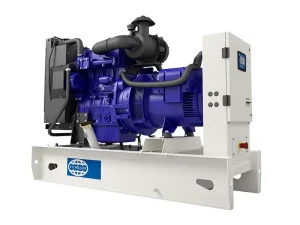
China FG Wilson Small Range <220 KVA High-Efficiency Energy Generator Sets P7.5-4S
Inspect Specifications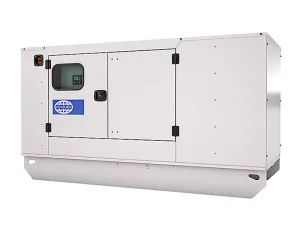
High-Quality Wilson Open Type Small Diesel Generator Sets 230 V, 50 Hz P50-5S
Inspect Specifications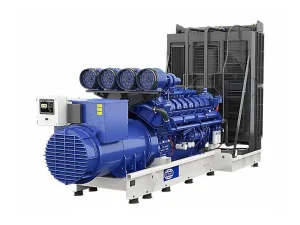
Cheap Fg Wilson High Power Diesel Generator Set (800-2500kva) P1650-1 Exporters
Inspect Specifications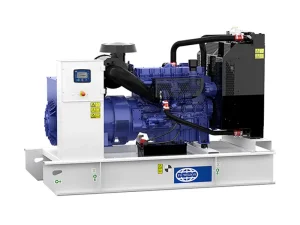
High-Quality Wilson Small Range <220 kVA Advanced Power Generator P165-6
Inspect Specifications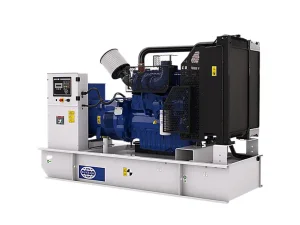
China FG Wilson Generator set 225-938kVA, Industrial-Grade Power Guarantee P300-5
Inspect Specifications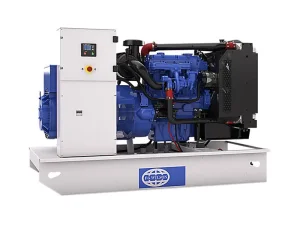
China Wilson Open Type Small Diesel Generator Sets 230 V, 50 Hz P26-3S
Inspect Specifications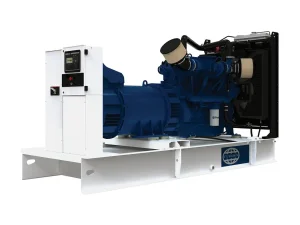
Cheap Fg Wilson Medium Range 225-938KVA High Efficiency Diesel Generator Set P780-1
Inspect Specifications