Featured Industrial Engine Assemblies & Power Generation Units
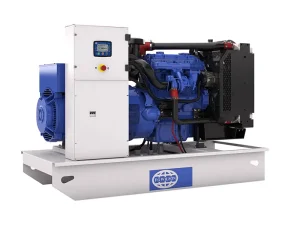
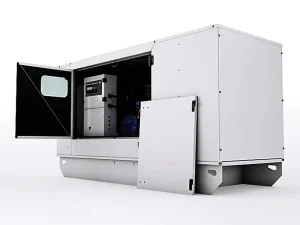
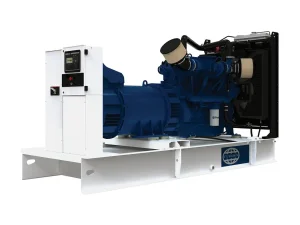
Precision cast structural blocks, complete open-frame generator systems, and acoustic canopy solutions manufactured under stringent ISO 9001 quality supervision in Beijing, China.
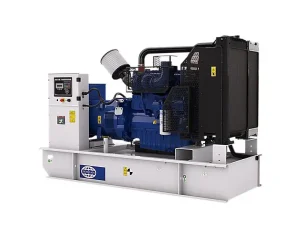
The Strategic Role of China in the Global Engine Block Ecosystem
How foundry modernization, precision metallurgical control, and vertically integrated powertrain manufacturing establish Chinese suppliers as core tier-one partners for worldwide energy and mechanical infrastructure.
Foundry Consolidation & Scale
The international internal combustion powertrain market demands unprecedented economies of scale combined with tight dimensional tolerances. Over the past decade, Chinese foundries have transitioned from regional casting workshops into digitally monitored, automated smart-foundries. By integrating automated pouring carousels, induction melting furnaces, and robotic core de-coring systems, Chinese suppliers produce over 45% of the globe’s commercial-grade grey iron and compacted graphite iron (CGI) crankcase castings. This structural consolidation enables original equipment manufacturers (OEMs) and international distributors to secure stable supply chains resilient against global raw material volatility.
High Cylinder Pressure Regimes
Modern heavy-duty diesel engines operate under peak firing pressures (PCP) exceeding 220 to 260 bar to fulfill stringent Stage V and Tier 4 Final particulate and NOx emission boundaries. Engineering an engine cylinder block capable of withstanding millions of severe thermal-mechanical cycles without bore distortion or bulkhead fatigue micro-fracturing requires microscopic control over lamellar graphite structure, pearlitic matrix consistency (>95%), and thermal conductivity. Chinese technical exporters operate at the vanguard of these metallurgical thresholds, delivering raw and fully machined cylinder blocks that eliminate traditional blowhole defects.
Vertically Integrated Value Chains
Rather than acting merely as raw casting purveyors, leading Chinese suppliers like Beijing Xinda Creation Machinery Equipment Co., Ltd. offer complete lifecycle powertrain ecosystems. The engineering span extends from rapid prototyping utilizing 3D sand printing (binder-jet additive tooling) to high-speed 5-axis CNC multi-station machining, automated ultrasonic wall-thickness mapping, high-pressure washing up to 100 bar, and dynamic hot-test validation. This comprehensive downstream integration ensures that global B2B clients receive finished, drop-in replacement engine blocks, generator sub-assemblies, and ancillary pumps configured to exact project envelopes.
Comparative Metallurgy: Grey Cast Iron vs. Compacted Graphite Iron (CGI)
Choosing the precise alloy chemistry and microstructural orientation dictates structural longevity, thermal dissipation, noise-vibration-harshness (NVH) dampening, and fatigue resistance.
| Material Designation | Tensile Strength (MPa) | Elastic Modulus (GPa) | Thermal Conductivity (W/m·K) | Relative NVH Damping | Primary Industrial Use-Cases |
|---|---|---|---|---|---|
| Grey Cast Iron HT250 (EN-GJL-250) | 250 – 300 | 100 – 115 | 46 – 50 | Exceptional (1.0x baseline) | Standard standby diesel generators, light-to-medium trucks, industrial pump engines |
| High-Grade Grey Iron HT300 (EN-GJL-300) | 300 – 360 | 115 – 130 | 43 – 47 | Superior (0.9x baseline) | Continuous prime-power gensets, commercial excavators, agricultural heavy machinery |
| Compacted Graphite Iron (CGI 450) | 450 – 550 | 145 – 160 | 36 – 40 | High (0.75x baseline) | High-boost heavy-duty marine propulsion, megawatt-range gensets, Stage V high-PCP engines |
| Ductile Spheroidal Iron (EN-GJS-600) | 600 – 700 | 165 – 175 | 32 – 36 | Moderate (0.5x baseline) | Specialized extreme-load heavy industrial crankcases, specialized bedplates |
| Cast Aluminum Alloy (A356-T6) | 280 – 330 | 70 – 75 | 150 – 170 | Low (Cast-in iron liners required) | Light commercial hybrid platforms, high-speed patrol craft, weight-critical systems |
Compacted Graphite Iron (CGI) Breakthrough
Compacted graphite iron bridges the gap between the castability and thermal conductivity of flake grey iron and the high tensile yield of ductile nodular iron. Featuring worm-like (vermicular) graphite particles, CGI provides roughly 75% higher tensile strength and a 40% increase in elastic modulus over conventional grey iron. Chinese foundries utilize automated thermal analysis systems that sample molten iron in real-time right before inoculation, ensuring that nodularity is tightly maintained between 0% and 20%. This metallurgical precision enables block wall thickness reductions of up to 25%, drastically trimming powertrain mass while elevating fatigue thresholds.
Thermal Management & Distortion Control
Cylinder bore out-of-roundness during engine operation directly degrades piston ring pack sealing, resulting in excessive blow-by, lube oil poisoning, and heightened soot emissions. By leveraging Finite Element Analysis (FEA) coupled with Computational Fluid Dynamics (CFD), Chinese engineering teams optimize the internal jacket coring geometry. Coolant flow velocities are accelerated near the firedeck where thermal fluxes peak, while lower cylinder regions maintain uniform heat distribution. This prevents hot-spot thermal expansion differentials and ensures that bore circularity is maintained within sub-micron tolerances during continuous full-load runs.
Acoustic NVH Attenuation Ribbing
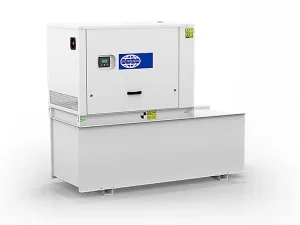
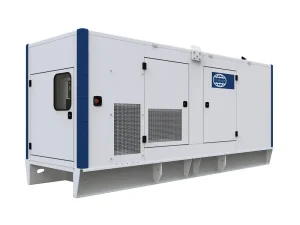
With the expansion of stringent municipal and occupational noise regulations worldwide, engine block acoustic emission has emerged as a primary design parameter. Structural ribbing matrices are strategically integrated across external skirt surfaces and crankcase sidewalls using modal dynamic simulation. By shifting natural resonant frequencies away from primary piston slap and crankshaft firing harmonics (typically 500 Hz – 2.5 kHz), Chinese block architectures contribute significantly to meeting low-noise parameters—especially when paired with silent enclosure packages like those engineered by FG Wilson and Cinda Creation.
State-of-the-Art Machining Protocols & Stringent Metrology
From 3D sand core printing to sub-micron multi-axis CNC line boring and automated laser interferometry, inspect how high quality is manufactured into every casting.
Automated Core Assembly
Utilizing cold-box phenolic urethane and inorganic binder systems, precision robotic arms manipulate complex core clusters for water jackets, oil galleries, and crankcase bays. Sand core distortion is controlled within ±0.2 mm, eliminating casting wall-thinning defects.
5-Axis CNC Line Boring
High-torque horizontal machining centers (HMCs) equipped with thermal growth compensation perform roughing and finish boring on main crankshaft saddles and camshaft tunnels in a single fixturing setup, ensuring coaxiality within 0.006 mm across 6-cylinder spans.
Plateau Honing Technology
Cylinder liners and direct-machined parent bores receive cross-hatch plateau honing using vitrified diamond stones. Surface finishes achieve Rk < 0.4 µm and Rpk < 0.15 µm, promoting immediate piston ring bed-in and ultra-low lubricating oil consumption.
Coordinate Metrology (CMM)
Climate-controlled inspection labs operate multi-sensor Zeiss and Leitz Coordinate Measuring Machines with volumetric accuracies of 0.9 µm + L/350. 100% of critical datums, dowel pin locations, and firedeck flatness are recorded for ISO audit trails.
Real-World Deployments: Powering Critical Global Infrastructure
From megawatt data hubs to remote high-altitude mines and extreme sub-zero pipelines, engine block reliability dictates project survival.
Healthcare & Mission-Critical Backup
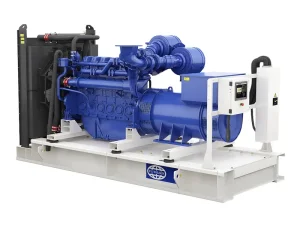
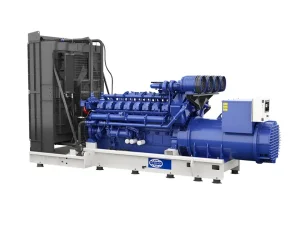
Hospitals, trauma units, and cloud computing data centers tolerate zero voltage fluctuations or startup delays. Engine blocks fitted to emergency gensets like the FG Wilson P1375-1 must exhibit instantaneous structural stability under 100% single-step block-loading within 10 seconds. Rigid crankcase bulkheads prevent crankshaft deflection during abrupt transient torque spikes.
Mining & Remote Extractive Operations
In surface mining and deep pit operations across South America, Australia, and Central Africa, diesel engines run non-stop in highly abrasive, dust-laden atmospheres. Heavy-duty cast iron parent blocks resist vibration stresses induced by severe cyclonic dust storms and continuous cyclic load fluctuations from massive crushers and draglines.
Trans-Continental Energy Pipelines
Along the 2,400-kilometer China–Myanmar crude oil and natural gas pipeline, 17 natural gas units and 5 heavy-duty diesel engines operate continuously. The long-block assemblies provide prime mechanical drive for crude transport pumps, delivering over 20,000 hours of continuous uptime between scheduled major maintenance overhauls.
Sub-Zero Arctic & Tropical Desert Extremes
FG Wilson diesel power units have proved operational longevity exceeding 20 continuous years in Arctic research stations at -45°C, as well as in Arabian desert facilities exceeding +55°C ambient heat. Engineered blocks eliminate micro-porosity, preventing freeze-thaw hydraulic cracking and thermal warpage in severe temperature swings.
Decarbonization, Zero-Carbon Fuels & Smart Casting Advancements
How Chinese engine block manufacturers are redesigning internal combustion architectures to accommodate hydrogen, methanol, and ammonia combustion dynamics.
Hydrogen ICE & Alternative Fuels
Hydrogen Internal Combustion Engines (H2-ICE) introduce unique tribological challenges: low gas lubricity, heightened flame speeds, and high susceptibility to pre-ignition and hydrogen embrittlement. Chinese metallurgical laboratories are pioneering nickel-chromium modified grey iron alloys alongside Plasma Transferred Wire Arc (PTWA) thermal bore spraying. PTWA deposits an ultra-dense, low-friction nanostructured iron-alloy coating directly onto the cylinder bore wall, eliminating heavy cast-in liners, elevating heat rejection efficiency by 18%, and protecting parent metals against embrittlement.
Additive Sand Tooling & AI Simulation
The era of multi-month pattern machining has been displaced by industrial 3D binder-jet sand printing. Engineers print intricate core assemblies with internal conformal cooling passages previously uncastable via traditional draft-angle tooling. When merged with AI-driven solidification simulations (AnyCasting / MAGMAsoft), virtual models predict shrink porosity, air entrapment, and residual thermal stresses prior to first molten iron pour. Lead times for prototyping heavy-duty V12 and V16 engine blocks have contracted from 26 weeks to just 18 working days.
Circular Remanufacturing & Core Upgrades
Achieving global ESG goals necessitates sustainable lifecycle management of high-mass engine castings. Chinese exporters lead comprehensive core remanufacturing programs. Salvaged engine blocks undergo high-frequency ultrasonic cleaning, robotic laser-cladding to restore worn main journal housings to factory blueprints, and precision re-sleeving. Remanufactured long blocks deliver identical OEM power guarantees with a 70% reduction in embedded lifecycle carbon emissions compared to virgin ore casting.
Full Lifecycle Engineering & Global Procurement Assurance
Beijing Xinda Creation Machinery Equipment Co., Ltd. (Cinda Creation) delivers end-to-end assurance from factory specification review to global logistics handling.
Triple ISO Certified Management
Quality, environment, and worker safety are certified through internationally audited systems: ISO 9001:2015 Quality Management System, ISO 14001:2015 Environmental Management System, and ISO 45001:2018 Occupational Health and Safety. This documented compliance guarantees traceability from incoming pig iron metallurgy through final dispatch crating.
Rapid Response & Warranty
International field reliability is backed by a 12-month standard warranty from the initial on-site startup date. Our senior technical response desk maintains a guaranteed 24-hour service response window, providing digital diagnostic reviews, electrical schematics, and Perkins/Weichai spare parts supply to minimize downtime.
Custom Heavy Export Packaging
Engine blocks and generator power plants face extreme ocean freight conditions, including saline humidity and heavy wave vibration. Every unit is treated with vapor-phase corrosion inhibitors (VCI), sealed inside hermetic vacuum barrier foil, and secured in heat-treated ISPM-15 compliant timber cases designed for multi-point crane and forklift rigging.
Frequently Asked Questions (FAQ) for Engineering Buyers
In-depth technical and logistical answers addressing engine block specifications, metallurgy, quality auditing, and international trade protocols.
What are the key technical differences between Prime, Standby, and Continuous engine power ratings?
How do you calculate kVA to kW, and how does power factor affect generator block sizing?
What international casting and machining standards govern China-sourced engine blocks?
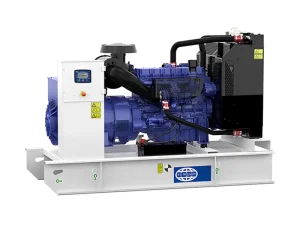
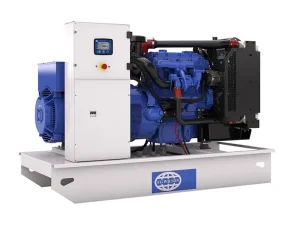
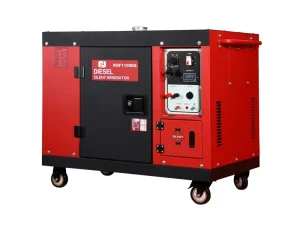
Should our project select an Open-Frame or a Sound-Attenuated Silent Generator set?
How does high altitude and high ambient temperature derating affect engine block selection?
What parameters must procurement teams provide to receive an accurate configuration and quote?
How are engine blocks protected against internal and external corrosion during ocean transit?
What documentation and inspection certificates accompany export shipments?
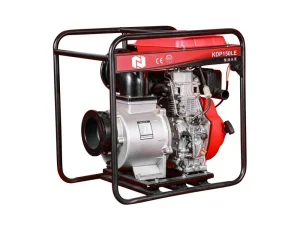
Continuous Fleet Power, High-Pressure Pumping & Medium Range Gensets
Explore additional high-performance industrial power platforms and heavy-duty auxiliary units engineered for global distribution.
Request Complete Engine Block Blueprints & Project Quotes
Consult directly with Beijing Xinda Creation's senior powertrain engineers. Receive comprehensive 3D CAD step files, material certifications, and turnkey project FOB/CIF quotations tailored to your exact project load profile.