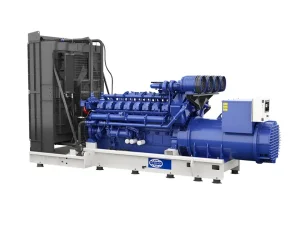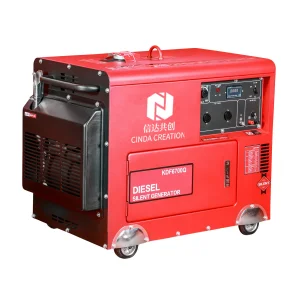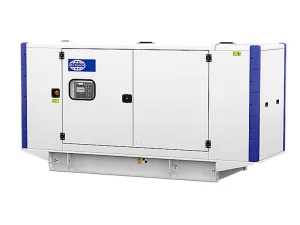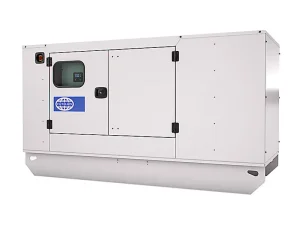
High-Efficiency Gas & Auxiliary Power Inventory
Direct supply from state-of-the-art Chinese integration facilities. Certified to international performance tolerances under ISO 8528 and CE directives.
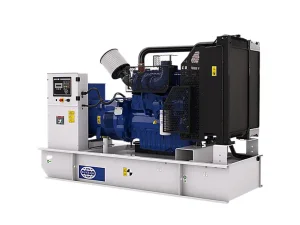
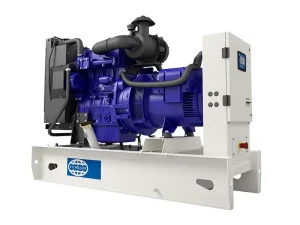
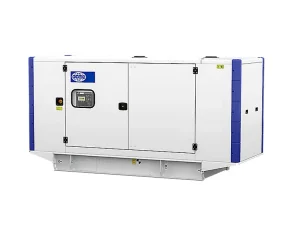
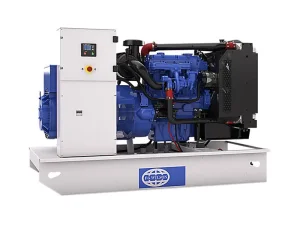
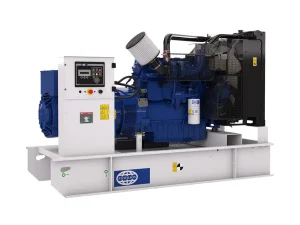
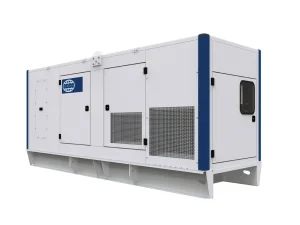
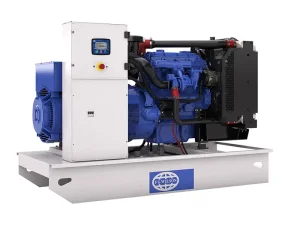
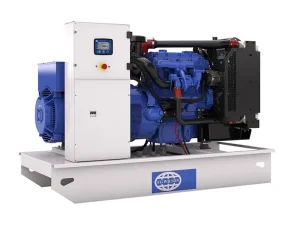
Executive Engineering Overview: Small Gas Generation in the Global Energy Shift
Analyzing thermodynamic efficiency, fuel flexibility, and life-cycle cost models of small-displacement (10 kVA to 250 kVA) gaseous engines.
The global energy paradigm is witnessing an accelerated decentralization. While megawatt-scale natural gas power blocks fulfill foundational grid balancing, small-range gaseous generators (sub-250 kVA) have evolved into critical nodes for decentralized continuous power, high-ambient peak shaving, and zero-downtime microgrid resilience. As emission standards converge toward near-zero particulate matter (PM) and strict nitrogen oxide ($NO_x$) constraints globally, industrial consumers are re-evaluating legacy small diesel units in favor of natural gas, LPG, biogas, and hydrogen-enriched gaseous power generation.
China's manufacturing ecosystem for small gaseous generating units bridges the gap between precision thermodynamic performance and massive industrial scaling. Through close architectural synergy with proven blocks from international leaders like FG Wilson (incorporating advanced Perkins, Weichai, and Kubota gaseous derivative platforms), Chinese exporters configure small gas gensets capable of achieving ultra-low thermal derating at high altitudes, rapid dynamic load recovery within transient Step 1 limits, and uncompromised continuous electrical efficiency.
Stoichiometric vs. Lean-Burn Control
Small-displacement gaseous engines deploy digital air-to-fuel ratio (AFR) controllers. Stoichiometric systems utilize 3-way catalytic converters for near-zero emissions in urban centers, whereas lean-burn variants optimize total fuel consumption across continuous Prime cycles.
Transient Response Optimization
Overcoming standard gas engine throttle lag via digital gas admission valves and integrated ECM throttle governing. Our gensets maintain stable frequency under a 60% transient block load according to ISO 8528-G2 compliance metrics.
Multi-Fuel Adaptability
Proprietary gas filtration and pressure-regulation trains enable swift conversion between Pipeline Natural Gas (PNG), Liquefied Petroleum Gas (LPG), and Associated Petroleum Gas (APG) with low Methane Number (MN) tolerances.
China OEM Integration & Supply Chain Efficiency Advantages
How Beijing Xinda Creation transforms tier-one global components into robust, cost-advantaged export systems.
Tier-1 Component Direct Sourcing
Operating from Beijing with deep strategic ties to global equipment lines including FG Wilson, Weichai, and Perkins assembly bases. We eliminate intermediate multi-layer distribution markups while maintaining 100% component authenticity.
End-to-End Factory Integration
From heavy-gauge robotic sheet metal fabrication for acoustic enclosures to powder coating lines rated for 1,000-hour salt spray exposure. Canopies achieve exceptional corrosion resistance and attenuation (68 dBA @ 7m).
Comprehensive Load-Bank Testing
Every small generator undergoes automated load step testing (0%, 25%, 50%, 75%, 100%, and 110% overload) across transient response, heat dissipation, and exhaust emissions before issuing the final Factory Acceptance Test (FAT) sign-off.
Mission-Critical Applications for Small-Range Gas Units
Deployment topologies across demanding commercial, industrial, and off-grid infrastructures worldwide.
Telecom & Edge Data Hubs
Continuous off-grid prime power for remote 5G base transceiver stations (BTS) and modular edge centers. Gas systems eliminate on-site diesel theft risks while offering runtimes exceeding 500 hours between service intervals.
Urban Commercial & Residential Backup
Supplied with ultra-silent sound attenuated enclosures operating beneath 65 dBA. Connecting directly to municipal natural gas lines avoids on-site fuel storage regulations in dense municipal centers.
Combined Heat & Power (Micro-CHP)
Capturing jacket water heat and high-temperature exhaust through specialized plate exchangers. Small gas generator setups yield combined thermal and electrical efficiencies exceeding 85% for wellness centers, hotels, and greenhouses.
Oilfield Associated Gas Utilization
Wellhead flares produce vast amounts of wasted associated petroleum gas. Small, heavy-duty gas generator skids convert raw APG on-site into electricity for beam pumps, instrumentation, and local camp microgrids.
Hybrid Solar-Storage-Gas Microgrids
Acting as the on-demand dispatchable backbone for remote battery energy storage systems (BESS) and PV installations. Fast dry-contact start logic allows synchronized ramp-up when renewable generation dips.
Agricultural & Livestock Biogas Units
Engineered with corrosion-resistant valve materials and intake scrubbers to accommodate methane derived from anaerobic digesters, resisting $H_2S$ acidic decomposition and minimizing farm operational overhead.
Small Gaseous Generation: Trends Shaping Procurement
Where international engineering demands are heading over the next decade.
| Performance Dimension | Legacy Small Diesel Gensets | Modern Small Gas Gensets (China Export Standard) | Long-Term Strategic Impact |
|---|---|---|---|
| Emissions Compliance | Requires complex DPF/SCR systems for Tier 4F | Inherent low PM; simple 3-way catalyst for EPA/EU Stage V | Substantially reduced exhaust after-treatment maintenance |
| Operating Expense (OPEX) | High recurring diesel delivery & storage costs | Lowest cost per kWh via direct natural gas piping or bulk LPG | Achieves operational payback in continuous applications within 14 months |
| Fuel Spoilage & Storage | Fuel degrades within 6-12 months; algae risks | Gaseous fuel does not degrade over extended idle periods | Infinite standby fuel readiness without chemical polishing |
| Noise Attenuation | High mechanical knock and low-frequency rumble | Smooth spark-ignited combustion cycle | Ideal for strict municipal hospital & residential acoustic boundaries |
Hydrogen Blending & Dual-Fuel Advancements
China's premier genset research facilities are currently rolling out gaseous engines capable of operating on up to 20% Hydrogen ($H_2$) blended with Natural Gas without requiring cylinder head modifications. This capability positions small distributed infrastructure assets to transition alongside decarbonization protocols without stranded capital expenditure.
Technical Specification Framework for International Buyers
Essential checklist parameters for EPC contractors and industrial procurement leads when ordering from China.
Gas Quality Analysis
Confirm the lower heating value (LHV), methane number (MN), and hydrogen sulfide ($H_2S$) concentration to calibrate compression ratios and anti-detonation safety margins.
Load Profiling & Motor Starting
Analyze inductive motor loads against alternator kVA capacity. Specify digital permanent magnet generators (PMG) for reliable fault clearing and transient voltage dip control.
Environmental De-Rating
Calculate temperature and altitude factors. Installations above 1,000m or in ambient climates exceeding 40°C require factory-engineered high-ambient charge coolers and heavy radiators.
Control & Paralleling Logic
Select standard digital synchronizing controllers (Deep Sea, ComAp) to support multi-genset load sharing, mains export, and remote telemetry via Modbus/SNMP protocols.
Frequently Asked Questions: Small Gas Generating Sets
Detailed engineering inquiries addressed by our export technical team.
What is the practical dynamic step load limit for a small gas generator compared to diesel?
What pipeline gas inlet pressure is required for small-range gas gensets?
How does ambient temperature and elevation derate gas engine performance?
What are the typical maintenance intervals for small continuous gas gensets?
Can small gas gensets be paralleled with existing utility grids or solar plants?
Complete Heavy-Duty Gaseous & Diesel Equipment
Global export models ready for commissioning across commercial, mission-critical, and mining sites.