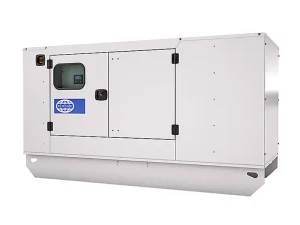
Primary Heavy-Duty Genset Deployments
Engineered to deliver uninterrupted stability across mining camps, remote industrial outposts, telecom networks, and high-density computing centers.
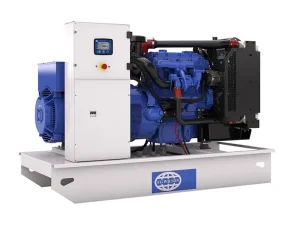
China Wilson Small Type 33KVA Energy Source P33-6
Detailed Technical Specs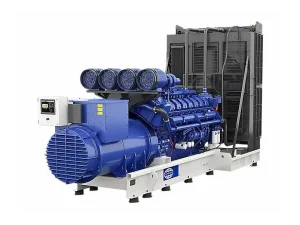
Large Range >800 kVA FG Wilson P2000-3 Power Plant
Detailed Technical Specs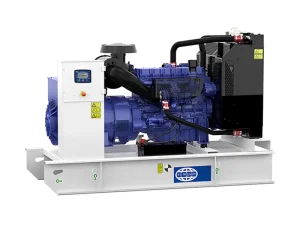
Wilson Open Type Small Diesel GenSets P200-6 400/230V
Detailed Technical Specs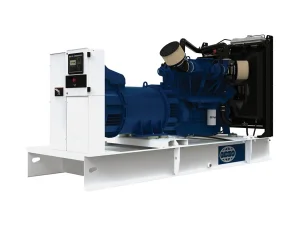
FG Wilson Medium Range 225-938kVA GenSet P660-3
Detailed Technical Specs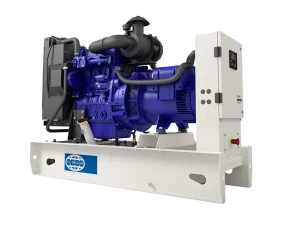
Small Range <220 kVA P18-6 Skid FG Wilson System
Detailed Technical Specs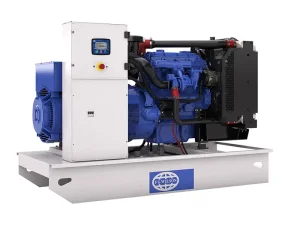
Wilson Small Range <220 kVA High-Efficiency P65-5
Detailed Technical Specs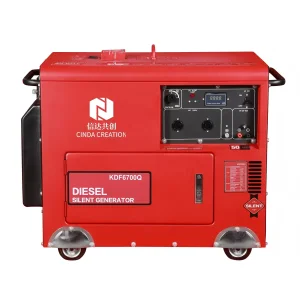
KDF6700Q Quiet Generator Set Portable 4.5kVA / 5.0kVA
Detailed Technical Specs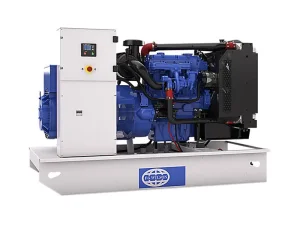
Wilson Open Type Small Diesel Sets 230V 50Hz P26-3S
Detailed Technical SpecsGlobal Genset Sourcing Paradigms & Technology Shifts
A technical examination of changing power procurement behaviors across international utility grids, private infrastructure, and industrial mega-projects.
Grid Volatility & Mission-Critical Demands
The acceleration of intermittent renewable generation (wind and solar) has heightened utility destabilization across North America, Europe, Africa, and Latin America. As microgrids expand, standby diesel generators no longer act merely as passive disaster insurance; they serve as dynamic grid-peaking assets and frequency stabilizers. Sourcing managers now prioritize sets equipped with transient load acceptance rates exceeding ISO 8528-5 Class G2 and G3 specifications, guaranteeing power restoration in under 10 seconds.
Tiered Emissions & Decarbonization Mandates
Global procurement teams must navigate complex regional emissions compliances: EPA Tier 4 Final in the United States, Stage V in the European Union, and China IV Non-Road mandates across Asia. The challenge involves managing capital expenditure while guaranteeing dual-fuel compatibility, selective catalytic reduction (SCR) modules, and hydrotreated vegetable oil (HVO) biofuel tolerance. China’s supply chain delivers certified power platforms configured with factory-integrated diesel particulate filters (DPF) that achieve compliance without parasitic power draw.
Optimizing Total Lifecycle Cost (TCO)
Equipment acquisition accounts for only 12-18% of a commercial genset's total lifecycle expense; the balance is consumed by fuel burn, preventive maintenance schedules, and unplanned downtime. B2B buyers evaluate fuel consumption maps at 50%, 75%, and 100% prime ratings. Genuine Perkins, Cummins, and Weichai engine pairings engineered in Beijing offer thermal efficiencies exceeding 42%, extending preventative service intervals beyond 500 operational hours.
Enterprise Rating & Sizing Matrix
Operational parameters distinguishing generator duty cycles in accordance with ISO 8528, ISO 3046, and international EPC requirements.
| Duty Classification | Annual Operating Limit | Average Permissible Load Factor | Overload Capability | Primary Industrial Applications |
|---|---|---|---|---|
| Emergency Standby (ESP) | Maximum 200 hours per annum | ≤ 70% over 24-hour cycle | 0% (No overload permissible) | Hospitals, commercial high-rises, cold storage logistics |
| Prime Power (PRP) | Unlimited running hours | ≤ 70% over 24-hour cycle | 10% overload for 1 hour every 12 hours | Remote mining, construction, island microgrids |
| Continuous Power (COP) | Unlimited continuous baseload | 100% constant continuous load | 0% (Continuous baseline only) | Pipelines, combined heat & power (CHP), wastewater plants |
| Data Center Continuous (DCC) | Unlimited continuous runtime | Up to 100% rated capacity | Specific transient overrides | Tier III and Tier IV certified cloud data centers |
Engineered Turnkey Solutions for Demanding Environments
From harsh extraction sites to isolated municipal medical facilities, our power systems are tailored to mitigate environmental risk and operational stress.
Healthcare & Mission-Critical Life Safety
Hospitals cannot tolerate harmonic distortion or prolonged transfer delays. We supply silent-canopied generator systems paired with dual-bypass Automatic Transfer Switches (ATS) executing open- or closed-transition synchronization in under 10 seconds. Coupled with advanced digital deep-sea controllers (DSE) and permanent magnet generators (PMG), these units provide reliable motor-starting currents and protect sensitive imaging diagnostic machinery.
Oil, Gas & Transcontinental Pipelines
Long-distance pipeline distribution networks require continuous prime operation in isolated locations. As evidenced by continuous duty on the 2,400 km China-Myanmar crude line, our fleets integrate heavy filtration for unrefined diesel and dual-fuel configurations. Heavy-duty cast iron block structures, remote telematics tracking, and vibration-isolated skid chassis guarantee resilience against continuous load shocks and line harmonics.
Extreme Ambient Engineering: Arctic to Desert
Standard generator sets derate rapidly when ambient temperatures breach 40°C or drop below -20°C. For Middle Eastern and Sub-Saharan deployments, we configure oversized cooling packages, double-pass tropicalized radiators, and sand-trap louvers. Conversely, Arctic packages feature jacket water heaters, fuel line tracing, intake air pre-heating grids, and insulated acoustic canopies, validated by over two decades of successful field performance in sub-zero regimes.
Technology Roadmap: Cloud Telematics & Hybridization
The convergence of traditional internal combustion reliability with algorithmic microgrid controls, predictive cloud diagnostics, and battery storage.
IoT Remote Diagnostics & Predictive Maintenance
Every industrial unit can be paired with 4G/5G edge telematics interfaces, streaming oil pressure, coolant temperature, fuel consumption, battery state, and winding thermometry into our centralized cloud management console. Advanced edge algorithms forecast alternator winding insulation failure, injector fouling, and turbocharger wear hundreds of hours ahead of a critical shutdown, transforming preventative maintenance from reactive guesswork into precision planning.
BESS Hybrid Co-Generation Integration
Modern sustainability objectives require lowering unnecessary fuel burn during periods of low-load demand. Our next-generation power units are built with plug-and-play controller logic that integrates seamlessly with Battery Energy Storage Systems (BESS) and commercial photovoltaic arrays. Under low-load conditions, the BESS supports the facility silently; as load thresholds increase, the generator initializes automatically, runs within its peak thermal efficiency window (75-85%), and recharges the batteries simultaneously.
Sound Attenuation & Acoustic Engineering
Urban density demands higher sound attenuation. Our silent and super-silent enclosures employ computational fluid dynamics (CFD) designed air paths that provide adequate engine cooling while reducing sound pressure to under 68 dBA at 7 meters. Treated with anti-corrosion marine-grade powder coatings, internal rock-wool acoustic baffles, and heavy-gauge galvanized steel canopies, these systems withstand 1,000 hours of continuous salt-spray testing without structural compromise.
Frequently Asked Questions for Project Engineers
Essential considerations covering international logistics, technical parameter sizing, site derating, and warranty coverage.
How do environmental factors such as altitude and ambient temperature affect generator output?
Diesel internal combustion engines require ambient oxygen for efficient combustion. At altitudes above 1,000 meters (3,280 ft), atmospheric pressure decreases, requiring a typical derating of 1% to 3.5% per 300 meters of elevation. Similarly, when ambient temperatures exceed 40°C (104°F), air density decreases and cooling efficiency drops, requiring an engine output derate of approximately 1% to 2% for every 5°C above standard rating conditions. Our Beijing engineering team conducts precise thermal calculations based on your geographic coordinates to deliver a system correctly matched to your local environment.
Why is the 0.8 power factor standard in three-phase power ratings?
Most industrial equipment—including induction motors, transformers, air conditioning compressors, and switchgear—exhibits an inductive load that causes current to lag voltage. A power factor of 0.8 lagging is the standard international engineering benchmark for calculating apparent power (kVA) relative to real power (kW). For example, a 1,000 kVA generator operating at a 0.8 power factor delivers 800 kW of real usable power. Overlooking the power factor can result in undersizing the alternator, leading to thermal overload even if the engine has surplus mechanical horsepower.
What documentation and certifications are provided for export compliance?
Every genset configured for export undergoes strict pre-delivery factory testing under resistive load banks at 25%, 50%, 75%, 100%, and 110% load steps. Our shipments are accompanied by detailed factory test inspection certificates, comprehensive electrical wiring schematics, full parts identification manuals, and engine warranty registration documents. Corporate manufacturing operations are certified under ISO 9001 (Quality), ISO 14001 (Environmental), and ISO 45001 (Occupational Health & Safety), with third-party inspection options (SGS, BV, Intertek) supported prior to departure.
How are spare parts logistics and long-term service handled globally?
System downtime can carry significant financial and operational costs. We supply genuine Perkins, FG Wilson, and Weichai filtration kits, injectors, fuel pumps, sensors, and electronic control modules (ECMs) directly from our Beijing warehouse. In addition, our components share cross-regional compatibility with worldwide distributor networks. For mission-critical sites, we can bundle a 2,000-hour preventive maintenance parts package directly inside the generator canopy during maritime transit, ensuring your on-site technicians have the required service items from day one.
Extended Industrial & Portable Power Catalog
Explore our wide selection of silent enclosures, open skid configurations, and single-cylinder utility workhorses built to meet diverse operational requirements.
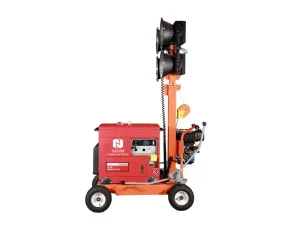
Noise Reduction Technology Silent GenSet KDF8500Q(-3)
Detailed Technical Specs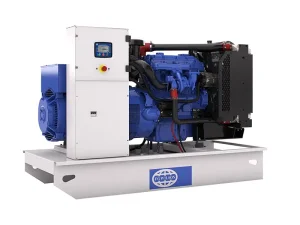
Wilson Open Type Small Diesel GenSets 400/230V P88-3
Detailed Technical Specs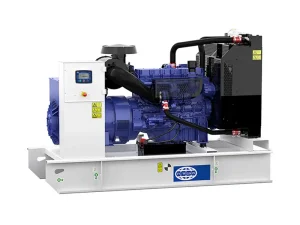
Wilson Open Type Small Diesel Sets 400V 50Hz P150-5
Detailed Technical Specs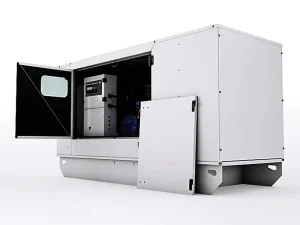
Wilson Open Type Small Diesel Sets 230V 50Hz P55-6S
Detailed Technical Specs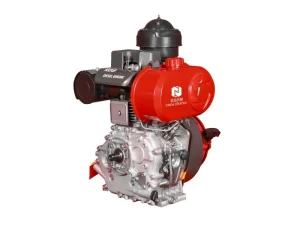
Single Cylinder Air-Cooled Diesel Generator Set KD9
Detailed Technical Specs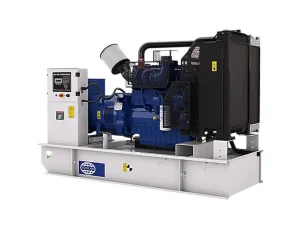
Medium Range 225-938kVA FG Wilson Industrial P330-5
Detailed Technical Specs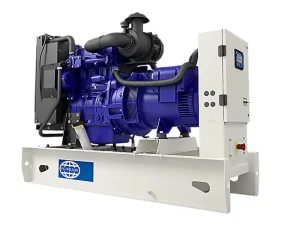
FG Wilson Low Noise Energy Solution GenSets P11-6S
Detailed Technical Specs