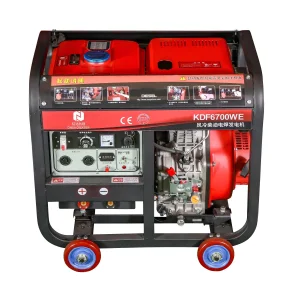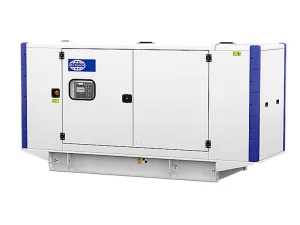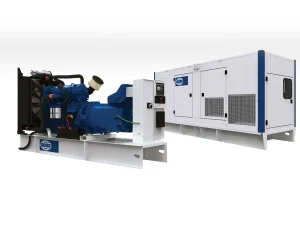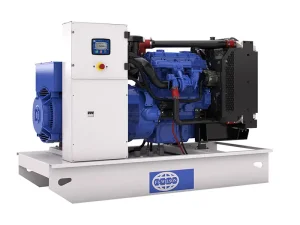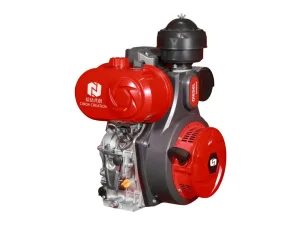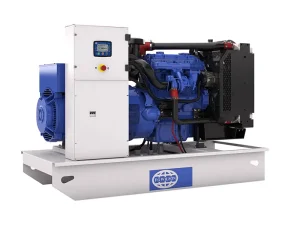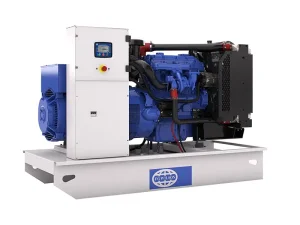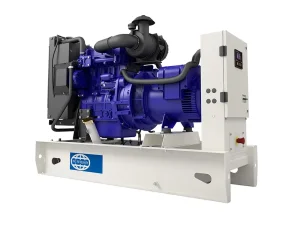
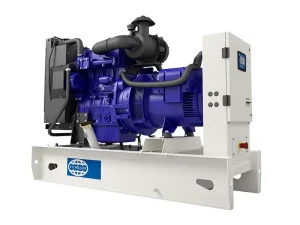
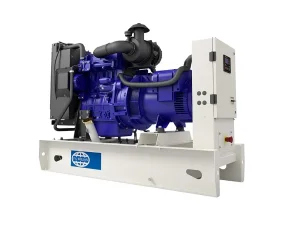
Small Range <220 kVA
Engineered for uncompromising commercial resilience. Every unit undergoes strict bench-testing, voltage stabilization audits, and harmonic distortion verification before global deployment.
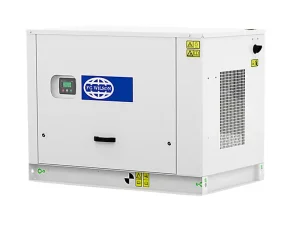
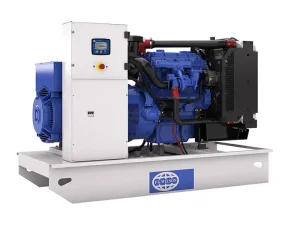
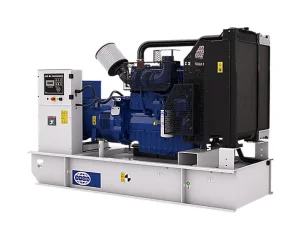
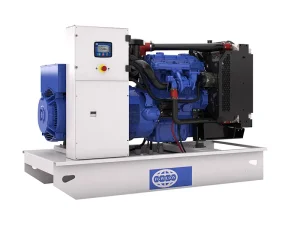
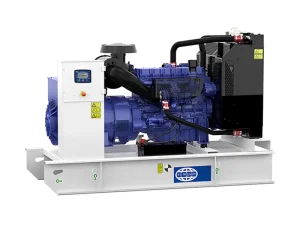
Demystifying retail branding, China's Tier-1 industrial manufacturing corridors, and how global procurement teams distinguish between mass-consumer inverter units and industrial-grade continuous gensets.
Across the North American commercial and tool retail landscapes, the search term "Inverter Generators At Harbor Freight" has become a cultural benchmark for accessible, clean inverter electricity—epitomized by consumer lines such as Predator. However, for B2B engineering managers, utility procurement directors, and global contractors, an essential truth defines this sector: Harbor Freight does not build engine blocks, wound alternators, or multiphase inverter control modules in California. Instead, the real architectural strength, precision casting, and computerized inverter module fabrication originate from specialized high-technology original equipment manufacturing (OEM) clusters across China.
At Beijing Xinda Creation Machinery Equipment Co., Ltd. (Cinda Creation), founded on July 17, 2019 in Tongzhou District, Beijing, our core operations sit squarely within this high-performance energy infrastructure. Operating under strict ISO 9001 (Quality Management), ISO 14001 (Environmental Stewardship), and ISO 45001 (Occupational Safety) certifications, Cinda Creation bridges the gap between mass-market consumer inverter products and heavy-duty industrial standby power. While retail outlets provide 2 kW to 9 kW gasoline portable units for homeowner standby and weekend jobsites, Cinda Creation engineers the next-tier envelope: enterprise-grade FG Wilson and Weichai prime-power and emergency standby systems from compact small units under 220 kVA all the way through 1375 kVA mega-generators equipped with electronic fuel management and precision Perkins and Weichai engines.
Consumer-grade inverter units use multi-stage power rectification: raw multiphase alternating current (AC) is generated at high frequency, rectified to direct current (DC), and subsequently smoothed by insulated-gate bipolar transistors (IGBTs) to deliver Total Harmonic Distortion (THD) under 3%—critical for delicate microprocessors, medical telemetry, and modern instrumentation.
While retail consumer inverters exhibit an intended lifespan of 500 to 1,500 running hours in light intermittent service, industrial heavy-duty diesel generator sets engineered with Perkins and Weichai blocks provide mean time between overhauls (TBO) reaching 15,000 to 25,000 operational hours when supported by genuine Perkins replacement components.
China's manufacturing supremacy in generator production rests on a comprehensive supply cluster: automated copper-coil winding, localized aluminum die-casting, high-density acoustic insulation foam molding, and firmware-calibrated digital automatic voltage regulation (AVR) modules manufactured within 100-kilometer industrial zones.
Objective parameters for electrical contractors, municipal engineers, and multinational procurement teams planning critical power acquisitions.
| Evaluation Parameter | Harbor Freight Inverter Class (e.g. Predator 3500-9500) | Industrial Small Range Genset (FG Wilson P22-6 to P200-6) | Heavy Medium/Large Range (FG Wilson P400 to P1375-1) |
|---|---|---|---|
| Primary Power Mechanism | Small 4-stroke OHV Gasoline Engine with electronic inverter conversion | Perkins 1100 / 400 Series Water-Cooled Diesel Engine direct-coupled | Perkins 2000 / 4000 Series or Weichai Turbocharged Heavy Industrial Diesel |
| Continuous Prime Output | 1.6 kW – 7.5 kW Single-Phase | 18 kW – 160 kW (22 kVA – 200 kVA) 3-Phase 400/230V | 180 kW – 1000+ kW (225 kVA – 1375 kVA) 3-Phase |
| THD (Harmonic Distortion) | < 3% Clean Wave via Digital Inverter | < 4% Commercial Wave via Brushless AVR Alternator | < 2.5% Utility Standard with PMG excitation |
| Acoustic Rating (Noise @ 7m) | 57 dB(A) – 67 dB(A) (Ultra-quiet polymer shroud) | 65 dB(A) – 72 dB(A) (Heavy Galvanized Steel Soundproof Canopy) | 75 dB(A) – 82 dB(A) (Acoustically Attenuated Containerized Bay) |
| Duty Cycle Classification | Intermittent Standby (3 to 8 hours continuous run per session) | Unlimited Prime Running Hours at variable load (ISO 8528-1) | Mission-Critical Continuous Base Load & Data Center Standby |
| Control Automation & ATS | Manual Recoil or Push-Button 12V Key; Parallel port capable | Microprocessor Auto-Mains Failure (AMF), ATS Integration, Remote SCADA | DeepSea / PowerWizard Intelligent Multi-Genset Paralleling & Load Sharing |
| Emissions & Certification | EPA Tier 3 / CARB Phase 3 spark-ignition regulations | EPA Tier 3/4i, EU Stage IIIA / Stage V compliance variants | ISO 9001, ISO 14001, ISO 45001, CE, Factory Pre-Delivery Test Record |
Analyzing why international brands and industrial exporters source complete units, components, and precision assemblies from China's manufacturing ecosystems.
The global dominance of Chinese machinery exporters in the generator space—whether delivering consumer inverter generator sets for American retailers like Harbor Freight or multi-megawatt commercial units for infrastructure corridors—rests on four pillars of supply chain synergy:
From lightweight die-cast aluminum alloy cylinder blocks utilized in portable pure-sine wave inverter engines to ductile cast iron crankshafts for heavy Perkins diesel blocks, Chinese high-pressure die casting foundries offer microscopic grain density control, minimizing porosity and enabling high thermal endurance under prolonged 100% prime-load operating conditions.
The efficiency of any generator depends on the copper purity of its stator and rotor windings. China's domestic electromechanical supply chain provides 99.99% oxygen-free electrolytic copper wire, Class H synthetic insulation varnishes, and laser-punched cold-rolled silicon steel laminations that hold core eddy current losses below 1.8 Watts per kilogram.
Contemporary inverter generator performance relies on micro-controller units (MCUs) running pulse-width modulation (PWM) control algorithms. Chinese electronics clusters assemble rugged surface-mount device (SMD) boards coated in military-grade silicone conformal sealant, protecting microcircuits against salt fog, sand ingress, and tropical humidity.
Chinese manufacturing cycles compress new generator canopy prototyping, acoustic labyrinth optimization, and vibration dampening rubber mount calibration into weeks rather than quarters. Automated dyno load banks evaluate step-load responses from 0% to 110% overload before units leave the assembly line.
Auditable performance commitments backing every shipment leaving our Beijing logistics and consolidation hubs.
Headquarters: Room 2421, 24th Floor, Building 5, Yard 2, Jiangmidian Street, Tongzhou District, Beijing, China. Dedicated hotline: +86-139-1156-4503 | WhatsApp: +86 137 8567 2167 | Official Email: [email protected]
What corporate risk managers and B2B buyers must specify when sourcing Chinese generator equipment to guarantee trouble-free customs clearance and local code approval.
Procuring power generation machinery across international borders entails far more than calculating freight rates per TEU container. Whether purchasing retail inverter stock inspired by Harbor Freight procurement structures or ordering large-capacity FG Wilson silent diesel generator sets for telecommunication towers in Latin America, Southeast Asia, or the Middle East, compliance with local electrical codes and environmental laws determines project viability.
In the United States, retail consumer generators such as those stocked by Harbor Freight must possess valid Environmental Protection Agency (EPA) certificates of conformity and California Air Resources Board (CARB) evaporative emissions compliance. For industrial diesel gensets supplied by Cinda Creation, our Perkins-powered and Weichai-powered units can be configured to match designated site jurisdictions—including Tier 2/Tier 3 emergency stationary classifications, fuel-optimized export models for non-regulated territories, and ultra-low emission Tier 4 Final/Stage V packages incorporating Diesel Particulate Filters (DPF) and Selective Catalytic Reduction (SCR) urea injection.
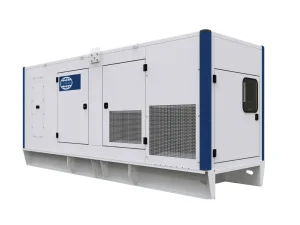
Commercial job sites, hospitals, and urban residential developments mandate strict sound envelope compliance. While consumer inverters achieve quiet operation (57-65 dBA) through compact thermoplastic enclosures, high-capacity diesel generators require heavy acoustic structural engineering. Cinda Creation's FG Wilson silent series utilizes 2.0 mm electro-galvanized zinc-treated steel canopies coated in electrostatic polyester powder paint. Interior acoustic linings utilize non-flammable, oil-repellent rock wool insulation, dual-chamber industrial exhaust silencers, and engineered airflow baffles that permit full engine radiator cooling while suppressing sound pressure to 65-72 dBA at 7 meters.
Unlike portable recreational generators that power tools via localized NEMA receptacles, commercial infrastructure requires seamless grid failure transition. Cinda Creation provides integrated or standalone Automatic Transfer Switch (ATS) panels featuring motorized mechanically-interlocked transfer contactors. When municipal voltage sags below 85% or experiences phase failure, the microcomputer control module triggers cold-cranking within 3 seconds, transferring load within 10 to 15 seconds. For mega-developments exceeding single-engine capacity, our DeepSea or PowerWizard synchronization controllers allow multiple gensets (e.g., three Wilson P501-3 units) to parallel automatically onto a common busbar, adjusting load distribution proportionally.
Reviewing real-world field environments where Cinda Creation and FG Wilson generation units deliver uninterrupted continuous prime and standby electricity.
In rural and decentralized emergency medical stations, a power outage directly threatens lives. Compact portable diesel units and silent FG Wilson sets maintain continuous power for pharmaceutical cold-chain vaccine refrigeration, surgical theater lighting, and computerized tomography (CT) scanners without harmonic voltage spikes.
Heavy energy transmission infrastructure demands uncompromising reliability. Along the 2,400-kilometer China–Myanmar crude oil pipeline, a fleet of 17 natural gas generator sets and 5 heavy diesel generators operates continuously in high-vibration remote pumping stations, serving as an international benchmark for pipeline auxiliary power.
In equatorial desert environments where ambient summer temperatures exceed 50°C (122°F), standard commercial gensets derate by 20% to 35% due to cooling limitations. Cinda Creation configures custom heavy-duty tropical radiators, 55°C high-ambient push fans, and sand-trap louvers to maintain full rated kW capacity without thermal shutdown.
Proven in polar conditions, FG Wilson generator sets supplied through certified exporters have reliably operated in the Arctic circle for over two decades. Equipped with electric jacket water pre-heaters, lube oil sump heating elements, motorized insulated radiator shut-off dampers, and arctic-grade low-pour-point diesel filters, fast cold-starts are assured down to -40°C.
How digital EFI, hybrid battery-energy storage integration (BESS), and intelligent IoT telematics are transforming off-grid and emergency power architecture through 2030.
The global portable inverter and industrial generator manufacturing sector is undergoing its most significant technological leap in half a century. Driven by strict global carbon mandates, high fossil fuel costs, and the rapid proliferation of sensitive edge-computing nodes, Chinese R&D centers are spearheading three primary industry evolutions:
Traditional carburetors in portable inverter generators (such as early generation Harbor Freight Predator units) are rapidly being superseded by closed-loop electronic fuel injection (EFI) engines. By employing oxygen sensors in the exhaust stream, throttle position encoders, and digital electronic control units (ECUs), modern Chinese inverter powerplants achieve 25% lower fuel consumption under partial loads, eliminate float-bowl clogging from stale ethanol-blended fuels, and facilitate instant push-button starting across extreme altitude and temperature gradients.
Industrial users no longer treat diesel generator sets as isolated power islands. Modern commercial installations combine mid-range gensets (such as the FG Wilson P110-6 or P250-5) with lithium-iron-phosphate (LiFePO4) Battery Energy Storage Systems (BESS). In this hybrid architecture, the generator runs exclusively at its peak fuel-efficiency sweet spot (70%–85% load) to rapidly recharge battery banks and serve large inductive surges, automatically shutting down when low-load telemetry allows the battery inverter to sustain base load silently.
Factory-installed 4G/5G telematics modules communicate real-time generator operating metrics directly to cloud-based monitoring suites. Cinda Creation's customers can track real-time engine oil degradation, fuel consumption rates, coolant temperatures, vibration harmonics, and battery cranking voltage from anywhere in the world. AI-driven predictive fault algorithms alert technicians to replace fuel filters or service injectors before an unexpected outage occurs.
Detailed technical answers to common queries submitted by industrial plant managers, electrical contractors, and overseas procurement teams.
Explore our full line of specialized heavy generation machinery, dual-function diesel welding sets, and high-efficiency open frame units.