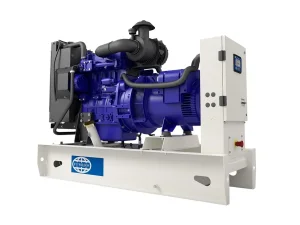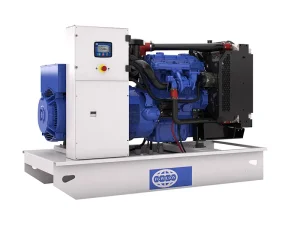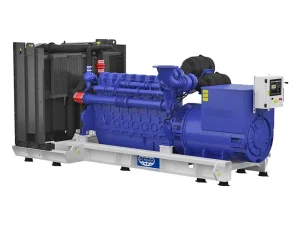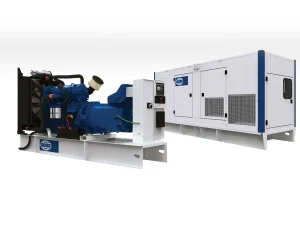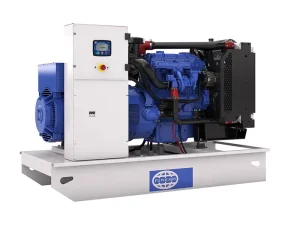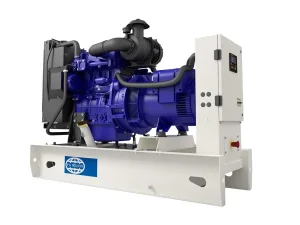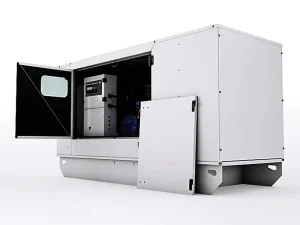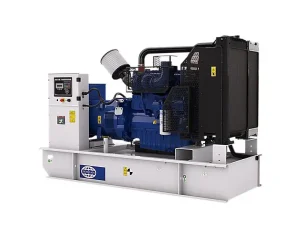
Specified Multi-Fuel & Diesel Generating Systems (Series I)
Configured across continuous, prime, and critical standby operational profiles with seamless electronic fuel management.
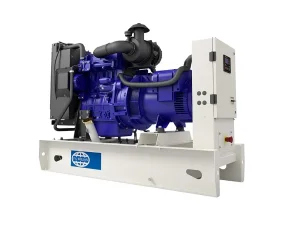
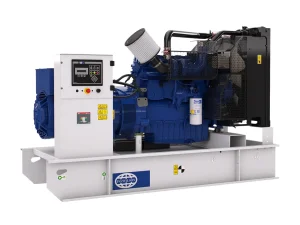
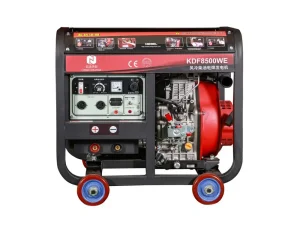
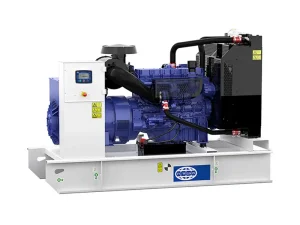
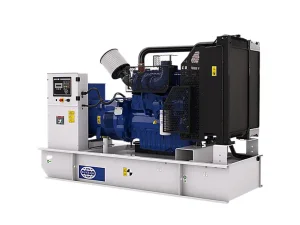
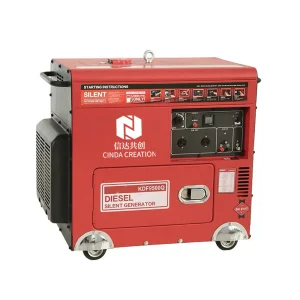
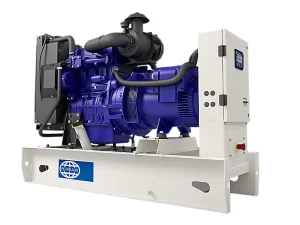
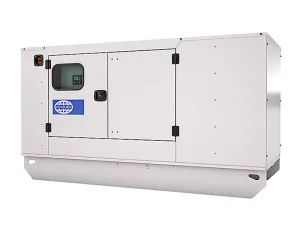
Engineering Multi-Fuel Flexibility: Beyond Conventional Diesel Gen-Sets
Modern global energy dynamics necessitate generator sets capable of operating on interchangeable fuel inputs: Diesel, Natural Gas (CNG/LNG), Liquefied Petroleum Gas (LPG), and flare/wellhead biogases without compromising load acceptance or mechanical longevity.
Automated Fuel Ratio Modulation
Utilizing high-speed ECU algorithmic control, our multi-fuel platforms inject gaseous fuel into the air intake stream while maintaining minimum diesel pilot injection, delivering up to 70-80% gas substitution under fluctuating load conditions without knock or thermal runaway.
Zero-Downtime Hot Fuel Switching
Instantaneous automatic failover switches from gaseous operation to 100% diesel mode instantaneously whenever supply line pressures drop below critical thresholds, preventing generator tripping across mission-critical facilities, telecom grids, and mining plants.
Severe Environment Thermal Balances
Equipped with oversized core radiators, pre-heaters, heavy-duty air filtration, and specialized anti-corrosion canopy metallurgy to ensure continuous operations at -40°C Arctic chill up to +55°C hyper-arid desert regions.
| Evaluation Parameter | Standard Diesel Genset | Dedicated Spark Gas Engine | China Multi-Fuel Hybrid Genset |
|---|---|---|---|
| Fuel Supply Vulnerability | High (Subject to fuel supply chain shocks) | Critical (Dependent strictly on pipeline gas) | Negligible (Dual-fuel & Tri-fuel redundancy) |
| Operating Expenditure (OPEX) | Base Reference (High fuel costs) | 35-50% Reduction vs Diesel | 30-45% Sustained Reduction |
| Transient Load Acceptance (0-100%) | ISO 8528 G2/G3 Step Response | Sluggish (Requires derating or staging) | ISO 8528 G3 Equivalent (Diesel pilot assist) |
| Carbon / NOx / Particulate Footprint | High baseline PM & NOx emissions | Low PM, Minimal soot | Significant reduction in PM (Up to 70%) & CO2 |
China Factory Ecosystem: Advanced Manufacturing & Cost Leadership
Combining globally recognized engine architectures with China's precision manufacturing, modular assembly capabilities, and exhaustive test benches.
Tier-1 Powertrain Partnerships
Direct integration partnerships with FG Wilson, Perkins, and Weichai provide direct OEM engineering validation, warranty integrity, and authorized spare component flows at genuine factory-direct costs.
Custom Heavy Fabrication
Advanced laser cutting, robotic welding cells, and electrostatic powder coating plants enable customized acoustic enclosures (down to 65 dBA @ 7m), offshore skid packages, and multi-valve fuel manifolds built strictly to project specification.
100% Resistive-Inductive Testing
Every generator undergoes mandatory full-load testing on computer-controlled load banks across 0%, 25%, 50%, 75%, 100%, and 110% overload conditions before export, certifying frequency stability and voltage regulation compliance.
Addressing Enterprise Procurement Demands: Total Cost of Ownership (TCO)
B2B EPC contractors, utility companies, and corporate operations face razor-thin margins and strict carbon benchmarks. Selecting a multi-fuel system delivers three critical balance-sheet benefits:
Amortized Operational Arbitrage
By leveraging locally accessible pipeline natural gas or flare gas over expensive delivered diesel, commercial operators achieve CAPEX recovery on dual-fuel control retrofits and prime sets within 6 to 14 months of continuous running.
Supply Chain Continuity Insurance
In regions facing diesel allocation rationing, logistical blockades, or extreme weather delays, multi-fuel capabilities allow instantaneous redirection to LPG tanks or LNG bowsers, eliminating catastrophic production plant blackouts.
ESG & Carbon Compliance
Gaseous substitution significantly curtails nitrous oxide (NOx), unburned hydrocarbons, and black carbon particulate emissions, enabling compliance with strict municipal environmental permits and corporate ESG decarbonization quotas.
Localized Engineering Support & Global Regulatory Harmonization
A generator is only as reliable as its regulatory compliance and emergency field maintenance support. We ensure every unit is ready for seamless grid synchronisation and jurisdictional inspection.
International Certification Matrix
All generator sets and multi-gas injection manifolds conform rigorously with ISO 9001 (Quality Management), ISO 14001 (Environmental), and ISO 45001 (Occupational Safety) standards. Electrical control systems feature CE marking, UL 2200-compliant enclosure wire harnessing, and NFPA 110 compatibility for emergency standby installations.
Real-Time IoT Telematics & 24h Engineering Dispatch
Equipped with cloud-connected Deep Sea (DSE) or ComAp intelligent synchronizing controllers, operations teams monitor engine heat, air-fuel mixture ratios, differential filter pressures, and power output in real-time. Our Beijing-based engineering group guarantees a 24-hour SLA technical response window, supported by Perkins component inventory.
Engineered for Demanding Geographic & Industrial Applications
Field-proven performance across extreme ambient conditions and diverse industrial applications worldwide.
Crude Oil & Gas Pipelines
Powering remote pumping and monitoring stations along long-distance lines, such as the 2,400 km China–Myanmar pipeline, operating uninterrupted on pipeline gas with instant automatic diesel backup.
Sub-Zero & Arctic Infrastructure
Equipped with engine block heaters, specialized fuel line pre-heaters, and synthetic lubricants, proven by over 20 years of FG Wilson operational experience in extreme Arctic environments.
Hospitals & Healthcare Facilities
Silent enclosure sets providing continuous critical power to medical wards, refrigeration systems, and surgical suites with seamless automatic transfer switch (ATS) activation in under 10 seconds.
Large Infrastructure & Aviation
Supplying multi-megawatt synchronized power packages for major civil construction projects, including airport terminals and rail transit hubs across emerging international markets.
Industry Trends: The Next Generation of Distributed Hybrid Power
The global decentralized energy landscape is evolving rapidly. Multi-fuel generating systems sit directly at the convergence of decarbonization and absolute power resilience.
Hydrogen & Bio-Methane Blending
Modern engine blocks are being engineered with advanced ignition metallurgy capable of accepting up to 20-25% Hydrogen (H2) fuel mixtures with natural gas, significantly curbing lifecycle greenhouse emissions.
Integration with BESS & Renewables
Multi-fuel units increasingly deploy as on-demand peaking capacity within microgrids, syncing with Battery Energy Storage Systems (BESS) and solar arrays to run only during peak tariff hours or intermittent weather drops.
AI Predictive Maintenance Telemetry
By pairing neural algorithmic edge computing with vibration, temperature, and combustion sensors, systems diagnose component degradation before hardware breakdown, maximizing plant MTBF (Mean Time Between Failures).
Frequently Asked Questions: Technical Procurement & Integration
Authoritative insights addressing critical engineering, fuel management, and warranty queries from international project buyers.
What is the substitution ratio of gaseous fuel in dual-fuel operation?
Depending on load stability and engine displacement, modern ECU injection can achieve a 70% to 80% natural gas substitution rate under typical 70-80% prime load conditions. A minimum 20% diesel pilot injection is typically maintained to provide compression ignition and lubricate internal injectors.
How does the system react if the external gas supply line drops pressure?
The electronic gas control valve is linked with pressure transducers. If gas supply pressures drop below calibrated limits (e.g., <1.5 psi / 10 kPa), the controller executes an instant transition to 100% diesel fuel mode in under 10 milliseconds without load fluctuation or engine shutdown.
What is the standard warranty coverage and parts availability?
Every generator set comes standard with a comprehensive 12-month warranty counted from the initial start-up date. We support complete spare parts availability through long-standing Perkins supply channels, dispatching critical maintenance components within 24 hours.
How do you convert kW to kVA accurately for sizing multi-fuel equipment?
Real electrical power in kilowatts (kW) is divided by the power factor (standard 0.8 for commercial 3-phase systems). For example: 200 kW ÷ 0.8 = 250 kVA. Sizing must also account for electric motor inrush startup currents and site derating factors such as high altitude or high ambient temperatures.
Can flare gas or raw wellhead gas be utilized directly?
Yes, provided the gas undergoes conditioning. Flare gas containing H2S, excess moisture, or heavy hydrocarbons requires filtration and knock-out pots to avoid injector fouling, cylinder acid etching, or engine detonation.
What are the maintenance differences between multi-fuel and diesel gensets?
Multi-fuel systems burning clean natural gas often enjoy extended lube oil lifespans and reduced carbon buildup across cylinder heads and valves. However, routine inspection of the gas train, solenoid cut-off valves, and fuel rail pressure sensors is required during 250-hour service intervals.
High-Efficiency Generating Equipment & Spares (Series II)
Comprehensive solutions ranging from compact prime utility units to high-output industrial synchronizing units.