Heavy-Duty Diesel Power Systems & Prime Assemblies
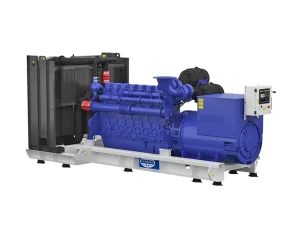
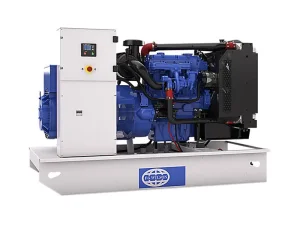
Configured with high-tolerance reciprocating internals, gudgeon wrist pin assemblies, and high-load mechanical integrity for global prime and standby applications.
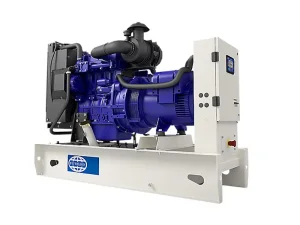
The Mechanics of Heavy-Duty Piston Pins: Kinematics, Tribology & Hertzian Stress
In modern internal combustion engines and high-output power generation systems, the piston pin (also designated wrist pin or gudgeon pin) serves as the primary mechanical link between reciprocating piston dynamics and oscillating connecting rod kinetics.
Extreme Peak Firing Pressures (PCP > 220 Bar)
Under high brake mean effective pressure (BMEP), the pin must withstand intense cyclic compressive and bending loads. Excessive elastic deflection leads to edge loading on small-end connecting rod bushings, provoking severe lubrication starvation, micro-welding, and premature seizure.
Hydrodynamic Squeeze-Film Dynamics
Because the piston pin oscillates rather than executes continuous rotation, full hydrodynamic lubrication wedges do not form consistently. Load carrying relies heavily on transient squeeze-film effects, demanding micro-topographical surface engineering with ultra-low surface roughness (Ra ≤ 0.04 µm).
Ovalization & Pin Boss Fatigue
Cyclic cross-sectional deformation induces high tensile stresses in the piston pin bosses. Advanced taper-bored and double-taper internal bore profiles decrease component mass while mitigating stress concentrations at critical inner transition radii.
Alloy Steels, Case Carburizing & Cryogenic Stabilization
China's state-of-the-art precision component supply chain leverages ultra-clean vacuum-degassed case-hardening steels. Controlled multi-stage heat treatment produces high surface hardness coupled with an energy-absorbing ductile core.
| Steel Grade Standard | Chemical Composition Profile | Surface Hardness | Core Tensile Strength | Effective Case Depth (ECD) | Primary Engine Duty Application |
|---|---|---|---|---|---|
| 20CrMo / AISI 4118 | 0.17-0.24% C, 0.90-1.20% Cr, 0.15-0.30% Mo | 59 - 63 HRC | ≥ 880 MPa | 0.80 - 1.20 mm | Naturally aspirated / Light commercial diesel sets |
| 20CrNiMo / AISI 8620 | 0.18-0.23% C, 0.40-0.70% Ni, 0.40-0.60% Cr | 60 - 64 HRC | ≥ 980 MPa | 1.00 - 1.50 mm | Medium turbocharged gensets (Perkins 1100/2000 series) |
| 18CrNiMo7-6 / 1.6587 | 0.15-0.21% C, 1.40-1.70% Ni, 1.50-1.80% Cr | 61 - 65 HRC | ≥ 1180 MPa | 1.40 - 2.20 mm | Heavy-duty mining, high-output marine & >800 kVA generators |
| 42CrMo4 (Nitrided) | 0.38-0.45% C, 0.90-1.20% Cr, 0.15-0.30% Mo | 650 - 750 HV1 | ≥ 1050 MPa | 0.30 - 0.50 mm (NHD) | High-speed small engines requiring minimal thermal distortion |
Continuous Carburizing
Atmospheric carbon potential is dynamically monitored via infrared sensors, ensuring precise carbon diffusion gradients without grain boundary oxidation networks.
Sub-Zero Deep Freezing
Liquid nitrogen immersion at -196°C eliminates retained austenite (transforming it to martensite), safeguarding dimensional stability across 30,000+ operating hours.
Superfinishing Honing
Multi-pass centerless grinding complemented by multi-stone micro-honing yields surface finishes of Ra ≤ 0.04 µm and Rz ≤ 0.4 µm with cross-hatch oil-retention textures.
100% Eddy Current QA
In-line dual-frequency eddy current crack detectors combined with automated laser gauging inspect 100% of units for surface micro-fissures and cylindrical runout.
Diamond-Like Carbon (DLC) & PVD Functional Layers
As modern heavy-duty engines migrate toward low-viscosity synthetic oils (0W-20, 5W-30) to meet Tier 4 Final and Stage V emissions, the boundary lubrication window widens dramatically. DLC-coated wrist pins eliminate scuffing risks entirely.
Hydrogenated Amorphous Carbon (a-C:H)
Deposited via Plasma-Assisted Chemical Vapor Deposition (PACVD) with a thickness of 2.0 to 4.0 µm. Delivers an ultra-low friction coefficient (µ < 0.08) against bronze bushings and steel bores under boundary shear conditions.
Graded Chromium Transition Interlayers
To resolve adhesive delamination induced by differential thermal expansion, an elemental Cr bond layer followed by a functionally graded CrN/CrCN transition matrix ensures exceptional scratch resistance exceeding 40 N (HF1-HF2 DIN EN ISO 26443).
Direct Bushes Eliminator (Steel-on-Steel)
DLC-coated piston pins allow engine designers to eliminate expensive small-end bronze connecting rod bushings. The pin runs directly in the steel rod eye, saving reciprocating mass and enabling narrower rod small ends.
Supply Reliability & Manufacturing Capability Metrics
China's consolidated powertrain manufacturing ecosystem delivers verifiable technical compliance, stringent tolerance margins, and continuous operational readiness.
Localized Application Scenarios: Severe-Duty Powertrain Case Studies
From equatorial oil pipeline continuous pumping to high-latitude Arctic emergency response, our piston pin designs and generator systems maintain hydrodynamic integrity across extreme operating envelopes.
Healthcare & Emergency Standby
Critical hospital gensets require immediate full-step load acceptance within 10 seconds. Micro-honed DLC wrist pins guarantee zero cold-scuff risk during emergency rapid-ramp cold starts without pre-lubrication cycles.
Continuous Infrastructure & Pipelines
On heavy-duty pipelines—such as the 2,400 km China-Myanmar crude transit corridor—piston pins operate continuously for 8,000 hours per annum, relying on high core toughness (18CrNiMo7-6) to resist fatigue-induced hoop stress fractures.
High-Ambient Desert Microgrids
In ambient temperatures exceeding +50°C, engine oil kinematic viscosity degrades significantly. Specialized barrel-profile outer diameters (crowned OD geometries) accommodate thermal distortion, eliminating localized edge seizing.
Sub-Zero Arctic Industrial Power
Operating in Siberian and Arctic mining zones down to -50°C, metallurgical impact energy values (Charpy V-Notch ≥ 50 J at -40°C) prevent brittle cleavage failures during high-viscosity cold engine cranking.
Vertical Integration & Engineering Agility in China's Manufacturing Base
From raw billet vacuum smelting to multi-axis CNC cold forging and automated packaging, Chinese precision piston pin suppliers deliver unmatched scale, speed-to-market, and total cost efficiency.
End-to-End Metallurgical Traceability
Every batch of raw round steel bar originates from tier-one domestic mills with full 3.1 inspection certification. Spectrographic chemical analysis and ultrasonic inclusion verification guarantee defect-free microstructures prior to shearing.
Automated High-Speed Cold Extrusion
Advanced multi-station horizontal cold headers form hollow pins with continuous, uninterrupted grain flow patterns. Cold working increases surface fatigue thresholds by 25% compared to conventional hollow-bar machining methods.
Digital Twin & Smart Batch Control
Real-time MES connectivity tracks carburizing atmospheric curves, quenching temperature drops, and dimensional histograms across every production run. Statistical Process Control (Cpk ≥ 1.67) governs every micron.
Global Commercial Dynamics: Total Cost of Ownership & Quality Parity
Global powertrain manufacturers and maintenance contractors are transitioning from single-source European and North American suppliers toward validated Tier-1 Chinese suppliers to fortify their component resilience.
Direct Component Cost Reduction (30–45%)
Chinese precision manufacturing delivers dimensional parity with global Tier-1 components at significant scale advantages. Strategic tooling amortizations and fully integrated machining lines yield superior procurement savings.
OEM Platform Interchangeability
Fully compliant with Perkins, Cummins, Caterpillar, FG Wilson, and Weichai mechanical specifications. Strict adherence to pin bore taper angles and chamfer radii prevents assembly-line pinching or bushing distortion.
Mitigating Secondary Failure Costs
Sub-standard wrist pins can result in catastrophic engine destruction: wrist pin fracture triggers connecting rod rupture, cylinder block penetration, and crankshaft failure. Certified QA prevents catastrophic capital loss.
Auditable Quality Protocols & Stringent International Standards
Rigorous compliance protocols govern every batch from physical sampling to non-destructive testing (NDT), dimensional metrology, and global environmental standards.
Zeiss 3D CMM & Form Metrology
Roundness, cylindricity, straightness, and OD taper profiles are inspected within 0.0005 mm accuracy using temperature-controlled metrology suites.
DIN 73121 & ISO 18632
Full dimensional compliance with internal combustion engine component standards, including precise control of internal wall transitions and oil hole deburring.
Magnetic Particle & Eddy Current
Combined high-throughput non-destructive screening prevents any pin with grinding cracks, quench micro-fissures, or material seams from entering the export stream.
ISO 9001 / 14001 / 45001
Triple-certified quality, environmental, and occupational safety management frameworks ensure stable corporate responsibility and ESG supply chain alignment.
Future Powertrain Evolution: Hydrogen, Ammonia & Extreme BMEP
The internal combustion engine is actively evolving toward carbon-neutral fuels. The transition introduces new combustion dynamics, steeper pressure rise rates (dP/dθ), and corrosive exhaust condensates.
Hydrogen ICE Embrittlement Mitigation
Hydrogen combustion operates with extreme flame propagation speeds and localized peak pressure spikes. Developing ultra-low-hydrogen-diffusion barrier coatings and high-purity nickel-alloy case steels prevents hydrogen embrittlement micro-cracking.
Ammonia Dual-Fuel Corrosion Resistance
Ammonia fuel combustion releases aggressive nitrogen oxides and unburned ammonia vapor that dissolve into engine crankcase oil. Multi-layer CrN/DLC multi-arc ion plating protects against chemical erosion and acid attack.
Ultralight Bionic Internal Contouring
Utilizing generative AI algorithms to design variable-thickness internal bores. Mass is reduced by up to 18% without sacrificing structural stiffness, directly lowering oscillating secondary inertia forces and noise (NVH).
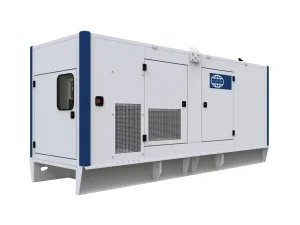
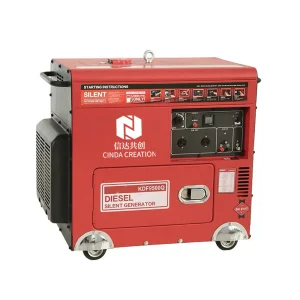
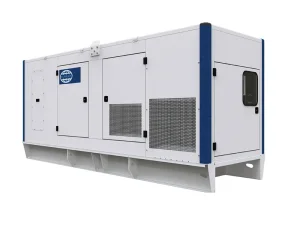
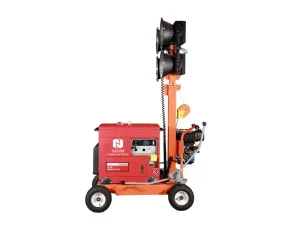
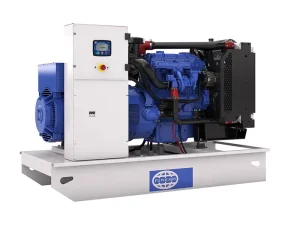
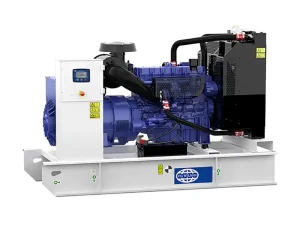
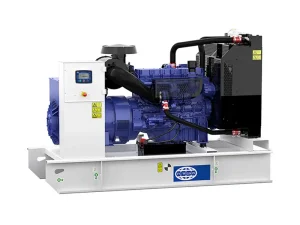
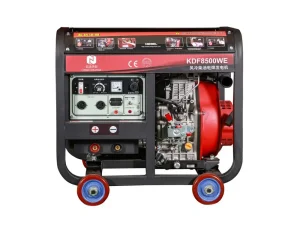
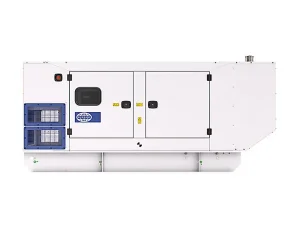
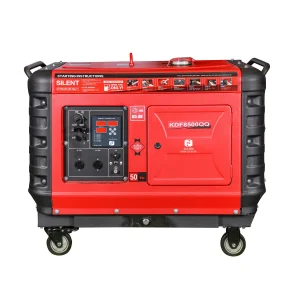
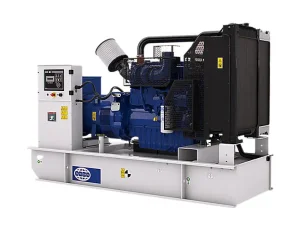
Industrial Diesel Gensets, Silent Enclosures & Multi-Role Units
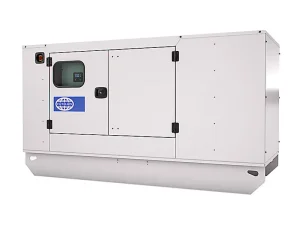
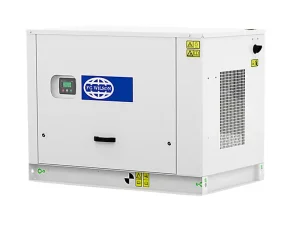
Engineered for commercial continuous and emergency standby duty, featuring proven combustion components and international certification.
Frequently Asked Questions: Technical Sizing, Steel Selection & Logistics
Clear answers from our application engineering team regarding metallurgical tolerances, lead times, custom manufacturing, and warranty support.
For high-boost, high-BMEP applications (exceeding 2.0 MPa), European standard 18CrNiMo7-6 (1.6587) or premium AISI 8620 with vacuum degasification is required. The alloy provides core tensile strength ≥ 1150 MPa combined with exceptional toughness to prevent ovalization and fatigue cracking.
DLC provides an amorphous carbon matrix with high sp3 tetrahedral bonding, delivering hardness upwards of 2,500 HV and friction coefficients below 0.08. This acts as a physical dry-lubrication barrier when oil film boundary conditions collapse during cold starts or transient overloads.
Standard precision tolerances adhere to IT3-IT4 grade: Outer diameter variation is held within ±0.002 mm (2 µm), roundness and cylindrical runout ≤ 0.0008 mm (0.8 µm), and surface roughness controlled down to Ra ≤ 0.04 µm via precision superfinishing.
Yes. We specialize in contract engineering and OEM manufacturing from customer STEP, IGES, and DWG drawings. Our engineering division reviews chamfer geometry, internal tapers, center-of-gravity balance, and oil lubrication hole positioning before tooling deployment.
For standard replacement pins matching Perkins, Weichai, Cummins, or FG Wilson platforms, stock is available for immediate dispatch. For custom OEM production runs, tooling and sample qualification takes 20–25 days, with batch MOQs starting at 500 units.
Every delivery includes a standard 12-month operational warranty, comprehensive EN 10204 3.1 Mill Test Certificates (MTC), heat-treatment hardness depth micro-reports, dimensional CMM inspection certificates, and full export compliance paperwork.
Request Engineering Specifications & OEM Quotations
Partner with an established Chinese powertrain and reciprocating components supplier. Receive certified 3D CAD modeling, metallurgical material certificates, and rapid technical quotes within 24 hours.