
Enterprise Power Generation Systems: Primary Technical Portfolio
Explore rigorous, load-tested diesel gensets engineered for utility failover, isolated microgrids, and demanding construction duty cycles. Configured with genuine components and certified under ISO 9001/14001/45001 standards.
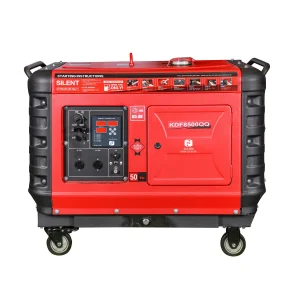
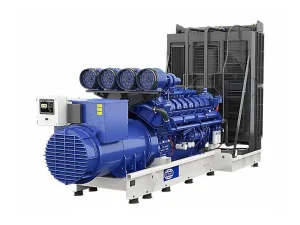
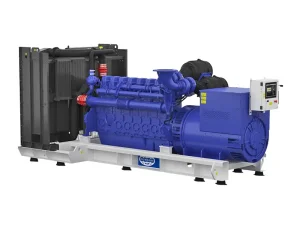
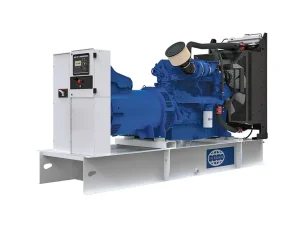
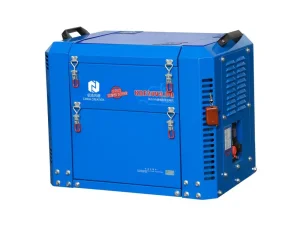
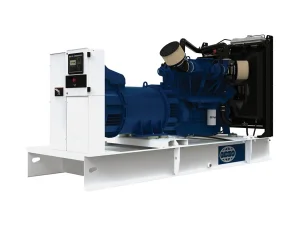
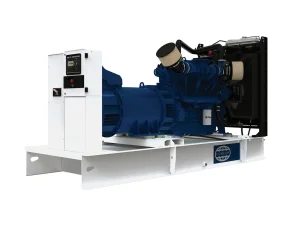
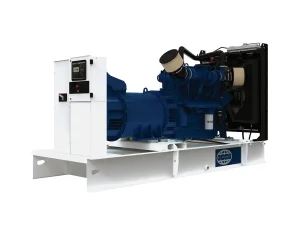
Global Energy Resiliency, Grid Volatility, and Decentralized Generation
The modern industrial macroeconomic climate is characterized by an escalating divergence between central utility grid reliability and escalating electrical intensity across heavy infrastructure, telecommunications, and digital processing hubs. Power generation is no longer simply an emergency backup luxury—it has evolved into a strategic operational risk mitigation asset. Industrial operators throughout North America, Europe, Southeast Asia, Africa, and the Middle East face mounting exposure to grid curtailment, localized brownouts, transmission bottlenecks, and erratic peak-demand surcharges.
Consequently, autonomous continuous and prime-rated electric generator systems have assumed the foundational role of behind-the-meter base-load providers and peak-shaving nodes. For mission-critical infrastructures—including hyperscale cloud data centers, municipal wastewater treatment systems, continuous-casting metal foundries, and remote extractive facilities—unplanned electrical disruption carries catastrophic financial repercussions. A resilient diesel or gas generating unit provides uncompromising black-start response, full block-load acceptance within sub-10-second intervals, and electrical decoupling from fragile regional transmission grids.

China's Manufacturing Synergy: Delivering Unrivaled Generator Engineering
Strategic integration of world-class powertrain components, high-throughput robotic metal fabrication, and comprehensive digital test facilities delivers superior quality-to-cost equilibrium for multinational procurement directors.
Tier-1 Powertrain Supply Chains
Chinese production clusters are deeply integrated with premier global engine fabricators including Perkins, Cummins, Weichai, Baudouin, and MTU. By leveraging localized Tier-1 assembly lines operating under rigorous multinational licensing, our plants ensure genuine mechanical components, verified metallurgy, and globally cross-referenced spares compatibility.
Advanced Laser & Acoustic Engineering
Canopy manufacturing combines CNC fiber-laser cutting, automated press-brake forming, and multi-stage anti-corrosion electro-deposition coating (e-coat with electrostatic powder finish). Super silent enclosures feature multi-chamber sound attenuating baffles, acoustic rock-wool insulation, and heavy-gauge zinc-coated steel to suppress sound pressure to 65–75 dB(A) @ 7m.
100% Full-Load Factory Acceptance Testing (FAT)
Every gen-set departing our Beijing facilities undergoes computerized resistive and inductive load-bank testing across 0%, 25%, 50%, 75%, 100%, and 110% overload conditions. Real-time telemetry records frequency stability, transient step-load voltage dip, total harmonic distortion (THD < 3%), exhaust temperatures, and lube oil hydrostatic pressures prior to crating.
Tailored Engineering for Extreme Environmental Conditions
A diesel generator is only as dependable as its thermodynamic adaptation to its installation environment. Cinda Creation packages are customized for microclimates across 80+ export markets.
Sub-Zero & Polar Environments (-40°C)
Deployed throughout Siberian mining zones and Arctic outposts. Units feature thermostatically managed coolant jackets, heavy-duty immersion sump heaters, dual-redundant nickel-cadmium starting batteries, electric intake air pre-heaters, synthetic low-viscosity lubrication systems, and motorized recirculating exhaust louvers to guarantee instant cold start-up.
Arid, High-Ambient & Desert Zones (+55°C)
Engineered for Middle Eastern oilfields and sub-Saharan sites. Features oversized 50°C/55°C ambient-rated copper-core tropical radiators with pusher fans, dual-stage heavy-duty cyclonic centrifugal air pre-cleaners, dust-tight sand-trap canopy louvers, and IP54 sealed control enclosures that resist airborne silica infiltration.
Marine Coastal & Offshore Corrosive Belts
Designed for ports, offshore drilling platforms, and coastal islands. Standardized with ISO 12944 C5-M high-durability epoxy maritime paint matrices, marine-grade stainless steel (316L) exterior hinges and fasteners, anti-condensation winding heaters, and Class H vacuum-pressure-impregnated (VPI) alternator stator/rotor insulation.
Synchronous Digital Paralleling, ATS Architecture & Hybrid Microgrids
Single-generator isolation is rapidly being superseded by modular multi-genset synchronization schemes. Cinda Creation integrates advanced micro-processor instrumentation—including Deep Sea Electronics (DSE8610 MKII), ComAp InteliGen, and DEIF AGC controllers—facilitating seamless auto-synchronization, active and reactive load sharing (kW/kVAr), and automatic mains failure (AMF) transition via motor-driven air circuit breakers (ACB) or vacuum circuit breakers (VCB).
Multi-unit parallel arrays deliver unmatched redundancy: in high-risk continuous processing environments, an N+1 or N+2 topology allows one or more generating sets to undergo scheduled maintenance or unexpected tripping without interrupting critical downstream operations. Furthermore, modern controllers interface directly with solar photovoltaic inverters and battery energy storage systems (BESS), functioning as an automated hybrid microgrid that slashes hourly diesel consumption while maintaining uninterruptible utility-grade stability.
Integrated 4G/Ethernet communication modules interface with SCADA networks via Modbus RTU/TCP protocols, transmitting real-time telemetry—including common-rail fuel rail pressures, winding core thermistors, coolant temperatures, vibration amplitudes, and fuel levels—to plant engineers on remote control consoles anywhere in the world.
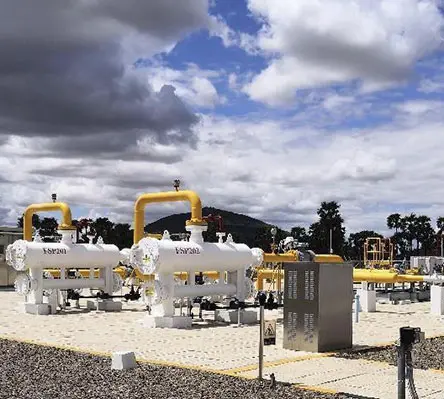
Standardized Generator Range & Power Rating Topology
Reference guide for electromechanical project planners detailing typical capacity tiers, prime vs. standby continuous loads, and target infrastructure applications.
| Rating Category | kVA / kW Envelope | Standard Prime Duty | Standby Failover | Primary Industrial Use-Cases |
|---|---|---|---|---|
| Compact / Light Commercial | 6.9 kVA – 75 kVA | Unlimited variable load @ 70% load factor | 100% capacity during utility blackout | Telecom towers, perimeter security, medical clinics, mobile workshops |
| Small Range Industrial | 90 kVA – 220 kVA | 10% overload allowed 1 hr every 12 hrs | Intermittent outage protection | Cold storage, commercial high-rises, fuel retail stations, batch plants |
| Medium Range Power Node | 225 kVA – 938 kVA | Continuous multi-pump/motor starting duty | Rapid ATS changeover < 10 sec | Municipal water pumping, chemical factories, heavy processing workshops |
| Large Range Megawatt Node | 1,000 kVA – 2,500+ kVA | Heavy baseload generation & remote grids | Mission-critical 100% constant load | Hyperscale data centers, mining sites, regional hospitals, cross-country pipelines |
Total Cost of Ownership (TCO) & Electrical Sizing Protocols
B2B capital allocation demands looking beyond initial Capex. Optimizing fuel burn curves, maintenance intervals, and electrical derating ensures lifecycle longevity and bottom-line efficiency.
Transient Motor Inrush & kVA Sizing
Inductive electrical loads (such as chillers, centrifugal pumps, and cranes) draw 300% to 600% starting currents (kVA surge). Sizing calculations must factor in alternator sub-transient reactance (X"d), automatic voltage regulator (AVR) response times, and 2/3 pitch winding designs to suppress harmonic distortion and prevent under-voltage tripping during motor startup.
Altitude & Thermal Derating Realities
Atmospheric density directly governs internal combustion stoichiometry and alternator thermal dissipation. For every 300 meters above 1,000 meters altitude, atmospheric pressure reduces available oxygen, requiring approximately 3-4% power derating. Similarly, ambient operational temperatures exceeding 40°C require engineered deratings to avoid unburned hydrocarbons and thermal overheating.
Specific Fuel Consumption (BSFC) & Opex
Fuel consumption constitutes up to 70-85% of total lifecycle expenditure over a 15,000-hour operational window. High-pressure common rail (HPCR) injection and optimized electronic governors yield brake specific fuel consumption (BSFC) figures as low as 195–205 g/kWh, generating substantial cumulative operational savings compared to older mechanical governor engines.
Enterprise Power Generation Systems: Secondary Technical Portfolio
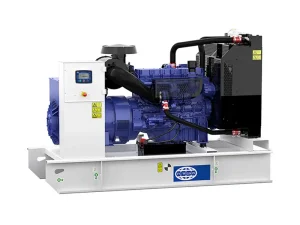
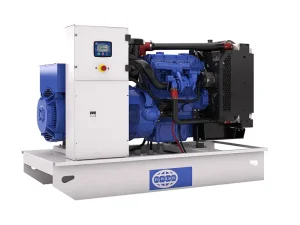
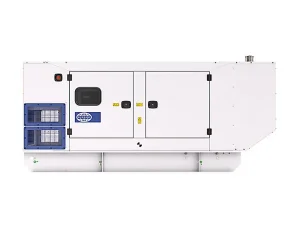
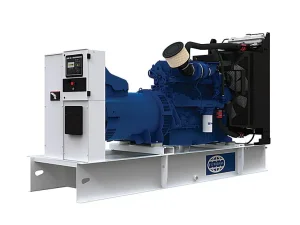
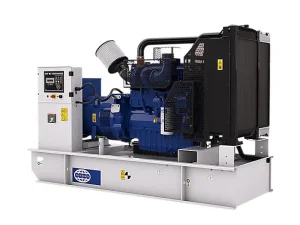
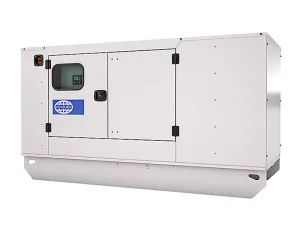
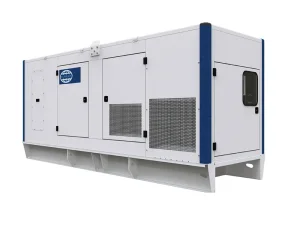
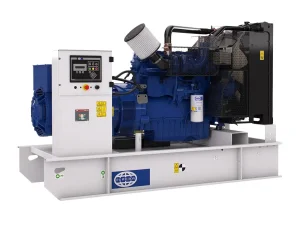
Medium-range, open-frame, and intelligent automated gensets configured for rapid worldwide containerized shipping and seamless plant-room integration.
Engineering Questions & Procurement FAQ
In-depth responses authored by senior power generation engineers to assist EPC contractors, facility managers, and distributors in specifying and deploying equipment.
What is the definitive engineering distinction between Prime (PRP) and Standby (ESP) ratings?
ISO 8528-1 governs international generator ratings. Standby Power (ESP) represents the maximum output accessible during a variable electrical utility outage, typically restricted to a maximum 70% average load factor over 24 hours, with an operational limit of approximately 200–500 hours annually with zero allowable overload. Prime Power (PRP) applies where the generator serves as the main primary supply under variable load conditions for unlimited annual hours. Under PRP duty, a 10% overload is permissible for 1 hour within every 12 operating hours. Misclassifying continuous industrial base-loads under ESP ratings leads to premature cylinder liner glazing, high oil consumption, and voided warranties.
How does Power Factor (PF) affect real electrical power (kW) conversion from apparent power (kVA)?
Apparent power (kVA) reflects total vector power in an alternating current system, whereas real active power (kW) performs mechanical work. For standard three-phase industrial alternating systems, standard alternating current alternators are rated at a lagging power factor of 0.8: kW = kVA × 0.8. A 1,000 kVA generator delivers 800 kW of real electrical power. Running loads with lower power factors (such as uncompensated induction motors or older fluorescent ballasts) introduces excessive inductive reactive currents (kVAr), generating thermal stress across the rotor and stator windings without producing useful work.
Under what circumstances should buyers specify Silent Canopies vs. Open-Frame units?
Open-frame generating sets are engineered specifically for dedicated interior powerhouse installations or plant rooms with pre-existing, engineered intake/exhaust silencers, acoustic wall baffles, seismic inertia blocks, and forced-draft ventilation fans. They provide 360-degree maintenance access. Conversely, silent and weather-protected canopies are self-contained exterior enclosures equipped with integrated acoustic splitters, residential-grade mufflers, bunded internal base fuel tanks, and weatherproofing designed to withstand rain, windblown dust, and high UV radiation while attenuating noise down to 65–75 dBA @ 7m.
What is the function of an Automatic Transfer Switch (ATS) during blackouts?
An Automatic Transfer Switch (ATS) continuously tracks utility grid voltage and frequency parameters across all incoming phases. Upon detecting grid failure, under-voltage (<90%), or phase interruption, the ATS logic controller signals the generator's digital engine control unit (ECU) to initiate crank sequencing. Once the alternator reaches nominal voltage and frequency (usually within 6–10 seconds), the ATS mechanically disengages the utility circuit and closes the generator breaker, supplying continuous power to downstream switchboards. Once grid power returns and stabilizes for a preset interval, the ATS reverses the transition and executes a controlled cool-down run on the generator.
What comprehensive quality warranties and aftermarket spares support are provided?
Cinda Creation provides a comprehensive 12-month global commercial warranty dating from verified site startup and commissioning, or 1,000 running hours (whichever milestone occurs first). We operate an expedited international parts dispatch system maintaining inventory for critical wear items: OEM Perkins filters, injectors, turbocharger cartridges, electronic AVR regulators, water pump rebuild kits, and starter motors. In the event of field issues, our Beijing engineering desk provides 24-hour diagnostic turnaround via encrypted telemetry logs or live remote video assistance.
What essential technical parameters must be submitted to receive a precise quote?
To avoid under-sizing or component incompatibility, prospective clients should provide: total connected electrical load profile (steady-state kW/kVA and peak inductive motor starting requirements); system nominal voltage (e.g., 380V, 400V, 415V, 480V) and operating frequency (50 Hz @ 1500 RPM vs 60 Hz @ 1800 RPM); required duty profile (Standby, Prime, Continuous); site installation elevation (meters above sea level) and extreme ambient seasonal temperatures; preferred enclosure configuration (open frame, silent canopy, or ISO containerized); baseline fuel autonomy requirements (8h, 12h, or 24h sub-base tank); and whether parallel synchronization controls or an external ATS are required.