
Primary Silence Box & Soundproof Generator Inventory
Explore our top 8 acoustic-attenuated generator sets and precision power silence boxes, factory-fitted with electrostatically coated zinc galvanization and rockwool acoustic batting.
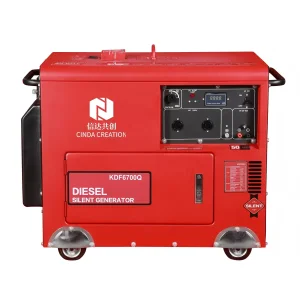
Cheap Versatile KDF6700Q Quiet Generator Set Portable Power Source 4.5kVA 5.0kVA Exporters, Service
Configure Enclosure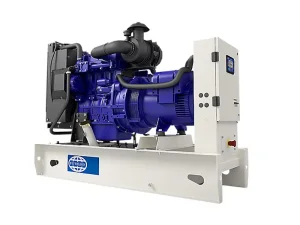
China Wilson Open Type Small Diesel Generator Sets 230 V, 50 Hz P16-1 Supplier, Exporter
Configure Enclosure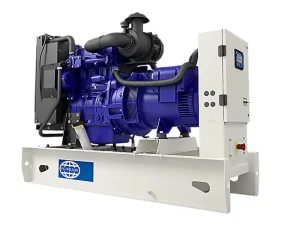
High-Quality FG Wilson Low Noise Energy Solution Generator Sets P11-6S Suppliers, Exporter
Configure Enclosure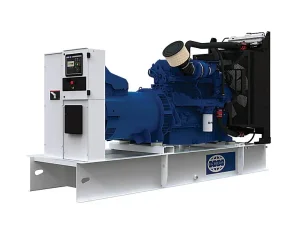
High-Quality Medium Range 225 – 938 kVA Fg Wilson High-end Generator Set P500-3 Supplier, Exporters
Configure Enclosure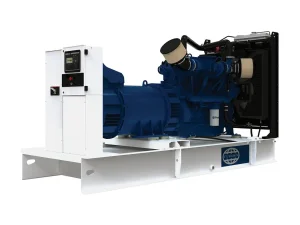
Cheap Fg Wilson Medium Range 225-938KVA High Efficiency Diesel Generator Setn P780-1 Suppliers, Exporter
Configure Enclosure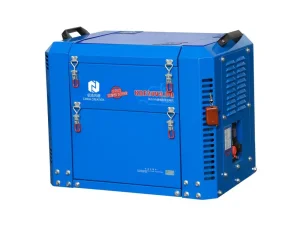
Cheap KDF24V3.0Q Quiet Operation Diesel Generators for Peaceful Environments Suppliers, Service
Configure Enclosure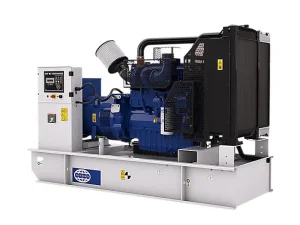
Cheap Medium Range 225-938KVA Intelligent Generator Set Automatic Control P344-5 Exporter, Service
Configure Enclosure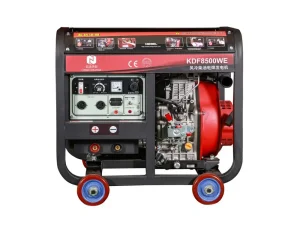
High-Quality Electric Welding High-Performance Generators Set KDF8500WE Exporters, Exporter
Configure EnclosureThe Mechanics of Silence: Acoustic Box Physics & Design Criteria
Demystifying mechanical noise transmission, airborne acoustic wave mitigation, resonance isolation, and thermodynamic fluid equilibrium in industrial generator silence boxes.
Viscoelastic Acoustic Decoupling
To stop low-frequency structure-borne vibration from turning the canopy panels into resonant acoustic sounding boards, our silence boxes employ heavy-duty elastomer or spring anti-vibration mounts (AVMs) with dynamic deflection rates exceeding 95% isolation efficiency.
Multi-Chambered Acoustic Splitters
Air intake and cooling discharge louvers use labyrinthine tortuous paths lined with perforated galvanized sheet metal and non-flammable basaltic rockwool, canceling high-frequency turbulent noise without inducing backpressure chokes on the engine radiator fan.
Dual-Core Industrial Silencers
Integrated internal residential-grade silencer canisters combine reactive resonance chambers with absorptive packing materials, dampening sharp exhaust pressure waveforms by 28–38 dBA while maintaining minimal engine exhaust backpressure (below 10 kPa).
China Factory 4.0: Modern Manufacturing, Metallurgy & Structural Integrity
How advanced robotic fabrication, laser cutting, and electrostatic pretreatment grant Chinese silence box suppliers unparalleled supply chain resilience and cost efficiency.
Laser-Guided Fabrication & Micro-Tolerance Tolerances
Traditional canopy fabricators rely on manual shearing and press brakes, leading to irregular joint gaps where sound leaks—a phenomenon known in building acoustics as acoustic flanking transmission. Even a 1% structural perimeter air gap can compromise the overall insertion loss of a silence box by up to 10 dBA.
At our Beijing manufacturing facilities, Cinda Creation leverages multi-kilowatt fiber laser cutting systems and automated CNC bending cells. Steel plates (2.0 mm to 3.5 mm cold-rolled or marine-grade galvanized steel) are processed with dimensional tolerances within ±0.2 mm. Doors, access panels, and cable gland plates are sealed with extruded hollow-core EPDM closed-cell synthetic elastomer gaskets that maintain continuous elastic contact across temperature cycles from -40°C to +85°C.
This modular manufacturing methodology ensures every soundproof canopy, whether designed for a compact 10 kVA generator or a 2500 kVA containerized power module, achieves airtight acoustic integrity while permitting rapid assembly and disassembly during on-site overhaul.
Automated Powder Coating & C5-M Corrosion Resistance
A silence box frequently operates in aggressive ambient environments—from saltwater coastal shores to arid deserts with high abrasive particulate sandstorms. Structural longevity depends entirely on surface pretreatment and polymer finish chemistry.
Our automated surface-finishing lines utilize a nine-stage immersion pretreatment process, including zinc phosphate degreasing and nano-ceramic passivation. Following pretreatment, an electrostatic robot applies thermosetting pure polyester architectural powder coating, baked in curing ovens at 200°C for 25 minutes.
The resulting surface achieves a dry film thickness (DFT) exceeding 90–120 microns, offering 1,000+ hours of continuous salt-spray resistance under ASTM B117 standards. For high-humidity offshore or chemical industrial sites, we provide ISO 12944 C5-M marine epoxy paint systems.
| Structural Parameter | Standard Commercial Enclosure | Cinda Creation Industrial Silence Box | Impact on Project Lifecycle |
|---|---|---|---|
| Casing Sheet Material | 1.2 mm Mild Hot-Rolled Carbon Steel | 2.0 mm – 3.0 mm Electro-Galvanized Zinc Steel (SECC) | Prevents corrosion undercutting, doubles structural life span. |
| Acoustic Insulation Density | 24 kg/m³ Polyurethane Foam (Flammable) | 50–80 kg/m³ Hydrophobic Mineral Rockwool (Class A1 Non-Combustible) | Zero fire hazard risk, superior low-to-mid frequency sound attenuation. |
| Perimeter Gasket System | Standard Rubber Weatherstripping | Automated Continuous Polyurethane Foamed-in-Place / Extruded EPDM | Eliminates acoustic flanking gaps; airtight IP54/IP56 weather sealing. |
| Exhaust Silencer Architecture | External Industrial Grade Muffler (-9 dBA) | Internal Dual-Chamber Resonator + Spark Arrestor (-32 dBA) | Streamlined footprint, protected from weather, residential noise compliance. |
| Airflow Fluid Dynamics (CFD) | Generic Cut-Out Louvers | 3D CFD-Optimized Reverse-Baffle Acoustic Silencer Splitters | Engine temperature stays within optimal ΔT < 8°C while dampening noise. |
Mission-Critical Deployment Scenarios for Silence Boxes
From continuous prime power on trans-continental energy corridors to ultra-quiet emergency standby for tier-rated metropolitan hospitals.
Tier-III / Tier-IV Data Centers
Hyperscale data clusters require massive megawatt-class standby gen-sets. Cinda Creation supplies containerized modular silence boxes (20ft and 40ft ISO configurations) featuring automated motorized intake/discharge dampers that close during fire emergencies and sound attenuators tailored for high static backpressures.
Healthcare & Surgical Facilities
Hospital environments mandate acoustic levels below 65 dBA at property boundaries to preserve therapeutic tranquility. Our medical-grade silence enclosures incorporate secondary sound attenuation baffles, internal critical-grade exhaust silencers, and ATS-driven rapid synchronizing power panels.
Energy Infrastructure & Pipelines
Proven along the 2,400-km China–Myanmar crude oil pipeline, where 17 gas units and 5 heavy diesel sets operate continuously in remote rainforests. Our silence enclosures withstand persistent monsoon moisture, sand ingress, and ambient heat without requiring off-site maintenance downtime.
High-Ambient Desert Enclosures
Standard acoustic canopies choke generator cooling in extreme Middle Eastern or African conditions. Our high-ambient silence boxes utilize enlarged intake splitters and heavy-duty high-static fans, ensuring engines run at full prime load without derating even at ambient temperatures reaching +55°C.
Sub-Zero Arctic Deployments
Backed by 20+ years of FG Wilson genset performance in extreme Arctic conditions, our cold-weather silence boxes integrate motorized recirculation louvers, thermostatically controlled jacket water heaters, fuel line tracing, and insulated internal canopy panels rated down to -45°C.
Urban Construction & Night Work
Urban municipal infrastructure projects face strict evening curfew limits (often max 55 dBA). Our compact, mobile silence box sets mounted on highway-speed dual-axle trailers provide mobile prime power with integrated fuel containment bases and external emergency-stop interlocks.
Global Enterprise Sourcing Criteria: The Sizing & Specification Roadmap
A systematic methodology for mechanical engineers, MEP consultants, and international EPC procurement directors evaluating silence box manufacturers.
1. Power Rating & Load Profile
Define prime (unlimited variable load) versus standby (emergency outage) kVA/kW demand. Calculate inductive motor starting surges (kVA step load) and total harmonic distortion (THD) limits for sensitive electronics.
2. Acoustic Target (dBA @ Dist.)
Specify realistic sound targets. Differentiate between free-field hemispherical propagation vs. reflective reverberant boundaries. Confirm whether measurements apply at 1m, 7m, or perimeter fence lines.
3. Environmental Limits
Account for altitude derating (>1000m ASL drops air density) and high ambient temperatures. Sizing must ensure radiator static fan pressure overcomes acoustic splitters without overheating the engine block.
4. Environmental Bunding
Mandate double-wall fuel tanks with 110% total fluid containment capacity (engine oil, coolant, diesel) to prevent hazardous ground seepage, adhering to international environmental stewardship standards.
Technology Roadmap: Next-Generation Acoustic Innovation (2025–2030)
How acoustic metamaterials, active electronic noise cancellation (ANC), and IoT telemetry are transforming passive silence boxes into smart industrial assets.
Acoustic Metamaterials & Sonic Crystals
Traditional absorption requires bulky, thick rockwool layers to capture long, low-frequency soundwaves (below 250 Hz). Cinda Creation is pioneering the integration of sub-wavelength acoustic metamaterials—engineered micro-lattices that trap and dissipate deep engine rumble in ultra-thin 30 mm enclosure profiles.
Hybrid Active Noise Cancellation (ANC)
By embedding ruggedized acoustic microphones and micro-transducers inside the exhaust and ventilation duct paths, upcoming silence boxes project phase-inverted acoustic waveforms (anti-noise) to eliminate low-frequency tonal spikes, achieving unprecedented whisper-quiet performance without increasing static airflow resistance.
Predictive IoT Structural Health Monitoring
Future-ready silence boxes feature integrated tri-axial vibration sensors, thermal imaging arrays, and air pressure differential transducers connected via cloud telemetry. Predictive algorithms identify deteriorating engine isolator mounts or clogged air filters before they cause catastrophic acoustic or mechanical failures.
Compliance Assurance, Certifications & Lifecycle Support
Rigorous international compliance frameworks, factory acceptance testing (FAT), and genuine replacement parts that ensure complete investment protection.
ISO Triple-Management Certification
Beijing Xinda Creation operates under strict ISO 9001 (Quality Management System), ISO 14001 (Environmental Management), and ISO 45001 (Occupational Health and Safety) protocols. Each silence box and genset is verified for build uniformity, electrical insulation, and structural integrity.
CE & European Noise Directive 2000/14/EC
All exported silence box generator systems conform to the European Outdoor Noise Directive 2000/14/EC (amended by 2005/88/EC). Equipment bears verified Sound Power Level (LWA) markings, empowering our distributors to bid successfully on municipal European and British public works.
Rapid 24h Response & Perkins Spares Supply
Covered by a robust 12-month operational warranty calculated from on-site start-up, backed by our guaranteed 24-hour technical response window. We maintain an extensive warehouse of authentic Perkins components, Weichai engines, and FG Wilson spares ready for expedited air freight worldwide.
Extended Silence Box & Specialized Genset Solutions
Explore the remaining 8 heavy-duty configurations from our Beijing production portfolio, spanning compact high-pressure diesel sets to 2500 kVA utility-grade silent enclosures.
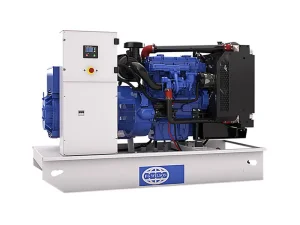
Cheap Wilson Open Type Small Diesel Generator Sets Standby26kVA/26kw P26-6S Supplier, Suppliers
Configure Enclosure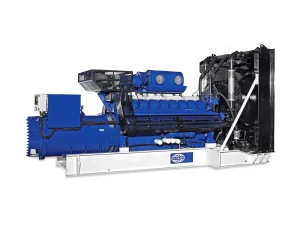
Cheap Fg Wilson Industrial Diesel Generator Set (800-2500kva) P1875-1 Exporter, Service
Configure Enclosure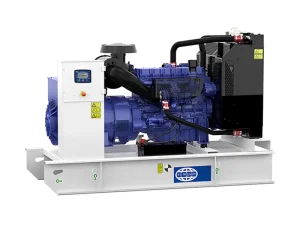
High-Quality Wilson Open Type Small Diesel Generator Sets 400230 V, 50 Hz P200-6 Exporters, Service
Configure Enclosure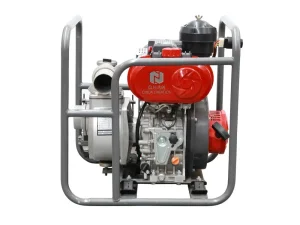
Cheap High-Performance High-Pressure Air-cooled Diesel Engine KD7 Supplier, Exporters
Configure Enclosure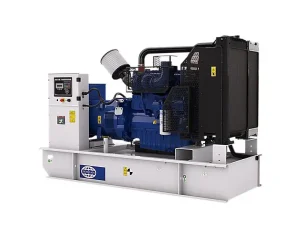
China Medium Range 225 – 938 kVA-P275-5 FG Wilson Generator Set Supplier, Exporters
Configure Enclosure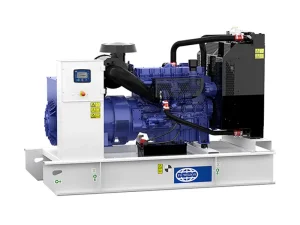
High-Quality Wilson Small Range <220 kVA Advanced Power Generator P165-6 Supplier, Exporters
Configure Enclosure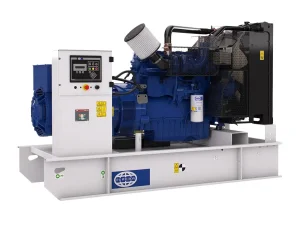
High-Quality Fg Wilson Medium Range 225-938KVA High Efficiency Diesel Generator Set P375-4 Exporters, Service
Configure Enclosure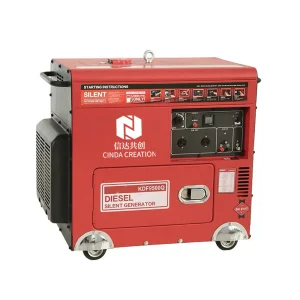
China Portable Diesel Super Silent Electric Electricity Power Diesel Engine Genset Supplier, Exporters
Configure EnclosureFrequently Asked Questions: Silence Box Sourcing & Engineering
Direct answers to the most common technical questions raised by international engineering contractors, facility managers, and distributors.
What is the acoustic difference between a "Standard Silent Canopy" and a "Super Silence Box"?
A standard silent canopy typically attenuates noise down to 75–82 dBA at 1 meter (approx. 70–75 dBA at 7 meters) using standard single-baffle intake/discharge and 30 mm acoustic lining. A "Super Silence Box" integrates dual-chamber acoustic splitters, thicker 50–100 mm high-density mineral rockwool (50–80 kg/m³), internal multi-stage residential spark-arresting silencers, and fully decoupled vibration damping mounts. This configuration achieves sound levels below 65–70 dBA at 1 meter (< 60–63 dBA at 7 meters), meeting strict night-time residential and hospital sound level standards.
How does an enclosed silence box prevent the generator from overheating under 100% prime load?
Acoustic attenuation and thermal management operate in tension. Minimizing noise requires baffling airflow paths, which inherently adds static air resistance. Cinda Creation resolves this using Computational Fluid Dynamics (CFD) modeling to design custom intake and discharge plenums. We ensure the total static pressure drop across the silence box louvers stays within the engine radiator fan's allowable limits (typically < 125 Pa). This maintains the temperature differential between the ambient outside air and the air inside the enclosure (ΔT) strictly below 6°C–8°C, preventing thermal derating even in 50°C tropical climates.
Can Cinda Creation supply customized silence boxes for existing open-frame gensets on site?
Yes. While we supply fully assembled, factory-tested FG Wilson and Weichai silent generator sets, we also engineer retrofit silence boxes and modular acoustic drop-over containers. By providing your existing open generator set's detailed dimensions, engine exhaust centerlines, radiator discharge face dimensions, air intake volume requirements (m³/min), and target dBA rating, our engineering team in Beijing designs a tailor-made, bolt-together modular enclosure complete with base tank integration and external connection terminal boxes.
What documentation and factory acceptance testing (FAT) are provided prior to export shipment?
Every silence box generator set undergoes an intensive Factory Acceptance Test (FAT) protocol at our testing facility. This includes step-load testing (0%, 25%, 50%, 75%, 100%, and 110% overload), calibrated multi-point acoustic sound meter mapping at 1m, 7m, and 15m across 8 directional axes, coolant/oil temperature stabilization recording, insulation resistance testing, and safety trip validation (low oil pressure, high water temperature, over-speed). Comprehensive documentation packages include the FAT test sheet, electrical schematic wiring diagrams, certificate of origin, and ISO compliance verification.
What is the standard production and shipping lead time from your Beijing facility?
Standard FG Wilson and Weichai small-to-medium silent generator sets (11 kVA to 375 kVA) maintained in our core inventory are available for container dispatch within 7–14 business days. Custom-engineered silence boxes, specialized high-voltage sets, or custom containerized modular power units (800 kVA to 2500 kVA) typically require 25 to 35 calendar days for precision laser fabrication, powder coating, integration, and full load-bank certification prior to port delivery at Tianjin or Qingdao.