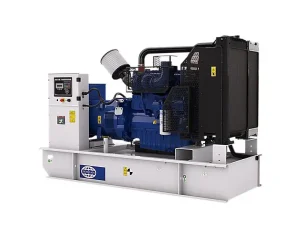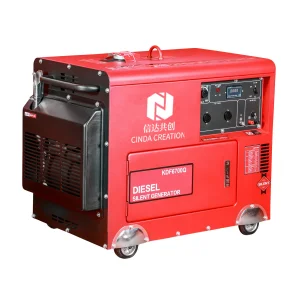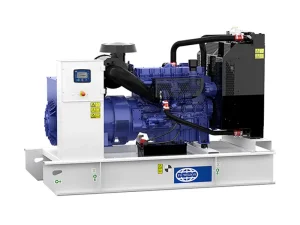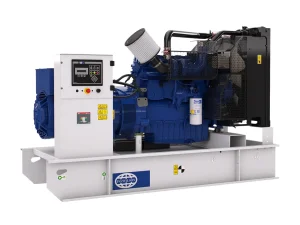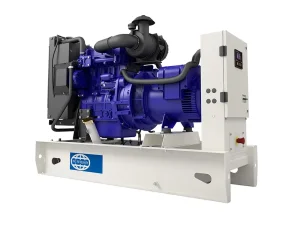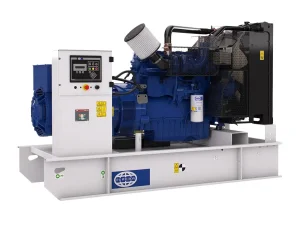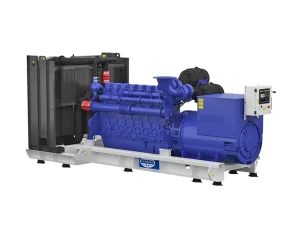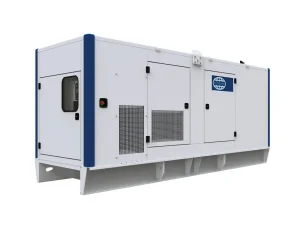
Pre-Engineered Silenced & Open Generator Systems (Batch A)
Precision acoustic attenuation paired with genuine FG Wilson, Perkins, and Weichai prime-mover architectures for global export standards.
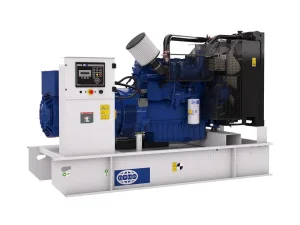
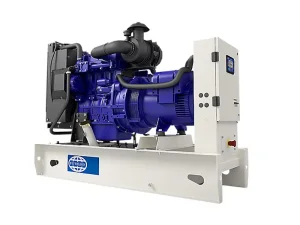
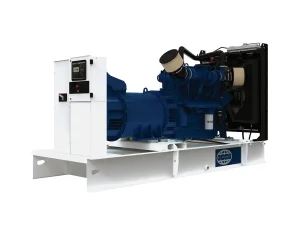
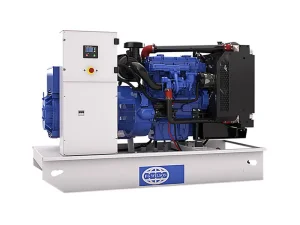
Engineering Principles of Industrial Engine Exhaust Silencers
Understanding Thermodynamic Backpressure Constraints, Insertion Loss Calculations, and Noise Mitigation Dynamics for Heavy Power Plant Deployments.
Reactive Silencing (Reflective)
Designed primarily for low-frequency sound energy dissipation (31.5 Hz to 250 Hz) emitted during cylinder exhaust blowdown. Utilizing internal expansion chambers, cross-perforated flow tubes, and tuned Helmholtz resonators, reactive silencers cause destructive acoustic wave interference without restricting volumetric exhaust throughput.
Ideal for large displacement marine diesels, heavy-duty Weichai and Perkins gen-sets operating under steady heavy base loads.
Absorptive Silencing (Dissipative)
Targeted toward mid-to-high frequency acoustic attenuation (500 Hz to 8,000 Hz) caused by gas kinetic turbulence, high-speed turbocharger compressor whine, and rapid valve seating. High-density basalt wool or refractory ceramic acoustic packings convert kinetic sound wave vibrations into microscopic frictional thermal energy.
Equipped with stainless steel woven scrim and high-shear perforated liners to prevent fiber migration into the atmosphere under extreme thermal transients.
Combined Multi-Stage Resonators
For hospital, residential, and ultra-quiet data center applications, combination reactive-absorptive silencers deliver across-the-spectrum sound attenuation from 35 dBA to 45+ dBA (Super Critical & Hospital Grade). These multi-stage systems integrate mechanical spark arrestors conforming to international forestry and offshore hazard directives.
Independently engineered to maintain maximum permissible backpressure under 5 kPa (0.725 psi), preventing exhaust valve thermal fatigue.
| Acoustic Silencer Classification | Insertion Loss (IL) Range | Typical Applications | Max Engine Backpressure Delta | Primary Noise Spectrum |
|---|---|---|---|---|
| Industrial Grade (Standard) | 15 – 20 dBA | Open mining fields, offshore platforms, remote oil rigs | < 2.5 kPa | Low Frequency (Cylinder firing pulses) |
| Residential Grade | 22 – 28 dBA | Industrial zones near suburban boundaries, urban logistics | < 3.5 kPa | Broadband (Low-Mid range) |
| Critical Grade | 28 – 35 dBA | Commercial office towers, hotels, district power plants | < 4.5 kPa | Mid-to-High Frequency (Turbocharger acoustics) |
| Hospital / Super Critical | 35 – 45+ dBA | Healthcare facilities, tier-IV data centers, research campuses | < 5.2 kPa | Full Octave Spectrum (31.5 Hz – 8 kHz) |
Global Enterprise Sourcing: How EPC Contractors Select China Silencers
Key technical specifications required by mechanical, electrical, and plumbing (MEP) consultants when sourcing high-integrity exhaust silencing systems from China.
Volumetric Flow & Exhaust Velocity
Silencer internal cross-sectional velocity must stay strictly between 25 m/s and 45 m/s. Excessive velocities generate secondary flow-regenerated self-noise that nullifies acoustic insertion losses, while oversized silencer barrels introduce thermal mass delays, increasing cold-start condensing risks and sulfuric acid pipe degradation.
Material Selection for Harsh Environments
Silencer fabrication in China utilizes premium carbon steel (Q235B) treated with high-temperature silicone aluminum paints (rated to 650°C), Grade 304, or marine-grade 316L stainless steel. For coastal LNG plants or high-humidity tropical sites, 316L internal perforated tubes prevent intergranular corrosion caused by sulfurous exhaust condensates.
Thermal Expansion & Structural Loads
Exhaust gasses leaving turbocharged Perkins or Weichai engines reach temperatures between 480°C and 580°C. Silencer designs must incorporate multi-ply stainless steel axial expansion bellows and articulated sliding mounting brackets to absorb up to 4.5 mm of longitudinal thermal expansion per linear meter of exhaust ductwork.
Macro-Industry Acoustic Solutions: Mission-Critical Power In Action
From extreme desert pumping stations to sub-zero Arctic infrastructure, see how our silenced power plants perform under extreme stress.
Hyperscale Data Center Campus Infrastructure
Modern data centers operating under Uptime Institute Tier III and Tier IV certifications require standby diesel gensets to start and accept 100% block load within 10 seconds. Acoustic boundaries at site perimeters are legally capped at 45 dBA to 55 dBA at 10 meters.
Our solutions deploy multi-stage Super Critical silencers equipped with custom acoustic attenuators, aerodynamically profiled air intake and discharge louvers, and dual-layer sound attenuated containers that eliminate low-frequency room resonance without inducing turbocharger surge.
45 dBA @ 10m Target Zero Derate AcousticsRemote Cross-Country Energy Pipelines
Exemplified by the landmark 2,400-kilometer China-Myanmar crude oil and natural gas pipeline, power generation modules operate in isolated rainforests and mountainous terrain without grid backup. Dual-fuel gas and diesel generator fleets utilize spark-arrestor-equipped silencers certified for hazardous gas zone perimeters.
Our customized heavy-gauge carbon steel silencers feature internally reinforced baffle walls capable of withstanding severe exhaust pulsation shocks, thermal shock cycles, and external cyclonic weather environments.
Continuous Duty Rating ATEX / Spark SafeExtreme Sub-Zero & Polar Environments
With operational footprints spanning Arctic exploration sites for over two decades, our FG Wilson and Weichai sound-attenuated packages are engineered for -40°C start-up reliability. Silencer shells are encapsulated within thermal thermal-insulating mineral wraps protected by marine-grade aluminum jackets.
This retains exhaust thermal velocity, mitigates hazardous condensation freeze-up within downstream silencer chambers, and protects site personnel from severe radiant heat contact.
-40°C Cold Start Thermal CladdingCertified Acoustic Testing & Manufacturing Precision
Stringent adherence to ISO 3744 acoustic measurement protocols, finite element analysis (FEA), and high-temperature integrity inspection.
ISO 9001 / ISO 14001 / ISO 45001 Compliance Protocols
All silencers and generator enclosures fabricated in Beijing and partnering production bases undergo three-tier non-destructive testing (NDT), dye penetrant weld inspection for thermal stress joints, and full acoustic sound pressure mapping across 1/1 octave bands according to ISO 8528-10 standards. Guaranteed compliance with European CE directives, US EPA Tier 4 Final particulate backpressure boundaries, and IMO Tier III marine exhaust emission regulations.