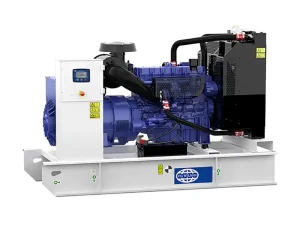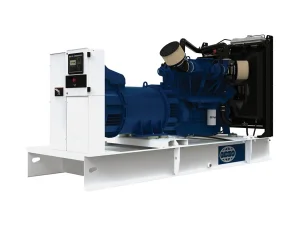
Industrial Enclosures
Acoustic Enclosed & Open Configurations
Precision-engineered sound-attenuated diesel units delivering robust prime and standby power for critical infrastructures.
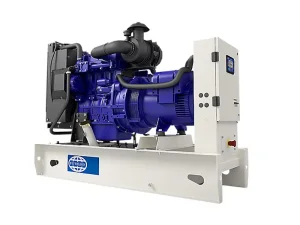
Wilson Open Type Small Diesel Generator Sets 230 V, 50 Hz P16-1
View Product Specs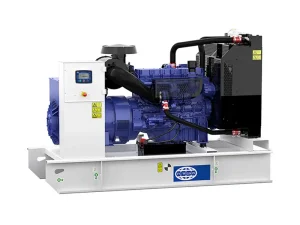
FG Wilson Generator Sets Small Type P200-3 Continuous Power
View Product Specs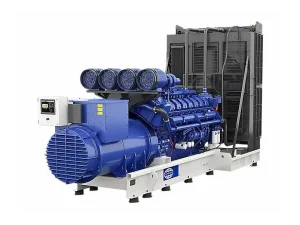
Large Range >800 kVA FG Wilson Generator Efficiency P2000-3
View Product Specs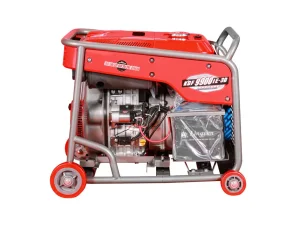
Diesel Variable Frequency Generator Set KDF9900 High Stability
View Product Specs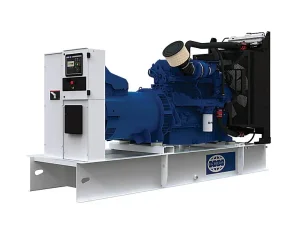
Medium Range 225 – 938 kVA FG Wilson High-end Unit P500-3
View Product Specs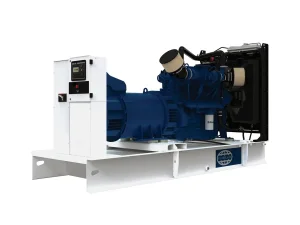
Diesel Generator 813 kVA Silent Type Genset Diesel P813-1
View Product Specs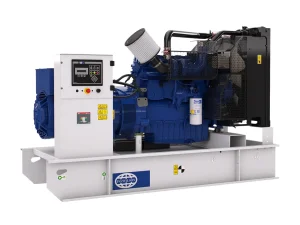
Medium Range 225 – 938 kVA FG Wilson Generator P249-5 Unit
View Product Specs
Market Whitepaper
Global Landscape: Acoustic Containment & Energy Transition
An engineering analysis of modern commercial, healthcare, and hyperscale requirements for silent prime and standby systems.
In modern industrial utility environments, acoustic attenuation has shifted from an optional enhancement to an uncompromising regulatory compliance mandate. Worldwide municipal environmental protection agencies, such as the EU Stage V sound directives, ISO 8528-10, and OSHA workplace thresholds, mandate that industrial stationary plants restrict localized emission levels to 65–75 dB(A) measured at 7 meters. As hyperscale data hubs, medical healthcare facilities, telecommunication backbones, and urban high-rise developments penetrate dense metropolitan perimeters, open-frame installations are no longer practical without extensive auxiliary room soundproofing.
Silent type generator units from China have evolved through sophisticated Computational Fluid Dynamics (CFD) thermodynamic simulations and finite-element structural design. Rather than merely encasing standard internal combustion units inside heavy steel shells, modern Chinese manufacturing clusters focus on acoustic impedance matching, advanced labyrinth air-flow ducts, and microporous high-density rockwool acoustic insulation. This integration achieves extreme low-noise output while sustaining uncompromised airflow thermodynamics to eliminate hot-spot derating in tropical and desert environments.
≤68 dB(A)
Acoustic Rating at 7m
50°C
Tropical Radiator Clearance
24h
Global Rapid Tech Window
ISO 9001
Triple System Certified
Future Evolution
Technological Roadmaps & Silent Canopy Trends
Next-generation sound encapsulation combined with hybrid powertrain and low-emission fuel infrastructure.
Multi-Chamber Attenuation
Modern canopies utilize specialized double-baffle intake and exhaust silencers with high-frequency sound-absorbing perforated zinc sheets, damping mechanical combustion knock without constraining engine volumetric efficiency.
Smart IoT & Cloud Fleet Link
Embedded CAN-bus controllers (DeepSea/ComAp protocols) relay continuous harmonic distortion, stator heat, fuel consumption, and ATS synchronicity over 5G clouds, enabling predictive condition-based maintenance.
Corrosion-Resistant Metallurgy
Marine-grade electro-galvanized or alloy steel sheet housings treated with automotive multi-stage polyester powder coating withstand 1000+ hours of continuous salt-spray ASTM B117 testing for offshore operations.
Applied Engineering
Mission-Critical Field Scenarios
Proven engineering implementations spanning high-load environments across harsh terrains.
Medical Centers
Ultra-low noise profiles allow generators to sit directly alongside surgical wings and recovery wards, maintaining seamless power via fast-switching ATS panels without disturbing clinical acoustics.
Pipeline Energy Hubs
Over extreme longitudinal spans—exemplified by continuous pumping stations along the 2,400 km China-Myanmar energy corridor—prime rated silent units sustain uninterrupted operations across rugged microclimates.
Sub-Zero Polar Mines
Equipped with internal ceramic block heaters, fuel pre-heating jackets, and auto-closing acoustic air louvers, silent units guarantee instantaneous cold starting in severe Arctic conditions down to -40°C.
Commercial Campuses
High-density metropolitan office complexes require compact footprints with top-exhaust discharge silencers, delivering peak shaving and standby power that complies with municipal urban noise codes.
Total Quality Assurance
Engineering Blueprint: ISO Certified Systems
Stringent pre-shipment qualification procedures governed by ISO 9001, ISO 14001, and ISO 45001 compliance standards.
Full-Spectrum Load Bank Testing
Every silent set undergoes iterative step-load profiling (0%, 25%, 50%, 75%, 100%, and 110% overload) using resistive-inductive testing blocks to record harmonic distortion and exhaust back-pressure levels.
Thermodynamic Airflow Optimization
Aerodynamic radiator cowl integration guarantees that internal airflow velocity stays below critical back-pressure limits, preventing premature engine thermal derating during high ambient summer conditions.
Precision Acoustic Certification
Calibrated class-1 sound meter arrays verify 8-directional hemisphere sound emission levels in accordance with ISO 3744 standards before factory release sign-off and packing.
Consulting Support
Frequently Asked Technical Questions
Detailed technical guidance for electrical design engineers, plant directors, and procurement teams.
What is the fundamental difference between Prime (PRP) and Standby (ESP) ratings?
An Emergency Standby Power (ESP) rating represents the maximum electrical power available during a variable electrical load sequence under utility power outage conditions, with annual running hours capped around 200–500 hours without overload capability. A Prime Power (PRP) rating represents unlimited annual operating hours under varying load, with an allowable 10% overload capability for 1 hour within every 12 hours of continuous operation (e.g., FG Wilson P250-5 rated 230 kVA Prime vs. 250 kVA Standby).
How do acoustic canopies affect engine cooling and power derating?
Soundproof canopies naturally introduce internal static pressure resistance to air intake and radiator cooling paths. Without precision CFD engineering, this could lead to engine thermal derating above 40°C ambient temperatures. Our silent enclosures feature low-resistance labyrinth air channels, oversized radiator discharge ducts, and high-efficiency pusher fans that allow generators to operate at rated capacity in ambient environments up to 50°C without risk of thermal trips.
How should procurement teams accurately convert kW to kVA when specifying units?
Apparent power in kVA is calculated by dividing real power in kW by the operating power factor (cos φ), which is standardized at 0.8 lagging for commercial three-phase industrial diesel units. For instance, a facility requirement of 184 kW equates to 184 ÷ 0.8 = 230 kVA. Sizing must also account for high inductive inrush current transients generated by large electric motor starts (e.g., HVAC chillers, submersible pumps) and potential non-linear harmonic distortion.
When should an open-type unit be selected over a silent-canopy enclosure?
Open-frame units are designed for installation within dedicated, purpose-built generator plant rooms equipped with existing mechanical acoustic baffles, motorized intake/exhaust louvers, and structural noise attenuation. They provide maximum ease of serviceability and reduce capital costs. Silent canopy units are the ideal plug-and-play solution for outdoor installations, roof placements, commercial parking lots, or indoor plant rooms where room soundproofing is cost-prohibitive.
What warranty protection and global spare parts networks are guaranteed?
All exported generating sets include a comprehensive 12-month standard warranty from the date of commissioning or 1,000 running hours, supported by around-the-clock 24-hour technical response. We maintain an inventory of genuine Perkins and FG Wilson maintenance components, filtration consumables, electronic AVRs, and deep-sea controller modules to ensure reliable operations globally.
Technical Catalog
Explore Complete Generator Solutions
Explore our full line of quiet, mobile, medium, and heavy-duty industrial diesel generators.
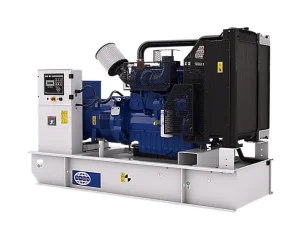
Medium Range 225-838kva-P250-5 Durable Diesel Generator
View Product Specs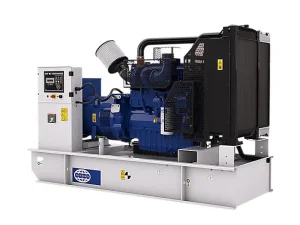
Medium Range Intelligent Generator Set Automatic Control P344-5
View Product Specs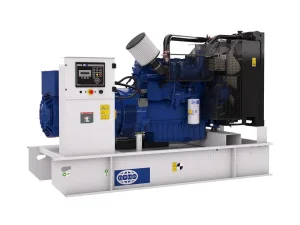
FG Wilson 225-938kVA High-Efficiency Power Set P275-2
View Product Specs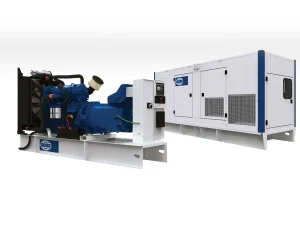
FG Wilson Open Type Medium Diesel Generator Sets P501-3
View Product Specs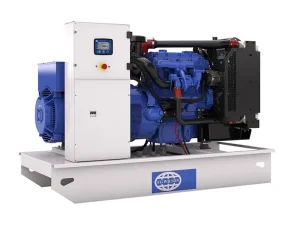
Wilson Small Type 33KVA Reliable Energy Source P33-6 Unit
View Product Specs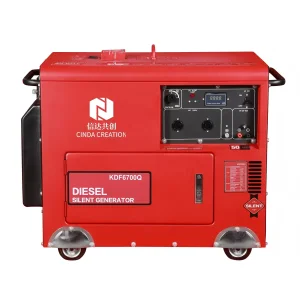
Versatile KDF6700Q Quiet Generator Set Portable Power Source
View Product Specs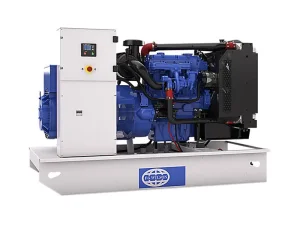
Wilson Open Type Small Diesel Generator Sets 230 V P26-3S
View Product Specs