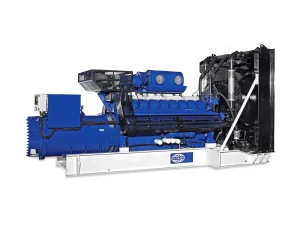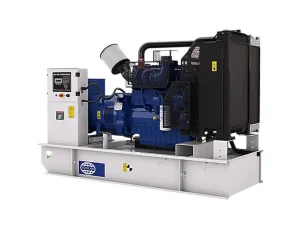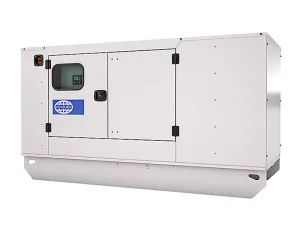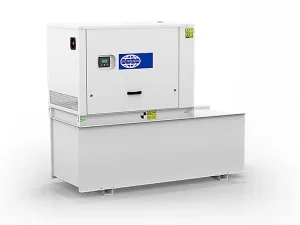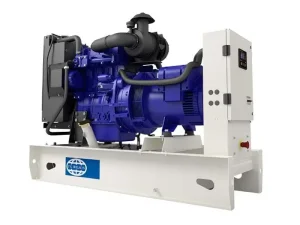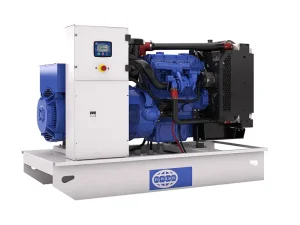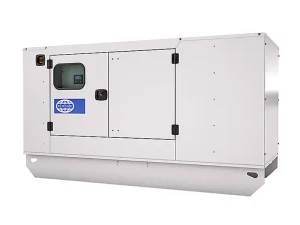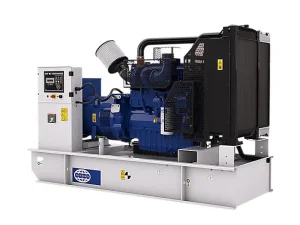
Featured Industrial Power Units & Engine Assembly Products
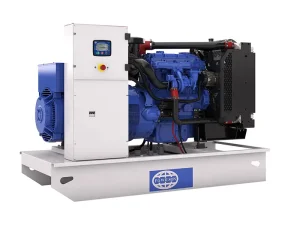
Direct manufacturer-grade power units, certified Perkins/Cummins compatible hardware, and generator assemblies exported to global engineering hubs.
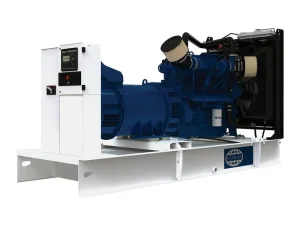
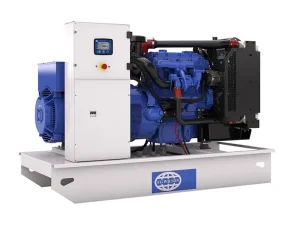
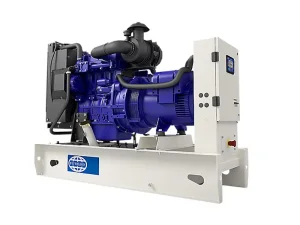
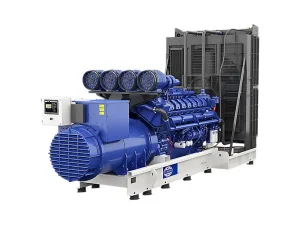
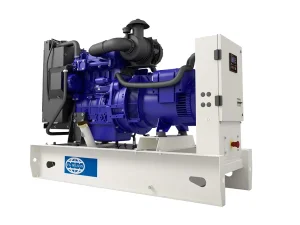
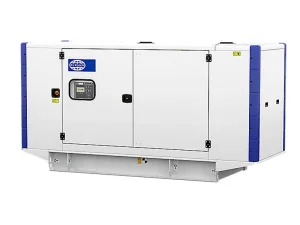
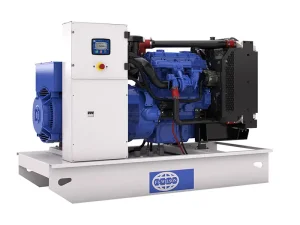
Global Landscape of Cummins Engine Systems & Critical Spare Parts Export
Technical evaluation of powertrain longevity, global supply chain dynamics, and component standardization across industrial diesel platforms.
1. Commercial Realities and Industrial Status of Heavy-Duty Internal Combustion Platforms
The international market for heavy-duty internal combustion engines, particularly for architectures such as Cummins (ISF, 4BT, 6BT, 6CT, QSL, ISM, QSX15, QSK19, QSK60) and complementary platforms including Perkins, Weichai, and FG Wilson assemblies, has entered an era dictated by extreme precision, rapid duty-cycle transitions, and aggressive lifecycle management. Modern industrial operators cannot tolerate unplanned downtime: every minute a drilling rig, data center backup, or high-volume marine dredge stalls due to component degradation incurs massive compounding financial penalties.
Consequently, procurement executives across the EMEA, APAC, and Americas markets have shifted focus away from basic spot purchasing to long-range strategic partnerships with vetted engine parts exporters. Modern Cummins platforms operate under extreme thermodynamic stresses—combustion chamber pressures regularly exceeding 200 bar and turbocharger rotational velocities surpassing 100,000 RPM. This necessitates an uncompromising standard for replacement components: cylinder liners must preserve structural cross-hatching to guarantee hydrodynamic oil lubrication; crankshafts must undergo rigorous induction hardening and micro-polishing; and high-pressure common rail (HPCR) injection mechanisms must adhere to sub-micron geometric tolerances.
2. The Chinese Manufacturing and Engineering Efficiency Advantage
China’s power equipment and internal combustion manufacturing ecosystem has evolved from a high-volume output base into a world-class center of advanced engineering, precision casting, and intelligent automation. China hosts premier joint-venture and licensed manufacturing facilities—such as Dongfeng Cummins (DCEC), Chongqing Cummins (CCEC), and Beijing-adjacent assembly plants—offering unmatched supply-chain depth.
Chinese engine parts exporters provide global enterprise buyers with three distinct competitive advantages:
- Integrated Metallurgy & Tooling Infrastructure: Proximity to specialized foundries enables rapid prototyping, high-integrity ductile iron casting, and automated heat treatment with continuous optical emission spectrometry verification.
- Economies of Scale with Agile Lead Times: The aggregation of tier-1 component ecosystems allows suppliers to maintain substantial inventories of essential engine blocks, camshafts, turbochargers, cylinder heads, water pumps, and electronic control modules (ECMs), drastically reducing lead times compared to Western distribution channels.
- Total Cost of Ownership (TCO) Optimization: Buyers routinely achieve a 25% to 40% reduction in capital expenditure on overhaul spare packages without compromising metallurgic integrity, material fatigue limits, or operational MTBF (Mean Time Between Failures).
| Critical Engine Component | Standard Replacement Benchmark | China Advanced Export Specification | Operational Impact |
|---|---|---|---|
| Forged Steel Crankshaft | Conventional nitriding, standard surface polish | 42CrMoA micro-alloy forging, deep-induction hardened journals, Ra < 0.2µm | Eliminates harmonic fatigue under continuous prime load conditions |
| High-Pressure Common Rail (HPCR) | Standard nozzle coating, 1600 bar tolerance | Diamond-Like Carbon (DLC) coated needle, 2200+ bar rating, sub-micron seating | Maximizes fuel atomization efficiency and prevents fuel injector scoring |
| Wet Cylinder Liners | Centrifugal grey cast iron | Boron-copper alloyed centrifugal casting, precision plateau honing | Reduces lube oil consumption by up to 18% and prevents ring micro-welding |
| Turbocharger Assemblies | Standard cast turbine wheels | Inconel 713C superalloy turbine wheels, dual-plane dynamic balancing | Resists extreme exhaust gas surge and thermal shock up to 750°C |
Engineered for Demanding Real-World Operating Environments
Robust mechanical and thermal configurations calibrated to extreme continuous duties across diverse global sectors.
Extreme Climate Marine & Offshore
Exposed to high atmospheric salinity and continuous moisture, marine propulsion and auxiliary generator systems rely on corrosion-resistant water pumps, zinc-anode protected heat exchangers, and marine-certified seals. Our exported components resist marine pitting corrosion and maintain mechanical integrity throughout long commercial voyages.
Data Center & Healthcare Prime Power
Mission-critical standby configurations cannot experience voltage drift or transient recovery delays. Using precision-matched governor controllers, high-flow fuel delivery valves, and balanced rotating groups, our parts ensure immediate 10-second cold-start pickup and stable frequency lock under 100% block load transitions.
Mining, Heavy Civil & Remote Pipelines
Operating across harsh deserts, high altitudes, and abrasive dust zones—similar to the 2,400 km China-Myanmar crude oil pipeline infrastructure—diesel powertrains demand multi-stage high-efficiency filtration, heavy-wall cylinder liners, and high-ambient cooling radiators engineered to mitigate thermal derating.
Global Enterprise Procurement Trends & Supplier Criteria
The strategic shifts defining how international procurement teams evaluate, verify, and secure high-grade powertrain components.
End-to-End Quality Traceability
Global EPC contractors and fleet operators now require complete mill test certificates, material batch traceability, and coordinate measuring machine (CMM) inspection data for every critical structural component.
Emissions Compatibility (Tier 3 / Tier 4F)
With global environmental guidelines tightening, aftermarket and replacement parts must maintain precise thermodynamic profiles to ensure compatibility with SCR, DPF, and EGR exhaust aftertreatment systems.
Multi-Brand Fleet Synchronization
Industrial operations rarely run single-brand engine assets. Strategic exporters must demonstrate cross-platform mastery across Perkins, Cummins, Weichai, and Wilson systems, allowing consolidated shipping and reduced freight overhead.
Consolidated Overhaul Kit Packaging
Rather than managing hundreds of distinct part numbers, corporate buyers demand complete, serialized in-frame and out-of-frame overhaul kits containing pistons, rings, bearings, gaskets, and valvetrain hardware in single-crate deliveries.
Frequently Asked Questions on Cummins Engine Parts & Export Protocols
Expert answers addressing metallurgic integrity, genuine interchangeability, international logistics, and warranty terms.
How do exported aftermarket Cummins parts compare to genuine OEM components?
What is the standard procedure for verifying part numbers and engine serial compatibility?
How are heavy powertrain components protected during ocean freight and multi-modal transit?
What warranty and technical assistance terms apply to exported generator sets and components?
Can you provide custom engineering configurations for high-altitude or desert installations?
High-Efficiency Generator Sets & Power Units
Complete medium and small-range diesel generator configurations ready for commercial backup, emergency prime deployment, and global field export.