
Continuous / Standby
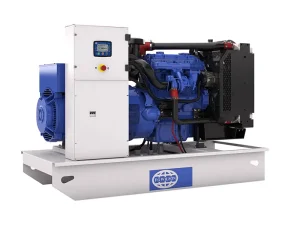
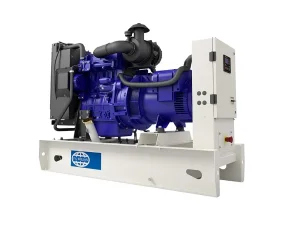
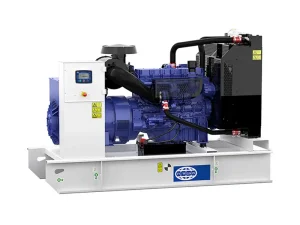
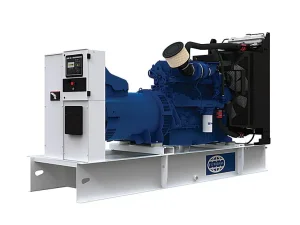
China Wilson 110KVA Portable Diesel Generator Small Range <220 kVA P110-3 Exporter, Service
Request Specification
Factory-verified diesel generator assemblies and fluid handling units engineered to international transient response and thermal endurance standards.
Examining how common-rail electronic fuel management, digital governing, and low-carbon synthetic fuels are reshaping commercial and industrial power generation.
In modern electrical architecture, power security is no longer an auxiliary calculation—it is the operational backbone of digital economies, mission-critical healthcare, heavy manufacturing, and transcontinental supply routes. As national utility grids experience unprecedented volatility from climate shifts and fluctuating renewable integration, commercial and industrial enterprises are pivoting toward robust, independent, on-site energy architectures. Within this landscape, Cummins powertrain platforms represent an undisputed global standard for transient load capability, thermal stability, and structural longevity.
The engineering evolution of Cummins heavy-duty platforms (ranging from the agile 4B, 6B, and 6C series up to the formidable QSX15, QST30, KTA38, and QSK60 architectures) reflects a systemic migration from mechanical fuel metering to fully integrated High-Pressure Common Rail (HPCR) injection and ECM-driven digital monitoring. These advancements enable single-step load acceptance exceeding 80% of rated capacity, fulfilling rigorous ISO 8528-5 Class G2 and G3 transient performance benchmarks. For engineering procurement leads, working with certified, high-caliber Cummins exporters ensures that this mechanical pedigree is coupled with synchronized alternators, precision cooling packages, and intelligent switchgear designed to operate faultlessly under extreme power-factor fluctuations.
Advanced electronic unit injectors (EUI) and high-pressure common rail technology atomize fuel at over 1,600 to 2,200 bar. This maximizes combustion velocity, cuts specific fuel consumption (BSFC), and suppresses soot emissions before secondary exhaust aftertreatment.
Equipped with specialized holset turbochargers and variable geometry control, modern Cummins gen-sets deliver rapid recovery from massive voltage and frequency dips during sudden motor starting and heavy inductive load connection.
Conforming to emerging Scope 1 ESG mandates, late-generation Cummins platforms allow direct drop-in utilization of Hydrotreated Vegetable Oil (HVO) and B20 biodiesel without derating output, lowering lifecycle greenhouse emissions up to 90%.
Why capital acquisition cost (CapEx) accounts for less than 18% of a mission-critical generator's 10-year financial envelope.
Experienced EPC contractors, mining consortiums, and hyperscale infrastructure managers approach power procurement with a rigorous Total Cost of Ownership (TCO) methodology. Purchasing an industrial diesel generator set based purely on introductory unit pricing frequently precipitates catastrophic budget escalations through unexpected parasitic load costs, unoptimized heat rejection, high maintenance frequency, and premature engine overhauls.
A high-quality Cummins exporter bridges the gulf between raw hardware supply and end-to-end engineering validation. The table below illustrates the critical delta between generic, unverified third-party generator sourcing and authentic, certified Cummins power packages engineered with calibrated alternators, heavy-duty cooling cores, and OEM-validated governing suites:
| Evaluation Parameter | Certified High-Quality Cummins Exporter Pack | Generic / Non-Standard Assembled Unit | Operational Impact on Facility |
|---|---|---|---|
| Transient Voltage Dip (G3 Step) | < 15% voltage deviation; recovery < 1.2 sec | 28% - 35% voltage deviation; recovery > 3.5 sec | Prevents sensitive server resets and PLC trips during sudden block loading. |
| Mean Time to Overhaul (TBO) | 20,000 to 30,000 continuous operating hours | 8,000 to 12,000 continuous operating hours | Reduces long-term asset amortization cost and avoids unbudgeted core replacement. |
| Altitude & Thermal Derating | Verified full-load to 40°C & 1,000m without power loss | Derates up to 3.5% per 5°C rise above 25°C | Guarantees rated nameplate output across Middle East, African, and Andean environments. |
| Harmonic Distortion (THD) | Total Harmonic Distortion < 3%; 2/3 pitch winding | THD > 6.5%; non-optimized pole spacing | Eliminates zero-sequence neutral overheating in data and telecommunication centers. |
| Spare Parts Interoperability | 100% genuine Cummins & Perkins cross-compatibility | Unstandardized non-OEM proprietary components | Ensures worldwide parts availability within 24–48 hours, curtailing downtime risk. |
How modern Chinese industrial manufacturing hubs unite global engineering IP with unrivaled fabrication velocity and QA automation.
The global energy equipment supply chain has undergone dramatic reconfiguration over the past decade. Where Western production hubs frequently face 36-to-56-week lead times on medium and large industrial prime-power engines, China's advanced manufacturing ecosystem—anchored by world-class joint-venture complexes including Dongfeng Cummins Engine Co. (DCEC) and Chongqing Cummins Engine Co. (CCEC)—has emerged as the premier global nexus for agile, certified power generation export.
At our integrated Beijing and regional manufacturing hubs, Industry 4.0 standards govern every phase of generator set production. Robotic laser-cutting and automated powder-coating processes ensure sound-attenuated acoustic canopies resist corrosive salt-fog and UV degradation for decades. Fully automated assembly cells mount dynamically balanced engine-alternator assemblies onto FEA-optimized heavy channel steel baseframes equipped with vibration dampening isolators.
Crucially, high-caliber Chinese exporters do not merely distribute crated engines; they engineer, customize, stress-test, and certify integrated prime and standby energy installations. Every unit undergoes strict inductive and resistive load-bank testing across 0%, 25%, 50%, 75%, 100%, and 110% overload conditions prior to export stamping, accompanied by comprehensive factory inspection certificates conforming to ISO 9001, ISO 14001, and ISO 45001.
Direct Tier-1 partnerships with international alternator specialists (Stamford, Leroy Somer, Marathon) and controller manufacturers (Deep Sea Electronics, ComAp) eliminate intermediary markups, slashing lead times by up to 60% compared to traditional European distribution lines.
Clients access live-streamed, IoT-enabled dynamometer and load-bank validation. Real-time telemetry tracks coolant delta-T, oil pressure transients, harmonic wave consistency, and sound pressure level (dBA at 7 meters) prior to seaworthy containerized packing.
A permanent standing inventory of thousands of genuine maintenance parts—including turbochargers, water pumps, fuel injectors, AVRs, and electronic sensors—allows rapid international dispatch, guaranteeing clients operational continuity.
From sub-zero Arctic pipeline pumping stations to hypersaline Middle Eastern refineries, engineered gen-sets must withstand real-world operational stress.
Demanding 100% prime/standby redundancy with zero millisecond toleration for brownouts. Configured with Cummins QSK platforms, Deep Sea digital paralleling systems, and Class-H insulation to guarantee non-linear server rack power protection.
High ambient temperatures exceeding +50°C paired with airborne silica dust require heavy-duty dual-stage Donaldson air filtration, 55°C high-ambient radiators, and desert-spec sand trap louvers to safeguard internal clearances.
Providing continuous prime baseline generation along high-pressure oil/gas transmission pipelines. Highlighting heavy-duty stainless steel fasteners, marine-grade zinc-rich epoxy coatings, and automated fuel-polishing skids.
Authoritative guidance addressing the most common queries raised by international procurement managers and MEP consulting engineers.
Under ISO 8528 regulations, Standby Power Rating (Emergency Standby Power - ESP) applies to supplying emergency power for the duration of a utility outage with a variable load factor not exceeding 70% across 24 operating hours, with zero overload capability. Prime Power Rating (PRP) is applicable for supplying electric power in lieu of commercially purchased power for unlimited hours per year in a variable load situation, with a 10% overload capability available for 1 hour within every 12 operating hours. Sizing must always be calculated against your prime duty requirements if the equipment is intended as primary baseload generation.
Atmospheric derating occurs because elevated temperatures and higher altitudes reduce ambient air density, diminishing oxygen content in the combustion chamber. Modern turbocharged, air-to-air charge-cooled Cummins engines generally operate without derating up to 1,000 meters above sea level and ambient temperatures up to 40°C. Above these limits, standard calculation parameters mandate an approximate derating of 3.5% per 300 meters of altitude gain and 2% per 5°C increase in ambient temperature. Our engineering department calculates your precise local thermodynamic density to supply an appropriately upsized displacement.
Dongfeng Cummins Engine Co. (DCEC) is a specialized Sino-American joint venture manufacturing Cummins B, C, D, and L series engines (typically covering the 20 kVA to 500 kVA power bracket). Chongqing Cummins Engine Co. (CCEC) is dedicated to heavy-duty industrial platforms including the N, K, and M series (covering high-output applications from 250 kVA up to 1,500 kVA+). Both facilities operate under the identical Cummins Global Production System (CPS) and rigorous global quality management protocols, ensuring all components maintain complete global interchangeable fidelity with US or European-built assemblies.
Modern facilities operate vast quantities of non-linear electrical loads such as variable frequency drives (VFDs), computers, LED ballasts, and telecom servers. These generate substantial 3rd harmonic currents that accumulate on the neutral conductor, inducing dangerous overheating and waveform distortion. Alternators configured with a 2/3 pitch winding eliminate the 3rd, 9th, and 15th harmonic frequencies, thereby ensuring the total harmonic distortion (THD) remains below 3%, securing sensitive instrumentation from inductive interference.
All export generator sets are backed by an extensive 12-month commercial warranty commencing from the official site commissioning date or 1,000 running hours (whichever is achieved first), fully extendable under long-term service agreements. Our service division maintains round-the-clock technical dispatch, full documentation suites (including schematics, P&IDs, and FAT records), and carries extensive inventories of OEM consumable filters, sensors, and structural engine overhauling components dispatched via global air courier within 24 to 48 hours.
High-capacity generator systems and acoustic-attenuated packages configured for high-demand commercial campuses, hospitals, and infrastructure projects.
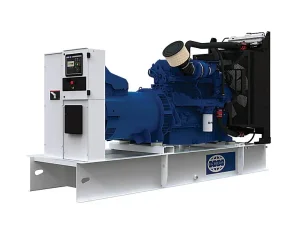
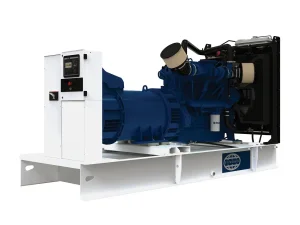
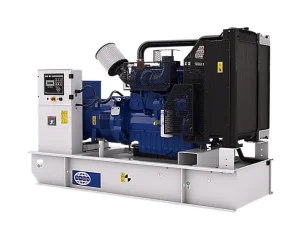
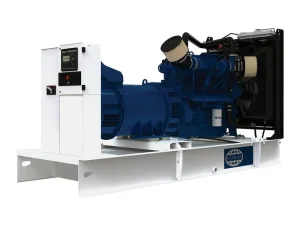
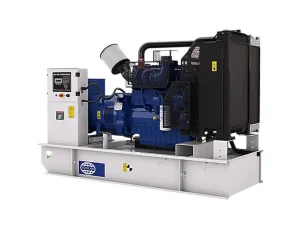
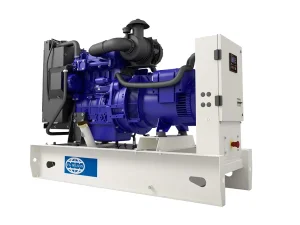
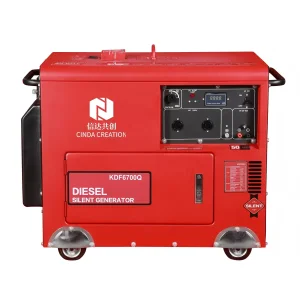
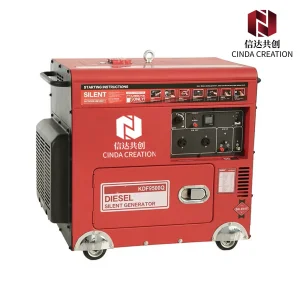
Whether specifying backup generation for a regional hospital, a multi-megawatt mining microgrid, or containerized prime power for remote oil pipelines, our mechanical and electrical engineering directors provide comprehensive sizing, transient modeling, and turnkey export logistics.