
Featured Standard & Industrial-Grade Generator Sets
Select from our precision-engineered FG Wilson small-to-medium standby and prime units. Every diesel genset undergoes continuous full-load dynamometer qualification and multi-angle acoustic verification before export dispatch.
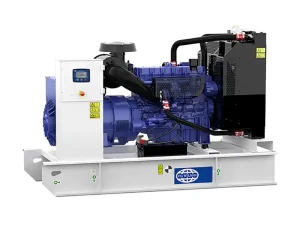
High-Quality P220-3 Small Range 220 kVA Efficient FG Wilson Diesel Generators1 Suppliers, Service
Explore Specification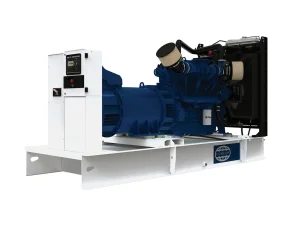
China Medium Range 225–938 kVA FG Wilson Generator Set P688-3 Exporters, Service
Explore Specification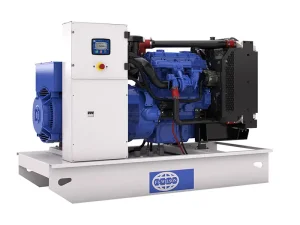
Cheap Wilson Small Range <220 kVA Portable Diesel Generator P50-3 Exporters, Service
Explore Specification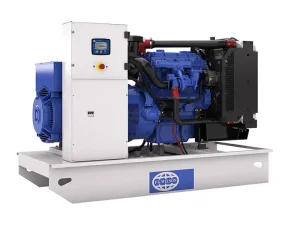
Cheap Wilson 90KVA Industrial Power Generator Small Range <220 kVA P90-3S Supplier, Suppliers
Explore Specification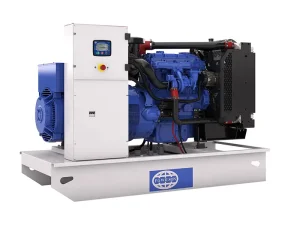
High-Quality Wilson Small Small Range<220 kVA High-Efficiency Power Generator P110-6 Suppliers, Exporter
Explore Specification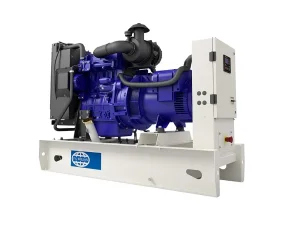
Cheap P9.5-4FG Wilson Generators: Reliable Power Solutions Suppliers, Exporters
Explore Specification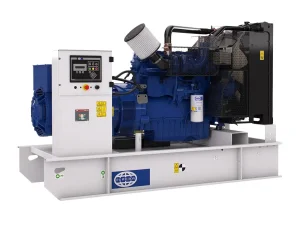
High-Quality Fg Wilson Medium Range 225-938KVA High Efficiency Diesel Generator Set P375-4 Exporters, Service
Explore Specification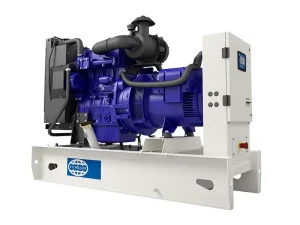
China FG Wilson Small Range <220 KVA High-Efficiency Energy Generator Sets P7.5-4S Exporter, Service
Explore SpecificationEngineering Principles of Industrial Generator Sets
Understanding the deterministic boundary between Standby (ESP), Prime (PRP), and Continuous Operating Power (COP) pursuant to ISO 8528-1:2018 standards is the foundational requirement for industrial power architecture.
Transient Response & ISO 8528-G3
Industrial generator sets deployed in sensitive sectors require ISO 8528 Class G3 compliance. This dictates recovery from an instantaneous 100% transient load step within ≤1.5 seconds, while maintaining voltage variance inside ±1% and frequency deviation within ±0.5%. Electronic speed governors coupled to Bosch or Woodward digital actuation units guarantee synchronous inertia under severe non-linear R-C inductive disruptions.
- Permanent Magnet Generator (PMG) excitation
- Sub-transient reactance X"d ≤ 12%
- Total Harmonic Distortion (THD) < 3.0%
Acoustic Shielding & Thermal Balance
Acoustic enclosures engineered by Cinda Creation achieve sound pressure attenuation of 65–72 dBA at 7 meters without compromising engine breathing. Through computational fluid dynamics (CFD) heat transfer modeling, split-stream aerodynamic louver configurations decouple ambient heat rejection from radiator core discharge, allowing peak output operation in ambient environments exceeding 50°C without derating penalties.
- 2.0mm galvanized steel canopy construction
- Fire-retardant rockwool soundproofing (Class 0)
- Dual-chamber residential exhaust silencers (-35 dBA)
Alternator Thermal Endurances
Utilizing genuine Leroy-Somer or Stamford brush-less alternators wrapped in Class H vacuum-pressure impregnated (VPI) insulation, the power generation sets demonstrate robust resilience against salt-spray corrosion, chemical fumes, and tropical humidity. The auxiliary stator windings (AREP or PMG excitation) sustain short-circuit current up to 300% for 10 seconds, maintaining downstream circuit-breaker coordination.
- IP23 standard / IP54 harsh environment options
- 2/3 pitch winding suppresses triplen harmonics
- Anti-condensation thermistor heating packages
| Rating Category | Permissible Run Hours | Average Load Factor | Overload Capacity | Optimal Project Application |
|---|---|---|---|---|
| Emergency Standby (ESP) | Max 200 hrs/yr | ≤ 70% over 24h cycle | 0% (Strictly prohibited) | Hospitals, Tier II Data Centers, Commercial Towers |
| Prime Power (PRP) | Unlimited annual hours | ≤ 70% over continuous runtime | +10% for 1h in every 12h | Remote Mines, Construction Sites, Independent Grids |
| Continuous Base Load (COP) | Continuous 8,760 hrs/yr | 100% constant steady state | 0% (Constant rating) | Base-load Power Plants, Pipeline Compression Stations |
| Data Center Continuous (DCC) | Unlimited annual hours | Up to 100% rated capacity | Integrated with Uptime Tier III/IV | Hyperscale Cloud Compute, Co-location Facilities |
China Factory 4.0: Supply Chain Resilience & Efficiency
By integrating state-of-the-art Chinese machining centers, automated robotic welding stations, and Perkins/Weichai manufacturing clusters, Cinda Creation eliminates component delivery bottlenecks and slashes total project costs.
Sub-Tier Traceability
From raw alloy block casting to fuel injection calibrations, every sub-assembly carries an indelible laser QR code integrated into our Manufacturing Execution System (MES). This delivers 100% pedigree validation for metallurgic integrity and component origin.
Full-Load Dyno Cells
No generator set exits Beijing manufacturing without undergoing a minimum 4-hour automated resistive/reactive load bank endurance run at 25%, 50%, 75%, 100%, and 110% overload conditions. Calibrated sensors monitor exhaust gas temperatures, oil pressures, and vibrational signatures.
Lead-Time Compression
By maintaining deep buffer inventories of Perkins 400, 1100, 2000, and 4000 series engines, alongside Weichai WP series blocks, we compress delivery schedules from the industry standard 24–32 weeks down to 4–8 weeks for custom builds, and under 7 business days for stock SKUs.
Optimized TCO Benchmark
Total Cost of Ownership (TCO) across a 10-year asset lifecycle is driven primarily by specific fuel consumption (SFC) and service accessibility. Our optimized combustion geometry delivers up to 6.2% lower SFC (grams per kWh) compared to aging legacy power assemblies in the global market.
Turnkey Solutions Across Demanding Vertical Sectors
Power reliability is not uniform; different industries demand distinct fault tolerance, load acceptance speeds, and environmental fortifications.
Healthcare & Surgical Centers
In hospital networks, grid interruptions jeopardize life-support apparatus. We engineer automated transfer switch (ATS) paralleling suites compliant with NFPA 99 and NFPA 110 Type 10 Level 1 protocols, initiating emergency full-load acceptance within 10 seconds of utility bus failure.
- Dual redundant start batteries (lead-acid / NiCad)
- Super-silent canopy options (<65 dBA @ 7m)
- Isolated neutral grounding arrangements
Cross-Border Oil & Gas Pipelines
Referencing our operational benchmark along the 2,400-km China–Myanmar crude oil artery, where 17 gas gensets and 5 industrial diesel generator units maintain continuous prime power. Uncompromising mechanical filtration tackles heavy particulate loads and variable-grade diesel feedstock without cavitation.
- Three-stage Racor fuel-water coalescence
- Continuous prime (PRP) duty certification
- SCADA Modbus RS485 / TCP IP telemetry
Hyperscale Telecom & Data Centers
Modern high-density compute facilities require low electromagnetic interference (EMI/EMC) alongside high motor-starting capability (kVA) to absorb chilling chillers and UPS rectifiers. Our units feature DeepSea DSE8610 MKII or ComAp InteliGen controls for effortless multi-megawatt synchronizing.
- Fast paralleling < 8 seconds bus-to-bus
- Harmonic mitigation via 2/3 pitch stators
- N+1 and N+2 redundant architecture design
Technology Roadmap: Hybrid Microgrids, HVO & AI Telemetry
The internal combustion genset is transitioning into a high-intelligence, multi-source decentralized node within decarbonized microgrids.
100% Biofuel & HVO Compatibility
Addressing Scope 1 emission reductions, our entire portfolio of Perkins- and Weichai-driven generator sets is certified for operation on Hydrotreated Vegetable Oil (HVO 100, EN 15940) and synthetic Gas-to-Liquid (GTL) fuels without modification to seals or pump clearances. This slashes net greenhouse gas footprint by up to 90% while delivering identical kW ratings and cold-flow properties.
BESS Hybrid Synchronization
Integrating battery energy storage systems (BESS) directly via DC-coupled bus bars or AC synchronization controls allows our generator sets to operate exclusively within their sweet spot (70%–85% load factor). In solar-diesel microgrids, this smart dispatch strategy eliminates low-load "wet stacking" and saves up to 45% in operating fuel consumption.
AI Predictive Health & Digital Twin
Utilizing edge IoT compute units embedded directly on the controller board, our intelligent genset models analyze vibration spectra, blow-by pressure, alternator stator temperature rise, and lubricating oil viscosity in real-time. Cloud-native digital twin algorithms preempt catastrophic bearing, turbocharger, or injector failure weeks prior to scheduled maintenance alarms.
Audited Quality Systems & Certification Credentials
Cinda Creation adheres to internationally accredited engineering regimens, validating every system before maritime containerization.
ISO 9001:2015 Management
Every step—from bill of materials reconciliation to final torque verification on engine mounts—is strictly cataloged within audited Quality Management Systems. Comprehensive Factory Acceptance Testing (FAT) dossiers, full schematics, and commissioning records are provided with every shipment.
ISO 14001:2015 Environmental
Demonstrating ecological responsibility across production processes: solvent-free electrostatic powder coating lines, zero chemical discharge, and full containment base fuel tanks configured to trap 110% of engine fluids, completely safeguarding ground ecosystems against spills.
ISO 45001:2018 Safety
Operational safety is structurally built into our products. Enclosed thermal turbo heat shields, fully caged radiator fans, emergency exterior E-stop pushbuttons, and IP65 weatherproof control panels ensure zero operator injury risk in challenging industrial field installations.
Global EPC & Procurement Checklist: Generator Set Sizing
Avoid costly de-rating oversights and improper reactive compensation by reviewing key application parameters before issuing tender requests.
1. Site Environmental Derate
Ambient temperatures above 40°C require roughly 2% power derating per 5°C increase. Altitudes above 1,000 meters above sea level reduce thin air oxygen density, necessitating approximately 3.5% derating per additional 300 meters unless turbocharged intercooled options are configured.
2. Inrush Current Calculations
Electric induction motors demand across-the-line starting currents reaching 600% of full-load amp (FLA). Without variable frequency drives (VFDs) or soft starters, alternators must be oversized by 1.5× to 2.2× to prevent unacceptable voltage dips exceeding 15%.
3. Fuel Logistics Autonomy
Evaluate standard sub-base fuel tank capacity. Standard 8-hour continuous tanks suffice for city-grid emergency standby, whereas isolated pumping stations or disaster response setups mandate 24-hour dual-wall bundled belly tanks with auto fuel transfer pumps.
4. Parallelism & Redundancy
For critical applications exceeding 1 MVA, installing two 500 kVA gensets in parallel is vastly superior to a single 1,000 kVA unit. Paralleling provides N+1 emergency fail-over, matches variable operational load efficiently, and prevents continuous low-load running.
Frequently Asked Technical & Commercial Questions
Clear, definitive answers to the most common questions raised by electrical contractors, plant managers, and procurement officers.
What is the engineering difference between prime (PRP) and standby (ESP) power ratings?
How do I convert real power (kW) to apparent power (kVA) when specifying a diesel generator?
Under what site conditions should an open frame vs. silent canopy generator set be specified?
What factory testing and warranty protection does Cinda Creation provide on exported equipment?
What critical project parameters are required to issue an engineered quotation?
High-Capacity Industrial & Dual-Function Generator Sets
Featuring high-output large-range generators from 800 kVA to 2500 kVA for utility baseloads and heavy mining plants, alongside multi-purpose welding power sets.
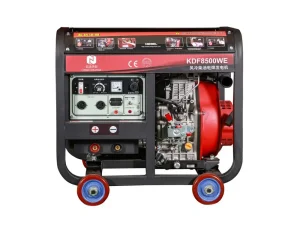
High-Quality Electric Welding High-Performance Generators Set KDF8500WE Exporters, Exporter
Explore Specification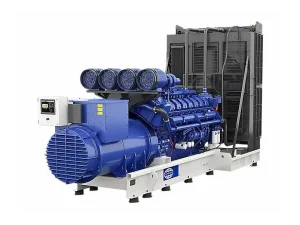
High-Quality Large Range >800 kVA FG Wilson Generator Power and Efficiency P2000-3 Exporters, Service
Explore Specification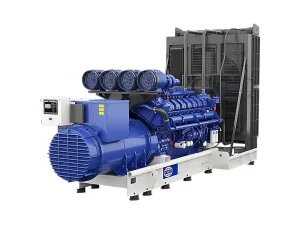
High-Quality Fg Wilson high-efficiency energy-saving diesel generator set (800-2500kva) P2500-1 Supplier, Service
Explore Specification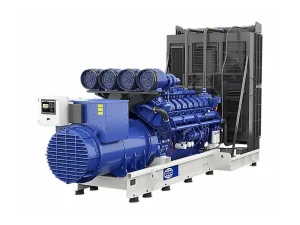
High-Quality Fg Wilson 800-2500kva diesel generator set P1500-1 Supplier, Exporters
Explore Specification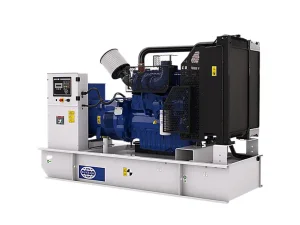
China FG Wilson Generator set 225-938kVA, Industrial-Grade Power Guarantee P300-5 Suppliers, Service
Explore Specification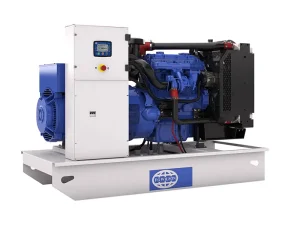
China Wilson 110KVA Portable Diesel Generator Small Range <220 kVA P110-3 Exporter, Service
Explore Specification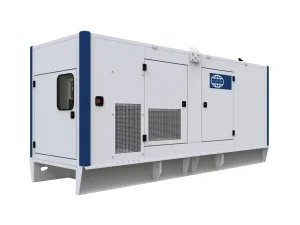
Cheap Wilson Open Type Medium Diesel Generator Sets 400/230 V, 50 Hz P550-2 Suppliers, Service
Explore Specification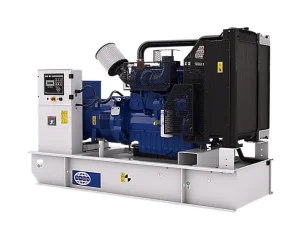
Cheap Medium Range 225-838kva-P250-5 Durable Diesel Generators for Industrial Exporters, Exporter
Explore SpecificationConsult with Senior Application Engineers in Beijing
Whether you require transient motor-starting analyses, custom sound attenuation under 65 dBA, or multi-unit synchronizing switchgear, our sales engineering desk delivers rapid technical submittals within 24 hours.