
High-Efficiency Residential & Light Commercial Gensets
Explore our export-certified generator sets and industrial diesel engines engineered for low acoustic signatures, prolonged prime autonomy, and maximum fuel conversion efficiency.
Global Dynamics Governing Household Generator Prices
A macroeconomic and thermodynamic assessment of how supply chains, raw material indices, and engineering regulations dictate residential power pricing.
Grid Volatility & Climatic Anomalies
The global shift toward decentralized micro-generation is no longer speculative. Prolonged grid curtailments across North America, extreme weather anomalies across European transits, and persistent infrastructure deficits across developing trade belts have combined to transform household generators from discretionary safeguards into non-negotiable household utilities.
Consequently, wholesale generator prices increasingly correlate with climatic risk profiles. Exporters are shifting production lines toward weather-hardened enclosures with automatic low-temperature starting kits (-25°C glow plug aids) and acoustic baffling capable of keeping sound output below 65 dB(A) at 7 meters.
Core Raw Material Price Elasticity
A significant portion of a household generator set's factory-gate price (FOB) is tethered to primary non-ferrous commodities and precision metallurgical inputs. The alternator winding relies on Class H insulated electrolytic copper (Cu purity ≥ 99.99%), where recent London Metal Exchange (LME) swings create baseline fluctuations of 8% to 15% across low-capacity genset tiers.
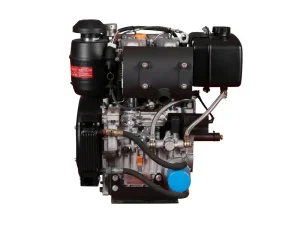
Simultaneously, the engine block, whether an air-cooled single-cylinder KD-series unit or a multi-cylinder Perkins-architecture block, depends on high-grade nodular cast iron and cold-rolled silicon steel laminations for the rotor/stator core. Exporters managing agile supply chains offset these swings through precision automation and strategic component buffering.
Emissions Regimes & Smart Telematics
Regulatory harmonization—spanning EPA Tier 4 Final, EU Stage V, and China Stage IV non-road emission mandates—has fundamentally redesigned the price equation. Low-emission electronic governors, high-pressure common rail (HPCR) injection, and exhaust gas after-treatment raise initial capital expenditures (CapEx) while slashing long-term operational expenditures (OpEx).
Modern household backup systems integrate IoT-enabled digital controllers (e.g., DeepSea, SmartGen) that support real-time RS485/Modbus telemetry, cloud-based fault diagnostics, and automated mains-failure (AMF) transfer switches, positioning contemporary gensets as intelligent nodes within digital home energy management ecosystems.
Comprehensive Household Generator Pricing & Specification Matrix
A technical cross-comparison of residential generator capacities, prime versus standby tolerances, acoustic engineering, and commercial export pricing benchmarks.
| Capacity Class | Typical Engine / Platform | Cooling / Acoustic Architecture | Prime vs. Standby Duty | Estimated Export Price Index | Strategic Target Application |
|---|---|---|---|---|---|
| 3.0 – 8.5 kVA (Small Residential) |
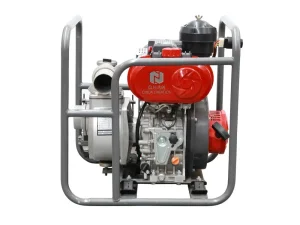
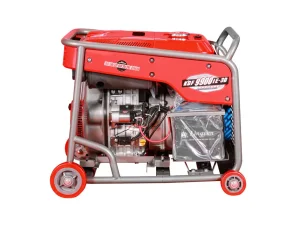
Single-Cylinder KD-Series / Air-Cooled Diesel Engine | Forced Air / Heavy-Duty Acoustic Silencer (68-72 dBA) | Standby: 8.5 kVA (6.8 kW) Prime: 7.5 kVA (6.0 kW) |
Budget Optimized $450 – $1,200 FOB |
Individual suburban villas, emergency refrigeration, off-grid cabins, rural perimeter lighting. |
| 11.0 – 22.0 kVA (Whole-House Silent) |
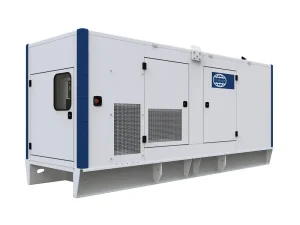
Multi-Cylinder Water-Cooled / Perkins or Weichai Equivalent | Radiator Cooled / Weatherproof Soundproof Canopy (≤62 dBA) | Standby: 22.0 kVA (17.6 kW) Prime: 20.0 kVA (16.0 kW) |
Value Engineered $2,800 – $4,600 FOB |
Luxury estates, small medical clinics, automated residential farms, high-draw HVAC installations. |
| 25.0 – 65.0 kVA (Multi-Dwelling / Commercial) |
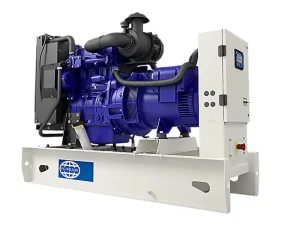
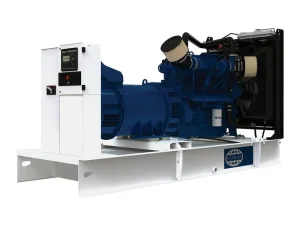
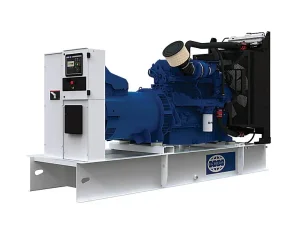
FG Wilson P-Series Architecture / Perkins Core Engine | Tropical Radiator (50°C Ambient) / Heavy Soundproof Attenuation | Standby: 65.0 kVA (52.0 kW) Prime: 58.0 kVA (46.4 kW) |
Commercial Standard $5,500 – $9,800 FOB |
Gated community microgrids, multi-tenant residential buildings, rural pump stations, data relay towers. |
| 110 – 220 kVA (Apartment Complex / Prime) |
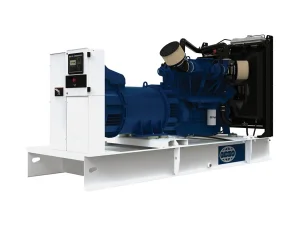
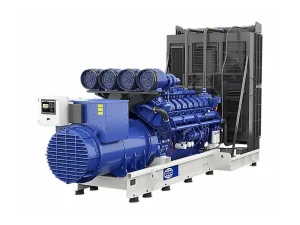
Heavy-Duty Weichai / Perkins Industrial Powertrain | Liquid Intercooled / Open-Type or Containerized Enclosure | Standby: 220 kVA (176 kW) Prime: 200 kVA (160 kW) |
Industrial Tier $11,500 – $22,000 FOB |
High-rise residential developments, commercial mixed-use retail, remote exploration camps, municipal water plants. |
| 500 – 938 kVA (Substation / Prime Power) |
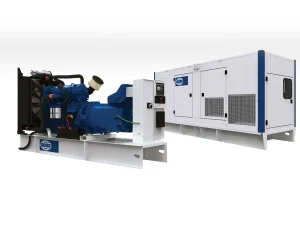
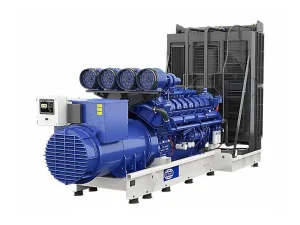
FG Wilson Medium Range (P500-P938 Series) | Full Remote Cooling Radiator / Sound Attenuated Container | Standby: 938 kVA (750 kW) Prime: 850 kVA (680 kW) |
Capital Scale $45,000 – $92,000 FOB |
District power backup, municipal emergency reserves, mega-infrastructure, utility peak-shaving operations. |
China Factory 4.0: Supply Chain Resilience & Efficiency Advantages
How state-of-the-art Chinese manufacturing clusters synthesize technological precision, vertical integration, and robotic automation to redefine global price-to-performance benchmarks.
Vertical Supply Chain Integration
Unlike Western equipment assemblers who rely on fragmented global subcontractors with prolonged lead times, China's advanced manufacturing hubs in the Yangtze River Delta and Greater Bohai Rim incorporate fully integrated vertical ecosystems. From foundry casting and CNC cylinder head machining to automated copper winding and laser sheet-metal canopy cutting, all critical tiers reside within a 50-kilometer radius.
This geographic density compresses lead times from 16 weeks down to 18-25 business days, drastically reducing intermediate logistics overheads and delivering raw FOB cost advantages of 20% to 35% compared to European counterparts.
Automated Robotic Quality Assurance
Factory 4.0 implementation across leading exporters has replaced manual calibration with automated, camera-guided robotic welding, computerized dynamic balancing for crankshafts and rotors, and digitized salt-spray electrostatic powder coating lines. This automation ensures acoustic enclosures withstand over 1,000 hours of ASTM B117 salt spray exposure without cosmetic or structural corrosion.
Every generator set undergoes computerized automated load-bank testing (0%, 25%, 50%, 75%, 100%, and 110% overload conditions) with real-time verification of voltage variation (±1%), frequency droop (≤3%), and total harmonic distortion (THD < 5%).
OEM Agility & Modular Customization
Global procurement teams rarely purchase off-the-shelf catalog configurations. Specialized tenders demand diverse voltage outputs (110V/220V split-phase for the Americas, 230V/400V 3-phase for Europe and Asia, 127V/220V for Latin American mining basins) alongside alternating 50 Hz and 60 Hz governor calibrations.
China's smart manufacturing lines accommodate modular SKUs without minimum-order-quantity (MOQ) penalties. Exporters flexibly embed OEM brandings, custom ATS enclosures, oversized base fuel tanks (providing 24-hour continuous autonomy), and bespoke anti-condensation alternators suited for tropical or humid deployment.
Localized Engineering Use Cases & Real-World Demands
Examining four distinct operational environments where residential and light-commercial diesel generators deliver critical reliability under diverse climatic and mechanical stresses.
Urban & Suburban Residential Enclaves
High-density residential areas impose strict municipal acoustic ordinances. Gensets deployed in suburban North America, the UK, or the Middle East must operate below 65 dB(A) at property boundaries.
Config: Soundproof weatherproof canopies, internal residential silencers, double-layer sound-absorbing rockwool, and automatic ATS switches synchronized to trigger within 8-12 seconds of a utility outage.
Remote Clinics & Emergency Healthcare
In rural Latin America, Southeast Asia, and Sub-Saharan Africa, regional health centers require zero-interruption power to preserve cold-chain vaccines, run oxygen concentrators, and sustain emergency surgery theaters.
Config: High-reliability diesel power units (11-40 kVA) paired with oversized radiators, dual fuel filtration (water-fuel separators), and digital AMF controllers featuring automatic diagnostic self-testing.
Commercial Agriculture & Irrigation
Modern intensive livestock facilities and automated irrigation pivots face devastating losses during unannounced grid drops. Lack of ventilation or well water flow can wipe out entire production cycles within hours.
Config: Air-cooled KD-series sets or robust open-type multi-cylinder units with heavy-duty cyclonic air filters, mechanical governor simplicity, and high transient inductive motor-starting capacity.
Telecom Base Stations & Data Relays
Off-grid telecommunication towers and fiber repeaters require continuous prime power across remote mountaintops and deserts with minimal on-site human intervention.
Config: Variable frequency generator sets or ultra-efficient diesel units with 500-hour oil service intervals, 1000-liter extended fuel tanks, and GSM-enabled remote monitoring telemetry.
Total Cost of Ownership (TCO) & Export Logistics Optimization
Smart international buyers evaluate beyond baseline FOB figures. True procurement value balances container cubing, preventive maintenance overhead, and fuel conversion efficiency.
Container Packing & Ocean Freight Density
Ocean freight rates directly affect landed unit costs. Professional Chinese exporters employ 3D container cubing algorithms to maximize space inside 20ft General Purpose (GP) and 40ft High Cube (HQ) containers.
- SKD (Semi-Knocked Down): Removing canopies and mounting skids on custom stacking frames increases 40HQ load capacity by up to 45% for high-volume distributors.
- CBU (Completely Built Up): Turnkey crating with reinforced forklift pockets, vapor-phase corrosion inhibiting (VCI) shrink wrap, and sea-worthy fumigated timber bases ensure direct-to-site readiness upon port arrival.
- Optimized Customs Harmonization: Accurate HS Code declarations (e.g., 8502.1100 for ≤75 kVA, 8502.1200 for 75-375 kVA) along with CE, EPA, and SONCAP documentation prevent port demurrage delays.
Life-Cycle Maintenance & Consumables Economics
Initial machine acquisition accounts for only 20% to 25% of the total life-cycle expenditure over an eight-year commercial or heavy residential standby window. The remaining 75% to 80% is consumed by fuel burn, preventive filter swaps, and lubrication cycles.
- Fuel Conversion Curves: Modern common-rail diesel platforms achieve specific fuel consumption figures under 205-215 g/kWh at 75% prime load, conserving thousands of liters over standard mechanical pumps.
- Component Interoperability: Partnering with exporters offering direct Perkins, FG Wilson, and Weichai cross-compatible spare parts guarantees access to affordable oil, fuel, and air filter cartridges worldwide.
- Factory Warranty Integrity: Standard 12-month or 1,000-running-hour comprehensive warranties backed by prompt 24-hour technical response windows protect against unscheduled downtime.
B2B Procurement & Engineering FAQ
Clear, technical explanations addressing common specification challenges, pricing variables, and shipping protocols encountered by global buyers.
What primarily distinguishes prime power from standby power in pricing?
A standby rating designates the maximum power available for the duration of a utility outage with variable load profiles (annual limits typically capped at 200–500 hours). Prime power permits continuous operation with unlimited annual runtime under variable loads, accompanied by a 10% overload tolerance for 1 hour in every 12. Selecting prime power ensures heavier duty crankcases, enlarged cooling packs, and higher-grade copper alternators, reflecting a 12% to 18% higher capital price.
Why choose an air-cooled diesel generator over a liquid-cooled unit?
Single-cylinder air-cooled diesel generators (such as the KD7 or KD9 models) offer exceptional reliability in portable and light residential setups (3–8 kVA). Without radiators, water pumps, coolant hoses, or thermostats, they eliminate coolant leakage risks, weigh significantly less, and cost 40% to 60% less to produce, making them ideal for budget-conscious backup, agricultural pumps, and mobile field tasks.
How does an acoustic silent canopy impact factory export pricing?
Upgrading from an open-frame unit to a weather-shielded, sound-attenuated canopy typically increases FOB pricing by 15% to 25%. This cost accounts for heavy-gauge galvannealed steel (2.0–2.5mm thickness), automated robotic powder coating, specialized internal baffle chambers, acoustic rockwool damping, residential mufflers, and weather-sealed cable entry ports that drive acoustic outputs down to 60–65 dB(A) at 7 meters.
Can Chinese exporters configure generators for 60Hz 120V/240V markets?
Yes. Chinese manufacturing facilities customize windings and governing assemblies for both 50Hz (1500 RPM) and 60Hz (1800 RPM) grid frameworks. 60Hz configurations tailored for North America, the Philippines, Saudi Arabia, or South America are wound to 12-lead reconnectable designs supporting 120V/240V split-phase, 127V/220V 3-phase, or 277V/480V industrial tensions, with mechanical or electronic governors calibrated accordingly.
What is the typical FOB export lead time for customized bulk orders?
Standard open-frame or catalog silent generators (under 220 kVA) maintain factory production cycles of 15 to 20 working days. Custom projects involving bespoke ATS integration, specialized dual-voltage alternators, or extreme cold-weather preheating systems are completed and tested in 25 to 35 working days, benefiting from China's localized supply chain ecosystem.
How are warranty claims handled internationally for overseas shipments?
Commercial equipment export protocols provide a comprehensive 12-month or 1,000-operating-hour warranty from initial commissioning. Authorized exporters maintain dedicated warranty spare-part allocations, dispatching replacement filters, sensors, AVRs, and controllers via expedited air courier (DHL/FedEx) within 24 to 48 hours of ticket verification, backed by direct engineering video support.
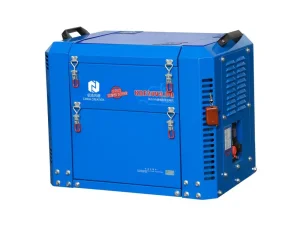
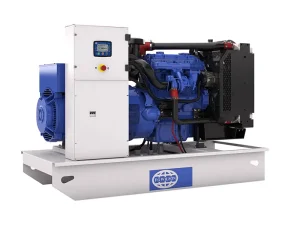
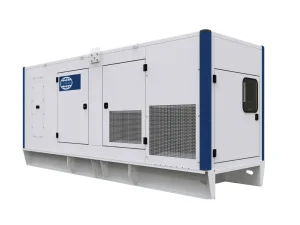
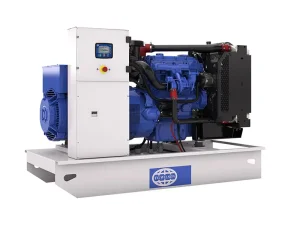
High-Power & Specialized Industrial-Grade Generators
Comprehensive standby power sets, variable-frequency units, and heavy industrial diesel platforms ready for containerized export and critical site commissioning.

Request Factory Direct Sizing & Official Export Quotation
Connect directly with our engineering sales specialists in Beijing. Provide your site electrical parameters, required voltage frequency, acoustic regulations, and target port of delivery to receive an ISO-certified quotation and container logistics analysis within 24 hours.