Featured High-Efficiency Powertrain & Generation Systems
Engineered for mission-critical continuity, high-pressure common rail precision, and superior operational durability under harsh operating envelopes.
Global Injection Technology Evolution & Dynamics
Modern powertrain engineering mandates extreme atomization pressure, ultra-responsive solenoid actuation, and compliance with tightening international decarbonization benchmarks.
Sub-Micron Atomization & HPCR
The move to High-Pressure Common Rail (HPCR) architectures above 2,500 to 3,000 bar minimizes droplet Sauter Mean Diameter (SMD). Fine dispersion ensures stoichiometric completion, directly lowering unburnt hydrocarbons and particulate soot matter.
Multi-Pilot Rate Shaping
Modern electronic control modules support up to seven discrete injection events per combustion cycle. Integrating pre-injection, main rate shaping, and post-injection eliminates severe cylinder knock, accelerates catalyst warm-up, and maintains operational smoothness.
Alternative Fuels & HVO Compatibility
Alternative fuels such as Hydrotreated Vegetable Oil (HVO), biodiesel blends (B20/B100), and synthetic e-fuels display different lubricity indices and bulk modulus behaviors. Next-generation injectors feature specialized DLC (Diamond-Like Carbon) coatings to combat micro-scuffing.
Global Enterprise Sourcing Priorities & Intent Matrix
Industrial supply chain directors evaluate tier-one fuel injection vendors based on dimensional repeatability, metallurgy, and low total cost of ownership (TCO).
Sub-Micron Machining Tolerances
Needle clearances within injector bodies routinely operate at tolerances tighter than 0.5 to 1.5 microns. Suppliers must demonstrate air-gauging calibration and sub-micron dimensional repeatability to prevent premature hydrodynamic leakage.
Advanced Metallurgical Heat Treatment
Plungers and control valves undergo advanced vacuum carburizing, cryogenic stabilization, and tungsten-doped DLC treatments. These surface finishes withstand abrasive cavitation erosion and heavy-duty high-sulfur diesel applications.
Dynamic Flow-Bench Calibration
Each injector requires individual characterization on continuous automated test stands. Generating verified IMA/EMA correction codes ensures that real-world engine control units maintain balanced cylinder-to-cylinder fueling.
Total Cost of Ownership (TCO)
Procurement looks past unit pricing to consider injector nozzle longevity, remanufacturing viability, core exchange schemes, and extended service intervals. Reliable components help prevent catastrophic piston crown washouts.
Macro-Level Heavy Powertrain Injection Solutions
How precision fluid dynamic architectures mitigate failure modes in continuous prime, mission-critical standby, and heavy industrial environments.
Critical Infrastructure & Data Centers
Hyperscale facilities require generators to hit 100% block-load capacity within 10 seconds of an outage. Precision common rail injectors ensure instant atomization without wet-stacking, avoiding voltage and frequency fluctuations during grid failures.
Continuous Heavy Industrial Extraction
Marine drilling units, mining excavators, and pipeline pumping stations run under sustained high torque loads. Hydro-eroded nozzle spray orifices resist thermal coking, maintaining steady spray patterns even during unrefined fuel delivery.
Extreme Altitude & Cold Weather Sites
High-altitude installations face thinner air densities, while sub-zero Arctic settings lead to cold-start viscosity issues. Electronic injectors with multi-phase thermal maps dynamically trim delivery durations, preventing excessive smoke emissions and bore-wash.
Global Supply Assurance, QA & Compliance Frameworks
Strict adherence to international standards shields downstream operations from unplanned outages and regulatory penalties.
ISO 9001 / IATF 16949 Auditing
Tier-one supply chains require comprehensive Statistical Process Control (SPC), PPAP Level 3 documentation, and complete metallurgical traceability (MTRs) from raw alloy bars to assembled, boxed products.
Emissions Compliance Protocols
Assemblies undergo targeted emission checks to comply with US EPA Tier 4 Final, EU Stage V, and IMO Tier III marine criteria. Verified spray angles maintain aftertreatment systems like DPF and SCR without premature clogging.
Protective Packaging Logistics
Micro-finished injector parts are sensitive to atmospheric moisture and particulate contamination. Products are cleaned ultrasonically, bathed in calibration fluid, sealed in anti-corrosive VCI bags, and shielded against shipping shocks.
Field Engineering Support
Technical support includes on-site calibration verification, electronic CAN-bus diagnostics, and oil/fuel contamination root-cause analysis, helping buyers resolve fuel quality issues before injector failure occurs.
Fuel Injection Engineering Roadmap: 2025–2035
A clear look at how fuel injection technologies are adapting to zero-carbon energy vectors and intelligent closed-loop combustion monitoring.
Hydrogen Direct Injection (H2-DI)
Adapting direct fuel injection to pure compressed hydrogen requires solving dry, unlubricated contact problems. Next-generation designs use non-magnetic alloys, ceramic coatings, and high-velocity sealing to prevent hydrogen embrittlement.
Sensor-Integrated Smart Injectors
Integrating micro-piezoelectric pressure transducers directly into the injector body delivers real-time needle-lift and nozzle sac pressure tracking. This lets ECUs automatically compensate for mechanical wear over thousands of operational hours.
Dual-Fuel & Ammonia Systems
Large marine and prime-power platforms are shifting toward dual-fuel systems. High-precision diesel micro-pilot injections ignite low-reactivity alternative fuels like e-ammonia and methanol, maintaining reliable flame propagation.
Frequently Asked Engineering & Sourcing Inquiries
Key technical and procurement insights for field engineers, maintenance directors, and sourcing managers.
What primary factors cause fuel injector failure in industrial engines?
The leading cause remains abrasive particulate contamination down to the 2-to-5 micron range, which cuts control valve seating faces. Additional common causes include water contamination leading to corrosion, thermal coking on nozzle tips from prolonged low-load running, and cavitation wear under repeated pressure spikes.
Why is IMA/EMA classification coding critical during injector replacement?
Due to microscopic machining differences, every injector exhibits slightly different hydraulic flow characteristics. An IMA/EMA calibration code is programmed into the engine ECU, applying a fuel trim offset that balances delivery volume and timing across all cylinders.
Can modern common rail injectors run reliably on B20 or 100% HVO biofuels?
Yes, provided the injector metallurgy and internal coatings are rated for alternative fuels. HVO functions smoothly as a drop-in replacement. Higher biodiesel blends (B20/B100), however, require monitoring for oxidation stability and fuel-system elastomer compatibility to avoid nozzle lacquering.
How does nozzle sac volume impact industrial engine exhaust emissions?
Residual fuel remaining in the nozzle sac after needle closure can boil out into the cylinder late in the cycle, causing incomplete combustion. Valve Covered Orifice (VCO) designs reduce this dead volume, directly lowering raw unburnt hydrocarbon (HC) and particulate emissions.
Auxiliary Industrial Power & Generation Deployments
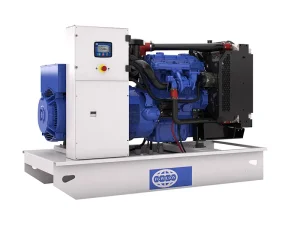
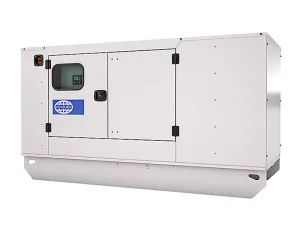
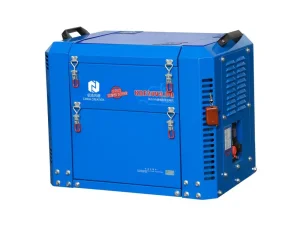
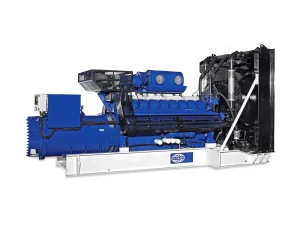
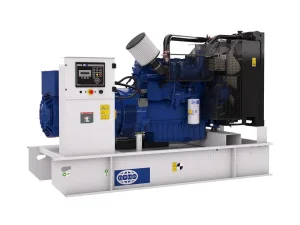
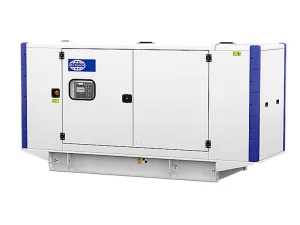
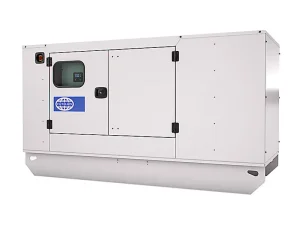
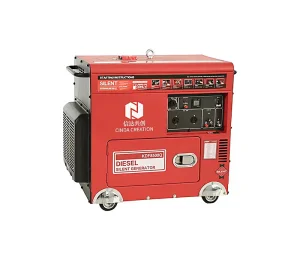
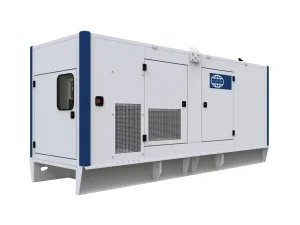
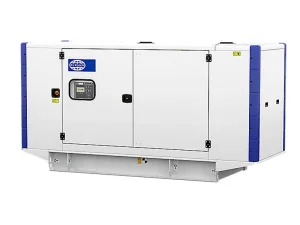
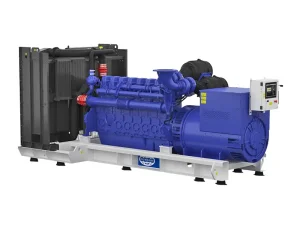
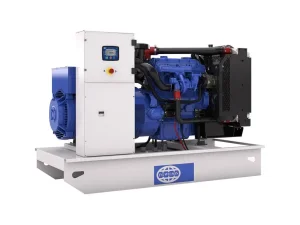
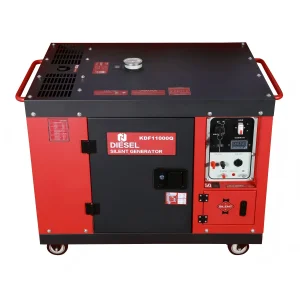
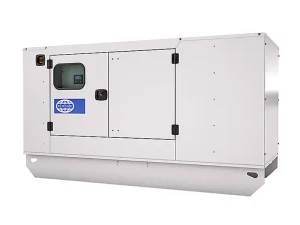
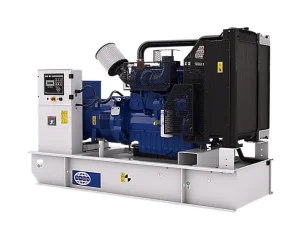
Browse our extended product lineup, covering commercial silent units, open skid configurations, and heavy industrial power systems.