
Featured Prime & Standby Generation Systems (Series A)
Engineered for continuous field duty, transient load response, and severe environment reliability. Explore immediate export allocations with factory-direct acceptance test certifications.
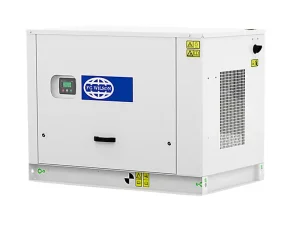
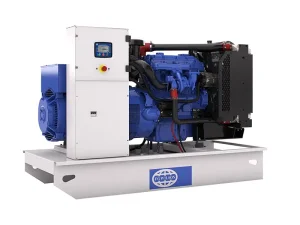
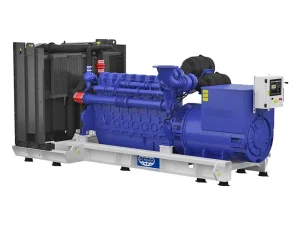
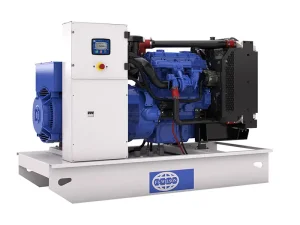
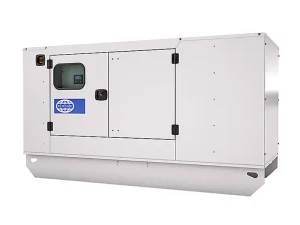
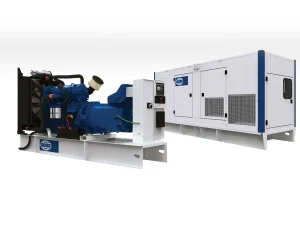
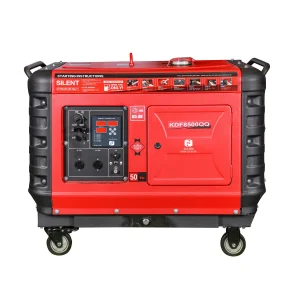
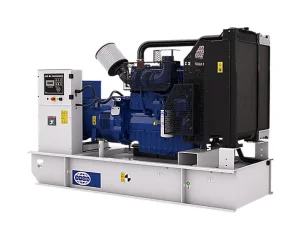
Strategic Procurement of High-Quality Petrol Generators in the Global Decentralized Power Landscape
As international industrial infrastructure transitions toward distributed resilience, procurement teams face complex challenges balancing energy density, carbon compliance, noise emission regulations, and lifecycle acquisition cost. While heavy baseload installations rely on large diesel reciprocating sets, contemporary tactical operations, field telemetry nodes, construction sites, mobile medical units, and commercial microgrids increasingly demand versatile, high-displacement, low-vibration petrol (gasoline) generators and pure sine inverter generator architectures.
Cold-Weather Flash Point Advantage
Unlike high-cetane diesel fuels that encounter paraffin wax precipitation and fuel filter gelling at temperatures below -10°C, commercial-grade petrol maintains high volatility and atomization characteristics down to -40°C. For high-altitude mining sites, emergency telecommunications towers, and sub-zero utility repair fleets, petrol generator sets equipped with auxiliary thermal jackets deliver instant cold-crank capabilities without requiring supplemental glow-plug cycles or heated fuel lines.
Low Acoustic Footprint & Vibration Attenuation
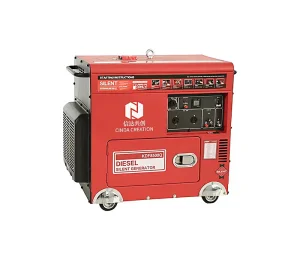
Internal combustion compression in spark-ignited petrol engines operates at significantly lower peak combustion chamber pressures (typically 8:1 to 10.5:1 ratio) relative to high-compression diesel units (up to 22:1). This mechanical reality translates to vastly diminished mechanical slap, lower torsional vibration, and quieter operation, making enclosed silent petrol generators the standard for urban residential zones, field hospitals, mobile broadcast units, and night-time infrastructure repairs.
Capital Expenditure & Logistics Agility
From a logistics and lifecycle cost (TCO) standpoint, lightweight aluminum-alloy petrol engine blocks deliver exceptional power-to-weight ratios (kW/kg). This enables rapid deployment via standard commercial transport, pickup beds, or helicopter drops without necessitating industrial crane rigging. When evaluating localized small-capacity emergency standby networks (under 15 kVA), procurement teams benefit from 40% lower initial acquisition CapEx compared to tier-compliant diesel generators.
Technical Architecture: Traditional Synchronous Alternators vs. Pure Sine Wave Digital Inverters
Evaluating harmonic purity, automated voltage regulation (AVR), and multi-pole permanent magnet alternators for sensitive IT, medical, and process automation hardware.
| Evaluation Parameter | Standard Brushless Petrol Genset | AVR-Equipped Industrial Petrol Set | Digital Pure Sine Inverter Petrol Set |
|---|---|---|---|
| Voltage Output Stability | ± 8.0% across dynamic load cycles | ± 2.5% controlled by solid-state AVR | ± 1.0% microchip pulse-width modulated (PWM) |
| Total Harmonic Distortion (THD) | 12% - 18% (non-linear loads degrade) | 5% - 8% (acceptable for electric tools) | < 2.5% Studio-Grade Purity |
| Engine Throttle Dynamics | Constant 3000 / 3600 RPM baseline | Mechanical governor compensation | Dynamic Smart-Throttle (RPM scales with real watt draw) |
| Fuel Consumption Efficiency | High baseline under low partial load | Standard thermodynamic curve | Up to 38% fuel savings during low-load intervals |
| Sensitive Data Center / Medical Suitability | High risk of harmonic heating / logic reboot | Permitted with active secondary filters | Direct plug-and-play for surgical, telemetry & servers |
| Parallel Synchronization Capability | Requires costly motorized switchgear | Limited manual phase synchronization | Integrated parallel communication ports (expandable kW) |
Electronic Fuel Injection (EFI) Integration
Modern enterprise petrol generators are departing from legacy carburetors in favor of closed-loop Electronic Fuel Injection (EFI). By continuously monitoring ambient intake pressure, cylinder head temperature, and exhaust lambda sensor feedback, EFI systems dynamically calibrate injector pulse durations. This completely eliminates altitude derating issues up to 3,000 meters above sea level and ensures single-pull or instant solenoid pushbutton starting without manual choke manipulation.
Permanent Magnet Alternator (PMA) Technology
By integrating rare-earth neodymium magnets directly into the high-speed rotor assembly, modern petrol inverter generators generate high-frequency multi-phase AC power. This AC current is immediately rectified into DC voltage before being reconstituted into crisp 50Hz/60Hz single-phase or three-phase pure sine waves by high-capacity insulated-gate bipolar transistors (IGBTs). The structural mass of the generator alternator is reduced by up to 50% compared to traditional wire-wound copper armatures.
Dual-Fuel (Petrol / LPG-CNG) Hybridization
To extend operational run-time in disaster recovery scenarios where commercial liquid petrol distribution networks are disrupted, advanced generator suppliers configure dual-fuel carburetion blocks. The engine seamlessly shifts between high-octane petrol and pressurized Liquefied Petroleum Gas (LPG) or compressed natural gas (CNG). LPG operation ensures indefinite fuel shelf-life without gumming up fuel jets, minimizes spark plug carbon fouling, and lowers overall carbon monoxide exhaust emissions by up to 35%.
Engineered Deployment Profiles: Mission-Critical Enterprise Applications
Cross-sector deployment parameters engineered for harsh physical environments, strict noise ordinances, and autonomous operational cycles.
Emergency Healthcare & Field Clinics
Mobile triage shelters, field laboratories, and vaccine cold-storage chains require steady pure-sine wave generation. Low acoustic profiles prevent patient distress while ultra-low THD ensures precision imaging, ultrasound equipment, and centrifuges run without micro-processor lockups or thermal drift.
Remote Telecom & Microwave Repeater Towers
Off-grid 4G/5G repeater masts situated on mountain peaks depend on compact petrol generator modules configured with long-range fuel tanks and remote GSM telematics. Autonomous dry-contact start signals actuate generator charging cycles when DC battery banks reach critical low-voltage thresholds.
Infrastructure Construction & Pipeline Repair
High-impact structural welding, core drilling, and pneumatic compression on pipeline rights-of-way require high motor-starting inductive reserve. Reinforced open-frame petrol generator sets with full tubular steel roll cages withstand severe job site vibration, abrasive sand, and outdoor moisture.
Commercial Retail & Banking Data Backup
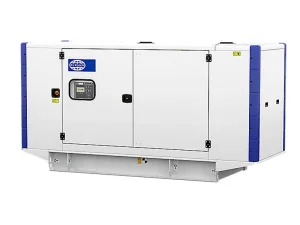
Urban retail branches, financial ATM clusters, and cold-chain supermarket nodes maintain uninterrupted business operations during seasonal brownouts. Ultra-quiet canopy enclosures ensure zero disruption to street-level pedestrian environments while running critical POS systems and alarm panels.
Total Cost of Ownership (TCO) & Factory Acceptance Standards
For large engineering, procurement, and construction (EPC) contractors, generator fleet acquisition requires multi-variable life-cycle assessment. A low unit sticker price is frequently negated by excessive lubricating oil consumption, premature cylinder bore wear, high failure rates of voltage regulators, and lack of standardized regional spare parts.
1. Full Copper-Wound Armatures vs. Copper-Clad Aluminum (CCA)
High-specification industrial suppliers insist on 100% Grade H insulation pure electrolytic copper windings. Copper delivers superior thermal conductivity, handles sudden inductive surge loads (e.g., motor starts) without insulation breakdown, and exhibits 40% lower internal resistance compared to lower-cost CCA conductors.
2. Cast Iron Cylinder Sleeves & Overhead Valve (OHV) Valve Trains
Long-endurance petrol generators feature heavy-duty centrifugal cast iron liners press-fitted into die-cast aluminum crankcases. This pairing combines excellent heat dissipation with supreme abrasive wear resistance, providing MTBF (Mean Time Between Failures) exceeding 2,500 continuous running hours before top-end overhaul.
3. Low-Oil Automatic Protective Shutdown Systems
Industrial generators incorporate float-activated or piezoelectric low-oil pressure sensors linked directly to the primary ignition circuit. If crankcase oil viscosity degrades or oil reserves drop below critical hydrodynamic lubrication limits, the ignition module instantly grounds, averting catastrophic connecting rod seizure.
Factory Acceptance Test (FAT) Checklist
Prior to container stuffing and international bill-of-lading issuance, top-tier petrol generator manufacturers subject 100% of serialized units to rigorous bench validation:
- 0% to 100% Step-Load Acceptance: Verifying governor recovery within 1.5 seconds per ISO 8528-5 Class G2.
- Dielectric Withstand & Megger Testing: Armature winding insulation resistance certified at >100 Megaohms at 1,000V DC.
- Acoustic Decibel Mapping: Hemispherical sound-pressure logging across 8 angular points at 7-meter perimeter.
- Thermal Equilibrium Validation: Continuous 4-hour full-load run checking alternator temperature rise under 45°C ambient chamber limits.
Global Compliance, Emissions Frameworks & Regional Import Certification
Cross-border machinery procurement demands rigorous verification of exhaust emission tiers, electrical safety, electromagnetic compatibility, and sound power limits.
European Union: CE, Stage V & Sound 2000/14/EC
Generators destined for EU member states must comply strictly with Regulation (EU) 2016/1628 Stage V non-road mobile machinery (NRMM) limits on hydrocarbon (HC), nitrogen oxides (NOx), and carbon monoxide (CO). Furthermore, outdoor acoustic emission directive 2000/14/EC mandates certified Guaranteed Sound Power (LwA) labels on all canopied petrol sets.
North America: EPA Phase 3 & CARB Tier 4
Shipments into the United States and Canada require Environmental Protection Agency (EPA) Phase 3 small spark-ignition engine certification. For delivery into California, engines must carry California Air Resources Board (CARB) compliance, incorporating evaporative emission carbon canisters, low-permeation fuel tanks, and fluorocarbon-lined fuel transport hoses.
Middle East & Africa: SASO, SONCAP & High-Ambient
Exporting to Saudi Arabia, Nigeria, Kenya, or Ghana involves pre-shipment verification under SASO Saber or SONCAP programs. In addition to documentation, machinery must be rated for desert environments (+50°C continuous ambient), requiring upgraded high-flow cooling fans, cyclonic pre-cleaner air filters, and thermal heat shields around carburetors.
Frequently Asked Questions by Industrial Buyers & EPC Specifiers
Direct, authoritative technical answers addressing fuel selection, sizing criteria, harmonic distortion, and warranty provisions.
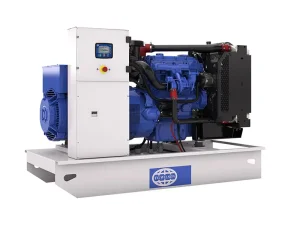
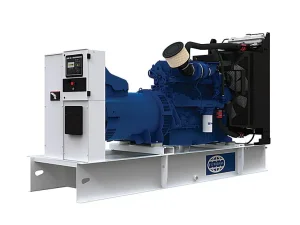
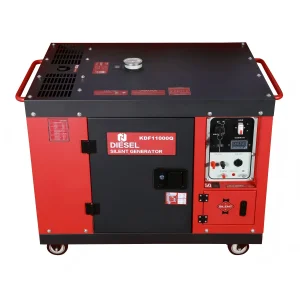
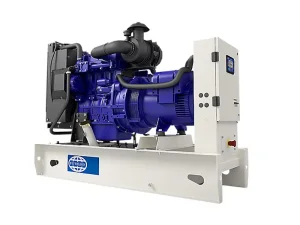
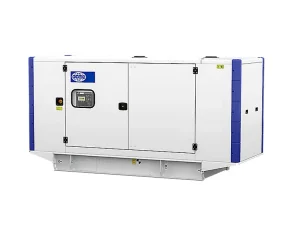
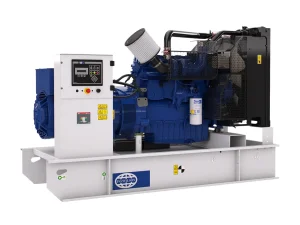
Featured Industrial & Open-Frame Generator Sets (Series B)
Engineered for continuous commercial service, auxiliary mining power, agricultural water management, and critical infrastructure redundancy.
Request Comprehensive Engineering Submittals & Containerized Export Quotations
Connect directly with our Beijing power generation engineering office to evaluate load schedules, altitude de-rating, sound enclosure configurations, and container consolidation logistics.