
High-Efficiency Small & Mid-Range Power Units
Configured specifically with Perkins engines, Stamford/Leroy-Somer alternators, and advanced digital control platforms.
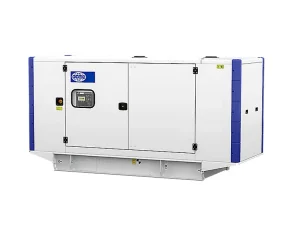
Cheap Wilson Eco-Friendly Generator Small Range <220 kVA P65-6 Exporters, Exporter
View Specifications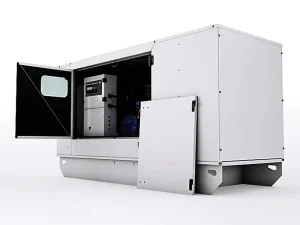
Cheap Wilson Open Type Small Diesel Generator Sets 230 V, 50 Hz P55-6S Supplier, Suppliers
View Specifications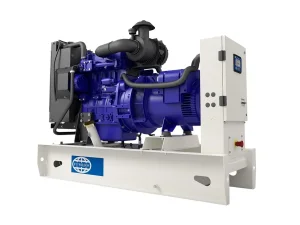
China FG Wilson Small Range < 200KVA Diesel Generator P7.5-1S Suppliers, Exporter
View Specifications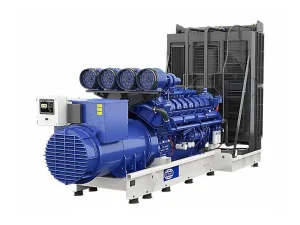
Cheap Fg Wilson High Power Diesel Generator Set (800-2500kva) P1650-1 Exporters, Service
View Specifications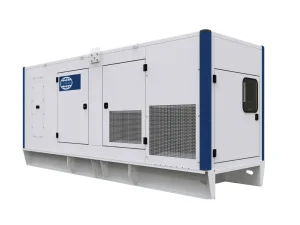
Cheap Fg Wilson Generator Set, 225-938KVA, low noise design, suitable for urban use P750-3 Supplier, Exporters
View Specifications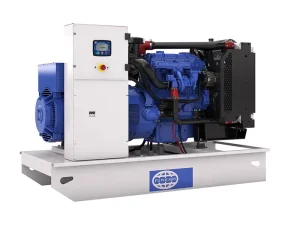
China Wilson Open Type Small Diesel Generator Sets 400/230 V, 50 Hz P88-6 Suppliers, Service
View Specifications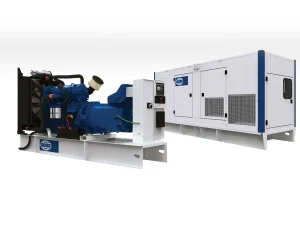
China FG Wilson Open Type Medium Diesel Generator Sets P501-3 Supplier, Service
View Specifications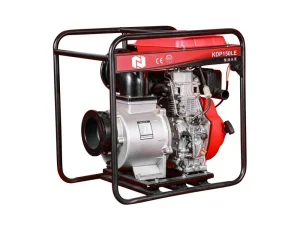
China High-Pressure Water Pumps: Versatile, Efficient, and Durable KDP150LE Suppliers, Exporter
View SpecificationsEngineering Small-Range Generators: Mechanical Rigor & Power Density
A deep engineering overview into why small portable generator systems require stringent acoustic, thermal, and harmonic precision.
Acoustic Dampening & Canopy Design
Sound attenuation in small-footprint units requires specialized labyrinthine airflow ducting, hydrophobic rock-wool soundproofing, and vibration-isolating mounts that drop noise levels to <68 dBA at 7 meters without suffocating radiator thermal exchange.
Transient Load Acceptance
Powered by industrial-tier diesel engines (such as Perkins and Weichai), our small generator units conform to ISO 8528-5 Class G2/G3 standards, absorbing 100% block loading within two seconds while holding total harmonic distortion (THD) under 3% for sensitive microelectronics.
Thermal & High-Altitude Hardening
Equipped with tropical-spec radiators, high-static push fans, and heavy-duty preheaters, our small generator platforms operate seamlessly between -40°C in Arctic installations and +50°C in hyper-arid equatorial desert environments without severe thermal derating.
| Parameter / Specification | Standard Open-Frame Architecture | Silent Acoustic Canopy Series | Custom Harsh-Environment Spec |
|---|---|---|---|
| Target Power Density | 10 kVA – 220 kVA (Prime Duty) | 9.5 kVA – 200 kVA (Standby Duty) | Custom Multi-Engine Arrays |
| Sound Pressure Level (LpA) | 95 – 102 dBA @ 1m (Unbaffled) | 63 – 72 dBA @ 7m (Dual-Muffler) | <60 dBA (Hospital-Grade Attenuation) |
| Control Integration | Manual Key / DeepSea Digital Start | DSE / ComAp Automated ATS | Cloud IoT / SCADA Dual Redundancy |
| Fuel Autonomy (Internal Base Tank) | 8 Hours Continuous Operation | 12–24 Hours Integrated Bunded Tank | Dual 1000L External Interlink Valves |
China Factory 4.0: Supply Chain Resilience & Quality Rigor
How Beijing Xinda Creation converges localized industrial clustering with digital production protocols to ensure on-time delivery across 60+ countries.
Tier-1 Component Ecosystem
Direct joint partnerships with Perkins, Weichai, DeepSea, and ABB minimize tier-2 supply choke points. 95% of electrical wiring harnesses and structural steel chassis are produced within a 150km industrial perimeter, curtailing lead times by 35% compared to Western assembly plants.
Full-Spectrum End-of-Line Testing
Prior to crating, every portable generator small unit undergoes mandatory 0%, 25%, 50%, 75%, 100%, and 110% step-load verification on automated resistive-reactive load banks. Oil pressure, winding thermals, harmonic wave stability, and exhaust backpressures are certified per ISO 9001.
Corrosion Resistance for Ocean Transit
Canopies are fabricated using cold-rolled galvanized sheet steel, treated via multi-stage zinc phosphating, and finished with electrostatic pure polyester powder coating. Units resist 1000+ hours of continuous ASTM B117 salt spray testing during container maritime shipping.
How Global EPCs & Industrial Buyers Specify Small Generators
Avoid costly commissioning failures by checking these five essential parameters before signing a purchase order.
1. kW vs. kVA & Motor Inrush Current
Standard resistive loads (heating, lighting) calculate at unity power factor (1.0). Induction motors, pumps, and compressors impose power factors of 0.8 and inrush spikes 3 to 6 times the run current. Ensure alternators are sized for short-circuit maintenance ratios (300% for 10s).
2. Altitude & Temperature Derating
Atmospheric density drops at altitude, decreasing engine oxygen intake and cooling capacity. For every 300 meters above 1000m, plan for roughly 3.5% engine derating. Over 40°C ambient, an additional 2% derate per 5°C must be factored into generator capacity curves.
3. Automatic Transfer Switch (ATS) Matching
A portable generator set operating in a prime or critical backup environment requires an ATS calibrated with phase failure sensors, mains under-voltage delays (0-30s), and cool-down timer cycles to protect engine turbos before final shutdown.
Technology Roadmap: The Next Era of Small Portable Generation
Transitioning from mechanical governance to intelligent, low-emission hybrid decentralized micro-nodes.
Stage V & Tier 4 Final Common Rail
Upcoming small-range diesel units are integrating high-pressure common rail (HPCR) injection and selective catalytic reduction (SCR) modules to meet Euro Stage V emission thresholds without increasing canopy dimensions or footprint mass.
Hybrid PV-BESS Diesel Integration
Our upcoming micro-genset line incorporates built-in DC-coupling inverters. Generators interface seamlessly with battery energy storage systems (BESS) and containerized solar PV, functioning only when state-of-charge drops below 15%—slashing operational fuel burn by 65%.
Predictive Cloud Maintenance Telemetry
Standardizing 4G/LTE IoT gateway integration allows real-time diagnostics: lube oil viscosities, particulate filter backpressure, coolant heat trends, and predictive starter battery health monitored on unified desktop and mobile command dashboards.
Macro-Industry Deployments: Field Cases That Prove Reliability
Examining field installations across challenging environments worldwide where continuous electrical power is non-negotiable.
Remote Clinics & Emergency Field Care
Portable generators provide clean, stable emergency standby power for medical first-aid stations and remote healthcare clinics, maintaining cold chains for blood/vaccine refrigeration and operating diagnostic imaging without voltage surges during grid collapses.
2,400 km China-Myanmar Pipeline Support
On the heavy crude oil pipeline spanning 2,400 km across southwest terrain, 17 natural gas generator sets and five industrial diesel units ensure unattended SCADA monitoring stations and valve control nodes operate with 99.999% power availability.
20+ Years Continuous Arctic Exploration
Equipped with customized low-temperature auxiliary equipment, block pre-heaters, and winterized lubricants, FG Wilson power systems deployed by our engineering team have survived minus 45°C sub-zero conditions across high-latitude polar weather stations.
Audited International Certifications & Field Assurance
Beijing Xinda Creation machinery operates strictly under ISO 9001:2015 (Quality), ISO 14001:2015 (Environmental Management), and ISO 45001:2018 (Occupational Health & Safety). Our equipment undergoes full container export compliance with CE declarations, SASO filings, and customs clearance pre-checks.
Frequently Asked Questions for Small Generator Procurement
Real-world engineering guidance directly answering contractor and buyer specifications.
What is the practical difference between Prime and Standby ratings?
A Standby rating represents the maximum electrical power available for emergency operation during a utility outage with variable load profiles (no overload capacity). A Prime power rating applies to unlimited annual operating hours with a 10% overload margin permitted for 1 hour within any 12-hour continuous cycle. If running off-grid, size your generator based on Prime.
How do I convert real electrical power (kW) to apparent power (kVA)?
Divide real power (kW) by the engine power factor (PF), which is conventionally rated at 0.8 for commercial three-phase industrial alternating current generators: 184 kW ÷ 0.8 PF = 230 kVA. Always incorporate an additional 20-25% buffer for motor start inductive inrush currents.
Should I choose a silent canopy or an open-frame chassis?
Silent canopies feature galvanized steel enclosures lined with acoustic insulation and internal silencers, recommended for outdoor, clinic, residential, or retail applications. Open-frame generators are engineered for designated indoor plant rooms equipped with louvers, dedicated exhaust runs, and soundproof perimeter walls.
What is the standard warranty and post-warranty spare supply cycle?
Cinda Creation offers a comprehensive 12-month or 1,000-operating-hour warranty from initial on-site commissioning. Our technical desk responds within 24 hours. Furthermore, we maintain warehouse reserves of original Perkins filters, injectors, pumps, and control modules dispatched globally by air freight.
What site-specific data is necessary for factory configuration?
Please provide your operational duty profile (Prime or Standby), operating line voltage and frequency (e.g., 400V/230V 50Hz or 480V 60Hz), site altitude, maximum and minimum ambient temperatures, noise limits at your site perimeter, and fuel tank autonomy requirements (standard 8-hour or custom extended bunded base).
How does your factory prevent wet stacking on low-load generators?
Prolonged operation under 30% nominal load leads to unburned fuel accumulating in the exhaust manifold (wet stacking). We offer intelligent load bank pairing, auto-exercising scheduling in our DSE control units, and thermostatically managed bypass heaters to ensure optimal cylinder wall temperatures.
Precision Small & Medium Power Generation Inventory
Explore verified silent, open-type, and high-pressure pumping units manufactured for immediate global shipment.
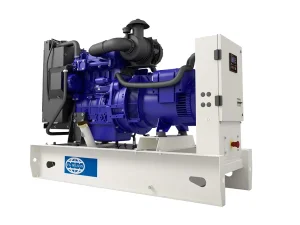
China Wilson Silent Type Small Diesel Generator Sets 400230 V Standby95kva76kw P95-4 Exporters, Exporter
View Specifications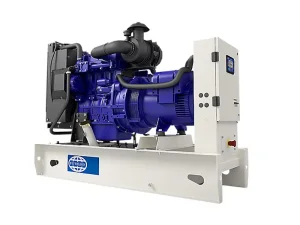
China Wilson Open Type Small Diesel Generator Sets 230 V, 50 Hz P16-1 Supplier, Exporter
View Specifications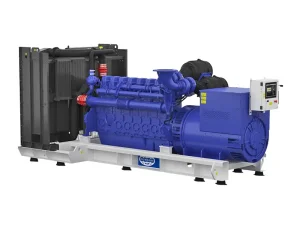
China Fg Wilson High-power Generator sets Large Range >800 kVA Are Applicable To Various Scenarios - P1375-1 Supplier, Exporters
View Specifications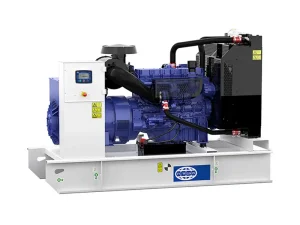
High-Quality Wilson Open Type Small Diesel Generator Sets 400V, 50 Hz P150-5 Exporter, Service
View Specifications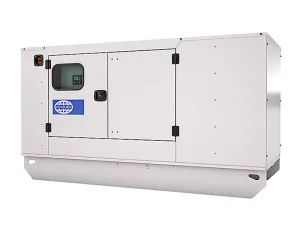
High-Quality Wilson Open Type Small Diesel Generator Sets 230 V, 50 Hz P50-5S Supplier, Exporters
View Specifications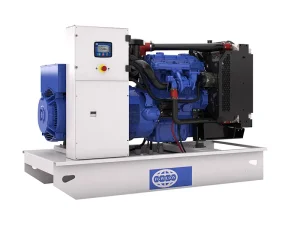
Cheap Wilson Small Type Low Noise Power System P55-4 Supplier, Exporter
View Specifications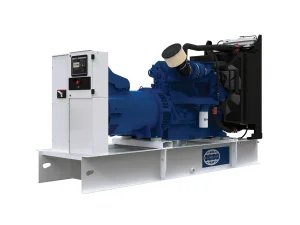
High-Quality Wilson Open Type Medium Diesel Generator Sets P550-3 Exporters, Exporter
View Specifications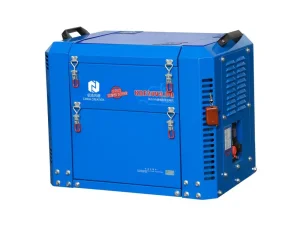
Cheap KDF24V3.0Q Quiet Operation Diesel Generators for Peaceful Environments Suppliers, Service
View SpecificationsConfigure Your Custom Generator Set Today
Direct communication with our Beijing engineering application desk. We provide comprehensive load-step modeling, sound attenuation schematics, GA drawings, and rapid turnaround quotations within 24 hours.