Industrial Catalog · Batch A
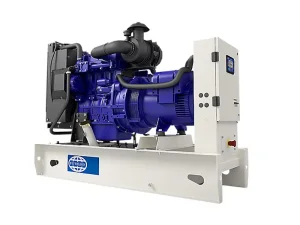
Certified Prime & Standby Small Power Units
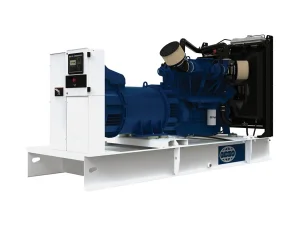
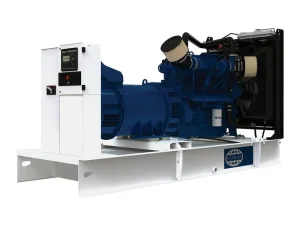
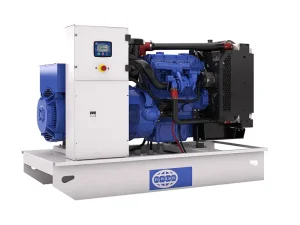
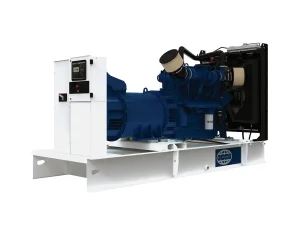
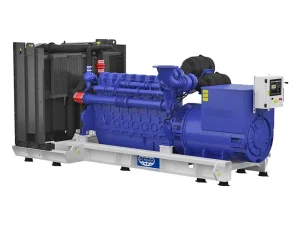
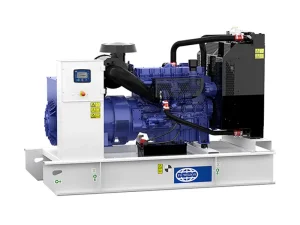
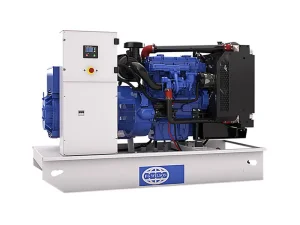
Configured with Perkins and Weichai heavy-duty blocks, robust Leroy Somer alternators, and multi-voltage auto-start synchronizers for rugged fieldwork.
Enterprise Procurement Framework
Global Procurement Dynamics for Small Power Generation
Procuring engineering teams across utility, telecommunications, and field extraction operations require uncompromising transient response, low total cost of ownership (TCO), and rugged environmental survivability.
Transient Load Acceptance
Small-footprint operations require generators capable of accepting up to 100% block load in a single step according to ISO 8528-5 Class G2 and G3 criteria, mitigating voltage drop across inductive motor startup sequences.
Lifecycle TCO Optimization
Fuel efficiency algorithms, optimized Perkins combustion chambers, and extended lube-oil service intervals (up to 500 hours) significantly trim operational expenditure across continuous multi-year deployments.
Harsh Ambient Resilience
Engineered to prevent thermal derating under 50°C high-ambient deserts, while integrated glow plugs and block jacket heaters ensure single-attempt ignition at sub-zero Arctic extremes down to -32°C.
Macro-Sector Deployment
Engineered Sector Solutions & Field Operations
From critical life-support medical clinics to trans-continental pipeline booster terminals, our small-to-medium generator configurations eliminate downtime risks.
Healthcare & Clinics
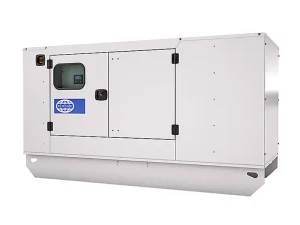
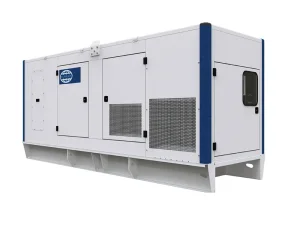
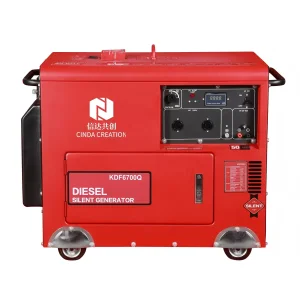
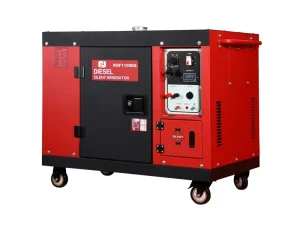
Sound-attenuated silent units delivering clean power with total harmonic distortion (THD) below 3%, preserving sensitive biomedical analyzers and vaccine cold-chains.
Telecom & Remote Towers
Equipped with high-capacity internal base fuel tanks for 24-48 hour extended autonomy, smart telemetry for fuel level tracking, and automatic generator start (AGS) hooks.
Infrastructure & Utilities
Proven reliability on energy conduits including the 2,400 km China-Myanmar pipeline, offering robust secondary backup for telemetry, valve actuation, and cathodic protection.
Construction & Mining Camps
Heavy-duty skid frames with integrated forklift pockets and central lifting lugs, ready for multi-point site crane relocation across uneven aggregate terrains.
R&D Vector
Technological Roadmap & Next-Gen Generation
Embracing digital control synchronization, HVO/biodiesel decarbonization pathways, and AI-assisted cloud predictive telemetry.
Microgrid & Hybrid Integration
Seamless coupling with photovoltaic (PV) solar inverters and battery energy storage systems (BESS). Intelligent genset controllers modulate fuel consumption by cycling diesel power only during high-draw or battery depletion states.
Drop-in Renewable Fuels (HVO)
Full mechanical and pump validation for Hydrotreated Vegetable Oil (HVO) and ASTM D975 diesel blends, slashing net greenhouse gas emissions up to 90% without requiring physical engine retrofitting or recalibration.
IoT Predictive Maintenance
Embedded CAN-bus J1939 telematics transmitting oil viscosity degradation, coolant temperature excursions, vibration signatures, and injector flow metrics via satellite or cellular gateways to fleet managers.
2019
Beijing Foundation Year
24h
Global Engineering Dispatch
12 Mo
Start-up Comprehensive Warranty
600+
Active Genset & Spare SKUs
Compliance & Support
Localized Assurance & Auditable Regulatory Compliance
Operating as Beijing Xinda Creation Machinery Equipment Co., Ltd. (Cinda Creation), our engineering and export departments navigate multi-territory regulatory codes, ensuring zero customs bottlenecks or operational permits denials.
- Triple ISO System Audits: Certified compliant under ISO 9001 (Quality), ISO 14001 (Environmental Management), and ISO 45001 (Occupational Health & Safety).
- Exhaust & Sound Standard Matching: Enclosures designed to meet strict European CE standards, acoustic certifications (<68 dB(A) at 7m), and regional emissions regulations.
- Rapid Spare Parts Ecosystem: Guaranteed consignment access for genuine Perkins engine components, fuel water separators, and electronic AVRs dispatched worldwide within 48 hours.
Export Verification Protocol
Every generator set departs our Beijing staging facility only after undergoing rigorous 3-stage load bank testing (50%, 75%, 100%, and 110% overload conditions).
Tested Parameters:
- Phase-to-phase insulation impedance test
- Frequency transient recovery & stability
- Automatic Transfer Switch (ATS) failover cycle
- Thermal imaging of alternator copper windings
Technical Clarifications
Frequently Asked Technical Questions
Clear engineering answers addressing alternator sizing, voltage conversion, derating factors, and export logistics.
How do Prime Power (PRP) and Standby Power (ESP) ratings differ in small gensets?
Standby Power (ESP) is the maximum rating available for emergency power during utility interruption, with no overload capacity permitted. Prime Power (PRP) allows continuous running hours with variable loads, permitting a 10% overload for 1 hour every 12 operating hours per ISO 8528.
How are kW and kVA computed when selecting inductive electric loads?
Real power (kW) equals apparent power (kVA) multiplied by the power factor (typically 0.8 for standard industrial 3-phase circuits). To calculate required capacity for inductive machinery like HVAC compressors or submersible pumps, factor in motor startup inrush (3x to 6x normal operating current).
When is an open-frame generator preferable to a sound-attenuated silent unit?
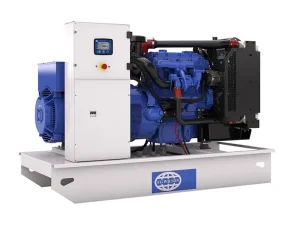
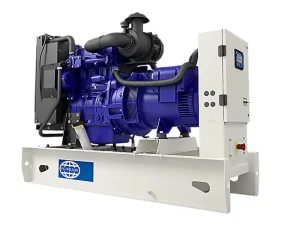
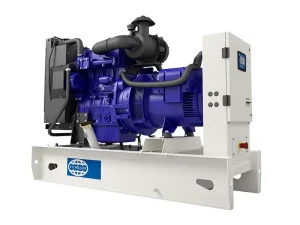
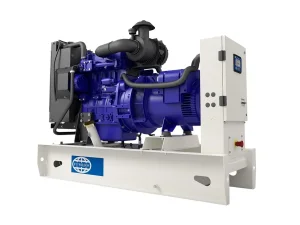
Open-frame gensets are engineered for indoor mechanical plant rooms or containerized assemblies with preexisting acoustic baffles and dedicated forced-air ducting. They reduce procurement cost and provide unobstructed single-side maintenance access.
What environmental derating factors apply at high altitudes and hot temperatures?
Standard genset ratings apply up to 1000m altitude and 25°C ambient. Beyond this, atmospheric air thinning and reduced cooling require standard derating calculations: roughly 1% power reduction per 100m above 1000m, and approximately 2% per 5°C rise above 40°C.
Industrial Catalog · Batch B
Advanced Industrial Generation & Modular Sets
Complementing our compact fleet with medium-to-large prime platforms, emergency automated synchronizers, and open-type industrial sets.