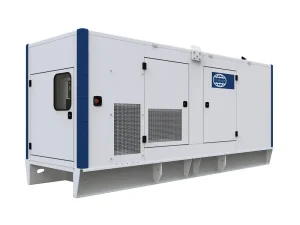
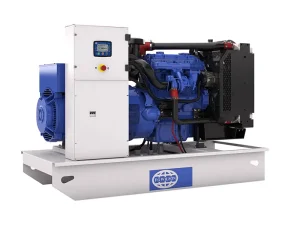
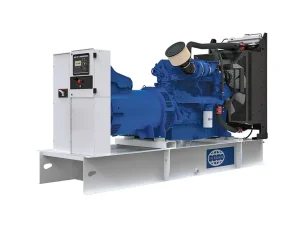
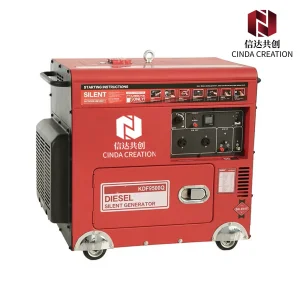
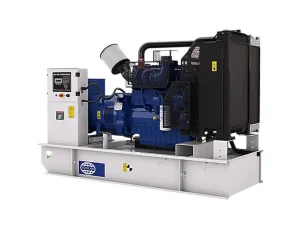
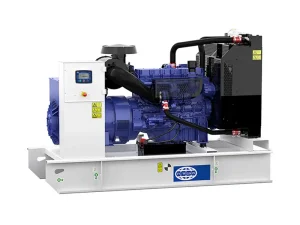
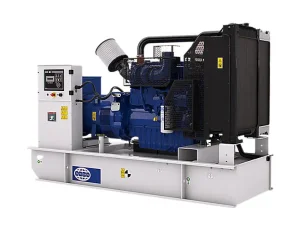
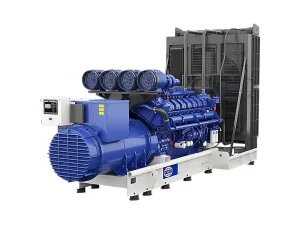
High-Performance Standby & Auxiliary Generator Inventory
Engineered for seamless emergency transfer, severe climate performance, and maximum kilowatt density across industrial facilities.
Macro Energy Dynamics & Global Procurement Imperatives
Analyzing grid volatility, critical uptime standards, and the transition toward highly automated standby diesel architectures.
Grid Instability & Outage Hedging
Global utility infrastructures are facing unprecedented strain due to industrial electrification, shifting renewable generation profiles, and severe weather anomalies. Standby generators provide absolute sovereignty against brownouts and transmission failures, delivering steady-state power within seconds of disruption to safeguard high-capital automated manufacturing operations.
Mission-Critical Tier Uptime
In data colocation centers, biopharmaceutical research, and smart logistics hubs, a sub-second loss of power cascades into severe data corruption and millions of dollars in mechanical interruption. Standby systems paired with synchronized Automatic Transfer Switches (ATS) ensure complete compliance with NFPA 110 Level 1 emergency and standby power requirements.
Rigorous TCO Engineering
Modern procurement directors evaluate standby assets beyond initial capital cost. Lifecycle calculations emphasize fuel economy across variable loading (40% to 100%), modular commonality with genuine Perkins and Weichai engines, optimized thermal derating coefficients, and local parts accessibility to drive down the unmitigated Total Cost of Ownership.
Precision Architecture: FG Wilson & Perkins Sizing Matrix
Decoupling complex prime vs. standby classifications, motor starting inrush currents, and atmospheric de-rating parameters.
| Operational Parameter | Standby Power (ESP) | Prime Power (PRP) | Continuous Power (COP) |
|---|---|---|---|
| ISO 8528-1 Definition | Emergency utility outage backup | Unlimited annual hours, variable load | Continuous base load, non-variable 100% |
| Mean Variable Load Factor | Max 70% over 24-hour cycle | Max 70% over 24-hour cycle | 100% continuous load factor |
| Overload Capability | No overload margin permitted | 10% overload for 1 hr in 12 hrs | No continuous overload rating |
| Typical Applications | Hospitals, data centers, towers, complexes | Remote mining, construction, island microgrids | Base load power stations, cogeneration |
| Cooling & Thermal Overhead | High surge thermal buffer | High continuous ventilation package | Heavy-duty industrial continuous cooling |
Export Verification & Real-Time Operations
Robust manufacturing benchmarks verified across thousands of export hours and severe field applications.
Macro Turnkey Power Solutions Across Extreme Terrains
Engineered for complex utility interfaces, remote oil fields, health complexes, and rigorous urban acoustic restrictions.
Healthcare & Diagnostics
Equipped with sub-10 second fast-start electronic governors, digital automatic voltage regulators (AVR), and low total harmonic distortion (THD < 3%) to protect sensitive medical telemetry, scanners, and intensive care ventilators during primary grid collapse.
Extractive & Pipeline Networks
Heavy-duty, vibration-dampened gensets proven across the 2,400-kilometer China-Myanmar pipeline. Multi-unit paralleling architecture combines continuous fuel filtration, spark arrestors, and automated load sharing for continuous pumping and monitoring stations.
High-Ambient Tropical Enclosures
Desert and equatorial installations require dedicated high-ambient cooling matrices capable of handling up to 50°C ambient temperatures without thermal de-rating. Heavy-gauge galvanized canopies resist sandstorms, UV radiation, and tropical humidity.
Arctic & Extreme Sub-Zero
With an active operating record of over 20 years in Arctic environments, our cold-weather packages integrate jacket water immersion heaters, thermostatic fuel line warming, synthetic lubricant circulation, and motorized air intake louvers to ensure instant cold starts down to -40°C.
Technical Roadmap: Hybridization, HVO & Edge Analytics
Pioneering decarbonization pathways and remote predictive telemetry for modern standby power installations.
Biofuel & HVO Compatibility
To align with corporate Scope 1 decarbonization goals, our FG Wilson and Perkins-powered lineups are engineered to run seamlessly on Hydrotreated Vegetable Oil (HVO) and ultra-low sulfur diesel (ULSD), reducing net CO2 emissions by up to 90% without requiring mechanical modifications or sacrificing transient load acceptance.
Hybrid BESS Microgrid Synchronization
Integrating standby generator architectures with Battery Energy Storage Systems (BESS) creates intelligent hybrid microgrids. During short-duration anomalies, batteries instantly bridge the load, allowing the diesel generator to ramp cleanly into its optimal thermal and fuel efficiency curve, drastically reducing runtime hours and mechanical fatigue.
AI-Enabled Predictive Diagnostics
Integrated DSE controllers transmit high-frequency sensor streams (vibration spectra, fuel rail pressures, oil conductivity, and alternator winding heat) via industrial IoT gateways. Cloud-based machine learning models forecast component wear and filter saturation before catastrophic start failure can occur.
Engineering Inquiries & Technical Procurement FAQ
Clear, definitive guidelines on generator sizing, site preparation, and overseas compliance protocols.
How do you calculate kVA and kW sizing when dealing with high inductive electric motor loads?
What ambient derating factors must be considered for high-altitude or high-temperature deployments?
When should an engineering team specify an Open Frame unit vs. an Acoustic Silent Canopy?
How does Cinda Creation ensure Perkins and Weichai parts supply continuity across overseas sites?
What documentation and pre-shipment validation are conducted prior to global export?
Mission-Critical Power Supply Configurations
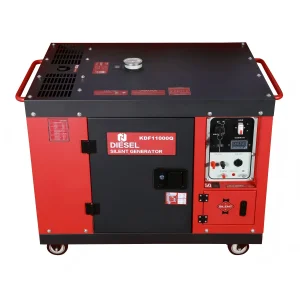
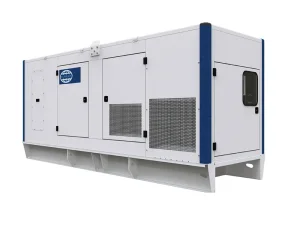
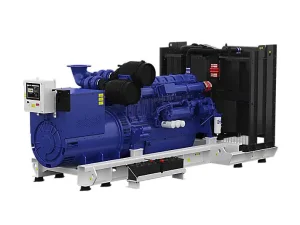
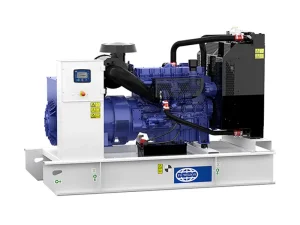
From modular mid-range units to extreme utility-scale gensets, select the optimal footprint for your project.