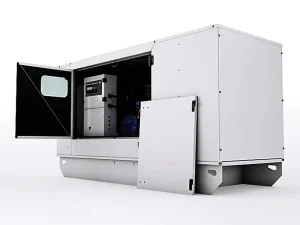
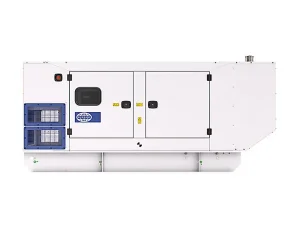
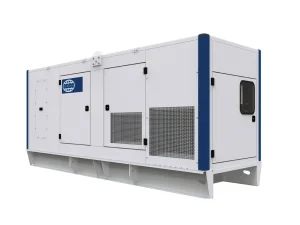
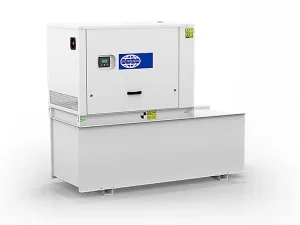
Engineered Power Solutions: Featured Generator & Motor Inventory
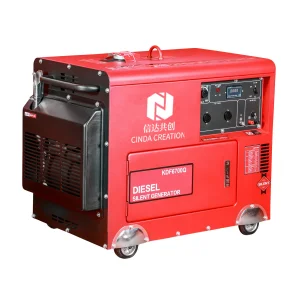
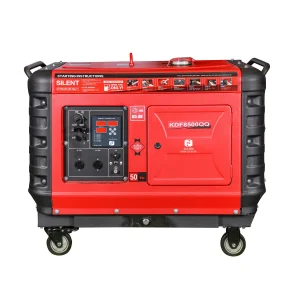
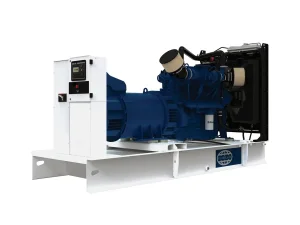
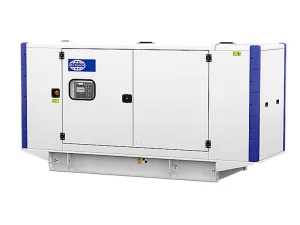
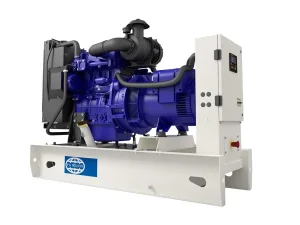
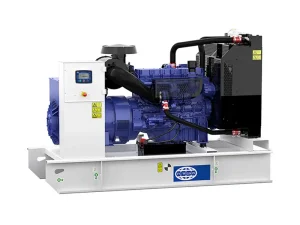
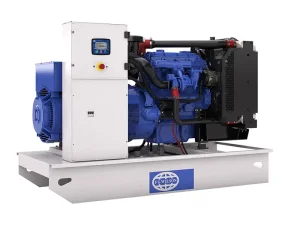
Explore heavy-duty, ultra-quiet, and continuous-duty electro-mechanical generator assemblies ready for global export, custom-wound to international voltage and frequency requirements.
The Global Motor & Industrial Power Dynamic Landscape
Analyzing the convergence of high-torque industrial motor manufacturing, distributed generation grids, and mission-critical backup power demand worldwide.
Grid Instability & Continuous Power
Modern automated industries, hyperscale data networks, and continuous processing facilities cannot tolerate a 20-millisecond drop in alternating current. The global expansion of volatile renewable generation (solar and wind) has paradoxical heightened the necessity of robust, synchronous motor-driven generators.
- Transient load compliance exceeding ISO 8528-5 Class G2 and G3 criteria.
- Rapid excitation systems restoring terminal voltage within 0.25 seconds.
- Uninterrupted synchronization between diesel prime movers and plant switchgear.
Electrification of Heavy Infrastructure
Industrial motors and diesel-driven power sets represent the fundamental mechanical heartbeat of modern infrastructure. From high-capacity centrifugal slurry pumps in Chilean copper extraction to massive ventilation fans in European subsea tunnels, electric motor drive integrity is paramount.
- Heavy-duty squirrel-cage induction systems for high-breakaway inertia.
- Integrated digital Automatic Voltage Regulators (AVR) handling non-linear loads.
- High-durability cast frames resisting mechanical harmonic deformation.
Strict Efficiency & Emissions Directives
Global regulatory architectures, including EU Stage V, US EPA Tier 4 Final, and China Non-Road Stage IV, require strict thermal-mechanical combustion optimization. Leading motor suppliers engineer low-exhaust configurations with intelligent common-rail injection and low-loss electromagnetic laminations.
- Premium electromagnetic steel laminations cutting core eddy losses by up to 18%.
- DOC + DPF + SCR exhaust aftertreatment integration for ultra-low PM/NOx.
- Full compatibility with synthetic paraffinic fuels including HVO and GTL.
The Chinese Factory Advantage: Manufacturing Velocity & Vertical Scale
Why Tier-1 international contractors, mining consortia, and utility providers source electro-mechanical drive systems and gensets engineered in advanced Chinese industrial clusters.
1. Complete Upstream Supply Chain Proximity
Unlike Western assemblers reliant on multi-continent logistics for raw silicon steel, cast end-brackets, heavy crankcases, and copper magnet wire, Chinese manufacturing hubs in Beijing, Jiangsu, and Shandong house fully integrated production clusters within a 100-kilometer radius.
This proximity shortens prototype-to-series production lead times from months to weeks, enabling rapid engineering changes for specific shaft extensions, unique mounting foot patterns, or tailored terminal box orientations.
2. Advanced Robotic Stamping & VPI Impregnation
Modern Chinese motor manufacturing leverages automated high-speed lamination stamping presses with tolerances under ±0.002 mm. Vacuum Pressure Impregnation (VPI) autoclaves utilize specialized solvent-free epoxy resins cured under tight thermal oversight.
This ensures void-free winding encapsulation, high thermal dissipation, and resistance to harsh industrial chemicals, alkaline salt atmospheres, and continuous vibration stress.
3. Strict ISO Testing & Quality Traceability
Exported motors and generator sets undergo 100% full-load testing on regenerative computer-controlled dynamometer test stands. Testing protocols verify cold/hot phase resistance, partial discharge limits, open-circuit saturation, short-circuit characteristics, and sound pressure acoustics.
Full manufacturing documentation accompanies every shipment, including certified material test reports, mill test certificates for shaft metallurgy, and baseline vibration FFT spectra.
Procurement Insight: Total Cost of Ownership (TCO) Equilibrium
Procuring industrial motors and diesel generator sets from premier Chinese exporters yields an average 32% to 45% CAPEX reduction over comparable European or North American equipment, without sacrificing reliability. These capital savings allow global contractors to integrate dual-redundancy (N+1 or 2N configurations) within standard baseline budgets, substantially elevating overall site uptime metrics.
Engineering Application Scenarios: Where Failure Is Not an Option
Documented deployment conditions demonstrate performance under extreme climatic, mechanical, and duty cycle constraints.
Critical Healthcare & Surgical Uptime
Hospitals, diagnostic laboratories, and medical clean rooms require pure sinusoidal power waveforms with ultra-low Total Harmonic Distortion (THD < 3%). Acoustic-attenuated enclosures lower engine noise below 68 dBA at 7 meters, preventing noise disturbance in treatment zones.
Automatic transfer systems (ATS) execute dead-bus load transfers within 8 to 10 seconds of utility interruptions, preserving life-support ventilators, magnetic resonance imaging (MRI) chillers, and precision operating theater climate loops.
Transcontinental Pipeline Pumping (2,400 km)
On the 2,400-kilometer China-Myanmar crude oil and natural gas infrastructure corridor, continuous power generation sets and heavy electric motor drives operate under 24/7 prime duty in remote jungle, mountain, and swamp terrains.
Equipped with dual oil filtration manifolds, high-dust cyclonic air intake stages, and industrial ComAp/DeepSea telemetric synchronizers, these units drive mainline booster pumps with uninterrupted multi-thousand-hour service intervals.
Sub-Zero Arctic Mining Operations
At polar latitudes reaching -45°C, regular industrial motors and generators risk brittle metal fractures, lubricating oil crystallization, and cold starting lockouts. Our cold-weather engineering designs have operated reliably in the Arctic circle for over two decades.
Custom arctic configurations feature electric jacket water preheaters, PT100 temperature sensors on all bearing housings, engine sump heating pads, internally insulated acoustic louvers, and synthetic low-pour-point motor lubricants.
Desert & High-Ambient Environments (+55°C)
Extreme Middle Eastern and equatorial operations challenge machinery with airborne quartz dust and ambient temperatures reaching +55°C, which derate standard commercial power equipment.
Heavy-duty desert canopies use high-static-pressure centrifugal radiator fans, sand-trap louvers with automatic inertia dumping, Class H anti-fungal epoxy insulation, and oversized alternator cores to deliver rated power output without thermal derating.
Engineering Sizing Matrix & Procurement Checklist
A structured technical evaluation framework to calculate kVA/kW capacity, mitigate motor inrush currents, and specify electrical equipment for global deployment.
| Evaluation Parameter | Technical Criterion | Standard Recommendation | Common Procurement Mistake |
|---|---|---|---|
| Duty Classification | ISO 8528-1: ESP vs. PRP vs. COP | Use PRP (Prime Power) for variable load 24/7; ESP only for emergency mains outage. | Sizing continuous industrial loads on standby ratings leads to premature thermal failure. |
| Motor Inrush Current | Locked Rotor kVA / NEMA Code Letter | Allow 3x to 6x full-load Amps for Direct-On-Line (DOL) motor starting; 2x for VFD. | Neglecting starting reactive kVA causes voltage dips exceeding 20%, tripping plant logic. |
| Environmental Derating | Altitude (>1000m) & Temp (>40°C) | Derate 4% per 500m above 1000m; derate 2% per 5°C elevation over 40°C. | Procuring nominal sea-level output for Andean or high-plateau mines results in blackouts. |
| Harmonic Distortion (THD) | Non-linear SCR / Inverter Loads | Specify 2/3 pitch winding designs to neutralize 3rd, 9th, and 15th harmonics. | Standard windings overheat neutral conductors under heavy computer or variable drive loads. |
| Acoustic Attenuation | Free-field ISO 3744 Sound Measurement | Specify 65 to 72 dBA @ 7m using double-layer rockwool with perforated steel baffles. | Purchasing generic "silent" boxes without certified decibel ratings risks municipal shutdown. |
kW to kVA Conversion Equation
For standard three-phase alternating current motor systems with a standard power factor of 0.8 lagging:
Amperes (A) = (kVA × 1000) ÷ (Voltage × 1.732)
Always verify the reactive power requirements of your connected electric motors during across-the-line starting sequences to avoid undersizing your alternator.
Single-Side Serviceability
For tight marine engine rooms, containerized power plants, and basement plant rooms, specify FG Wilson and partner assemblies featuring all maintenance touchpoints on a single side.
Oil dipsticks, spin-on fuel separators, lube oil cartridges, and air cleaners accessible from one side cut routine preventative maintenance downtime by over 40%.
Generator & Motor Synchronization
When paralleling multiple generator units to a common busbar, ensure your controller supports Isochronous Load Sharing, Automatic Synchronizing, and Reverse Power Protection (ANSI 32R).
Modular paralleling architectures let operators bring extra capacity online dynamically as factory motor loads surge, lowering off-peak fuel consumption.
Emerging Industry Trends: Next-Generation Electromechanics
How the integration of battery energy storage, edge telematics, and decarbonized synthetic fuels is reshaping motor and generator engineering.
Microgrid & BESS Hybrid Integration
Modern industrial power installations increasingly connect diesel generation sets directly to Battery Energy Storage Systems (BESS). In these microgrids, the engine runs exclusively at its peak thermal efficiency curve (typically 75% to 85% load), while batteries absorb transient motor load spikes.
This hybrid approach slashes diesel consumption by up to 30%, eliminates low-load engine "wet stacking," and reduces maintenance overhaul cycles.
AI-Driven IoT Telematics & Predictive Maintenance
Edge IoT controller modules analyze high-frequency operational metrics in real time. Tri-axial accelerometers on bearing end-shields detect early subsurface spalling or eccentricity long before thermal breakdown occurs.
Cloud-linked algorithms track oil dielectric breakdown, exhaust port temperature balance across cylinders, and winding thermal insulation degradation, shifting operations from reactive to predictive maintenance.
100% Bio-Fuel & Clean Fuel Readiness
Meeting corporate carbon reduction goals does not require replacing existing generator assets. Our power generation equipment and fuel delivery architectures support 100% Hydrotreated Vegetable Oil (HVO) and sustainable biodiesel blends conforming to EN 15940 standards.
Using HVO delivers identical transient load pickup and power density as conventional fossil diesel, while cutting net greenhouse gas emissions by up to 90% without fuel system corrosion or injector coking.
Frequently Asked Questions: Industrial Generators & Motor Drives
In-depth technical answers addressing sizing, environmental durability, international standards compliance, and export logistics.
What is the practical difference between Standby (ESP) and Prime (PRP) power ratings?
Under international standard ISO 8528, Emergency Standby Power (ESP) is defined as the maximum power available during a variable electrical power sequence for which a generator set is capable of delivering in the event of a utility power outage. It is typically limited to 200 hours of operation per year, with an average load factor of no more than 70%, and strictly permits no overload capability.
Conversely, Prime Power (PRP) applies to continuous operation under variable load for an unlimited number of annual operating hours. A 10% overload capability is permissible for 1 hour in every 12 hours of continuous run-time. For remote industrial sites without utility grid feeds, sizing MUST always be based on the Prime Power rating to prevent overheating of stator windings and premature engine wear.
How do electric motor starting inrush currents affect generator sizing?
When an AC induction motor starts Direct-On-Line (DOL), it draws a starting current (Locked Rotor Amperes) between 500% to 700% of its normal full-load running current. This heavy reactive current causes a transient voltage dip across the generator's internal impedance. If the voltage dip exceeds 15% to 20%, contactors and relays can drop out, and connected variable frequency drives (VFDs) may trigger undervoltage faults.
To safely accommodate electric motor loads without over-specifying engine brake horsepower, consider soft-starters (which limit starting current to 2.5x–3x) or Variable Frequency Drives (1x–1.5x inrush). Additionally, specifying an alternator with a permanent magnet generator (PMG) or auxiliary winding excitation ensures sufficient excitation power to sustain 300% short-circuit current for 10 seconds, easily starting heavy motors.
What acoustic attenuation methods are used on silent generator canopies?
Modern silent generator canopies use a multi-tiered noise reduction design. High-density, flame-retardant rockwool or sound-absorbing acoustic foam (50 mm to 100 mm thick) is secured behind galvanized perforated steel inner sheets to dampen internal reflections.
Intake and exhaust airflow channels feature multi-chamber labyrinth baffles that eliminate direct line-of-sight sound transmission while maintaining necessary air volume for radiator cooling. Industrial residential-grade internal silencers with flexible stainless-steel bellows cut low-frequency exhaust pulses by 28 to 35 dBA, achieving overall sound levels of 65 to 70 dBA measured at 7 meters under full engine load.
Why are 2/3 pitch stator windings essential for modern electrical systems?
Modern facilities operate widespread non-linear loads, including variable speed motor drives, UPS systems, computer servers, and LED lighting. These loads generate triplen harmonics (especially the 3rd, 9th, and 15th harmonics), which circulate through the neutral conductor, causing severe overheating and neutral-to-ground voltage shifts.
Alternators built with a 2/3 pitch winding design mathematically cancel out the 3rd harmonic waveform across the phase windings. This design prevents excessive neutral current overheating, lowers total voltage waveform distortion, and avoids interfering with nearby sensitive telecommunication and micro-processor electronics.
What maintenance documentation and spare parts support are provided for export orders?
Every export unit includes full factory quality assurance records: a certified 100% dynamometer load test sheet across 25%, 50%, 75%, 100%, and 110% load points, an insulation megger test certificate, schematic wiring diagrams, and parts manuals in English.
For ongoing field support, we supply genuine Perkins, FG Wilson, and Weichai maintenance packages, covering 1000-hour and 2000-hour service kits (primary/secondary fuel filters, spin-on oil cartridges, air filter elements, alternator drive belts, and rocker cover gaskets) to prevent operational downtime in remote deployment locations.
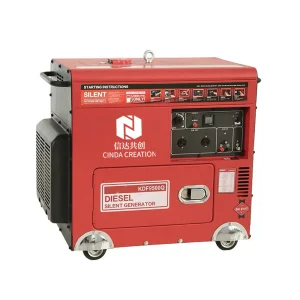
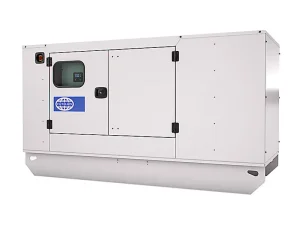
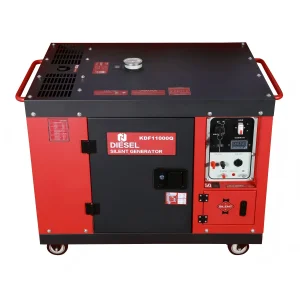
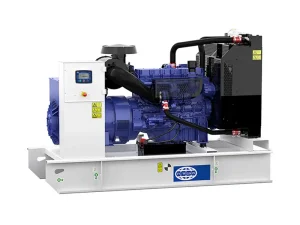
Global Power Units: High-Efficiency Medium & Small Genset Range
Complete open-frame and acoustic canopy diesel power units engineered for industrial automation, agricultural pumping stations, and off-grid remote site installations.