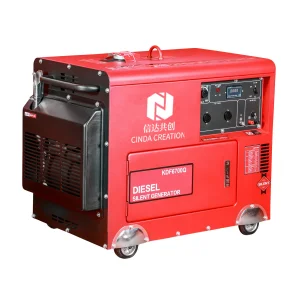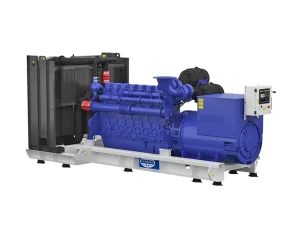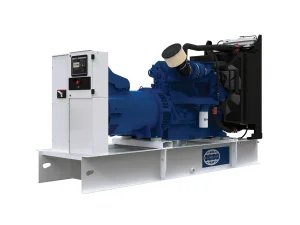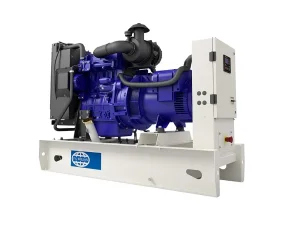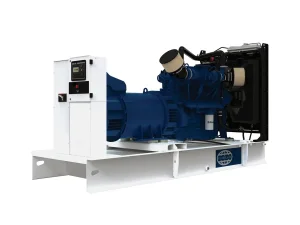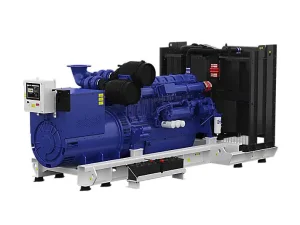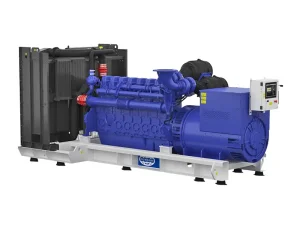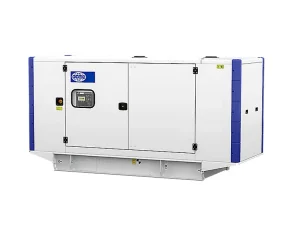
Featured Power Generation Assemblies for Immediate Houston Deployment
Engineered to support heavy Gulf Coast ambient heat, continuous continuous-duty refinery runs, and emergency auxiliary field services.
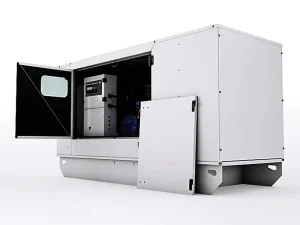
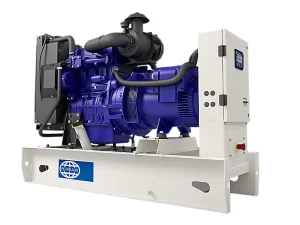
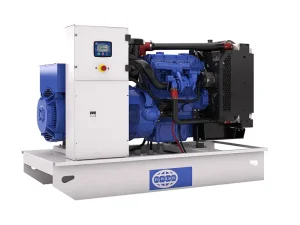
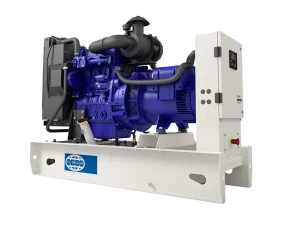
Houston's Industrial Landscape: The High Demand for Cost-Efficient Prime & Standby Diesel
The Houston metropolitan area, anchoring the energy capital of the world, demands an uninterrupted, resilient power architecture capable of surviving extreme weather events and 24/7 industrial loads.
Petrochemical & Refinery Security
The Houston Ship Channel complex houses the highest density of petrochemical facilities in the Western Hemisphere. Continuity of operations is critical. Sudden line dropouts precipitate multimillion-dollar catalytic cracker trips and environmental flaring penalties. Diesel engine packages serve as the primary defensive bulkhead for process cooling pumps, process air blowers, and emergency shutdown mechanisms.
Permian Basin Staging Hub
Houston is the operational brain and supply chain artery for the Permian Basin and Eagle Ford shale formations. Operators procure modular skid-mounted diesel engines directly through Houston logistics channels for mechanical drilling operations, fracturing fluid blending systems, mud pumps, and distributed basecamp microgrids where ERCOT grid interconnection is nonexistent.
Maritime Logistics & Port Demands
The Port of Houston handles massive containerized and project cargo traffic annually. Shore-to-ship cold ironing auxiliary power, diesel hydraulic power units (HPUs) for mobile cranes, and backup dredge power require robust, marine-grade corrosion-inhibited diesel propulsion and auxiliary gensets engineered to endure high salinity environments.
Maximizing ROI: The Strategic Synergy of Chinese Direct Manufacturing with Houston Field Support
How North American EPC contractors and fleet procurement directors navigate inflation by capturing high-precision casting and assembly economics without sacrificing local compliance.
Unmatched Precision & Manufacturing Scalability
Chinese engine and generator manufacturing clusters (including integrated production lines for Weichai, licensed Perkins configurations, and FG Wilson assembly nodes) benefit from massive domestic component integration. High-tensile cast-iron engine blocks, precision forged crankshafts, and advanced digital Common Rail fuel delivery modules are produced under fully automated CNC environments certified under ISO 9001 and ISO 14001 guidelines.
By leveraging integrated global assembly ecosystems, Houston businesses secure heavy machinery at direct-to-factory cost baselines, circumventing the layered dealer markup structure endemic to North American heavy machinery dealerships.
Rigorous Pre-Shipment Quality Assurances (Q&A / FAT)
Every industrial diesel engine and generating assembly destined for Texas industrial sites undergoes stringent Factory Acceptance Testing (FAT). Protocols mandate step-load testing (0%, 25%, 50%, 75%, 100%, and 110% overload conditions) via reactive load banks, alongside real-time thermal harmonic analysis and vibration spectroscopy mapping.
Units are containerized with anti-corrosion barrier packaging to insulate precision machined components from ocean-transit humidity, ensuring immediate deployment readiness upon clearance through the Port of Houston or Barbours Cut Marine Terminal.
Compliance, Permitting, and Localized Engineering Services Across Greater Houston
Procuring imported power equipment requires strict adherence to local, state, and federal regulatory bodies to protect facilities from operational shutdown.
EPA Clean Air Act & TCEQ Permitting
Stationary and mobile non-road diesel power generators in Harris, Montgomery, and Galveston Counties must strictly comply with Texas Commission on Environmental Quality (TCEQ) air permitting guidelines. We supply engines configured to meet Tier 4 Final particulate and NOx thresholds via integrated Selective Catalytic Reduction (SCR) and Diesel Particulate Filters (DPF), as well as emergency stationary Tier 2/Tier 3 exemptions per 40 CFR Part 60 Subpart IIII.
NFPA 110 & UL Standards Compliance
For mission-critical sites including medical centers in the Texas Medical Center (TMC), commercial cold-storage facilities, and municipal water purification works, emergency standby packages are engineered to satisfy NFPA 110 Level 1 protocols. Control switchgear facilitates complete load pickup within 10 seconds of normal utility outage, driven by high-reliability automated transfer switchgear (ATS).
Localized Gulf Coast Field Maintenance
Equipment longevity depends on proactive field service. Houston-area maintenance schedules are optimized for heavy coastal humidity, hurricane season readiness, and ambient operating profiles reaching 105°F (40.5°C). Preventative agreements include periodic fuel polishing, coolant descaling, turbocharger pressure balancing, and injector testing via regional field engineers.
Target Application Profiles and Technical Trends in the Lone Star State
Emerging powertrain engineering trends meeting the evolving operational demands of modern Texas industrial facilities.
HVO & Renewable Diesel Compatibility
With corporate ESG commitments sweeping energy majors across Houston, our diesel engines are engineered 100% compliant with Hydrotreated Vegetable Oil (HVO) and ASTM D975 diesel blends. This enables operators to instantly slash net greenhouse gas outputs by up to 90% without sacrificing engine brake horsepower (BHP) or cold-cranking performance.
Remote IoT Scada & Telemetry
Field assets operating across remote coastal pumping plants or offshore logistics terminals feature Deep Sea or ComAp digital control interfaces integrated with cellular/satellite telemetry. Engineers in downtown Houston offices monitor exhaust temperatures, oil viscosity indexes, load percentages, and fuel theft warnings in real time.
High-Ambient Acoustic Canopies
Urban density across Houston requires sound attenuation without inducing engine thermal throttling. Our custom sound-attenuated acoustic enclosures employ marine-grade powder-coated galvanized steel with oversized airflow intake baffles designed to maintain full prime ratings up to 50°C ambient temperatures.
Frequently Asked Questions: Sourcing & Operating Diesel Engines in Houston
Detailed answers to complex questions frequently raised by procurement committees, site managers, and mechanical contractors.
How can Chinese factory-direct diesel generators be both cheap and dependable for critical Texas infrastructure?
What are the lead times and shipping routes for engine deliveries to Houston, Texas?
How do we manage maintenance, replacement parts, and technical field support locally?
What is the difference between Standby, Prime, and Continuous power ratings under Texas climate conditions?
What documentation is provided to satisfy local fire marshals and safety inspectors in Harris County?
Full Industrial Range: High-Capacity & Specialized Gensets for Gulf Operations
From silent microgrid backup modules to heavy megawatt-scale power units, browse our fully verified equipment catalog available for order.