
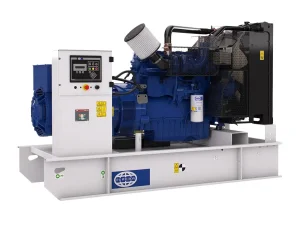
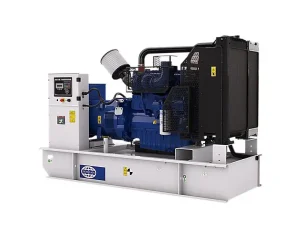
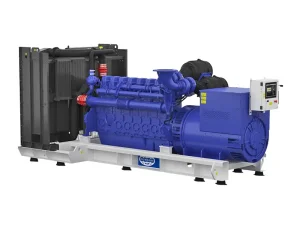
Featured Heavy-Duty Power Generation Units (Egypt Standard Configuration)
Factory-direct prime and standby generator systems calibrated specifically for Egyptian 380V/400V, 50Hz industrial grid codes and high-ambient ambient deration factors.
The Egyptian Power Landscape: Strategic Imperatives for Large-Range (>800 KVA) Deployments
The Arab Republic of Egypt stands at a critical juncture of infrastructure transformation, industrial re-shoring, and massive urban development under Egypt Vision 2030. Procuring affordable yet robust megawatt-class power is vital for maintaining business continuity.
Grid Fluctuations & Industrial Demand Surges
Over the past decade, Egypt has significantly expanded its primary generation capacity, anchored by landmark combined-cycle natural gas facilities. However, industrial corridors in Tenth of Ramadan, Sadat City, Borg El Arab, and Helwan regularly face distribution network stresses during the sweltering summer peaks (where national consumption exceeds 36 GW). Scheduled load-shedding and voltage fluctuations pose devastating risks to continuous industrial processes such as glass manufacturing, cold-chain preservation, chemical production, and metallurgy.
For large-scale industrial consumers, investing in large range >800 kVA diesel generator sets is not merely an emergency safeguard; it is a financial buffer against production scrap rates and unfulfilled supply-chain contracts.
Cost Rationalization in Foreign Exchange Constrained Markets
The term "cheap" in large-range industrial procurement does not equate to sub-par build quality. Within the contemporary Egyptian macroeconomic context—characterized by fluctuating currency values (EGP) and strict import prioritization through the Central Bank of Egypt—procurement managers require optimal Capital Expenditure (CAPEX) to Levelized Cost of Energy (LCOE) ratios.
By leveraging direct Chinese manufacturing ecosystems and OEM integration (such as FG Wilson and Perkins powertrains assembled with advanced automated production lines), buyers obtain European-tier performance at a direct factory-gate discount of 25% to 40% compared to traditional legacy European procurement houses.
Macro Industry Engineering Solutions: Desert Calibrations for Egypt
Deploying >800 kVA power blocks across North Africa requires rigorous thermal-fluid engineering. Standard off-the-shelf configurations manufactured for temperate European climates experience severe thermal tripping and abrasive mechanical wear when exposed to Egypt's desert environment.
Tropicalized Cooling Architecture
Ambient temperatures in Upper Egypt (Aswan, Luxor) and the Western Desert regularly breach 48°C. Our large-range sets feature oversized 50°C tropical radiator packages with high-static-pressure mechanical or variable-speed hydrostatic fans. This eliminates the standard 8-15% thermal deration curve, guaranteeing full megawatt-class output during peak heatwaves.
Khamaseen Sandstorm Air Filtration
During the spring Khamaseen season, abrasive silica particulates fill the air across Egypt. Our >800 kVA generator enclosures are equipped with dual-stage cyclonic pre-cleaners paired with multi-layer nanofiber air filters. This captures 99.8% of micro-abrasives before entering the turbochargers, preventing liner scoring and oil contamination.
Class H Insulation & Coastal Anti-Corrosion
For installations in the Suez Canal Economic Zone (SCZone), Port Said, or Ain Sokhna, marine salt air causes galvanic degradation. We utilize alternators with Class H vacuum pressure impregnation (VPI) and anti-harsh environment winding coatings, supplemented by marine-grade powder-coated 2.0mm galvanized steel acoustic canopies.
Technical Specification Matrix: Large Range (>800 KVA) Export Configuration
| Parameter | Standard European Base Set | Our Egyptian Market Desert/Industrial Spec | Operational Impact for Egyptian Buyer |
|---|---|---|---|
| Radiator Design | 40°C Ambient Limit | 50°C Heavy-Duty Tropical Radiator | Zero output throttling during summer peak hours |
| Air Intake Filtration | Single-stage paper element | Multi-stage cyclonic pre-filter + oil bath / HEPA | Engine service life extended by 300% in desert zones |
| Alternator Pitch & THD | 2/3 Pitch, Standard AVR | 2/3 Pitch, PMG excitation, Digital AVR (THD < 3%) | Safely powers non-linear VFD and data center UPS loads |
| Fuel Compatibility | Standard Euro V Ultra-Low Sulfur | Dual-stage water separating fuel filters (Egypt High-Sulfur) | Prevents high-pressure common rail (HPCR) injector failure |
| Controller Integration | Basic Analog / Simple Auto-start | Deep Sea DSE8610 MKII or ComAp InteliGen 200 | Automated synchronization of up to 32 units in parallel |
Mission-Critical Application Scenarios Across Egypt’s Economic Corridors
High-capacity generator infrastructure provides the primary or standby heartbeat for Egypt's flagship industrial, agricultural, and urban modernization ventures.
1. New Administrative Capital (NAC) Data & Financial Hubs
The construction of governmental districts, banking headquarters, and tier-III/IV enterprise data centers in the New Administrative Capital demands uninterrupted power supply under ISO 8528-5 Class G3 transient load limits. Our >800 kVA generators, equipped with permanent magnet generator (PMG) excitation and fast-ramping turbocharged diesel engines, seamlessly pick up 100% block loads within 10 seconds of utility failure, protecting critical telecommunications infrastructure and financial clearinghouses.
2. Suez Canal Economic Zone (SCZone) Heavy Manufacturing
Covering four major industrial parks and six strategically located ports (including Ain Sokhna and East Port Said), the SCZone is Egypt's trade gateway to Africa and Asia. Heavy manufacturing operations—ranging from automotive assembly to container handling crane electrification—rely on synchronized 1000 kVA to 2000 kVA multi-unit generator farms to ensure continuous export packaging without relying entirely on local substations.
3. New Delta & Toshka Agricultural Land Reclamation
The Toshka project and the New Delta development represent Egypt's largest agricultural engineering efforts, reclaiming millions of acres of desert land. Because national transmission lines take months or years to reach deep desert pivots, large-range >800 kVA diesel generator sets act as the prime base-load power source for deep-well submersible turbine pumps, high-pressure booster stations, and cold storage aggregation logistics centers.
4. Western Desert Hydrocarbon Exploration & Mining
Operating in the Western Desert's oil and gas concessions and the Eastern Desert's Sukari gold mining belt requires generator sets capable of continuous 24/7/365 prime generation. Built on heavy skid-mounted channel bases with integrated large-capacity sub-base fuel tanks (8 to 24-hour autonomy) and external fuel-transfer systems, our heavy units withstand rough terrain transportation and isolated off-grid environments.
Localized Support, Egyptian Import Regulations & GOEIC Compliance
International sourcing is only as good as customs fluidity and field reliability. We provide full-spectrum engineering and regulatory documentation tailored specifically to Egyptian customs authority requirements.
Nafeza & ACID System Protocol
We operate seamlessly within Egypt’s National Single Window for Foreign Trade Facilitation (Nafeza). Prior to container loading in Beijing, every shipment receives its official Advance Cargo Information (ACID) number. We guarantee complete digital harmonization across commercial invoices, packing lists, and bills of lading via CargoX, eliminating demurrage charges at Port of Alexandria, Damietta, or Ain Sokhna.
GOEIC & EOS Verification
Our heavy generator sets comply fully with the General Organization for Export and Import Control (GOEIC) requirements and Egyptian Organization for Standardization (EOS). Every generator leaves our manufacturing facilities accompanied by ISO 9001, ISO 14001, and ISO 45001 certified test reports, CE declarations of conformity, and factory load bank test certificates (25%, 50%, 75%, 100%, and 110% step loading).
Spare Parts Buffer & After-Sales
A generator without local spare parts availability is a liability. We maintain robust supply chains for genuine Perkins, FG Wilson, and Stamford components. Egyptian procurement partners can include 2,000-hour or 5,000-hour preventive maintenance kits (fuel filters, oil filters, air filters, fan belts, injectors, and digital AVR units) directly in the original export container, locking in pricing and safeguarding against future FX variations.
Technical Roadmap & Future Outlook: Next-Gen Hybrid Industrial Microgrids
The future of heavy-duty power generation in Egypt is clean, connected, and hybrid. Our engineering roadmap bridges reliable diesel muscle with renewable integration.
Solar PV + Battery (BESS) + Diesel Hybridization
Given Egypt’s exceptional solar irradiance (over 2,400 kWh/m² annually), our latest >800 kVA generator controllers come pre-engineered for hybrid microgrid controllers. By interfacing with rooftop or ground-mount photovoltaic systems and lithium-ion Battery Energy Storage Systems (BESS), the generator automatically modulates output. During daylight hours, solar absorbs the base load; the generator runs only during cloud transients or nocturnal high-load periods. This cuts diesel consumption across Egyptian desert operations by up to 45% to 65%.
IoT Remote Telemetry & Predictive Cloud Telematics
Managing remote generator assets across remote expanses from Marsa Matruh to Safaga is difficult. Our units feature 4G/GPS-enabled smart telemetry modules that communicate directly with centralized SCADA systems or mobile control dashboards. Facility engineers monitor fuel levels, coolant temperature, oil pressure, harmonic distortion, and run-hours in real time. Predictive maintenance algorithms detect air filter clogging or battery voltage drop-offs well before field downtime occurs.
Complementary & Specialized Power Solutions for Egyptian Industry
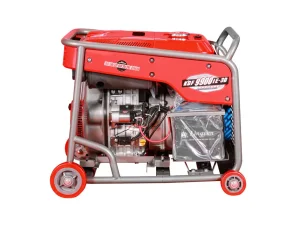
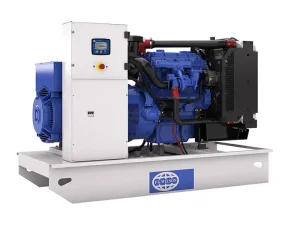
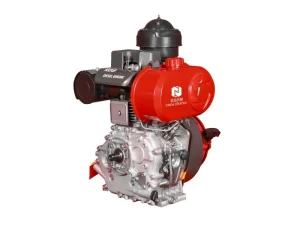
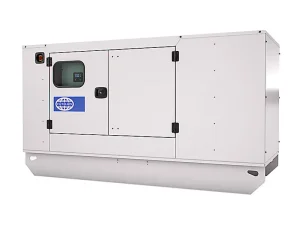
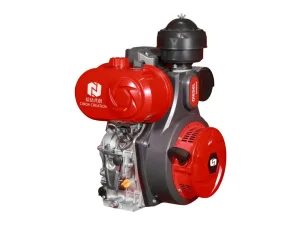
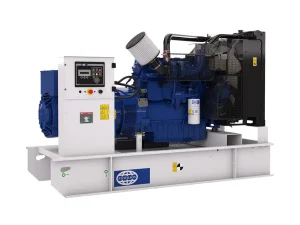
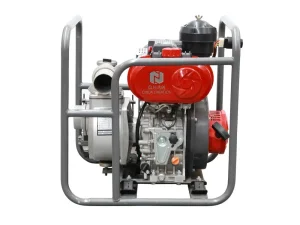
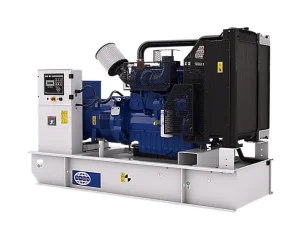
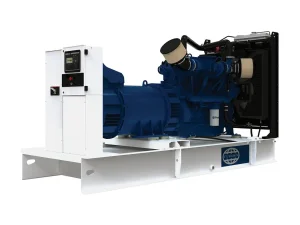
Beyond mega-capacity >800 kVA base generators, we export medium, small, air-cooled, and specialized power units to serve auxiliary support plants, agricultural pivots, and construction jobsites across Egypt.
Frequently Asked Questions: Procuring >800 KVA Generators for Egypt
Technical, commercial, and regulatory guidance compiled by our engineering export desk to assist Egyptian contractors, facility directors, and procurement teams.
Why are Chinese-exported FG Wilson / Perkins >800 kVA generators significantly cheaper than Western European stock?
How do you handle deration calculations for installations in Upper Egypt or desert regions?
What specific documentation do you supply for Egyptian customs clearance under the Nafeza / ACID system?
Can your >800 kVA generators be synchronized to create multi-megawatt power plants in Egypt?
How do your generator sets tolerate Egyptian diesel fuel quality?
What is the standard warranty and after-sales support protocol inside Egypt?
Powering Egypt’s Industrial Future with Unmatched Cost-to-Performance
Whether you require a single 1000 kVA standby unit for a Cairo financial tower or a multi-megawatt continuous power plant for a desert agricultural project, our engineering team is ready to analyze your load profile, altitude, and ambient site parameters.