
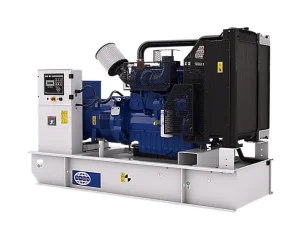
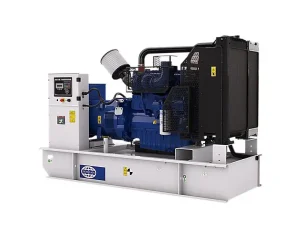
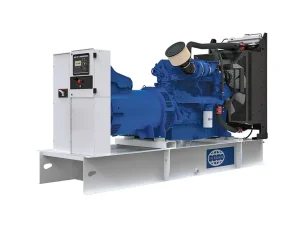
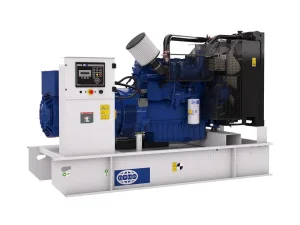
Core Medium Range Power Units Configured for Peru (225 – 938 kVA)
Pre-engineered 60Hz synchronised units with extreme cold starting aid, oversized high-efficiency alternators, and multi-stage fuel filtration for Peruvian industrial installations.
The Peruvian Power Ecosystem: Operating Realities for 225–938 kVA Installations
A strategic breakdown of geographical hurdles, SEIN national grid vulnerabilities, and regulatory voltage compliance across Peru's leading industrial sectors.
⛰️ Andean Altitudes & Harsh Operating Realities
Peru's economic foundation is deeply intertwined with mineral extraction in the high Andes—such as major open-pit and underground operations in Arequipa, Moquegua, Cajamarca, and Pasco located at elevations exceeding 3,000 to 4,800 meters above sea level. Standard commercial diesel generators experience rapid atmospheric derating due to thin oxygen density, resulting in incomplete combustion, unburned diesel soot, excessive exhaust gas temperatures (EGT), and significant power loss (often dropping 1% capacity per 100 meters above 1,000m).
For Chinese generator exporters targeting the Peruvian market, the 225 to 938 kVA medium range represents the critical engineering sweet spot. These units power continuous dewatering pumps, secondary ventilation fans, crushing circuits, and staff worker camps. Successful deployment demands specialized variable-geometry turbochargers, enlarged intercoolers, electric pre-heating jackets, and altitude-recalibrated electronic engine management units (ECUs).
🌊 Coastal Marine Corrosion & Agro-Export Logistics
Along the Pacific littoral—from the seafood canning and fishmeal factories in Chimbote and Paita to the export container hubs at Callao and the newly developed Chancay Megaport—generators operate in severe saline environments with high relative humidity and airborne salt particulates. Without galvanized sound-attenuated enclosures, stainless steel door hardware, and marine-grade epoxy windings, standard units face rapid insulation breakdown.
⚡ Peru Grid Frequency: 60 Hz Mandate
Unlike neighboring 50 Hz South American markets (e.g., Argentina, Bolivia, Chile), Peru operates entirely on a 60 Hz national standard with primary medium-voltage distribution systems and low-voltage end-user configurations including 220V Three-Phase Delta, 380V/220V Wye, and 440V/254V industrial voltages. Exporting to Peru requires alternator windings configured specifically for 1,800 RPM synchronous speed, ensuring precise frequency matching for electric motors, submersible pumps, and sensitive PLC automation racks.
🏭 SEIN Grid Inconsistencies & Peak Shaving
Peru's National Interconnected Electric System (SEIN - Sistema Eléctrico Interconectado Nacional) suffers severe transmission bottlenecks linking hydroelectric plants in the central Andes to coastal industrial zones. During the dry season (estiaje), industrial users face peak tariff surcharges (Horas Punta) and brownouts. Medium-range gensets between 225 kVA and 938 kVA serve dual roles: instant standby power for critical process continuity and autonomous peak-shaving generators to circumvent prohibitive utility tariffs.
Why Peruvian Industrial Contractors Procure Direct from Chinese Manufacturers
A rigorous cost-to-performance matrix comparing traditional local dealership markups with streamlined, tailored China manufacturing and direct shipping channels.
Tier-One Engine Integration
Our medium range 225-938 kVA units combine authentic Perkins, Cummins, and Weichai heavy-duty diesel engines with genuine Leroy-Somer and Stamford alternators. Assembled under strict ISO 9001, ISO 14001, and CE certifications, every genset delivers verified fuel efficiency, long mean-time-between-overhauls (MTBO), and direct compatibility with globally cataloged consumables.
28% to 40% CAPEX Optimization
By eliminating multiple tiers of regional intermediaries in Latin America, Peruvian EPC contractors, mining consortiums, and hospital facilities acquire high-specification power generation assets at direct factory pricing. Combined with zero preferential import tariffs under the China-Peru Free Trade Agreement (Form F), overall project capital expenditure is optimized significantly.
Direct Pacific Logistics to Callao & Chancay
Strategic dispatch from major Chinese deep-water ports (Shanghai, Ningbo, Qingdao) provides direct maritime container lines to Puerto del Callao and Puerto Chancay. Standardized industrial seaworthy packaging—including vacuum desiccant sealing and heavy-gauge steel skids—guarantees that generator sets arrive in pristine condition, ready for on-site commissioning.
📊 Altitude Derating & Atmospheric Derate Calculation Matrix for Peruvian Geography
Engine output must be calibrated against elevation above sea level (m.a.s.l.) and ambient operating temperatures typical across Peru's diverse climate zones.
| Region / Peruvian Hub | Altitude (m.a.s.l.) | Standard Derate Factor | Recommended Model Sizing (225-938 kVA) | Key Engineering Customization |
|---|---|---|---|---|
| Lima / Callao / Chancay (Coastal Port) | 0 – 100 m | 1.00 (100% Prime) | P250-5 to P450-3-SA Standard | C5-M coastal canopy, IP23/IP44 anti-condensation heaters |
| Ica / Trujillo / Piura (Agro & Fishery) | 50 – 500 m | 0.98 – 1.00 | P275-2 / P300-4 Continuous | Heavy-duty sand/dust inertial pre-cleaners, dual-stage fuel water separators |
| Arequipa / Cajamarca (Mid-Highland) | 2,300 – 2,750 m | 0.82 – 0.86 | Upsize by 20% (e.g. 350 kVA for 280 kVA Net) | Wastegate turbocharger boost matching, electronic throttle modulation |
| Cusco / Juliaca / Puno (High Plateau) | 3,400 – 3,850 m | 0.74 – 0.78 | P688-3 to P715-3 Heavy Units | Block jacket heaters (240V/2kW), low-temp glow plugs, high-capacity batteries |
| Cerro de Pasco / Toromocho (Mining Peak) | 4,300 – 4,800 m | 0.62 – 0.68 | P750-3 / P1500-1 Array Paralleled | Multi-stage turbocharging, enlarged tropicalized radiator (50°C), synthetic oil spec |
Mission-Critical Peruvian Applications for 225–938 kVA Generator Sets
Explore real-world engineering layouts deployed across Peru's leading commercial, agricultural, and resource-extraction facilities.
🥑 Agro-Export Cold Chains (Ica & La Libertad)
Peru is the world's premier exporter of fresh blueberries, asparagus, and avocados. Post-harvest cooling tunnels and controlled-atmosphere storage facilities require continuous, flicker-free power. A sudden 30-minute power outage during flash chilling ruins high-value export produce.
Our 275 kVA to 500 kVA gensets equipped with Class H insulation alternators handle severe inductive step-loads caused by industrial ammonia compressor motors without voltage sag.
⛏️ Mining Camp Infrastructure & Auxiliary Drilling
Remote mineral reconnaissance in Southern Peru operates hundreds of kilometers away from high-voltage transmission lines. In these austere settings, diesel generator sets provide autonomous baseline power for personnel accommodation, water treatment purification facilities, communication arrays, and slurry pump circuits.
Our 688 kVA to 938 kVA soundproof gensets feature integrated 8- to 24-hour dual-wall bunded base fuel tanks, preventing environmental soil contamination and minimizing logistical refueling frequency.
🏥 Commercial Centers, Hospitals & Data Centers (Lima)
Metropolitan Lima represents more than 45% of national electricity consumption. High-density commercial districts such as San Isidro, Miraflores, and Surco require ultra-silent generator sets that comply with strict municipal acoustic noise thresholds (under 68 dB(A) at 7 meters).
Our 225 kVA to 750 kVA intelligent units incorporate Deep Sea Electronics (DSE) AMF controllers that execute automatic mains failure changeovers in under 10 seconds, safeguarding life-support equipment and banking servers.
Smart Paralleling & Renewable Hybrid Systems for Peruvian Off-Grid Operations
Combining medium-range diesel generators with solar photovoltaic arrays and Battery Energy Storage Systems (BESS) across the Peruvian Sierra and Selva.
🔋 Multi-Generator Paralleling vs. Single Large Unit
In variable-load environments such as construction of the Línea 2 del Metro de Lima or airport expansions in Arequipa, running a single 1500 kVA generator at low capacity (under 30% load) causes engine glazed bores, fuel wet-stacking, and catastrophic carbon buildup. A modern, resilient solution utilizes two or three medium-range 450–750 kVA generator sets operating in parallel.
With automated digital load-sharing controllers (e.g., ComAp InteliGen or Deep Sea DSE 8610 MKII), units automatically synchronize and start or shed sequentially based on instantaneous real-time kilowatt demand. This approach optimizes specific fuel consumption (g/kWh), guarantees redundancy (N+1 safety), and allows zero-downtime maintenance cycles.
☀️ Solar-Diesel-Storage Microgrids in the Amazon & Andes
In off-grid jungle regions (Loreto, Ucayali, San Martín), diesel fuel transport incurs massive transport markups via river barges. Integrating our 225-938 kVA generators as dynamic dispatchable reserves in solar-hybrid microgrids cuts fuel consumption by up to 55%. The generator fires only during peak evening loads or prolonged cloudy periods, ensuring 99.99% system uptime.
⚡ Intelligent Synchronization Architecture
Electronic isochronous governing, motor-driven circuit breakers (ABB/Schneider), and automatic digital AVR trimming ensure seamless phase-angle, voltage, and frequency matching within <100 milliseconds.
🌐 Cloud IoT Telemetry & Remote Fleet Monitoring
Peruvian maintenance directors can monitor oil pressure, coolant temperature, fuel levels, battery voltage, and diagnostic fault codes (DTCs) in real time from Lima headquarters via integrated 4G/GPS satellite modems.
🌱 Fuel Economy & Low Emission Protocols
High-pressure common rail injection (HPCR) and precision electronic timing deliver full compliance with EPA Tier 2 and Tier 3 equivalent environmental standards, minimizing particulate matter and greenhouse gas footprint.
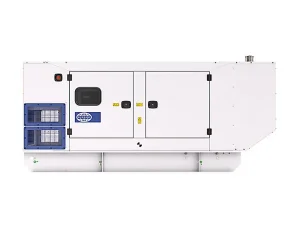
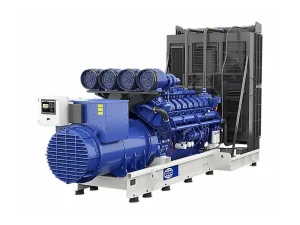
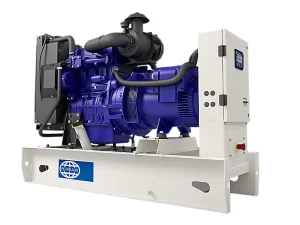
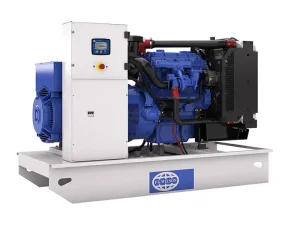
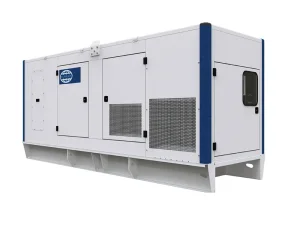
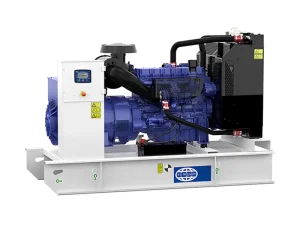
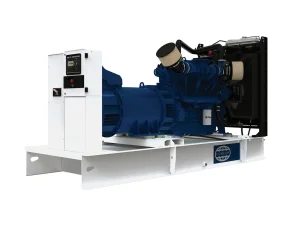
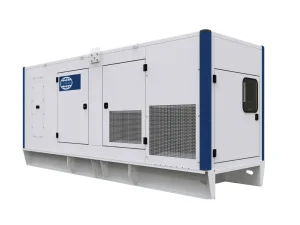
Extended Generator Range Available for Immediate Export to Peru
Comprehensive power spectrum spanning auxiliary silent generators up to heavy-duty multimegawatt industrial installations for mining and infrastructure projects.
Global Procurement Guide: Sizing 225–938 kVA Units for Peruvian Projects
A systematic checklist to prevent oversizing waste, under-capacity stalling, and harmonic distortion in inductive load networks.
📋 Essential Sizing Formula & Transient Load Step
When calculating generator capacity for industrial facilities in Peru, engineers must balance steady-state running kW with momentary inrush kVA caused by across-the-line (DOL) electric motor starts. While Variable Frequency Drives (VFDs) and soft starters mitigate starting spikes, they introduce Non-Linear Harmonic Distortions (THD) that heat up alternator windings.
Our engineering recommendation for Peruvian electrical contractors:
- Derating Buffer: Add a baseline 15% to 25% safety overhead for altitude derating above 2,000 meters in the Sierra.
- Power Factor Correction: Generator capacity is rated at 0.8 lagging PF (kVA to kW conversion). Ensure plant capacitors do not introduce a leading power factor, which causes catastrophic alternator self-excitation.
- Transient Motor Inrush: Specify an oversized PMG (Permanent Magnet Generator) excitation system to guarantee 300% short-circuit current sustained for 10 seconds.
🛠️ Pre-Shipment Testing Protocol in China
Every generator set destined for the Peruvian market undergoes a mandatory 4-hour dynamic resistive-reactive load bank test at our factory facility before seaworthy packing:
Frequently Asked Questions: Importing Diesel Generators into Peru
Authoritative technical, commercial, and logistical answers compiled by our international power equipment engineering team.
What frequency and electrical voltage configurations are standard for Peru?
How do China-Peru Free Trade Agreement (FTA) tariffs apply to diesel generators?
What measures prevent power loss when operating at extreme altitudes in the Andes (3,500m+)?
What is the difference between Prime Power (PRP) and Standby Power (ESP) ratings?
How are warranty claims, maintenance, and replacement spare parts handled in Peru?
What is the typical shipping lead time from China to Puerto del Callao or Puerto Chancay?
Secure High-Reliability Power for Your Peruvian Industrial Operations
Whether you require a single 250 kVA silent standby unit for a Callao packaging warehouse or a synchronized multi-megawatt 938 kVA generator array for an Andean mining project, our bilingual engineering team is standing by to configure your custom 60 Hz solution.
Send Inquiry Now ➔