High-Efficiency Portable & Soundproof Power Architectures
Direct supply line from certified Chinese OEM manufacturing facilities configured specifically for 60Hz Korean electrical distribution and stringent municipal sound-emission limits.
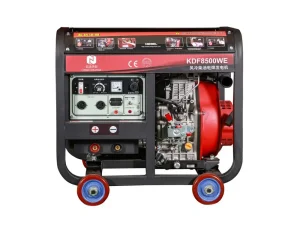
Integrated shielded metal arc welding and auxiliary standby power generation designed for rapid deployment across metropolitan construction zones.
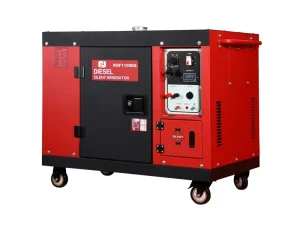
High-displacement single-cylinder architecture enclosed within an acoustic attenuation canopy for residential and telecom commercial sites.
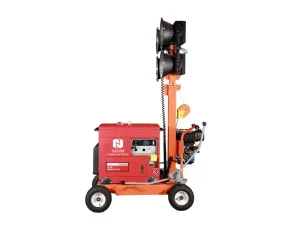
Three-phase synchronous electrical output featuring multi-chamber acoustic baffling and vibration isolation for dense commercial nodes.
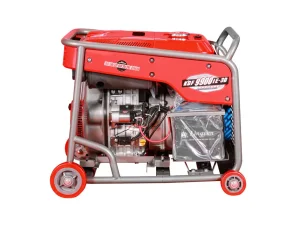
Variable frequency inverter diesel unit providing clean pure sine-wave output with <2.5% THD, engineered for microelectronic labs and server racks.
Operating Parameters & Commercial Realities in Metropolitan Seoul
The Seoul Metropolitan Area, spanning Seoul Special City, Incheon Metropolitan City, and the broader Gyeonggi-do corridor, represents one of the world's most hyper-dense commercial and industrial ecosystems. From the semiconductor facilities in Giheung and Hwaseong to the digital infrastructure hubs within the Pangyo Techno Valley and the Digital Media City (DMC) in Sangam-dong, power continuity is a core operational requirement. However, supplying decentralized small generator units (1 kVA to 30 kVA) and portable machinery to this geography requires a deep understanding of South Korea's unique engineering standards, spatial constraints, and strict environmental legislation.
Unlike standard 50 Hz Western European or Chinese domestic configurations, South Korea strictly employs a 60 Hz alternating current standard with single-phase 220V and three-phase 380V configurations. Operating an unadjusted 50 Hz power unit in Seoul causes premature motor breakdown, severe frequency instability, and erratic voltage drops in sensitive telecommunications, biomedical, and IT infrastructure. As an experienced Chinese exporter, our manufacturing pipeline systematically integrates high-precision 3600 RPM governors, 60 Hz rewound alternators, and advanced automatic voltage regulators (AVR) to deliver steady frequency and clean sine waves under full-duty cycles.
Furthermore, urban density across Seoul's 25 autonomous districts (Gu)—from the bustling commercial towers of Gangnam-gu and Jung-gu to the compact manufacturing workshops of Mullae-dong and Seongsu-dong—leaves virtually no tolerance for ambient acoustic pollution. Under South Korea's Noise and Vibration Control Act enforced by the Ministry of Environment, daytime construction boundaries frequently mandate limits below 65 dB(A) at 7 meters, while nighttime and residential tolerances drop below 50 dB(A). Standard open-frame Chinese diesel generators cannot legally operate in these environments without hefty municipal penalties. Our specialized silent and canopy-enclosed small units are specifically engineered with micro-perforated acoustic foam, labyrinthine airflow cooling passages, and tuned exhaust mufflers that mitigate low-frequency harmonics, enabling seamless deployment across residential and commercial sectors.
Acoustic Attenuation Mastery
Multi-stage sound suppression canopies and elastomeric vibration dampeners reduce engine resonance below municipal Seoul thresholds for uninterrupted urban utilization.
60Hz Synchronous Alternators
Engineered with copper-wound stators calibrated specifically for 220V/380V at 60Hz, preventing harmonic overheating in sensitive electronics and industrial machinery.
Flood Resilience Fluid Systems
Seoul's localized torrential downpours require high-head, anti-clogging centrifugal drainage pumps capable of dewatering subterranean parking and infrastructure rapid-response sites.
Global B2B Demand Trends & Macro-Industry Engineering Solutions
The global small-unit power generation and mobile mechanical sector is experiencing a major transformation driven by electrification, edge computing, and extreme climate volatility. In high-density metropolises like Seoul, the traditional role of a small diesel generator as purely an emergency backup for rural blackouts has evolved. International procurement teams, commercial real estate operators, and tier-1 civil engineering contractors now demand sophisticated decentralized systems capable of fulfilling four critical operational profiles:
1. Micro-Data Centers & 5G Base Station Redundancy
With South Korea leading the deployment of private 5G networks, autonomous transport corridors, and smart city infrastructure (such as Songdo and Digital Media City), localized telecommunication towers require ultra-compact, high-autonomy backup units. When utility power fluctuates, digital switching systems cannot tolerate frequency deviations exceeding ±0.5 Hz. Variable frequency diesel generators, like our digital inverter series, resolve this issue by decoupling engine RPM from electrical frequency, converting AC to DC and back to pristine AC via advanced insulated-gate bipolar transistor (IGBT) modules. This delivers laboratory-grade power while cutting fuel consumption by up to 35% during partial-load idling.
2. Urban Redevelopment & Metro Infrastructure Maintenance
Seoul's continuous urban renewal involves deep tunneling (GTX high-speed rail network) and high-rise commercial refits. In subterranean railway shafts and dense redevelopment streets, moving separate welding units and generators is logistically inefficient. Integrated dual-purpose electric welding generator sets solve this spatial problem. By providing up to 200–250A of stable welding current alongside auxiliary 220V power outlets, these machines allow structural welders, steel framework crews, and utility contractors to cut tool footprints in half while minimizing site clutter.
3. Monsoon Preparedness & Municipal Drainage Engineering
The East Asian summer monsoon season (Jangma) brings localized downpours that test Seoul's urban water drainage systems. Subterranean parking structures in Gangnam-gu, basement commercial arcades, and underground metro vestibules require immediate dewatering equipment. High-pressure diesel engine water pumps, built with abrasion-resistant cast-iron impellers and heavy-duty mechanical seals, provide independent fluid displacement without relying on vulnerable electrical grids during flash flooding.
| Architecture / Series | Rated Output / Specs | Acoustic Profile (7m) | Target Sector Application | Seoul Operational Compliance |
|---|---|---|---|---|
| KDF8500WE Gen-Weld | 5.5 kVA / 190A DC Weld | 72 dB(A) Semi-Silent | Subway maintenance & steel retrofitting | Dual-voltage 220V/60Hz, portable roll-cage |
| KDF11000Q Silent Core | 8.5 kVA Prime / 9.5 kVA Max | 66 dB(A) Enclosed | Boutique commercial & private clinics | ATS compatible, heavy vibration dampening |
| KDF8500Q-3 3-Phase | 6.0 kW Tri-Phase 380V/220V | 68 dB(A) Canopy | Light industrial, workshop machine tools | Balanced phase regulation, 60Hz 3-phase |
| KDF9900 Digital Inverter | 7.5 kVA Clean Sine Wave | 62 dB(A) Ultra-Quiet | Telecom towers, edge server nodes | THD < 2.5%, electronic speed governance |
| KDP150LE Dewatering Pump | 6-Inch High Flow / 1500L/min | N/A (Open Mounted) | Underground parking & civil sumps | Direct-injection diesel, self-priming head |
Cross-Border Logistics, Certification Compliance & OEM Standards
Procuring mechanical machinery and generating units from Chinese manufacturing centers for distribution in the South Korean market requires strict regulatory compliance. At Cinda Creation (Beijing Xinda Creation Machinery Equipment Co., Ltd.), our engineering and export workflows comply with international B2B procurement standards.
Every small unit shipped from our facilities to the Port of Incheon or Port of Busan undergoes an intensive 120-minute full-load bench test. This includes continuous load-bank testing across 25%, 50%, 75%, 100%, and 110% overload conditions to measure thermal equilibrium, oil pressure stability, voltage waveform distortion, and exhaust gas opacity. Our quality management framework operates under certified ISO 9001 (Quality Management), ISO 14001 (Environmental Systems), and ISO 45001 (Occupational Health and Safety) protocols, ensuring each unit meets rigorous international specifications.
Maritime Logistics Advantage: Incheon Direct Fast-Lane
Operating out of northern Chinese export hubs (Tianjin Port and Qingdao Port), our logistics pipelines connect directly with the Port of Incheon—the maritime gateway to the Seoul Metropolitan Area. Freight transit times typically range between 24 and 48 hours, enabling near-domestic supply chain responsiveness. This geographic proximity allows Korean machinery distributors and plant lease operators to maintain lean inventories while keeping stock lead times predictable.
To support ongoing maintenance across the Gyeonggi industrial belt, we provide spare-parts packages containing consumable filters, fuel injectors, AVR circuit boards, and gasket sets with every container shipment. Standardizing on common engine architectures ensures service technicians throughout South Korea can quickly perform routine maintenance using familiar tooling.
Specialized Diesel Engines, Pumps & Compact Generating Systems
Comprehensive machinery portfolio engineered for harsh environmental resilience, autonomous commercial operation, and prolonged continuous-duty cycles.
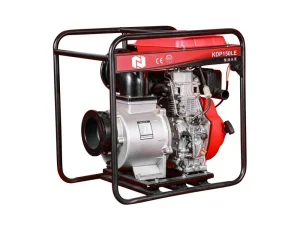
Heavy-duty diesel centrifugal pump designed for rapid dewatering operations across Seoul subterranean parking and infrastructure during monsoon seasons.
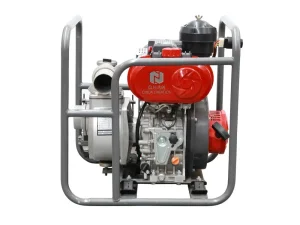
Single-cylinder direct-injection industrial diesel engine providing dependable standalone mechanical torque for tillers, pumps, and compact machinery.
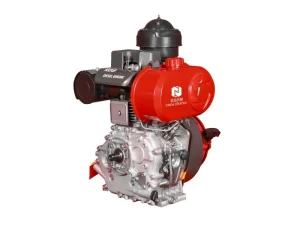
Rugged tubular steel frame generator set with direct air cooling, delivering cost-effective auxiliary power for open outdoor construction and agricultural sites.
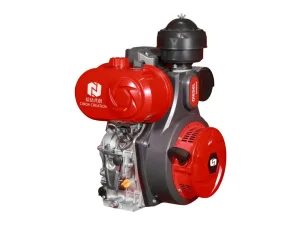
High-compression combustion chamber design optimizing fuel burn efficiency and lowering per-kilowatt operating costs for extended prime-running applications.
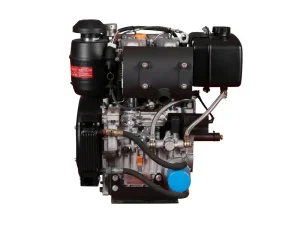
V-twin cylinder air-cooled diesel design providing high displacement torque and continuous power stability for high-draw inductive industrial motors.
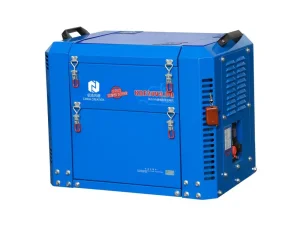
Whisper-quiet canopy construction optimized for residential estates, nighttime utility work, and high-density commercial corridors across Seoul.
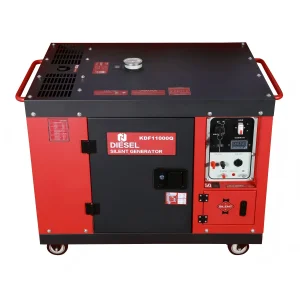
Compact castor-mounted canopy generator engineered for residential emergency standby, outdoor activities, and mobile pop-up retail kiosks in urban centers.
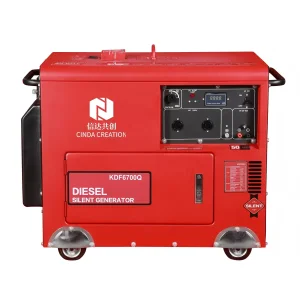
Market-proven workhorse delivering 4.5 kVA to 5.0 kVA continuous rating, featuring comprehensive analog/digital instrumentation and dual-voltage output.
Technical Roadmap: Hybridization, Emission Compliance & Smart Telematics
As the Seoul Metropolitan Government continues its decarbonization push under its Net-Zero roadmap, the regulatory framework governing internal combustion machinery is tightening. Procurement officers and plant leasing firms must plan their equipment fleets around evolving Tier 4 Final, Stage V, and upcoming Euro 6-equivalent off-road standards.
Our research and engineering initiatives are advancing across three key technology verticals:
-
1Electronic Common Rail (HPCR) & Aftertreatment Integration: Transitioning single- and twin-cylinder small units from mechanical jerk pumps to high-pressure common rail injection systems running at 1800 bar. This delivers optimized fuel atomization, particulate reductions, and full compatibility with low-sulfur industrial diesel fuels used throughout South Korea.
-
2Hybrid Battery-Diesel Energy Storage Systems (BESS): Developing integrated micro-hybrid topologies that combine a 5kVA diesel generator with a 10kWh lithium-iron-phosphate (LiFePO4) battery pack. Under light load demands, the inverter draws silent power from the battery bank, auto-starting the diesel unit only when battery reserves deplete or heavy motor inductive surges occur. This architecture cuts runtime and urban noise emissions by over 60%.
-
3IoT Telematics & Remote ATS Interfacing: Integrating optional 4G/LTE telematics modules that link each generator to cloud-based monitoring platforms. Fleet managers in Seoul can track real-time fuel levels, voltage stability, running hours, and diagnostic trouble codes (DTC) directly from mobile dashboards, enabling predictive maintenance before site disruptions occur.
Frequently Asked Questions: Sourcing Small Units for Seoul
Engineering clarifications, commercial parameters, and regulatory answers for technical buyers, plant engineers, and import authorities.