
Specified Power Units for Swiss Commercial & Mission-Critical Demands
Pre-configured with dual-frequency capability (50 Hz/400V), smart parallel synchronisation controllers, and low-decibel acoustic canopies tailored for urban and alpine installations.
-
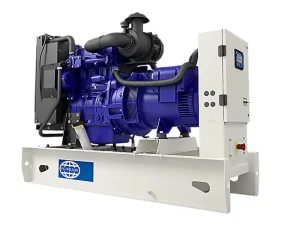
FG Wilson Low Noise Energy Solution Generator Sets P11-6S (Swiss Urban Standard)
-
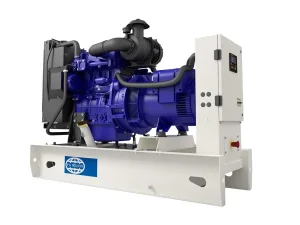
FG Wilson Small Range Standby Generator Set P16.5-1S for Swiss Alpine Telecommunication
-
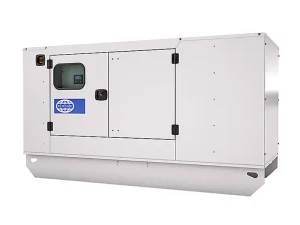
Wilson Reliable Backup Power Generator P55-3 for Swiss Precision Manufacturing Workshops
-
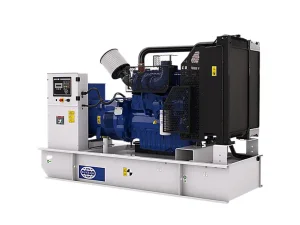
FG Wilson Industrial-Grade Power Guarantee Set P300-5 for Swiss Pharmaceutical & Hospital Plants
Precision Power in Switzerland: Compliance, Grid Resilience & High Alpine Deployment
An executive engineering analysis of the regulatory, commercial, and geographical parameters shaping diesel engine imports across Zurich, Basel, Geneva, and the Alpine cantons.
Stringent Clean Air Ordinances (OAPC / LRV)
Switzerland maintains Europe's most uncompromising emissions standards under the Swiss Ordinance on Air Pollution Control (OAPC/LRV). Diesel engines serving commercial facilities, municipal hospitals, or civil defense bunkers (Zivilschutz) require certified particulate filters (DPF) that achieve >99% particulate mass reduction, alongside electronically controlled high-pressure common rail injection.
The "OSTRAL" Contingency Mandate
Under the Organization for Energy Supply in Extraordinary Situations (OSTRAL), the Swiss Confederation has instituted strict emergency power provisions for large commercial consumers (grosser Stromverbraucher). Standby generation is no longer optional; it is an integrated insurance asset against cross-border grid instability and hydropower winter seasonality.
Extreme Sub-Zero Alpine Altitudes
Operating generators at elevations exceeding 1,500 meters across the Swiss Alps (Valais, Graubünden, Bernese Oberland) introduces severe air density deficits and temperatures down to -30°C. Engines exported to this market feature heavy-duty jacket water heaters, dual-redundant glow plug heating systems, and matched turbocharging to mitigate altitude derating.
Global Enterprise Procurement Dynamics: Decarbonisation, Resilience & TCO
Modern EPC contractors and corporate procurement officers are reassessing procurement matrixes. Strategic diesel generation is shifting from simple commodity buying to high-reliability contingency integration.
HVO (Hydrotreated Vegetable Oil) Fuel Flexibility
Global corporations operating in Switzerland (such as global banking institutions in Zurich and life science conglomerates in Basel) require net-zero compatibility. Our engines are fully verified to operate seamlessly on EN 15940 paraffinic diesel/HVO without modification, slashing lifecycle greenhouse gas emissions by up to 90% while ensuring 10-year stable fuel storage life.
Grid Paralleling & Microgrid Black-Start Capability
Modern decentralized infrastructure integrates intermittent renewables (solar and wind) with diesel genset capacity. Swiss procurement mandates fast-starting generators capable of synchronizing to local low-voltage/medium-voltage distribution within 10 seconds of grid drop, delivering dynamic reactive power compensation via digital automatic voltage regulators (AVR).
| Evaluation Parameter | Standard Export Configuration | Swiss Market Engineering Specification | Operational Value |
|---|---|---|---|
| Cold-Start Threshold | -10°C standard block heater | -30°C heavy-duty heating + Dual battery redundancy | Guaranteed instantaneous start during alpine winter outages |
| Acoustic Canopy Sound Level | 75–80 dB(A) at 7 meters | 62–68 dB(A) at 7 meters (Rockwool acoustic lining) | Permitted in residential, hospital, and municipal mixed zones |
| Emission Aftertreatment | Standard exhaust silencer | Optional closed-loop DPF & SCR integration | Conforms to Swiss FOEN / Cantonal environmental regulations |
| Control & Telemetry | Basic manual/auto start panel | Deep Sea / ComAp paralleling with Modbus/SNMP | Seamless integration with Swiss building management systems (BMS) |
China Industry 4.0: Supply Chain Agility, Production Integrity & Rigorous QA
How our Beijing manufacturing and assembly hub delivers Western-standard engineering tolerance, rapid turnaround, and robust component traceability for Swiss importers.
100% Full-Step Load Bank Testing
Before packaging for containerized shipment via Hamburg or Rotterdam to Basel terminals, every generator set undergoes 0%, 25%, 50%, 75%, 100%, and 110% overload dynamic load-bank verification. Exhaust gas temperatures, fuel pressure differentials, and harmonic distortion (THD < 3%) are automatically logged into an auditable test certificate.
Genuine Perkins & Wilson Component Ecosystem
Counterfeit prevention is critical for Swiss facility managers. Our strategic supply chain guarantees 100% genuine Perkins UK engines, Leroy-Somer or Stamford alternators, and genuine Schneider or ABB circuit protection breakers, eliminating premature component failure and ensuring effortless cross-border warranty honoring.
Direct Intermodal Logistics to Switzerland
Navigating landlocked Swiss customs (Zollverwaltung) requires immaculate documentation: EUR.1 origin proofs, CE Declaration of Conformity, noise emission certificates, and Machinery Directive 2006/42/EC compliance. We coordinate end-to-end multimodal transit via maritime freight to Northern Europe followed by bonded rail directly into Swiss distribution hubs.
Engineered for Swiss Applications: From Precision Horology to Alpine Ski Resorts
Specific field configurations matched to the distinct structural and environmental demands of Swiss commerce.
Watchmaking & Micro-Engineering (Jura Arc)
CNC micro-milling and cleanrooms in Neuchâtel and Geneva cannot tolerate micro-voltage sags. Our high-efficiency Wilson units equipped with permanent magnet generator (PMG) excitation supply ultra-stable, flicker-free power, preserving million-dollar batches of haute horlogerie mechanisms during grid interruptions.
Alpine Cableways & Mountain Shelters
Winter tourism in Zermatt, St. Moritz, and Engelberg relies on fail-safe backup for gondolas, snowmaking pumping stations, and high-altitude emergency clinics. Compact skid configurations with built-in bunded fuel tanks prevent environmental contamination in pristine Swiss water catchment areas.
Underground Bunkers & Secure Data Hubs
Switzerland hosts world-leading disaster-recovery data repositories inside fortified Alpine caverns. Our large-range (>800 kVA) FG Wilson units integrate remote heat exchangers, low-vibration anti-seismic spring mounts, and intelligent remote telemetry for subterranean operation.
Frequently Asked Questions by Swiss Importers & Engineering Contractors
Clear, definitive technical clarifications on standards, commissioning, logistics, and parts availability.
How do your diesel generator sets comply with Swiss LRV/OAPC emission laws?
Our generators for the Swiss market can be specified with electronically governed Perkins common-rail engines combined with optional certified particulate filters (DPF) and selective catalytic reduction (SCR) systems. For standby emergency units (operating under 50 running hours per annum), we provide the specific documentation required by Swiss cantonal environmental authorities (Kantonale Umweltämter) for fast-track statutory approval.
What is the lead time and transit protocol for deliveries into Switzerland?
Standard small-to-medium FG Wilson units (11 kVA to 300 kVA) are held in regular production stock with dispatch readiness within 10 to 15 business days. Transit from China to Switzerland is typically handled via express ocean freight to Hamburg/Rotterdam, followed by bonded rail or truck to Basel/Zurich dry ports (typical door-to-door transit time: 30–35 days). Air freight is available for critical spare parts and urgent components with a 3–5 day delivery window.
Can your gensets operate at high altitudes in the Swiss Alps without severe power loss?
Standard atmospheric derating causes roughly a 1% power reduction for every 100 meters above 1,000 meters elevation. To mitigate this in alpine installations (such as ski operations or telecommunications repeaters located at 1,800m–2,500m), our engineers oversize the engine displacement, utilize altitude-compensated turbochargers, and configure optimized fuel mapping to preserve full prime output without excessive thermal stress.
Are replacement parts for FG Wilson and Perkins generators readily accessible in Switzerland?
Yes. Because we utilize genuine FG Wilson and Perkins engine platforms, all routine service consumables (oil filters, fuel-water separators, air intake cartridges, fan belts) share standardized universal OEM part numbers. Importers can either source spares directly from our extensive inventory in Beijing at competitive export rates or access the local European Perkins parts network for immediate maintenance needs.
What documentation is provided to satisfy Swiss customs and electrical safety inspections?
Every shipment is accompanied by a comprehensive compliance dossier: Official Commercial Invoice and Packing List, Bill of Lading, Certificate of Origin, CE Declaration of Conformity (Low Voltage Directive 2014/35/EU, Electromagnetic Compatibility 2014/30/EU, Machinery Directive 2006/42/EC), factory load-bank test reports, and English/German technical operation and wiring schematics.
Specialized Diesel Generators & Heavy Auxiliary Systems for Swiss Commerce
Browse our complete spectrum of open frame, silent canopy, air-cooled, and high-megawatt industrial diesel engines available for direct export to Switzerland.
-
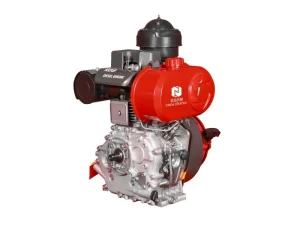
Single Cylinder Air-Cooled Diesel Generator KD9 (Compact Swiss Construction Auxiliary)
-
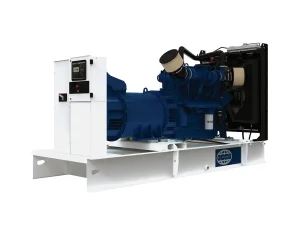
Medium Range 225-938 kVA FG Wilson Industrial Generator Set P625-3 (Basel Chemical Plant Grade)
-
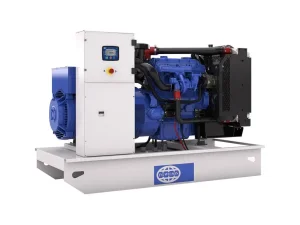
P33-3 (Skid) FG Wilson Small Range Silent Diesel Generator Set for Swiss Urban Clinics
-
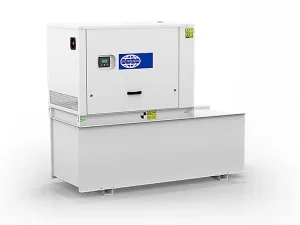
Wilson Open Type Small Diesel Generator Sets 400/230V P9.5-1 (Swiss Plant Room Integrated)
-
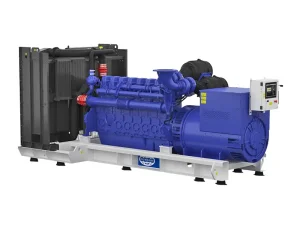
FG Wilson Large Range High-Power Generator Set P1375-1 for Swiss Data Center Continuity
-
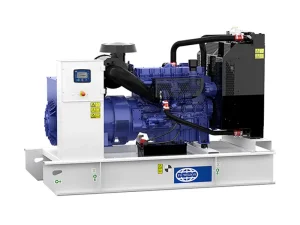
Wilson Advanced Power Generator P165-6 for Swiss Municipal Water Treatment Plants
-
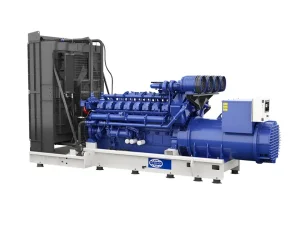
FG Wilson Megawatt High-Efficiency Generator Set P2500-3 for Swiss National Grid Reserves
-
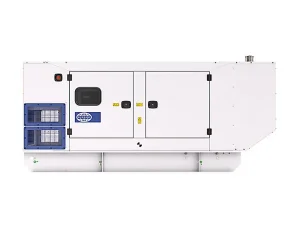
FG Wilson Medium Range 225-938 kVA Generator Set P300-4 (Commercial Swiss Hub Utility)
Request an Engineering Consultation & Swiss Custom Sizing
Connect directly with our senior power application engineers. Receive detailed electrical GA drawings, sound attenuation profiles, altitude calculation sheets, and competitive FOB/CIF quotation within 24 hours.