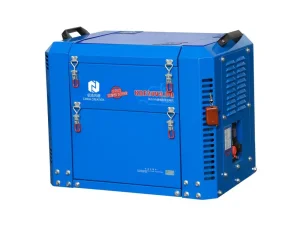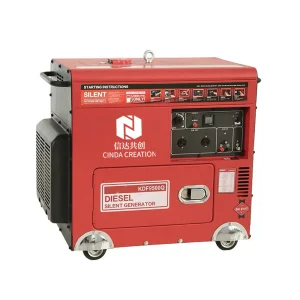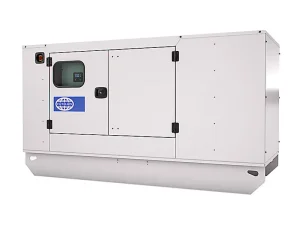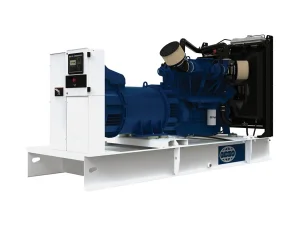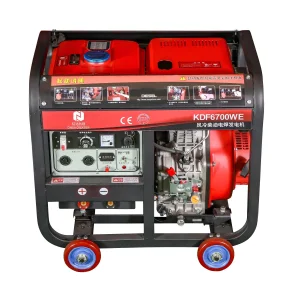
Dual Auxiliary & Site Welding Duty
Engineered for high transient response, step-load acceptance up to 100% ISO 8528 G3 standards, and integrated with digital synchronizing governors.
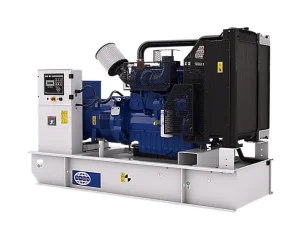
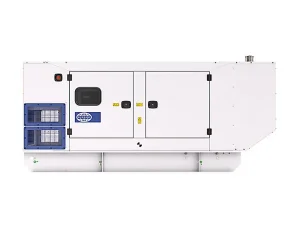
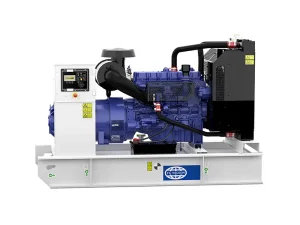
From the congested 60 Hz distribution feeders of Consolidated Edison (ConEd) in Manhattan to hyperscale data clusters along the Hudson Valley, New York enterprises require fault-tolerant megawatt architecture.
Commercial real estate and hospital facilities across the five boroughs face strict carbon caps. Large-scale gensets above 800 kVA must be configured with selective catalytic reduction (SCR) and particulate filtration to meet DEC Title V permits and LL97 peak reduction mandates.
Low-latency trading desks, colocation facilities, and fintech server nodes in Jersey City and Lower Manhattan cannot tolerate a single microsecond of power droop. High-inertia 800 kVA–2500 kVA generators guarantee seamless transfer during summer peak-load curtailments.
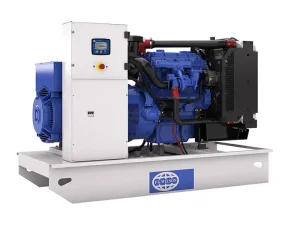
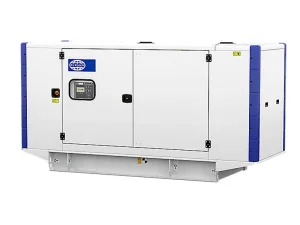
Following Superstorm Sandy, New York building codes mandated rooftop or elevated mezzanine genset installations. Our custom-engineered modular large range sets feature split acoustic enclosures and remote fuel pumping up to 30 stories without cavitation.
Comprehensive comparative analysis for chief mechanical engineers, electrical contractors, and EPC procurement officers evaluating heavy diesel generation systems.
In mega-infrastructure projects, sizing generator sets above 800 kVA (often extending to 1,250 kVA, 1,500 kVA, 2,000 kVA, and paralleled multi-megawatt blocks) requires an analytical evaluation far beyond nominal nameplate wattage. Engine displacement, governor transient response times, sub-transient reactance ($X''d$), and alternator temperature rise must be engineered holistically to counteract leading power factors from capacitive UPS input filters and high-harmonic variable frequency drives (VFDs).
In accordance with National Fire Protection Association (NFPA) 110 standards for Emergency and Standby Power Systems, critical life-safety and emergency branch circuits must accept full load within 10 seconds of utility failure. For 800 kVA+ systems, Cinda Creation pairs electronic unit injectors (EUI) or high-pressure common rail (HPCR) Perkins/Cummins/Weichai powerheads with deep-displacement turbocharger maps, allowing 100% single-step block loading without shedding frequency by more than 10%.
| Performance Criterion | Standard Commercial (500–800 kVA) | Cinda Creation Mission-Critical (>800 kVA) | New York City / ConEd Compliance Impact |
|---|---|---|---|
| Load Step Response | Class G2 (65% Single-Step Load) | Class G3 (100% Transient Step Load) | Prevents voltage collapse during high-inrush chiller & elevator startups |
| Alternator Excitation | Shunt / Self-Excited AVR | PMG (Permanent Magnet) + MX321/AREP | Sustains 300% short-circuit current for 10 sec to blow fault breakers safely |
| Harmonic Distortion (THD) | < 5% at Linear Load | < 2% at Linear, 2/3 Pitch Winding | Eliminates neutral conductor overheating caused by 3rd harmonic currents |
| Emission Profile | Tier 2 / Non-Regulated Export | EPA Tier 4 Final / SCR Aftertreatment Ready | Direct compliance with NYS DEC 6 NYCRR Part 222 Distributed Generation rules |
| Acoustic Rating (Canopied) | 85 dBA @ 1 Meter | 68–72 dBA @ 7 Meters (Dual-Stage Attenuation) | Adheres strictly to NYC Administrative Code Title 24 Noise Code restrictions |
Across both domestic North American hubs and overseas international mining or civil infrastructure terminals, modern energy architecture demands that diesel generators operate not merely as islanded backups, but as integrated microgrid anchors. Cinda Creation's >800 kVA units are equipped with Deep Sea (DSE8610 MKII) or ComAp InteliGen paralleling controllers that seamlessly synchronize up to 32 generator sets on a shared high-voltage or medium-voltage busbar.
When installing >800 kVA generators in urban New York buildings or global high-density facilities, circulating harmonic currents in the neutral conductor pose severe thermal hazards. We mandate 2/3 pitch winding stators to naturally eliminate triplen (3rd, 9th, 15th) harmonics, complemented by high-resistance neutral grounding resistors (NGR) that limit ground fault currents to under 10 Amperes, keeping critical loads operational while faults are isolated.
Cinda Creation handles complete turnkey logistics, seaworthy vacuum export preservation, multi-voltage transformer harmonization, and comprehensive factory acceptance testing (FAT).
From breakbulk cargo for 10-tonne open-skid generators to high-cube 40-foot CSC-certified soundproof containerized enclosures, our logistics team ships directly via Port of New York and New Jersey (PNYNJ), Rotterdam, Dubai, or Singapore with full inland rigging services.
Every generator undergoes 4-hour resistive and inductive load bank validation (0%, 25%, 50%, 75%, 100%, 110% overload) before export. Calibrated test reports cover water jacket thermal equilibrium, lube oil pressure, voltage waveform regulation, and frequency stability.
Downtime in >800 kVA setups is intolerably costly. We provide direct containerized maintenance bundles (1,000-hour and 3,000-hour filter, injector, belt, and sensor sets) backed by international warranty support, ensuring uninterrupted lifecycle operations.
How AI-driven predictive telemetry, hydrogen co-combustion, and advanced silencer fluid dynamics are transforming heavy industrial power generation.
Traditional monthly scheduled run-ups are giving way to edge-computed sensor arrays. Modern >800 kVA Cinda Creation units integrate vibration spectrum accelerometers on bearing journals, continuous oil dielectric sensors, and exhaust gas temperature (EGT) channel analyzers. Machine learning models predict injector coking, winding insulation breakdown, and coolant degradation up to 250 operational hours before anomalous trip conditions happen.
To assist global municipalities and New York State in achieving zero-carbon emission benchmarks, our advanced engine testbeds are validating hydrogen-diesel co-combustion kits. By injecting up to 25% green hydrogen into the intake air manifold under electronically managed stoichiometric ratios, peak carbon monoxide (CO) and particulate matter (PM) emissions drop precipitously while maintaining equivalent kilowatt thermal efficiencies.
Essential answers regarding ratings, UL/NFPA standards, electrical synchronizing, and global project shipment.
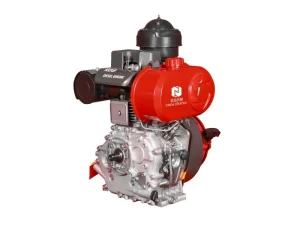
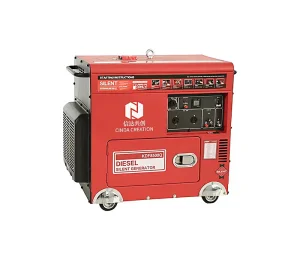
Explore our complete export selection, including silent canopy variants, fuel-optimized commercial prime movers, and single-cylinder backup engines.