
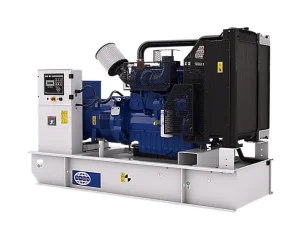
Primary Fleet Lineup
High-Performance 225–938 kVA Diesel Generator Sets for Irish Industrial Standards
Pre-commissioned against EirGrid and ESB Networks interlock requirements. Genuine Perkins and FG Wilson engine configurations calibrated for continuous prime and emergency standby duty.
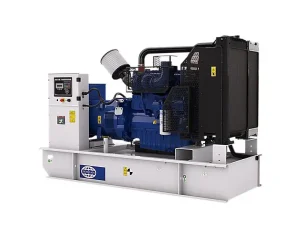
FG Wilson P275-5 Medium Range Generator Set for Dublin Tech Parks & Logistics
View Product Details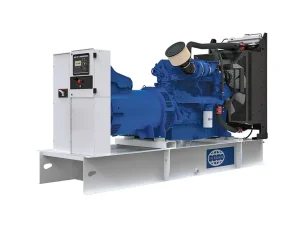
FG Wilson P450-3-SA Acoustic Enclosed Diesel Generator for Cork Biopharma Hubs
View Product Details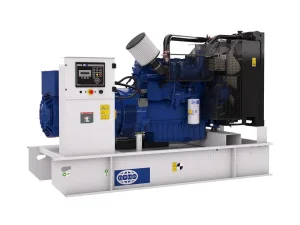
FG Wilson P275-2 High-Efficiency Synchronous Genset for Ireland Cold Storage & Dairy
View Product Details
Economic & Grid Realities
The Republic of Ireland’s Power Architecture: Managing Capacity Constraints & Industrial Demand
How medium-range generation bridges the critical threshold between stringent utility caps and uninterruptible enterprise continuity.
EirGrid Moratoriums & Structural Grid Pressures
Ireland's transmission system operator (EirGrid) and the Commission for Regulation of Utilities (CRU) have enacted stringent directives regarding grid connection offers, particularly in the Greater Dublin Area. With data processing, pharmaceutical, and high-tech manufacturing projected to consume over 30% of Ireland’s total generated electricity by 2030, commercial expansion frequently encounters grid connection lead times extending between 24 and 48 months.
Within this tight operational framework, medium-range generators (225–938 kVA) function not merely as standby units, but as mission-critical bridge infrastructure. They support peak-shaving protocols, secure commissioning deadlines for newly built manufacturing plants, and provide autonomous off-grid capacity during grid alerts issued under EirGrid’s System Alert protocols.
Regional Industrial Concentrations: Dublin, Cork & Shannon
Ireland’s economic landscape is characterized by hyper-specialized regional clusters, each imposing distinct demands on electrical standby engineering:
- Greater Dublin & Kildare: Hyperscale edge compute nodes, colocation facilities, and financial transaction data centers requiring Tier III/IV compliant N+1 or 2N backup architectures with sub-10-second automatic transfer switch (ATS) synchronization.
- Cork & Ringaskiddy Biopharma Corridor: Cleanrooms, active pharmaceutical ingredient (API) synthesis, and cryogenic storage facilities where a 30-second voltage collapse causes millions of euros in product loss.
- Shannon, Limerick & Galway: Precision medtech and aerospace manufacturing with high-inertia inductive motor loads demanding robust step-load transient response capabilities.
Statutory & Environmental Framework
Decarbonization, MCPD Directives, & EPA Licensing in Ireland
Deploying diesel generation in Ireland requires exact alignment with EU climate legislation, EPA air quality restrictions, and localized planning noise thresholds.
EU MCPD (Directive 2015/2193) Compliance
In Ireland, combustion plants with a thermal input between 1 MW and 50 MW fall under the European Union (Medium Combustion Plants) Regulations 2017 (S.I. No. 595/2017), enforced by the Environmental Protection Agency (EPA). Standby generator sets running under 500 operating hours per year enjoy specific emission limit value exemptions, but rigorous logging, runtime verification, and registration remain mandatory for compliance audits.
HVO 100 Transition: Net-Zero Fuel Readiness
Irish municipal authorities and corporate ESG mandates prioritize fossil-fuel reduction. All Cinda Creation FG Wilson medium-range sets (225–938 kVA) powered by Perkins multi-cylinder diesel engines are certified 100% compatible with Hydrotreated Vegetable Oil (HVO, EN 15940 standard). Utilizing paraffinic renewable diesel slashes greenhouse gas emissions by up to 90% without compromising power ratings, cold-start crank capabilities, or storage shelf stability.
Acoustic Mitigation & EPA NG4 Guidelines
Industrial facilities operating under EPA Industrial Emissions Licences (IEL) must strictly observe the Guidance Note for Noise: Licence Applications, Surveys and Assessments in Relation to Scheduled Activities (NG4). Daytime, evening, and night noise limits (typically 55, 50, and 45 dBA at sensitive receptor locations) mandate purpose-engineered sound-attenuated canopies with acoustic baffling, hospital-grade silencers, and anti-vibration spring mountings.
| Series & Rating (kVA) | Engine / Alternator Architecture | Fuel Consumption (100% Prime) | Acoustic Canopy Level (LpA @ 7m) | Target Sector in Irish Market |
|---|---|---|---|---|
| P250-5 (225–250 kVA) | Perkins 1206A-E70TTA / Leroy Somer | 52.4 L/hr (Diesel) / 54.1 L/hr (HVO) | 65.8 dBA (Galvanized Steel IP56) | Precision Engineering, MedTech (Galway/Shannon) |
| P275-5 (250–275 kVA) | Perkins 1506A-E88TAG3 / FGW Series | 58.2 L/hr (Diesel) / 60.1 L/hr (HVO) | 67.2 dBA (Weatherproof Enclosure) | Regional Distribution Centers, Cold Logistics |
| P450-3-SA (400–450 kVA) | Perkins 2206A-E13TAG3 / Stamford | 91.8 L/hr (Diesel) / 94.6 L/hr (HVO) | 69.4 dBA (Heavy Attenuated Canopy) | Biopharma Batch Reactors, Cleanrooms (Cork) |
| P550-2 (500–550 kVA) | Perkins 2506A-E15TAG2 / Leroy Somer | 112.5 L/hr (Diesel) / 115.8 L/hr (HVO) | 71.0 dBA (Open or ISO Containerized) | Commercial Mixed-Use, Edge Data Centers (Dublin) |
| P800-P938 (800–938 kVA) | Perkins 4006-23TAG2A / Leroy Somer | 172.0 L/hr (Diesel) / 177.3 L/hr (HVO) | 74.2 dBA (ISO 20ft CSC Container) | Semi-Conductor Facilities, Paralleling Grid Injection |
Application-Led Engineering
Sector-Specific Turnkey Implementations Across Ireland
Configured to resolve precise thermal, acoustic, and transient recovery demands in high-stakes operational environments.
1. Data Centers & Edge Node Microgrids
Deployment Rating: 500–938 kVA multi-unit paralleling installations.
Technical Need: Uncompromising transient response conforming to ISO 8528-5 Class G3. When transitioning off the utility feed, voltage dip must remain strictly within <15% and frequency drop within <5%, immediately accepting step-loads containing harmonic currents from uninterruptible power supply (UPS) rectifiers and variable speed drives (VSDs).
2. Pharmaceutical Fermentation & Synthesis
Deployment Rating: 375–750 kVA soundproofed packages.
Technical Need: Long-duration prime-rated autonomy with integrated double-skinned, bunded base fuel tanks (providing 24- to 48-hour continuous run intervals without external refuelling). Bunding complies with the Water Framework Directive to prevent diesel hydrocarbons from entering ground aquifers.
3. Agri-Food & Automated Cold Chain
Deployment Rating: 225–450 kVA open-frame or canopied sets.
Technical Need: Robust motor starting kVA (SkVA) to sustain concurrent starts of high-tonnage ammonia compressors and spiral freezing blast tunnels across major meat and dairy processing operations in Munster and Leinster.
Operational Reliability
Exporters' Quality Assurance & Localized Irish Lifecycle Support
From pre-shipment factory acceptance testing (FAT) to ongoing preventive field maintenance and rapid spare parts logistics.
Pre-Delivery Engineering & FAT Validation
Every generator set exported to the Irish market undergoes comprehensive end-of-line verification at our Beijing manufacturing and assembly facilities, certified under ISO 9001, ISO 14001, and ISO 45001. Our testing regime includes:
- Resistive-Inductive Load Bank Testing: Verification across 0%, 25%, 50%, 75%, 100%, and 110% overload conditions to document thermal stability, turbocharger boost pressure, and alternator winding temperatures.
- Transient Step-Load Analysis: Oscillographic capture of voltage drop and recovery duration in accordance with ISO 8528 standards.
- Safety Interlock & ATS Synchronization: Factory verification of Deep Sea Electronics (DSE) and PowerWizard synchronizing controllers against circuit breaker trip curves.
Dedicated Supply Chain & Perkins Spare Parts SLA
Field dependability in Ireland relies on immediate parts availability and prompt remote or on-site engineering intervention:
- Perkins Component Warehousing: Direct access to complete genuine spare parts inventories—including fuel injection pumps, ECM control units, turbocharger cartridges, gaskets, and filter elements.
- 24-Hour Technical Dispatch: Dedicated engineering response windows for telemetry diagnosis, alarm interpretation, and remote firmware optimization.
- Comprehensive 12-Month Extended Warranty: Full mechanical and electrical coverage effective from the site commissioning date, safeguarding initial capital expenditure.
Innovation Horizon
Strategic Roadmap: Next-Generation Generator Systems (2025–2035)
Navigating the trajectory from smart telemetry to zero-carbon synthetic fuels and AI microgrid synchronization.
2025 – 2026
IoT Telemetry & Remote Diagnostics
Full integration of cloud-connected SCADA interfaces enabling real-time monitoring of fuel levels, oil viscosity, coolant temperature, and battery charge from remote management consoles.
2027 – 2028
Hybrid Battery-Diesel Energy Storage
Synchronized pairing of 225–938 kVA diesel generators with lithium iron phosphate (LFP) battery energy storage systems (BESS) to eliminate low-load wet-stacking and shave peak consumption.
2029 – 2031
Hydrogen Dual-Fuel Injection
Modular retrofit kits introducing up to 25% green hydrogen injection into standard Perkins medium-range combustion chambers, reducing carbon mass emissions while maintaining thermal output.
2032 – 2035
AI Predictive Digital Twins
Machine-learning models continuously correlating ambient maritime conditions, vibration telemetry, and lube-oil spectrometry to forecast component degradation 500 operating hours prior to failure.
Comprehensive Portfolio
Extended Industrial Generator Fleet: Compact to Megawatt-Scale
Explore our complete export spectrum including low-noise silent canopies, open-frame plant room configurations, and heavy utility generators.
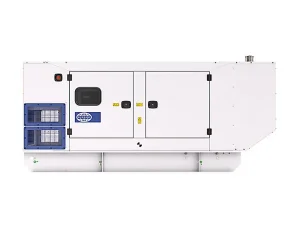
China FG Wilson Generator Set Medium Range 225 – 938 kVA P300-4 Suppliers, Exporters
View Product Details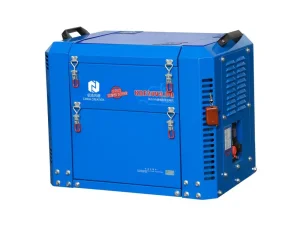
Cheap KDF24V3.0Q Quiet Operation Diesel Generators for Peaceful Environments Suppliers, Service
View Product Details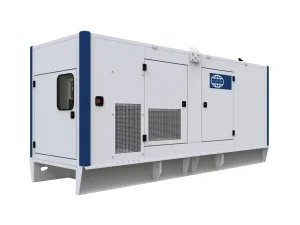
Cheap Wilson Open Type Medium Diesel Generator Sets 400/230 V, 50 Hz P550-2 Suppliers, Service
View Product Details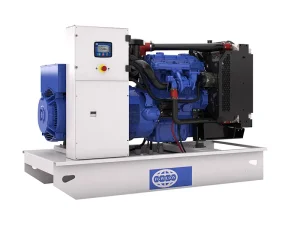
Cheap Wilson Small Type Low Noise Power System P55-4 Supplier, Exporter
View Product Details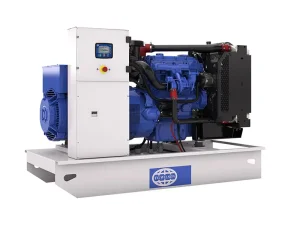
Cheap Wilson 40KVA Industrial Power Generator Small Range <220 kVA P40-4S Supplier, Exporter
View Product Details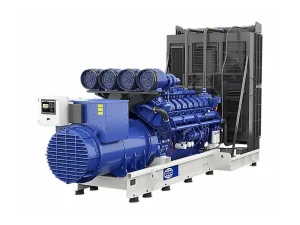
High-Quality Fg Wilson 800-2500kva diesel generator set P1500-1 Supplier, Exporters
View Product Details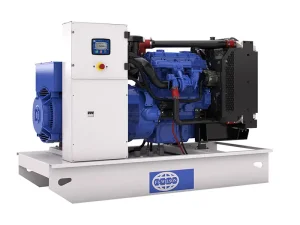
Cheap Wilson Small Range <220 kVA Portable Diesel Generator P50-3 Exporters, Service
View Product Details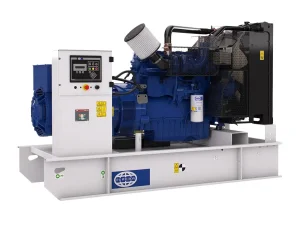
High-Quality Fg Wilson Medium Range 225-938KVA High Efficiency Diesel Generator Set P375-4 Exporters, Service
View Product Details
Engineering Knowledge Base
Frequently Asked Questions: Industrial Generator Specification in Ireland
Expert clarifications regarding grid synchronization, fuel transitions, and regulatory conformity for Irish electrical contractors and procurement managers.
What are the legal implications of the EU Medium Combustion Plant Directive (MCPD) for standby generators in Ireland?
Under Irish statutory instrument S.I. No. 595/2017, diesel generators with a rated thermal input between 1 MWth and 50 MWth (approximately 400 kVA to 20,000 kVA electrical output) fall under EPA oversight. Standby generators used exclusively for backup during grid interruption and tested for less than 500 hours per calendar year are exempt from standard emission limit values (ELVs) for NOx, SO2, and particulate matter. However, the site owner must formally register the plant with the EPA and maintain a tamper-proof digital log of running hours and fuel types consumed.
Can FG Wilson medium-range generator sets run on 100% HVO without derating electrical output?
Yes. All FG Wilson 225–938 kVA sets equipped with Perkins electronic common-rail engines (such as the 1206, 1506, 2206, 2506, and 4006 series) are completely certified to run on Hydrotreated Vegetable Oil (HVO) meeting EN 15940 standards. Because HVO possesses a slightly lower volumetric energy density than standard EN 590 fossil diesel, fuel consumption by volume increases by approximately 2–3%, but gross kWm engine power output and kVA standby/prime electrical capacity remain identical with zero engine derate.
How does Atlantic coastal air impact generator canopy selection in Western Ireland?
Sites deployed in coastal areas such as Shannon, Galway, Mayo, and Cork are exposed to airborne chlorides and high humidity, requiring atmospheric corrosivity category C4 or C5 protection (ISO 12944). Standard canopies degrade prematurely. Cinda Creation configures sets destined for Western Ireland with hot-dip galvanized steel sub-frames, architectural-grade polyester powder coating (minimum 120 microns), 316 stainless steel external hardware, and marine-grade anti-condensation winding heaters within the alternator.
What step-load and transient recovery standards do your systems achieve for data and hospital loads?
Our medium-range units comply with ISO 8528-5 performance Class G2 as a baseline, with Class G3 available for critical data center, hospital, and semiconductor infrastructure. Class G3 mandates that upon application of a 100% block load, transient voltage dip must not exceed 15% with complete recovery within 1.5 seconds, while transient frequency deviation remains strictly under 7% with recovery within 3 seconds, preventing nuisance trips on sensitive IT power supplies.
How do you handle ATS (Automatic Transfer Switch) integration with the ESB Networks utility feed?
Our systems interface seamlessly with four-pole motorized or mechanically interlocked ATS panels compliant with ESB Networks distribution code standards. We configure Deep Sea Electronics (DSE 7320 / DSE 8610 MKII) or FG Wilson PowerWizard synchronizing controllers to execute open-transition (break-before-make) or closed-transition (make-before-break / soft-load return) sequences, preventing back-feeding into the local utility grid.
What lead times and logistical pathways apply to delivery into Ireland?
From our Beijing manufacturing base, equipment is packed in seaworthy crating and shipped via direct ocean freight to the Port of Dublin or Port of Cork. Standard build and transit durations typically range between 6 and 9 weeks. Full documentation packages—including factory test certificates, EUR1 origin paperwork, CE Declarations of Conformity, wiring schematics, and mechanical GA drawings—are provided prior to vessel arrival for seamless Irish customs clearance.
Secure Your Industrial Power Infrastructure in Ireland
Consult with our senior electrical application engineers to calculate precise kVA sizing, transient response profiles, acoustic attenuation, and HVO decarbonization pathways for your next Irish facility expansion.