High-Spec Industrial Generator Sets Specified for Bulgarian Projects
Engineered for continuous field operation, robust waveform stability, low fuel burn, and uninterrupted multi-operator arc welding performance across extreme ambient variations.
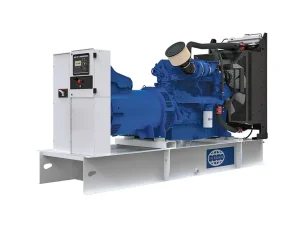
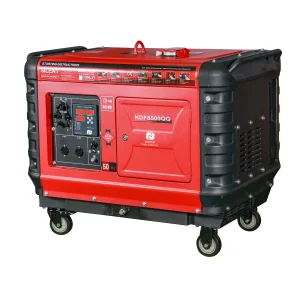
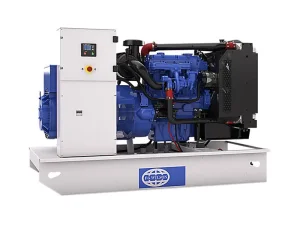
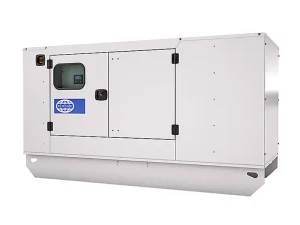
Bulgarian Industrial Landscape: High-Demand Welding & Prime Generation Sectors
Bulgaria stands as a pivotal industrial and logistical gateway in Southeastern Europe, serving as a critical nexus for trans-Balkan energy infrastructure, pan-European transport corridors (Corridors IV, VIII, IX, and X), and heavy industrial manufacturing. The operational environments encountered across Bulgarian construction and maintenance jobsites present demanding criteria for autonomous power and mobile fusion systems.
From the extensive lignite power generation basins of the Maritsa Iztok Complex to major metallurgical hubs in Plovdiv, Pernik, and Ruse, heavy structural steel fabrication requires uncompromised duty cycles. Welding generator sets deployed within Bulgaria must routinely withstand wide ambient thermal swings—ranging from sub-zero Balkan winter conditions (-20°C in mountainous passes and the Danubian Plain) to high summer heat loads (+40°C in the Thracian Lowland). Furthermore, the modernization of Bulgarian State Railways (BDZ) rail lines, rehabilitation of Danube riverine ports, and deepwater dock operations at the Black Sea ports of Varna and Burgas demand portable diesel-driven welding systems capable of operating off-grid with zero voltage droop or arc instability.
Pipeline contractors laying and inspecting natural gas interconnections—including the Interconnector Greece–Bulgaria (IGB) and domestic expansion corridors handled by Bulgartransgaz—mandate welding generators equipped with steep constant current (CC) characteristics for shielded metal arc welding (SMAW) with cellulosic electrodes (AWS E6010 / E7010). Any fluctuation in the magnetic flux or transient speed recovery of the diesel engine directly impairs penetration depth, risking catastrophic weld defects such as lack of sidewall fusion or hydrogen-induced cracking. As an authorized engineering and export partner, Beijing Xinda Creation Machinery Equipment Co., Ltd. configures engine-driven multi-process power units and FG Wilson generating systems optimized precisely for these stringent metallurgical constraints.
Global Paradigms & Localized Bulgarian Engineering Scenarios
Analyzing the shift from legacy mechanical chopper topologies to digital inverter modules, Tier 4 Final / EU Stage V compliance, and smart remote diagnostics.
Inverter Pulse & Waveform Shaping
Traditional engine-driven sets relied on heavy rotating armatures or basic silicon-controlled rectifiers (SCRs), resulting in arc spatter and thermal runaways. Modern units utilize high-frequency Insulated Gate Bipolar Transistors (IGBTs) providing pulse-width modulated (PWM) arc control, enabling Bulgarian fabricators to weld thin-wall stainless alloys and heavy carbon steel with clean puddle freeze.
Fuel Optimization & EU Stage V
With the European Union tightening particulate matter (PM) and nitrogen oxide (NOx) limits across non-road mobile machinery (NRMM Directive), our Bulgarian export configurations incorporate electronic common rail diesels with Diesel Particulate Filters (DPF) and variable engine idle controls that reduce diesel consumption by up to 34% during non-arcing intervals.
Dual-Operator & Auxiliary Power Isolation
Eliminating arc interference during simultaneous welding: Our dual-arc power architectures provide two completely galvanically isolated welding outputs alongside pure sine-wave 400V 3-phase and 230V single-phase auxiliary AC outlets, permitting Bulgarian crews to grind, cut, and weld concurrently without inductive cross-talk.
Targeted Deployment Environments Across Bulgarian Municipalities & Industrial Zones
To maximize Return on Investment (ROI) and minimize unplanned downtime, our engineering consultation focuses on matching specific Bulgarian industrial profiles to optimal generator-welder topologies:
| Bulgarian Industrial Sector | Primary Regional Centers | Predominant Welding Process | Recommended Machine Specification | Auxiliary Power Requirement |
|---|---|---|---|---|
| Refining & Petrochemicals | Burgas (Lukoil Neftochim), Devnya | GTAW (TIG) root passes & SMAW low-hydrogen fill/cap | 400A–500A Multi-Process DC Inverter, Stage V Canopy | 12–20 kVA 400V/230V for pipe bevellers & heat treat |
| Shipbuilding & Ship Repair | Varna Shipyard, Burgas Docks, Ruse (Danube) | FCAW (Flux-Cored Arc), Gouging & GMAW (MIG) | 500A Heavy Gouging Rig with Marine Corrosion Canopy | 15–30 kVA high-surge capacity for ventilation fans |
| Energy Infrastructure & Mines | Radnevo (Maritsa East Mines), Kozloduy NPP | Heavy Hardfacing, High-deposition Submerged Arc/SMAW | 600A Dual-Operator or 800+ kVA Central FG Wilson Genset | Pure Sine wave 230V for radiographic/NDT testing gear |
| Railways & Bridges (BDZ) | Sofia, Gorna Oryahovitsa, Plovdiv, Danube Bridge | Thermite welding support, flash butt repair & SMAW | Trailer-Mounted Portable 300A–400A with Spark Arrestor | 8.5–15 kVA 50Hz for rail track grinders & hydraulic packs |
Technology Roadmap: The Convergence of Hybrid Power & Digital Welding
Detailed technical trajectory spanning micro-hybrid battery buffers, telematics fleet monitoring, and multi-protocol industrial communication.
Phase 1: Hybrid Diesel-Lithium Architecture
Integration of lithium iron phosphate (LiFePO4) energy storage packs working alongside the prime-mover diesel engine. Peak current demands during arc initiation are buffered entirely by the battery inverter, eliminating sudden diesel engine bog-down, reducing thermal cycling, and allowing silent auxiliary AC operation during night-shift structural inspections in Bulgarian urban zones.
Phase 2: IoT Telematics & Predictive Maintenance
All sets exportable to Bulgaria can be integrated with 4G/5G remote data loggers communicating via Modbus RTU / CANbus J1939. Maintenance superintendents in Sofia or Varna receive real-time telemetry on coolant temperatures, fuel oil pressure, welding arc duration, duty cycle percentages, and GPS positioning, enabling preventative maintenance intervention before field failure occurs.
Phase 3: Automated Welding Cobot Power Quality
As Bulgarian manufacturing transitions towards semi-automated orbital pipeline welding and collaborative robotic (Cobot) field welding, generator sets require Class 1 power stability. Our harmonic suppression filtering keeps total harmonic voltage distortion (THD) under 3% and frequency deviation under ±0.25 Hz, shielding sensitive microprocessors from disruptive high-voltage arc strikes.
Comprehensive Industrial Power Solutions: From Engineering Configuration to Field Commissioning
Supplying power generation equipment to international contractors working in Bulgaria requires end-to-end engineering rigor. Beijing Xinda Creation Machinery Equipment Co., Ltd. operates not merely as an exporter, but as a systems integration specialist. Our turn-key procurement and support frameworks address every phase of deployment:
1. Pre-Engineering & Load Profiling
We review the customer's entire equipment schedule: total connected inductive motor horsepower, cyclic welding duty factors, simultaneous auxiliary tools, and ambient de-rating parameters (altitude above sea level and Balkan ambient temperature maximums). This prevents undersizing, engine wet stacking, or premature alternator thermal degradation.
2. Stringent Quality Assurance & ISO Audits
Every generator and welding unit leaves our manufacturing lines backed by ISO 9001, ISO 14001, and ISO 45001 certified management systems. Each machine undergoes full load bank testing, 110% overload validation, voltage regulation verification, and multi-hour arc stability burn-in tests, with certified test reports provided prior to dispatch.
3. Spare Parts Continuity & Logistics
Downtime in industrial plant shutdowns or gas corridor construction carries steep financial penalties. We support all deployed units with authentic Perkins, FG Wilson, and Weichai replacement components—such as fuel injection pumps, oil and fuel filtration packs, AVRs, and rectifier diodes—with expedited air-freight options direct to Sofia or Varna.
Enterprise Power Generation & Welding Fleets Ready for Bulgaria
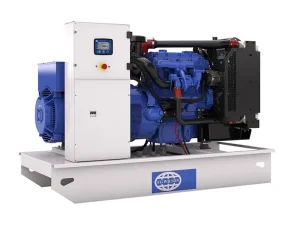
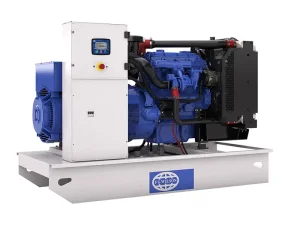
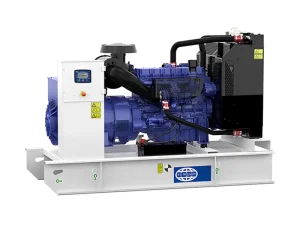
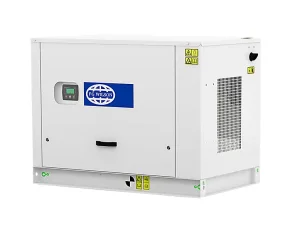
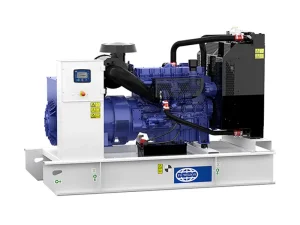
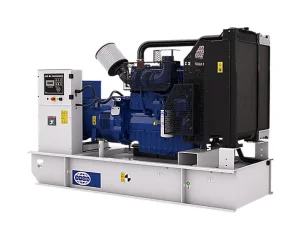
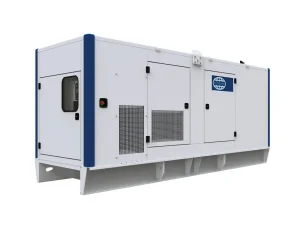
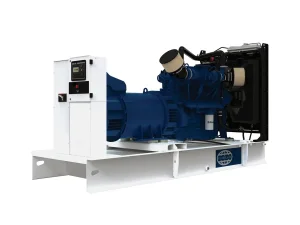
Explore our small, medium, and heavy-range Wilson diesel generator systems configured for continuous field operations and prime site power throughout Bulgaria.
Frequently Asked Questions: Bulgarian Technical & Operational Queries
Expert answers addressing electrical sizing, duty ratings, import compliance, and Balkan operational maintenance.
What differentiates an engine-driven welding generator from running a standalone inverter welder off a standard diesel genset?
A standard diesel generator is optimized to maintain steady voltage under relatively linear or slowly fluctuating electrical loads. In contrast, electric arc welding creates instantaneous, extreme short-circuit cycles as the arc initiates and extinguishes. Running high-amperage welders from an unconditioned generator often results in massive voltage dips, harmonic feedback into the alternator windings, and eventual AVR (Automatic Voltage Regulator) failure.
Dedicated welding generator sets utilize custom-wound alternators with dedicated secondary excitation windings or high-frequency chopper/inverter modules that isolate the engine-generator side from severe arc transients. Furthermore, true engine-driven welding sets offer optimized volt-ampere curves (Constant Current for stick/TIG; Constant Voltage for MIG/flux-cored), delivering stable arc puddle control that standalone commercial generators cannot replicate without substantial derating (typically requiring 2.5x to 3x kVA sizing relative to the welder wattage).
How do Bulgarian climatic and regional conditions affect generator-welder sizing and specification?
Bulgaria features diverse microclimates requiring specific engine options:
- Winterization (-20°C to -25°C): Projects in the Balkan Mountains (Stara Planina), Rila, Pirin, or the high Danubian plain necessitate thermostatically controlled jacket water pre-heaters, heavy-duty intake air glow plugs, fuel-water separators with integrated electric heating elements, and low-viscosity synthetic engine oils (e.g., 5W-40) to prevent wax crystallization in diesel fuel lines.
- Summer High-Ambient Operation (+40°C): The Thracian Plain and Southern Black Sea coastal regions experience intense summer heat. Units must feature oversized cooling packages, 50°C-rated tropical radiators, and high-efficiency pusher fans to prevent thermal de-rating of both the diesel prime mover and the electrical alternator.
- Saline Coastal Resistance: Equipment operating in the ports of Varna, Burgas, or coastal shipyards requires marine-grade polyurethane canopy powder coating, stainless steel latches and hinges, and sealed conformal-coated printed circuit boards (PCBs) to resist salt fog corrosion.
What documentation and standards do Cinda Creation sets supply for European Union and Bulgarian customs clearance?
All generator and welder assemblies exported to Bulgaria comply fully with EU harmonization legislation and Bulgarian national standards (BDS). Shipments arrive with the complete technical compliance dossier, including:
- CE Declaration of Conformity covering the Machinery Directive (2006/42/EC), Low Voltage Directive (2014/35/EU), and Electromagnetic Compatibility Directive (2014/30/EU).
- Outdoor Noise Certification fulfilling Directive 2000/14/EC requirements for sound-attenuated acoustic canopies.
- Engine Emission Stage V Compliance Documentation or export certification according to site usage classification under EU Regulation 2016/1628.
- Factory Acceptance Test (FAT) Reports: Comprehensive 0%, 25%, 50%, 75%, 100%, and 110% step-load test curves, insulation resistance megger tests, and welding arc duty performance records.
Can these generator sets support simultaneous arc welding and auxiliary 400V/230V power generation on Bulgarian construction sites?
Yes. Our multi-process dual-duty units feature dual independent output topologies. The alternator architecture incorporates dual winding circuits or dedicated secondary alternator rotors, ensuring that inductive surges from power tools—such as 2,400W angle grinders, magnetic base drill presses, hydraulic power packs, or site floodlighting—do not cause voltage spikes or dips in the DC welding arc.
This allows Bulgarian pipeline and civil engineering teams to operate a multi-man crew (e.g., one welder performing root pass welding while a second technician bevels or grinds the next joint) from a single diesel-driven machine, reducing machine transport logistics and cutting overall site fuel overhead.
What is the recommended maintenance schedule to ensure 10,000+ hour operational life in heavy industrial duty?
To maximize life expectancy when operating in high-dust environments such as Bulgarian open-pit lignite mines or grain transit terminals, we recommend the following maintenance cadence:
- Daily / Pre-Shift (Every 8–10 Hours): Verify engine oil level, check coolant level, drain fuel-water separator bowl, inspect air intake restriction indicator, and ensure all canopy cooling louvers are free of debris.
- Initial 50 Hours: First oil and filter change to flush break-in particulate; inspect alternator belt tension and electrical terminal torques.
- Every 250 to 500 Hours (Standard Interval): Replace engine lubrication oil and spin-on filters; replace primary and secondary fuel filtration elements; clean/blow out alternator stator windings with dry compressed air (<30 psi); inspect battery electrolyte and terminal condition.
- Every 1,000 to 2,000 Hours: Adjust engine valve lash clearances; service injector nozzles; flush and replenish engine cooling system with 50/50 ethylene glycol-water coolant containing anti-cavitation inhibitors; test insulation resistance of alternator windings (Phase-to-Phase and Phase-to-Ground >5 MΩ).
Initiate Technical Consultation for Bulgarian Projects
Connect directly with our senior power systems application engineers. We evaluate your load list, fuel autonomy specifications, voltage requirements, and delivery timeline to Sofia, Burgas, or Varna.
Send Inquiry Now