Export Inventory Series I
Primary 3 Phase Diesel Generating Units
Explore prime and standby 3-phase systems verified for mechanical integrity, transient load damping, and maximum fuel conversion efficiency across worldwide project terrains.
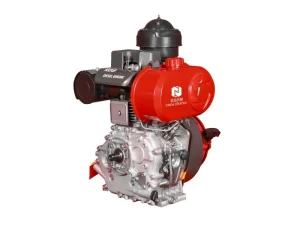
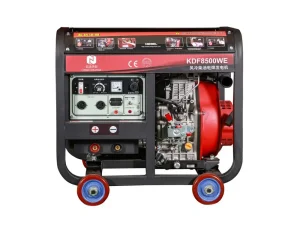
Cheap Single Cylinder Air-cooled Diesel Generator KD9 Supplier, Exporter
Configure & Quote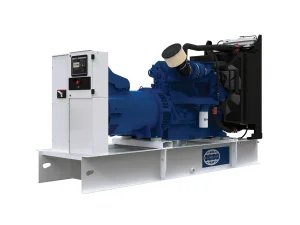
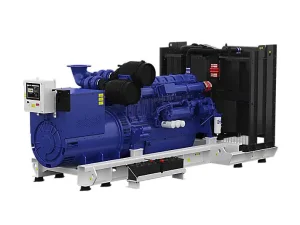
High-Quality Wilson Open Type Medium Diesel Generator Sets P550-3 Exporters
Configure & Quote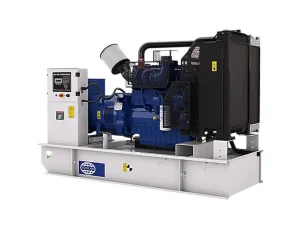
Cheap Medimu Range 225-938KVA Fg Wilson Industrial-Grade Generator Set P330-5
Configure & Quote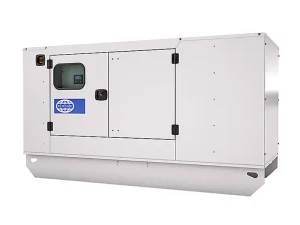
China Wilson Small Type Reliable Backup Power Generator P55-3 Supplier, Exporter
Configure & Quote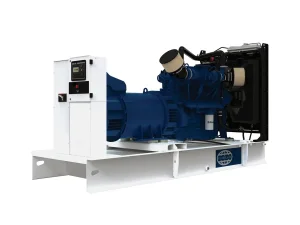
Cheap Electrical Equipment Diesel Generator 813 kVA Silent Type Genset Diesel P813-1
Configure & Quote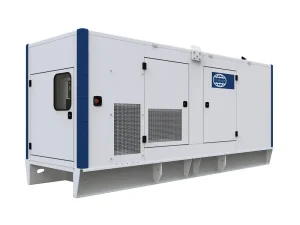
Cheap Medium Range 225 – 938 kVA Fg Wilson Generator P438-3 Suppliers, Exporter
Configure & Quote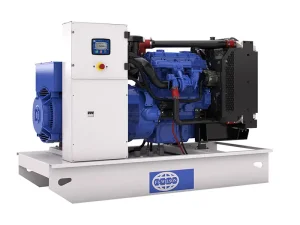
Cheap Wilson Small Range <220 kVA Portable Diesel Generator P50-3 Exporters
Configure & Quote2019+
Established Operational Track Record
12Mo
Comprehensive Equipment Warranty
24Hr
Technical Sizing & Support SLA
600+
Active Industrial Gensets & Perkins SKUs
Industry Paradigm & Strategic Procurement
Engineering Trends in 3 Phase Diesel Power Generation
The transition toward decentralised industrial microgrids, harmonic mitigation, and hybrid fuel configurations dictates that modern diesel generators satisfy rigorous thermodynamic efficiency benchmarks and tight inductive load thresholds.
Thermal Efficiency & Emissions
Modern three-phase diesel engines leverage high-pressure common rail injection (HPCR) and variable-geometry turbochargers. As verified export specialists, we ensure systems balance fuel consumption rates below 205 g/kWh with particulate matter controls conforming to Stage II/III and Tier 3 equivalent territorial benchmarks.
Digital AVR & Transient Regulation
Inductive starting currents generated by industrial multi-phase induction motors necessitate Digital Automatic Voltage Regulators (DAVR). Our alternator designs maintain steady-state voltage margins within ±0.5% and total harmonic distortion (THD) under 3%, preventing computerised equipment failure during load steps.
Intelligent Microgrid Interfacing
Exported three-phase platforms integrate DEIF, DeepSea, or ComAp micro-controller panels that coordinate seamless synchronisation. They act as autonomous spinning reserve nodes alongside battery energy storage systems (BESS) and distributed rooftop photovoltaic installations.
Value Engineering Analysis
Enterprise Sourcing: Deconstructing "Cheap" vs. Life-Cycle TCO
In global industrial procurement, "cheap" must never imply compromised metallurgy or fragile windings. Sourcing from experienced Chinese manufacturers delivers capital expenditure (CapEx) savings of 25%–40% without compromising Mean Time Between Failures (MTBF).
Direct Metallurgy Integrity
Cold-rolled silicon steel laminations in the stator, combined with 100% electrolytic Class H copper conductors, prevent internal overheating and winding degradation under full three-phase asymmetric loads.
Aggregated Factory Pricing
By integrating supply chain infrastructure in Beijing and surrounding heavy industrial clusters, equipment sourcing avoids distributor markups, passing pure assembly and validation costs directly to international EPC contractors.
Perkins & Weichai Supply Line
Strategic alignment with genuine Perkins engine components, alongside deep technical cooperation with Weichai powertrains, ensures that expendable components (fuel injectors, filters, oil seals) are globally accessible within 48 hours.
ISO Standardized Factory Testing
Prior to crating, every 3-phase genset undergoes multi-stage load bank testing: 25%, 50%, 75%, 100%, and 110% overload conditions to calibrate fuel governor responses and thermal steady-state heat rejection curves.
Mission-Critical Turnkey Deployments
Heavy-Duty Industry Sizing & Macro Solutions
Operational realities vary across harsh geographic zones. Our 3-phase diesel generator sets are custom-engineered for specific industrial profiles, ensuring complete thermal compliance, harmonic stability, and continuous duty uptime.
Healthcare & Hospital Standby Systems
Equipped with sub-10-second automatic mains failure (AMF) transfer systems, dual redundant starting batteries, and NFPA 110 Class 1 Type 10 compliance. Low-noise canopy treatment guarantees operational decibel ratings below 68 dB(A) at 7 metres, safeguarding intensive care and diagnostic equipment against grid brownouts.
Mining, Petrochemical & Pipeline Power
Continuous prime-rated power platforms built to withstand dust storms, corrosive ambient air, and high atmospheric altitudes up to 4,000 metres. Features cyclonic heavy-duty air pre-cleaners, anti-condensation space heaters on windings, and secondary bunded fuel containment tanks compliant with strict environmental spill-prevention codes.
Hyperscale Data Center Redundancy
Custom parallel generation modules configured for Tier III and Tier IV uptime architectures (N+1, 2N). Alternators specify continuous ratings with Class H insulation utilized at Class F temperature rises, keeping alternator thermal headroom high and dampening inductive spikes induced by massive server uninterruptible power supply (UPS) rectifiers.
Global Supply Chain & Standards
Localization Support, Regulatory Compliance & Safe Transport
Procuring heavy machinery from China requires verifiable standards compliance and sea-freight protection. Our export logistics team ensures full adherence to destination regulatory frameworks and protective transport regimes.
Certified Quality Accreditations
Manufacturing facilities and export processes operate strictly under certified management protocols: ISO 9001:2015 for quality management, ISO 14001:2015 for environmental compliance, and ISO 45001:2018 for occupational safety. Equipment bears authentic CE conformity, matching European low-voltage and machinery directives.
Grid Synchronization Adaptation
Whether your national infrastructure runs 380V/220V 50Hz, 400V/230V 50Hz, or 480V/277V 60Hz, our electrical engineers calibrate windings and alternators during production. We calibrate dual-frequency selector switches for construction contractors requiring cross-border plant redeployment.
Ocean-Proof Packaging Protocols
Export units are sealed in multi-layer vacuum moisture barriers with desiccant charges, wrapped in anti-UV stretch film, and mounted on structural anti-torque steel skid bases. Complete crating satisfies ISPM-15 phytosanitary wood treatment regulations for international customs clearance.
Future-Proof Technology Roadmap
Engineering Roadmap: Digitalization, Biofuels & Smart Paralleling
The next decade of backup power centers on hybridisation, reduced carbon intensity, and intelligent operational oversight. Our manufacturing pipeline integrates emerging technologies directly into standard commercial shipments.
HVO & Biodiesel Compatibility
All newly assembled Perkins and Weichai engine platforms are rated for Hydrotreated Vegetable Oil (HVO 100) and EN 15940 compliant paraffinic fuels. This drops net lifecycle CO2 emissions by up to 90% without compromising power ratings, engine warranties, or component service intervals.
IoT Edge Telemetry & Predict Maintenance
Equipped with 4G/5G satellite-assisted IoT gateway modules that stream real-time Modbus telemetry directly to your enterprise dashboard. Plant managers track fuel consumption, coolant degradation, winding temperatures, and bearing vibration indices to schedule predictive maintenance before unplanned disruptions occur.
High-Density Acoustic Engineering
Development of second-generation modular sound-attenuating canopies utilizing acoustic labyrinth airflow baffles and flame-retardant rockwool linings. These minimize footprint dimensions by 18% while achieving ultra-quiet 65 dBA noise targets for dense urban projects.
Engineering Help Desk
Frequently Asked Questions: 3-Phase Diesel Generator Sizing & Supply
Essential sizing parameters, regulatory frameworks, and duty definitions answered by our senior electrical and procurement engineering staff.
What is the critical calculation formula when converting 3-phase real power (kW) to apparent power (kVA)?
In standard three-phase AC distribution, apparent power (S in kVA) is derived by dividing real power (P in kW) by the standard lagging power factor (PF, typically 0.8 for industrial generators):
kVA = kW / 0.8. For instance, if an industrial factory calculates an active continuous requirement of 200 kW, the generator must be sized to at least 250 kVA. Furthermore, electric motor inrush currents during direct-on-line (DOL) startup often require an additional 25%–35% capacity buffer to prevent instantaneous voltage collapse.
How does ISO 8528 define Prime Power (PRP) versus Standby Power (ESP)?
Under international standard ISO 8528-1, Prime Power (PRP) signifies the maximum power a generator set can deliver continuously under variable load conditions for an unlimited number of annual operating hours, with an allowable 10% overload for 1 hour within any 12-hour period. In contrast, Emergency Standby Power (ESP) applies only to the duration of a primary grid blackout, restricted to approximately 200–500 annual running hours with zero permissible overload. Operating an ESP unit under sustained continuous load will accelerate thermal mechanical degradation and void manufacturer warranties.
Why is unbalanced loading critical in three-phase alternator configurations?
In a balanced 3-phase system, current flow across phases (L1, L2, L3) cancels out within the neutral conductor. When unbalanced single-phase equipment loads are attached across uneven legs, negative-sequence currents are introduced into the rotor windings. This induces localized eddy currents, leading to excessive rotor overheating, stator insulation breakdown, and voltage instability. Our three-phase alternators are designed with low negative-phase-sequence reactance, accommodating up to a 25% phase unbalance without exceeding maximum thermal rise limits.
What lead times and logistical terms (Incoterms) apply to overseas shipments?
Standard production lead time for factory-configured units below 500 kVA is typically 15 to 25 business days, while heavy multi-megawatt systems require 30 to 45 business days including full load-bank sign-off. We regularly support FOB Tianjin/Qingdao, CIF international destination ports, and DDP project-site deliveries. All documentation—including Original Bill of Lading, Certificate of Origin, ISO Compliance Dossiers, Factory Test Protocols, and Comprehensive Spare Parts Manifests—is dispatched via air courier alongside cargo arrival.
Export Inventory Series II
Heavy Industrial, Silent & Special Duty Sets
Explore high-capacity silent power, open-frame skids, and versatile high-performance generators engineered for demanding commercial and infrastructure deployments.
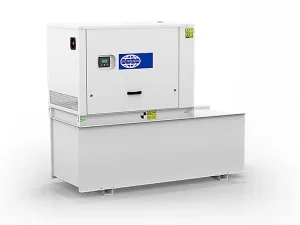
China Wilson Open Type Small Diesel Generator Sets Standby 9.5kVA P9.5-1
Configure & Quote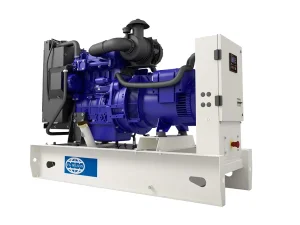
China Wilson Silent Type Small Diesel Generator Sets P9.5-4 Exporters, Exporter
Configure & Quote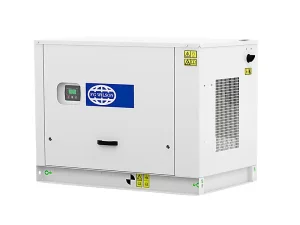
China Wilson Small Range <220 kVA Silent Diesel Generator P13.5-6 Supplier
Configure & Quote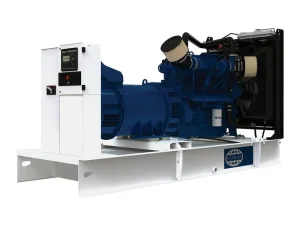
High-Quality Fg Wilson High-power Generator Set 225-938KVA P895-1 Supplier
Configure & Quote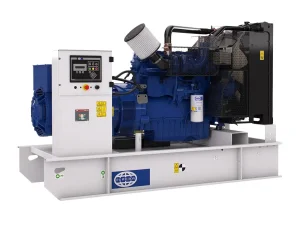
High-Quality Fg Wilson Medium Range 225-938KVA Generator Set P375-4 Exporters
Configure & Quote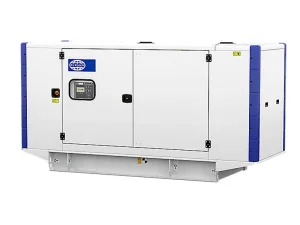
Cheap Wilson Small Range <220 kVA High-Efficiency Power Unit P165-5 Suppliers
Configure & Quote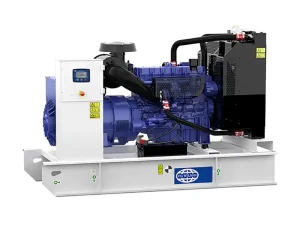
High-Quality P220-3 Small Range 220 kVA Efficient FG Wilson Diesel Generators
Configure & Quote