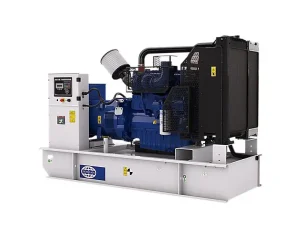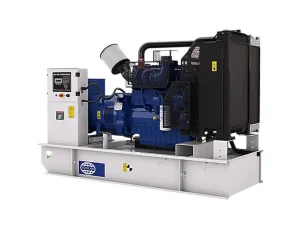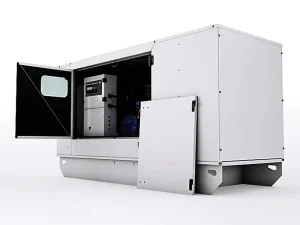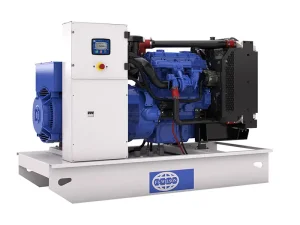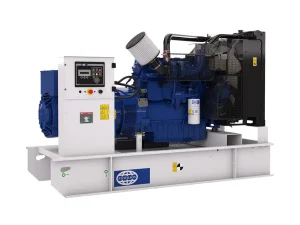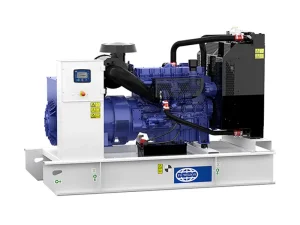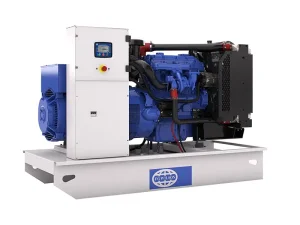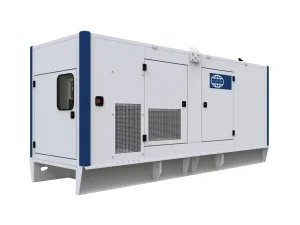
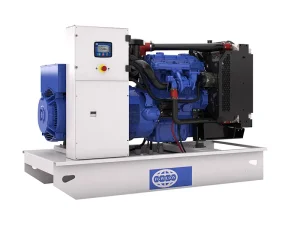
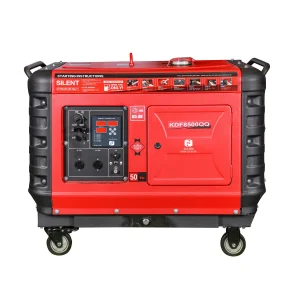
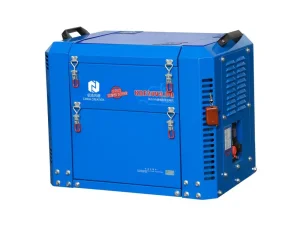
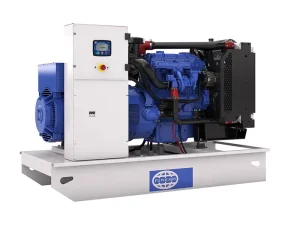
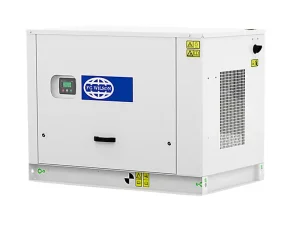
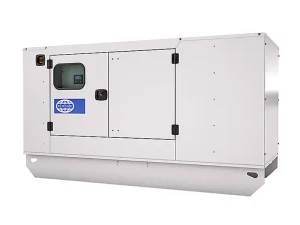
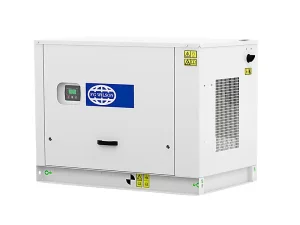
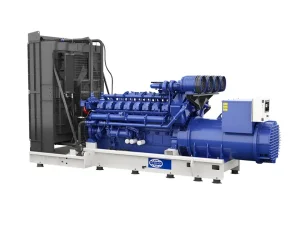
Featured Industrial Diesel Gensets & Control Solutions
Full factory integration with standard FG Wilson and Weichai control interfaces.
State of the Global Generator Control Panel & Distribution Market
As power reliability challenges increase across emerging economies and sophisticated manufacturing plants alike, generator control panels have evolved from simple analogue gauge clusters into mission-critical, microcomputer-driven telemetry and control nodes. A "cheap generator panel" does not imply compromised resilience—rather, it reflects optimized production economies, unified busbar fabrication, and the strategic integration of open-architecture digital controllers.
Grid Vulnerabilities & Prime Reliance
Rapid industrialization across Southeast Asia, the Middle East, and Sub-Saharan Africa has strained national utility grids. Facilities require generator panels configured with instantaneous phase-failure detection, automatic voltage regulation (AVR), and multi-tier breaker protection to prevent multi-million-dollar plant shutdowns during brownouts.
Microcontroller Convergence
Modern switchboards utilize digital signal processors (DSPs) to unify engine parameter monitoring (oil pressure, coolant temperature, fuel levels) with electrical data (frequency, kW, kVA, power factor). By replacing redundant analog relays with solid-state logic controllers (such as Deep Sea or ComAp equivalents), export hardware footprints are cut by 40%.
Stringent International Compliance
Procurement protocols in commercial tenders demand strict compliance with IEC 61439-1 (low-voltage switchgear and controlgear assemblies) and ISO 8528 standards. Panels manufactured for export must survive harsh ambient heat, salt-laden marine spray, and sudden load acceptance without thermal runaway.
How China's Supply Chain Delivers High-Precision Generator Panels at Low Cost
The cost advantage of buying generator control panels and switchboards from premier Chinese exporters like Cinda Creation is not derived from thin gauge steel or cheap breakers. It is rooted in industrial clustering, laser-automated sheet metal fabrication, and extensive domestic access to raw copper busbars and world-standard semiconductor modules.
CNC Robotic Punching & Bending
Automated cold-rolled sheet steel fabrication guarantees sub-millimeter tolerances on all IP55/IP65 enclosures, eliminating assembly delays and ensuring seamless weather-stripping fitment.
Vertical Switchgear Integration
Direct proximity to primary component foundries enables rapid sourcing of molded case circuit breakers (MCCBs), air circuit breakers (ACBs), and contactors at substantial discounts compared to Western brokers.
Full-Spectrum Load Bank Verification
Each control panel goes through step-load testing (0%, 25%, 50%, 75%, 100%, and 110% overload conditions) coupled with primary injection testing on current transformers prior to containerization.
Turnkey Container Logistics
Centrally managed out of Beijing and coastal logistics hubs, assemblies are crated in seaworthy, fumigated timber with anti-corrosion desiccant packs, safeguarding electronics against maritime humidity.
Localized Engineering Scenarios: Where Generator Panels Perform
Power requirements are never uniform. A generator control panel configured for an Arctic pipeline pump operates under wildly different thermal parameters and load profiles than a multi-genset synchronization board in a tropical data center.
Critical Healthcare & Hospitals
Life-support infrastructure cannot tolerate transfer latencies greater than 10 seconds. Our Automatic Transfer Switch (ATS) panels utilize dual motorized interlocked circuit breakers to ensure zero back-feed and instant start-up signalling during unexpected utility loss.
Desert & Tropical Oil Fields
Operating in 50°C ambient temperatures requires custom enclosure ventilation, IP65 ingress sealing against fine sand particles, and heavy-duty radiator cooling fans managed by temperature-sensing control relays.
High-Altitude Mining Installations
Altitudes exceeding 2,500 meters cause severe air rarefaction, degrading insulation and reducing breaker dielectric strength. Our engineers derate busbars and enhance creeping distances inside the switchgear cubicle for zero arc-over risk.
Key Industry Trends Reshaping Generator Panels
The convergence of industrial IoT, battery energy storage systems (BESS), and carbon reduction targets is forcing generator panel manufacturers to re-architect classic switchboards.
Cloud-Connected Telemetry & 4G/5G Scada
Modern operators demand remote diagnostics without visiting dangerous plant rooms. Today's generator panels feature embedded Modbus-RS485, SNMP, and GSM modules that stream real-time operational diagnostics directly to centralized engineer tablets.
Hybrid Microgrid Integration (Solar + Diesel)
As fuel costs climb, panels are tasked with controlling hybrid microgrids. Smart synchronization panels dynamically shed or pick up diesel generator capacity based on real-time solar inverter generation, cutting diesel consumption by up to 35%.
Solid-State Smart Breakers
Traditional electro-mechanical breakers take milliseconds to trip, allowing high fault currents to pass. Next-generation panel designs are piloting digital solid-state circuit interrupters that isolate downstream short circuits in microseconds, safeguarding delicate computing clusters.
What Overseas B2B Buyers Must Specify to Avoid Field Failure
Miscommunications between foreign purchasing managers and factory floor engineers frequently cause costly field retrofits. Use this comprehensive verification checklist before approving submittals.
1. Electrical Grid Architecture
Confirm operating voltage (e.g., 380V, 400V, 415V, 480V) and frequency (50Hz vs 60Hz). Specify phase count and whether a 3-pole or 4-pole switched neutral transfer switch is required to prevent earth fault tripping.
2. Ingress & Environmental Protection
State indoor vs outdoor location. Indoor assemblies in well-ventilated plant rooms can use IP31/IP42. Outdoor or harsh marine zones mandate IP55/IP65 with anti-condensation space heaters inside the panel enclosure.
3. Controller Programming & Comms
Define whether you require manual key-start, auto-mains-failure (AMF), or multi-unit load sharing (paralleling). Confirm preferred SCADA protocol (Modbus TCP/IP or RTU) for building management integration.
4. Fault Rating & Protection Curves
Provide prospective short-circuit current (Icu/Ics ratings in kA, e.g., 36kA, 50kA, 65kA). Verify that busbar braces are dynamically sized to withstand electromagnetic forces during dead-short occurrences.
Frequently Asked Technical & Procurement Questions
Everything you need to know about generator panel sizing, export logistics, and after-sales service.
Why are Chinese generator control panels and switchboards priced significantly lower than Western counterparts?
What is the difference between an AMF (Auto Mains Failure) panel and a standard ATS panel?
Can multiple generator panels be synchronized to supply power to a single common busbar?
How does ambient temperature and altitude affect control panel and switchboard design?
What warranty, spare parts, and commissioning services are provided for international orders?
Industrial Range Generators & Switchgear-Ready Gensets
Complete systems ready for direct pairing with remote distribution panels and synchronizing cabinets.