
Featured Industrial & Commercial Backup Power Gensets
Engineered to deliver seamless standby resilience and continuous prime generation across severe industrial environments worldwide.
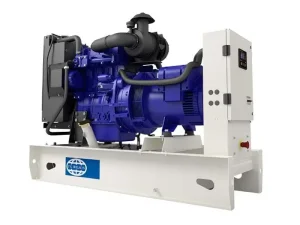
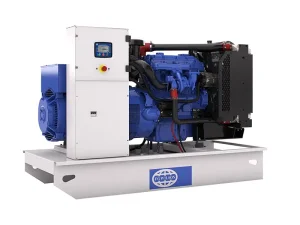
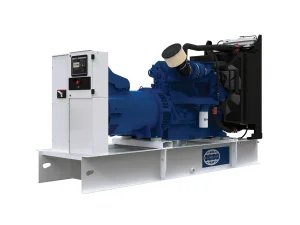
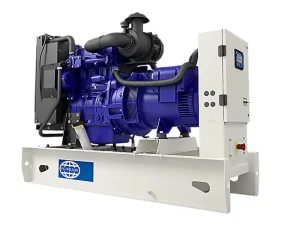
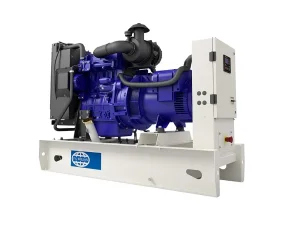
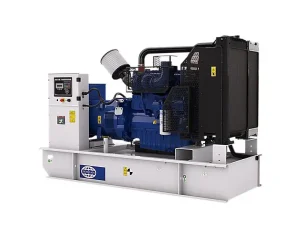
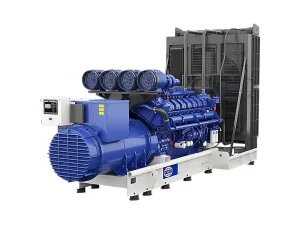
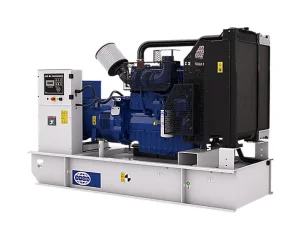
Global Landscape: Why China Backup Power Systems Anchor Worldwide Reliability
The transition toward volatile renewable energy grids and unpredictable geopolitical power markets has transformed the backup power generator from an insurance policy into an active pillar of business continuity. As global data center capacity surges and industrial automation intensifies, sudden micro-outages or voltage dips inflict catastrophic production losses.
Supply Chain Synergies
Exporting backup systems directly out of China unifies precision assembly lines with tier-one component ecosystems—ranging from genuine Perkins powerblocks to DeepSea and Woodward synchronization controllers—slashing lead times by 35% compared to Western hubs.
E-E-A-T Certified Quality
Under ISO 9001, ISO 14001, and ISO 45001 frameworks, units undergo stringent dyno testing, thermal-chamber validation, and transient response auditing to ISO 8528-5 Class G2/G3 metrics prior to harbor clearance.
TCO & Capex Optimization
B2B EPC contractors achieve optimal balance between initial investment and lifetime total cost of ownership (TCO) through modular containerization, superior fuel-to-power efficiency, and standardized global spare part availability.
Operational Scale: Tested & Commissioned Worldwide
Backed by Beijing Xinda Creation Machinery Equipment Co., Ltd., our engineering footprint bridges factory precision with international port logistics to deliver robust power assets globally.
Localized Application Scenarios: Mission-Critical Field Architectures
A generator set cannot be specified in isolation. Duty profiles, temperature derating coefficients, acoustic constraints, and altitude factors dictate bespoke mechanical packaging.
Data Centers & Tier III/IV Facilities
Zero-tolerance downtime mandates dual-feed automated transfer switches (ATS), fast-start governors that synchronize in under 10 seconds, and ISO 8528-5 Class G3 compliance to prevent harmonics distortion in enterprise UPS battery banks.
Oil, Gas & 2,400km Pipeline Stations
Benchmarked across the Trans-Asia and China-Myanmar crude networks. Deployed in N+1 and N+2 prime duty arrays, featuring heavy-duty air intake scrubbers, explosion-proof solenoids, and dual diesel/natural-gas fuel trains.
Sub-Zero Arctic Environments
Operating continuously for over two decades in Arctic outposts. Integrated with block jacket heaters, synthetic low-pour lubricants, fuel water separators with thermal recirculation, and thermostatically motorized ventilation louvers.
Healthcare, Clinics & Emergency Hubs
Acoustic attenuation reduces operational sound pressure levels to <65 dB(A) at 7 meters, while automatic changeover systems prioritize life-support circuits, sterile refrigeration, and trauma lighting during urban grid failure.
Technical Roadmap: The Future of Decarbonized Standby Generation
The backup generator industry is evolving beyond standard mechanical compression ignition. As export leaders, our design horizon targets sustainable, digitally connected power units.
Microgrid Integration & BESS Hybridization
Alternative Biofuels & HVO100 Readiness
IoT Telematics & AI Predictive Health
Macro-Industry Solutions: Complete Power Engineering Workflow
Beyond delivering a standalone generator, Cinda Creation acts as an engineering partner, executing end-to-end integration protocols tailored to complex site topographies.
1. Site Audit & Power Factor Sizing
We review inductive inrush currents, harmonic content, ambient de-rating (derating for elevation >1000m and temperatures >40°C), verifying that the selected alternator accommodates stepped motor-starting loads effortlessly.
2. Paralleling & Redundancy Schemes
For installations exceeding 1500 kVA, our engineering team supplies automated paralleling switchgear with load-dependent start/stop functionality, ensuring peak efficiency during low load intervals and instant N+1 failover backup.
3. Rapid Global Spares Dispatch
Supported by our Beijing supply depot, critical Perkins filters, electronic control modules (ECMs), AVRs, and fuel injection pumps are stocked for emergency 24-hour dispatch to minimize field MTTR (Mean Time to Repair).
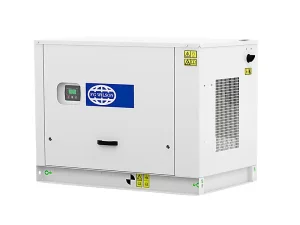
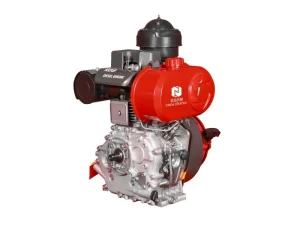
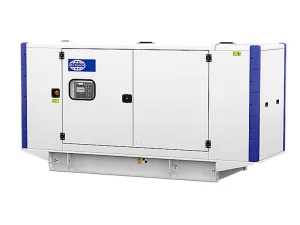
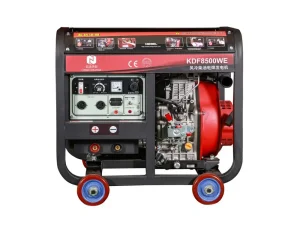
Specialized Compact, Silent & Heavy-Duty Power Units
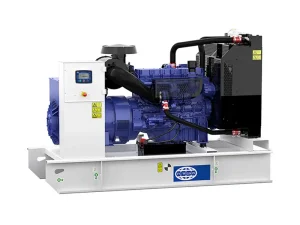
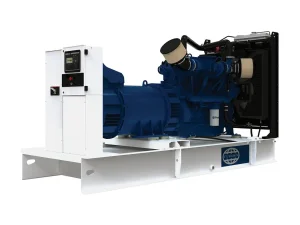
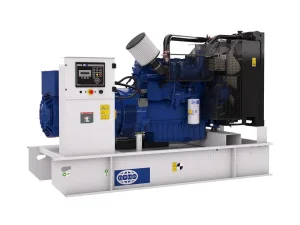
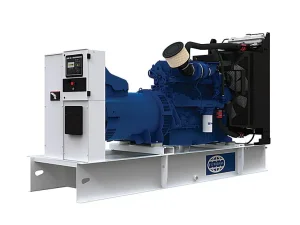
Examine our diverse operational fleet designed for residential quiet zones, field fabrication rigs, and large-scale industrial utility backup.
Frequently Asked Technical & Procurement Questions
Direct answers compiled by senior power applications engineers to streamline your global B2B procurement and tender compliance.