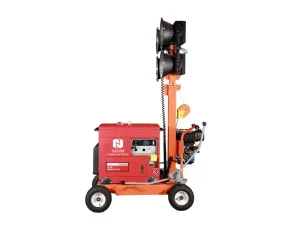
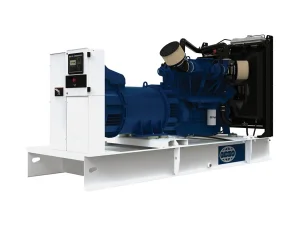
Primary Fleet
Precision Power Equipment Selection (Catalog Phase I)
From compact standby systems to medium and high-capacity synchronised gensets, engineered with Perkins, Weichai, and high-efficiency FG Wilson architectures.
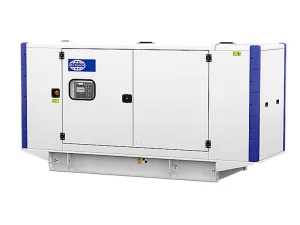
Cheap Wilson 50KVA Diesel Generator Industrial Power Solution P50-4
Explore Specifications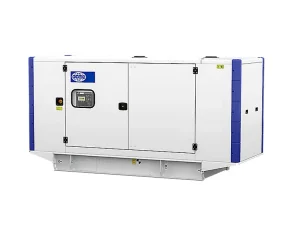
Cheap Wilson Eco-Friendly Generator Small Range <220 kVA P65-6
Explore Specifications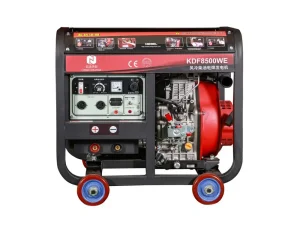
High-Quality Electric Welding High-Performance Generators Set KDF8500WE
Explore Specifications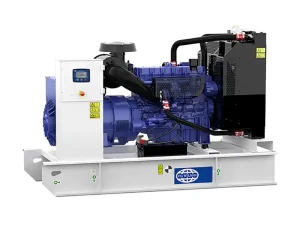
High-Quality P220-3 Small Range 220 kVA Efficient FG Wilson Diesel Generators
Explore Specifications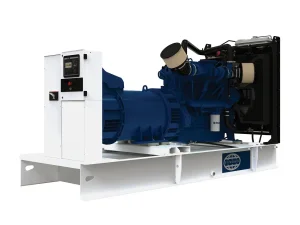
Cheap Fg Wilson 938KVA Large Capacity Generator Set P938-1
Explore Specifications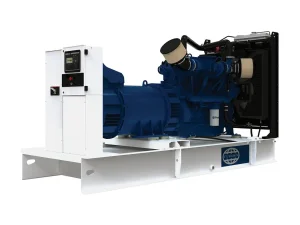
Cheap Fg Wilson Medium Range 225-938KVA High Efficiency Genset P780-1
Explore Specifications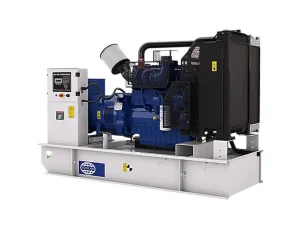
Cheap Medium Range 225-938KVA FG Wilson Industrial Generator P330-5
Explore Specifications
Macro Industry Solutions
Industrial Resilience & Microgrid Integration
Modern energy paradigms demand that generator sets—ranging from dedicated 22kW standby units to multi-megawatt systems—function not merely as emergency backups, but as adaptive nodal stabilizers.
Edge Computing & Telecom Base Stations
The rapid rollout of distributed 5G towers and localized edge data nodes requires ultra-reliable Generac 22kW and FG Wilson small-range configurations. These sites cannot tolerate harmonic voltage distortion or frequency hunting during grid shifts.
Our solutions feature digital electronic governors and integrated Automatic Transfer Switches (ATS) with rapid sensing to achieve sub-10-second transition times, preserving mission-critical network packets.
Smart Agriculture & Cold Storage Logistics
Cold chain preservation for pharmaceutical vaccines and perishables requires uninterrupted climate regulation. When ambient grids fluctuate in tropical or remote regions, power stability is paramount.
Exported sets are equipped with high-durability brushless alternators, Class H insulation, and extended runtime fuel tanks, ensuring autonomous continuous operation under severe cyclic duty without thermal derating.
Extractive & Pipeline Heavy Industry
Heavy infrastructural operations, including long-distance oil and gas pipelines, demand rugged mechanical integrity. As demonstrated on landmark regional corridors, our integrated fleets combine prime diesel and natural gas units.
Systems resist airborne particulate ingress and operate within multi-stage silencer canopies that damp acoustic pressure while maintaining aggressive convective heat dissipation.
99.98%
Standby Operational Reliability
< 10s
Automatic Black-Start Recovery
55°C
High-Ambient Thermal Tolerance
ISO 8528
Rigorous G2/G3 Compliance
China Factory 4.0
Supply Chain Resilience, Automation & Engineering Prowess
How Chinese manufacturing clusters optimize the total cost of ownership (TCO) for global B2B buyers without compromising component longevity or international compliance.
Intelligent Robotic Tooling
Canopy laser blanking, robotic welding, and automated thermosetting powder coating lines eliminate human variation, preventing corrosion in seaside or salt-fog environments.
Synchronised Load-Bank Testing
100% of dispatched generators undergo full-spectrum step-load validation: 0%, 25%, 50%, 75%, 100%, and 110% overload conditions to ensure transient response conformity.
Modular Core Architecture
Interchangeable mounting skids, standardized wiring harnesses, and common service interfaces reduce global fleet maintenance complexity and accelerate spare parts lead time.
Certified Quality Assurance
Operated strictly under accredited ISO 9001, ISO 14001, and ISO 45001 management protocols, backed by complete material traceability and mill test certificates.
Technical Roadmap & Benchmarking
Engineering Specifications: Generac 22kW Class vs. Industrial Diesel Standards
An engineering breakdown for electrical consultants, MEP contractors, and procurement executives evaluating prime versus standby power envelopes.
| Performance Parameter | Generac 22kW Class Standby (Air/Liquid) | FG Wilson Small Range (<220 kVA) | Industrial Heavy Range (>800 kVA) | Testing & Compliance Standard |
|---|---|---|---|---|
| Rated Power Output | 22 kW (27.5 kVA @ 0.8 PF) | 11 kW – 176 kW (13.5 – 220 kVA) | 640 kW – 1100 kW (800 – 1375 kVA) | ISO 8528-1:2018 (ESP / PRP) |
| Prime vs. Standby Duty | Emergency Standby (Outage Duration) | Continuous Prime / Standby Auto | Continuous Base-load / Data Center | NFPA 110 Type 10 Class Level |
| Combustion / Engine Cycle | V-Twin / In-line 4 (Gas/Diesel) | Perkins Industrial 3/4/6 Cylinders | Perkins / Weichai Multi-Valve Turbo | ISO 3046 Brake Specific Fuel |
| Voltage Stability (Steady State) | ± 1.0% to ± 2.0% | ± 0.5% with Digital AVR | ± 0.5% with Permanent Magnet (PMG) | IEC 60034-1 Electromagnetic |
| Total Harmonic Distortion (THD) | < 5.0% Clean Sine Wave | < 3.0% Industrial Non-linear | < 2.0% Ultra-Sensitive Core | IEEE 519 Standard Harmonic Limits |
| Acoustic Canopy Attenuation | 65 - 70 dB(A) @ 7 meters | 60 - 68 dB(A) Super Silent Enclosure | 72 - 78 dB(A) Containerized Silenced | 2000/14/EC Outdoor Noise Directive |
Phase 1: Hybridization & Solar-Storage Coupling
Next-generation 22kW architecture integrates bi-directional inverter interfaces allowing seamless pairing with lithium-iron-phosphate (LFP) BESS arrays, drastically cutting diesel fuel burn and cold-crank cycling.
Phase 2: IoT Telemetry & Predictive AI Diagnostics
Onboard controllers utilize 4G/5G remote telemetry for real-time tracking of oil viscosity degeneration, battery conductance, and coolant thermal efficiency, calculating Remaining Useful Life (RUL) before hardware fatigue occurs.
Phase 3: Alternative Fuel Decarbonization
Continuous evolution toward 100% Hydrotreated Vegetable Oil (HVO), renewable diesel drop-in blends, and dual-fuel hydrogen-natural gas mixtures, lowering lifecycle scope 1 carbon emissions by up to 85%.
Localized Service & Global Compliance
Meeting the Complex Procurement Mandates of Global Enterprises
From CE conformity and UL standards to regional customs documentation and sea freight moisture protection, we de-risk the overseas acquisition pathway.
Pre-Shipment Verification (PVoC / SASO / SONCAP)
Global project execution relies heavily on zero-friction destination customs clearance. We manage third-party pre-shipment inspections (SGS, BV, Intertek) to ensure all generators adhere strictly to national grid parameters, voltage frequencies, and regional safety mandates.
Turnkey Spare Parts Packages & Consumables
A generator is only as dependable as its maintenance chain. With every export shipment, we provide customized 1,000-hour and 2,500-hour preventative overhaul kits, genuine Perkins filtration elements, lubricating oil kits, and spare control microprocessors.
Rapid Technical Triage & 24-Hour Engineer SLA
Our centralized Beijing engineering office maintains an around-the-clock technical response desk. Contractors receive remote tele-diagnostic assistance, circuit schematics, synchronization guidance, and fuel consumption optimization profiles within a guaranteed 24-hour window.
Technical FAQ & Advisory
Frequently Asked Questions by Overseas Buyers
Clear answers to electrical calculations, duty cycle classifications, installation prerequisites, and export compliance.
How does a Generac 22kW class standby system compare with an industrial diesel generator for commercial applications?
The Generac 22kW air-cooled or gaseous generator is specifically optimized for residential, light retail, and small office standby duty, running on Natural Gas (NG) or Liquid Propane (LP) without fuel degradation issues over extended idle periods. Conversely, small-range industrial diesel generators (such as FG Wilson or Weichai sets from 15kVA to 50kVA) are built for continuous prime or heavy cyclic standby duty. Diesel units provide higher motor starting surge capacity (kVA), greater thermal inertia in high ambient heat (>45°C), and longer engine life between overhauls (TBO) in mission-critical commercial or telecommunication operations.
What is the exact engineering calculation to convert kW to kVA for genset sizing?
Real power is measured in kilowatts (kW), while apparent power is expressed in kilovolt-amperes (kVA). The relationship is governed by the power factor (PF): kW = kVA × PF. In standard industrial three-phase installations, the power factor is conventionally 0.8 lagging. Therefore, to calculate required kVA: kVA = kW ÷ 0.8. For instance, a 184 kW load requires an alternator rated for at least 230 kVA (184 ÷ 0.8 = 230). Always ensure an additional 20% to 30% margin is factored into the calculation to handle inductive motor in-rush currents (LRA) and prevent voltage dips.
When should an open-frame generator be specified over an acoustic silent canopy?
An open-frame diesel generator is selected when the equipment is installed inside a purpose-built, dedicated indoor plant room or basement that already incorporates structural soundproofing, motorized acoustic louvers, duct silencers, and forced mechanical ventilation. Open sets offer lower initial procurement costs and 360-degree unobstructed service access. Acoustic silent canopies are mandatory for outdoor perimeter installations, rooftop deployments, and sound-sensitive environments (hospitals, schools, hotels), providing weatherproofing, corrosion protection, and acoustic attenuation below 70 dB(A) at 7 meters.
What specific documentation and certifications are provided for export customs clearance?
Every generator consignment dispatched from our facility is accompanied by a comprehensive technical and commercial documentation package. This includes: the original Commercial Invoice and Packing List, Certificate of Origin (CO / Form E / Form F as applicable for tariff preferences), Factory Load-Bank Test Report, Bill of Lading, Engine and Alternator Warranty Passports, CE Declaration of Conformity, ISO 9001/14001 certificates, and, upon request, third-party inspection certifications such as SGS, BV, or Intertek (covering SASO, SABER, SONCAP, and PVoC standards).
What is the standard warranty policy and spare parts availability timeline?
All generator sets supplied by Cinda Creation are covered by a standard 12-month international warranty commencing from the official commissioning date or 1,000 running hours (whichever comes first), extendable up to 24 months for qualified infrastructure projects. Because our core diesel platforms integrate genuine Perkins, Weichai, and world-class alternators, fast-moving consumables and mechanical components (filters, injectors, sensors, AVRs, ATS microprocessors) are kept in stock and dispatched globally via DHL/FedEx air freight within 24 to 48 hours.
Extended Fleet
Heavy Duty, Mobile & Ultra-Silent Generators (Catalog Phase II)
Targeted industrial configurations engineered for rugged operating conditions, extreme ambient variations, and continuous remote prime duty.
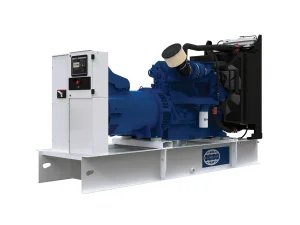
High-Quality Wilson Open Type Medium Diesel Generator Sets P550-3
Explore Specifications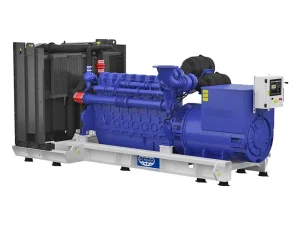
High-Quality Large Range >800 kVA FG Wilson Diesel Generator P1000-1
Explore Specifications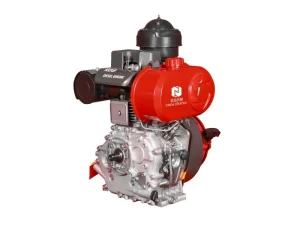
Cheap Single Cylinder Air-cooled Diesel Generator KD9
Explore Specifications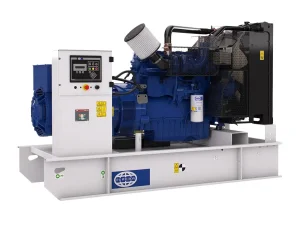
High-Quality Fg Wilson Medium Range 225-938KVA Genset P375-4
Explore Specifications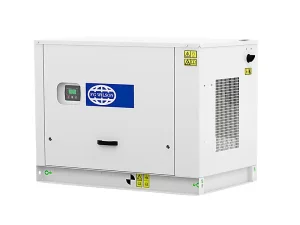
China Wilson Small Range <220 kVA Silent Diesel Generator P13.5-6
Explore Specifications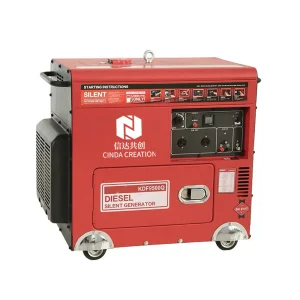
China Portable Diesel Super Silent Electric Power Engine Genset
Explore Specifications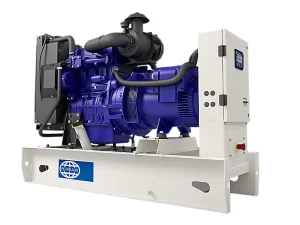
High-Quality Wilson Small Range <220 kVA Silent Power Generator P12-1S
Explore Specifications