Product Architecture
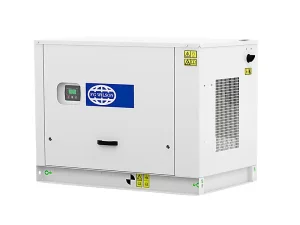
Featured 150kVA - 220kVA Industrial Power Sets
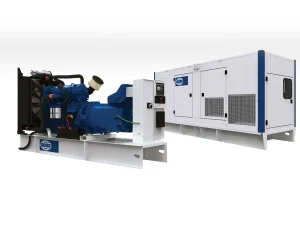
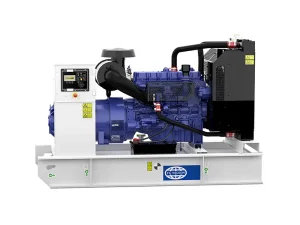
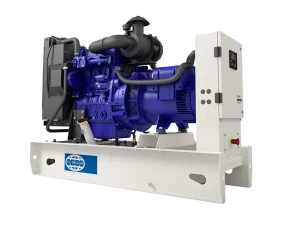
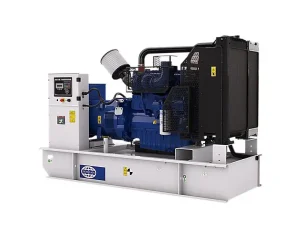
Rigidly assembled, dynamic load tested, and optimized for rugged continuous duty across municipal, mining, and critical mission portfolios.
Engineering Deep Dive
The 150kVA Power Class: Technical Equilibrium & Structural Architecture
Within mid-voltage and low-voltage distributed energy engineering, the 150kVA diesel generator represents a crucial operational equilibrium point. Delivering 120 kW continuous active power at 0.8 lagging power factor (PF), this size category forms the primary protective umbrella for mid-tier enterprise installations, medium healthcare campuses, and isolated manufacturing infrastructure.
Choosing an industrial-grade 150kVA system requires balancing mean time between failures (MTBF), transient step-load acceptance under ISO 8528-5 Class G2/G3 limits, and harmonic distortion handling for modern non-linear processing equipment.
Key Specifying Criterion: A certified 150kVA installation must guarantee single-step acceptance of at least 70% rated load block without exceeding a 20% voltage dip or a 10% frequency variation, ensuring seamless switchover for life-safety systems and critical automation.
| Operational Metric | Standard Baseline | Cinda Creation Premium Spec |
|---|---|---|
| Prime Power (PRP) | 135 kVA / 108 kW | 150 kVA / 120 kW (Continuous variable) |
| Standby Output (ESP) | 150 kVA / 120 kW | 165 kVA / 132 kW (Emergency reserve) |
| Fuel Specific Consumption | 220 g/kWh | ≤ 204 g/kWh at 75% nominal PRP |
| Total Harmonic Distortion | < 5% THD | < 2.5% Non-linear load isolation |
Integrated Powertrain Engineering
Our exported units leverage field-proven multi-cylinder turbocharged diesel engines paired with class H brushless alternators featuring auxiliary PMG (Permanent Magnet Generator) excitation. This design delivers superior motor-starting capabilities and robust short-circuit ride-through, isolating crucial industrial processes from utility instability.
Equipped with deep-sea or ComAp intelligent microcontrollers, these generator units support multi-unit paralleling, automated mains failure (AMF) transfer, and dual-redundant communication links via Modbus and Ethernet.
Global Deployments
Engineered for Harsh Operational Realities
From remote African mining operations to high-density European commercial centers, power systems must adapt to variable altitudes, ambient temperatures, and strict acoustic limits.
Modern Data & Edge Facilities
Precision computing nodes require sub-second auto-start transitions and zero harmonic contamination. The 150kVA units utilize high-efficiency PMG alternators and solid-state excitation systems to provide clean, filtered current that protects sensitive power supplies, storage arrays, and precision cooling equipment.
Extractive & Pipeline Infrastructure
Built for the remote demands of the energy industry, as demonstrated by the 2,400 km China-Myanmar crude pipeline. Dual filtration, sand-trap louvers, and enlarged radiator fins maintain operational readiness in high-particulate desert conditions up to 50°C ambient temperature without power derating.
Urban Acoustic Environments
For private clinics, hotels, and municipal campuses, sound emissions are strictly capped. Heavy-duty zinc-phosphated, powder-coated acoustic canopies incorporate multi-density stone wool insulation and optimized air-ducting labyrinths, reducing noise levels to ≤ 68 dB(A) at 7 meters.
Manufacturing Rigor
Supply Chain Resilience & Assembly Quality
Combining Tier-1 engine partnerships, vertical production efficiency, and international testing protocols to eliminate export lead-time bottlenecks.
Traceable Component Ecosystem
From genuine Perkins power units and Weichai blocks to Leroy-Somer or Stamford topology alternators, every critical component is backed by verified factory test certificates and cross-border digital traceability.
100% Load Bank Acceptance
Prior to sea packing, each 150kVA generator undergoes a multi-stage load bank protocol: 0%, 25%, 50%, 75%, 100%, and a 110% overload test to verify heat dissipation and governor stability.
Optimized Delivery Lead Times
Standardized configurations ship within 15 to 20 days. Modular skid architecture and pre-drilled cable entry flanges speed up on-site installation, reducing project commissioning timelines.
Vertical Integration
Laser sheet metal cutting, CNC precision bending, robot-assisted seam welding, and multi-stage electrophoretic coating take place under one roof, guaranteeing structural integrity against corrosion.
Strategic Horizons
The Next-Generation Power Generation Roadmap
As international emissions frameworks tighten, the industrial generator landscape is shifting beyond standard diesel mechanics toward higher-density, flexible-fuel, and digitally integrated power architectures.
1. HVO & Synthetic Biodiesel Readiness: Modern 150kVA engines support up to 100% Hydrotreated Vegetable Oil (HVO) conforming to EN 15940 standards, reducing well-to-wheel CO2 emissions by up to 90% without requiring mechanical modifications or fuel delivery redesigns.
2. Telematics & Predictive Maintenance: On-board IoT gateway modules continuously transmit running metrics—exhaust temperatures, oil degradation metrics, cooling circuit status, and vibration harmonics—to provide automated predictive warnings before field faults can develop.
3. Microgrid & Hybrid Battery Integration: Native support for battery energy storage systems (BESS) and distributed solar arrays allows these gensets to handle peak loads efficiently, cutting runtime and reducing fuel consumption across intermittent duty cycles.
Global Compliance Matrix
- ISO 8528 (Parts 1-9): International standards for reciprocating internal combustion engine-driven generating sets.
- ISO 9001, 14001, 45001: Fully audited quality, environmental responsibility, and worker safety management systems.
- IEC 60034-1: Strict thermal, dielectric, and mechanical safety parameters for rotating electrical equipment.
- CE Machinery & Low Voltage Directives: Compliant electrical shielding, emergency cutoff switches, and thermal isolation panels.
Industrial Fleet Portfolio
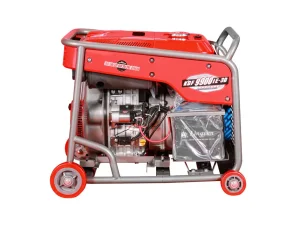
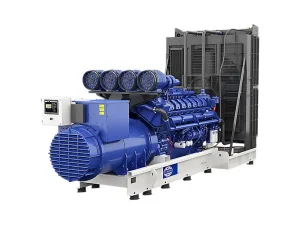
Extended Power Generation Range
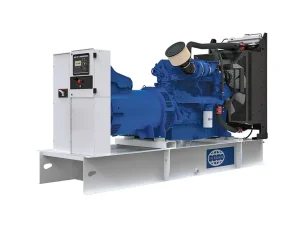
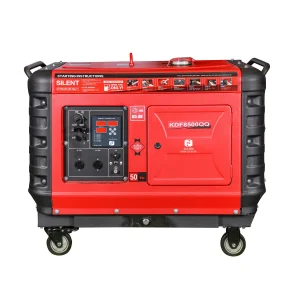
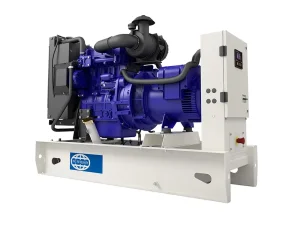
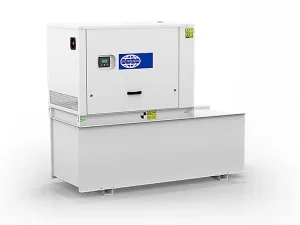
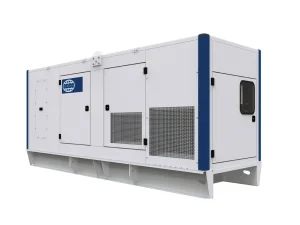
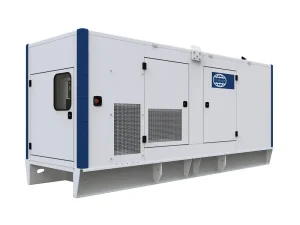
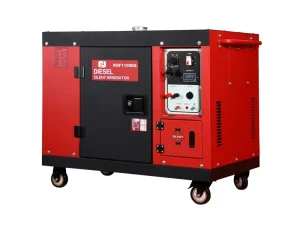
Discover complementary small, medium, and heavy-range continuous and standby power generation units engineered by Cinda Creation.
Procurement Inquiries
Frequently Asked Questions for 150kVA Procurement
Clear technical and logistical answers to help procurement managers evaluate system configurations, site requirements, and export documentation.
What is the practical difference between 150kVA Prime Power (PRP) and Standby Power (ESP)?
Under ISO 8528 guidelines, Prime Power (PRP) represents the maximum output accessible under unlimited annual operating hours with a variable load profile, with an average 24-hour load factor not exceeding 70%. A 10% overload margin is available for 1 hour within every 12 hours of operation. Standby Power (ESP) is the absolute limit reserved for emergency backup during utility outages; overload operation is not permitted under ESP ratings.
How do you calculate kVA to kW for balanced 3-phase commercial systems?
The conversion relies on the system power factor (PF), which is conventionally rated at 0.8 lagging for standard three-phase industrial alternator outputs. Multiplying 150kVA by 0.8 yields 120kW of real active electric output. Sizing calculations must account for the locked-rotor starting kVA (kVA/HP) of electric motors and non-linear harmonic cresting factors to avoid unexpected breaker trips.
When should an open-frame design be chosen over an acoustic soundproof canopy?
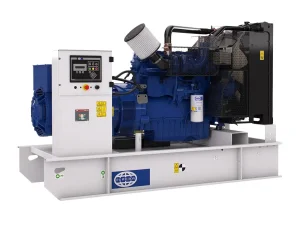
Open-frame generators are designed for dedicated generator rooms or indoor mechanical plant bays that already feature structural sound attenuation, automated ventilation louvers, and dedicated exhaust ducting. They offer lower equipment costs and easier 360-degree maintenance access. Weatherproof sound-attenuated canopies are required for outdoor installations, rooftop placements, or urban zones subject to strict local noise ordinances.
What warranty, spare parts support, and export dispatch commitments apply?
All units supplied by Beijing Xinda Creation Machinery Equipment Co., Ltd. are covered by a comprehensive 12-month warranty from initial startup (or 1,000 running hours, whichever occurs first). We supply genuine Perkins and Weichai maintenance kits, filters, and electronics globally, backed by a technical response guarantee within 24 hours of receiving field telemetry data.