
Standard & Heavy-Duty Power Generation Assemblies
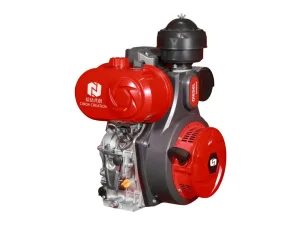
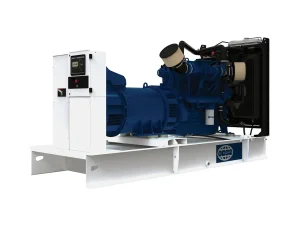
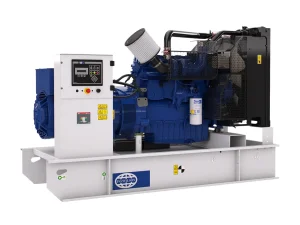
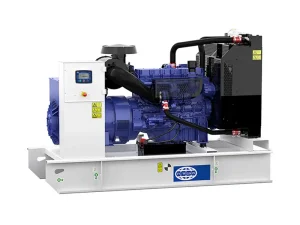
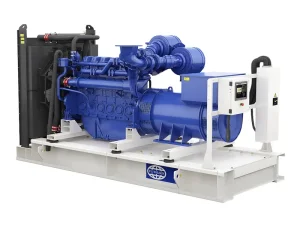
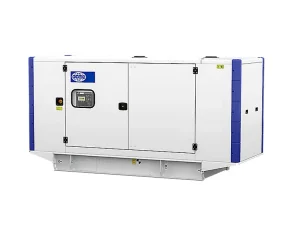
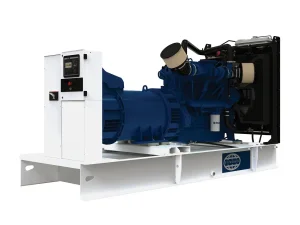
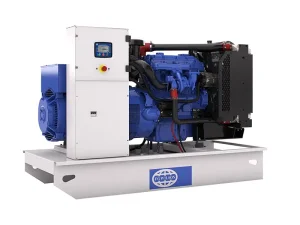
Pre-tested against ISO 8528 load acceptances, equipped with high-durability Perkins, FG Wilson, and advanced electronic fuel-injection governors ready for worldwide export dispatch.
Global Electric Generator Market Dynamics & Technological Trends
Decarbonization mandates, extreme climatic fluctuations, and expanding digital economies are radically transforming industrial generator engineering from passive backup iron into intelligent, grid-interactive distributed energy resources (DERs).
Hybrid Genset-BESS Microgrid Architectures
Modern industrial plants are rapidly migrating from standalone fossil-fueled prime power to hybrid microgrids integrating Battery Energy Storage Systems (BESS) and variable renewable generation. Modern electric generators must support high ramp rates, seamless black-start capabilities, and rapid dynamic response to stabilize microgrid bus voltage during sudden cloud cover or industrial step-load variations.
Transition to Biofuels & Hydrotreated Vegetable Oil (HVO)
Strict ESG criteria in the EU, North America, and Singapore mandate significant lifecycle greenhouse gas reductions. Contemporary Tier 2 through Stage V and Tier 4 Final gensets manufactured by leading partners utilize optimized common-rail fuel injection compatible with EN 15940 paraffinic diesel fuels, enabling direct drop-in replacement with Hydrotreated Vegetable Oil (HVO) to decrease net CO2 emissions by up to 90% without compromising engine longevity.
Edge IoT Telemetry & AI Predictive Maintenance
The convergence of remote SCADA, CAN-bus J1939 telemetry, and cloud machine learning models has redefined generator availability. Modern export installations integrate automated remote diagnostics that monitor bearing vibrations, oil breakdown, injector opening profiles, and exhaust temperatures in real time, preventing catastrophic mechanical failures and shifting maintenance models from scheduled intervals to prescriptive reliability.
Global Procurement Intent & Mission-Critical Selection Criteria
Corporate EPC engineering directors, municipal utility operators, and data center procurement teams do not purchase kilowatt capacity on price alone. True lifecycle optimization depends on precise harmonic management, transient performance, and total cost of ownership (TCO).
Understanding Duty Classifications
Sizing mistakes account for over 65% of premature engine wear and wet stacking incidents. Our applications engineering department validates buyer duty cycles under rigorous international criteria:
- Continuous Operating Power (COP): Supplying power to an unvarying electrical load for unlimited hours per year in remote mining or base stations.
- Prime Running Power (PRP): Supplying variable electrical loads for unlimited annual hours. Maximum permissible average load over 24 hours is 70% of PRP rating, with 10% overload allowed for 1 hour in every 12 hours.
- Emergency Standby Power (ESP): Maximum available electrical output under variable load sequences during utility outages, capped at 200 hours per year without overload capability.
- Data Center Continuous (DCC): Engineered for unconstrained runtime at 100% rated capacity without derating, compliant with Uptime Institute Tier III and IV standards.
Alternator Reactance & Non-Linear Loads
Modern commercial infrastructure is dominated by non-linear electrical loads such as VFD motor drives, computer servers, and high-frequency switched-mode power supplies (SMPS) that generate significant harmonic distortions (THD):
- Subtransient Reactance (X"d): We specify low subtransient reactance alternators (X"d < 12%) to mitigate voltage distortion and suppress harmonic overheating.
- Permanent Magnet Generators (PMG): Standardized PMG excitation provides isolated, constant power to the Automatic Voltage Regulator (AVR), guaranteeing 300% short-circuit current sustained for 10 seconds to trip selective downstream breakers.
- Digital Excitation AVR: Equipped with 3-phase sensing, under-frequency roll-off (UFRO), and over-excitation protection ensuring ±0.5% voltage regulation across all steady-state loads.
Climatic Derating Analysis
Every generator quoted for export is modeled against psychrometric site data to prevent surprise thermal shutdowns:
- Altitude Derating: Ambient atmospheric air thins as elevation rises. Turbocharger wastegate dynamics and intercooler heat dissipation are recalibrated for elevations exceeding 1,000 meters above sea level.
- High Ambient Cooling (50°C): Specialized tropical core radiators with high-static pusher fans avoid engine derating in Middle Eastern and Saharan environments.
- Cold Weather Packages: Arctic configurations featuring thermostatic jacket-water immersion heaters, fuel line tracing, and motorized shut-off louvers maintaining internal engine block heat above 40°C in sub-zero climates down to -40°C.
Engineered Turnkey Solutions Across Critical Sectors
From deep-sea pipelines to hyperscale cloud facilities, each industry vertical requires bespoke acoustic attenuation, switchgear synchronization, and fuel management engineering.
| Sector Application | Typical Capacity Range | Critical Engineering Focus | Control & Switchgear Architecture | Enclosure & Emission Requirements |
|---|---|---|---|---|
| Hyperscale Data Centers | 1500 kVA – 3000 kVA (Parallel) | DCC rating, low subtransient reactance (X"d), fast 10-second start to load | Redundant PLC N+1 / 2N synchronizing switchgear with motorized air circuit breakers | Containerized acoustic enclosures (<70 dBA @ 7m), Tier 4 Final / SCR exhaust aftertreatment |
| Oil, Gas & Remote Mining | 500 kVA – 2000 kVA | Continuous prime duty, heavy particle air filtration, dual fuel flexibility | DeepSea / ComAp microgrid controllers, automatic load-shedding algorithms | Heavy-gauge skid, corrosion-resistant offshore C5M marine coatings, sand-trap louvers |
| Healthcare & Life Safety | 250 kVA – 1250 kVA | NFPA 110 Type 10 Class 48 compliance, instantaneous block loading, 100% emergency pickup | Closed-transition Automatic Transfer Switch (ATS) with bypass isolation | Super-silent acoustic housings (<65 dBA @ 1m), on-board 24h double-wall bunded base tanks |
| Telecommunications & Rail | 20 kVA – 220 kVA | Ultra-low fuel burn rate, extended 500-1000h service intervals, DC battery integration | Smart GSM/Satellite IoT remote start/stop telemetry, automated fuel replenishment | Weatherproof modular canopies, tamper-proof anti-siphon locks, compact footprint |
Factory Acceptance Testing (FAT) & Rigorous Compliance Frameworks
We do not treat quality as an abstract claim. Every generator set fabricated, assembled, and configured at our Beijing facility undergoes intensive electrical and mechanical testing prior to issuance of global export documentation.
Certified Dynamic Load Bank Testing
Prior to export crating, each generator undergoes automated resistive and inductive load bank verification across stepping profiles: 0%, 25%, 50%, 75%, 100%, and 110% overload conditions. We capture transient frequency drop, recovery times, lube oil pressures, and exhaust thermal mapping, providing comprehensive Factory Acceptance Test (FAT) certificates with full traceability.
Global Harmonized Certifications
Our engineering practices strictly adhere to international codes and standards. We maintain full management compliance under ISO 9001 (Quality Management Systems), ISO 14001 (Environmental Standards), and ISO 45001 (Occupational Health & Safety). Our electrical outputs fully conform to CE electrical safety directives, IEC 60034-1, and ISO 8528 G2/G3 performance classes.
Worldwide Logistics & Spare Parts SLA
Exporting heavy power equipment requires maritime logistics proficiency. We supply seaworthy fumigated timber packing, vacuum shrink-wrapped corrosion-inhibiting VCI covers, and container chassis restraint engineering. Furthermore, our continuous inventory of genuine Perkins and Weichai overhaul kits, AVRs, and filters ensures 24-hour dispatch for emergency spares worldwide.
Technology Roadmap: Leading the Decarbonized Generation Era
As international emissions frameworks tighten, our R&D vision focuses on hybridizing conventional internal combustion generation with alternative fuels, digital twin modeling, and hydrogen combustion capabilities.
Hydrogen-Diesel Dual Fuel Blending
Development of retrofittable hydrogen manifold injection kits capable of introducing up to 25% green hydrogen into the combustion chamber under steady-state loads, decreasing carbon particulates and net greenhouse emissions without inducing engine knock or thermal nitrogen oxide (NOx) spikes.
Digital Twin Engine Telematics
Cloud-synchronized digital twins of individual gensets calculate real-time component stress by correlating ambient humidity, sulfur levels in fuel, cyclic load amplitudes, and lube oil viscosity. This technology allows automated parts replenishment before wear parameters breach ISO tolerances.
Zero-Emission Integrated Power Packs
Seamless factory pairing of silent containerized gensets with lithium iron phosphate (LFP) energy storage blocks and bidirectional inverter arrays. The system operates as a unified dynamic power node, absorbing transient peaks with battery power while operating the generator only in its highest fuel-efficiency thermal band.
Frequently Asked Questions by Global Engineering Buyers
Detailed technical answers addressing sizing, fuel management, parallel synchronization, and international warranty execution.
What engineering variables determine whether an open frame or soundproof silent canopy is required?
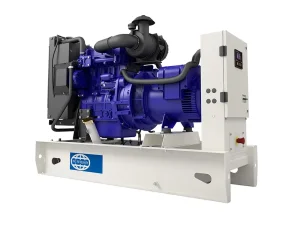
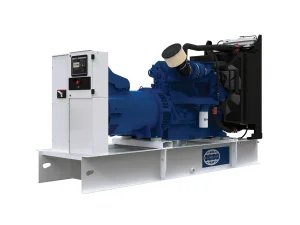
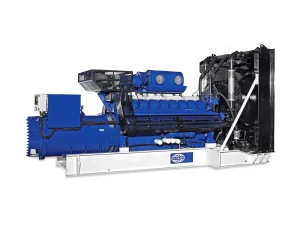
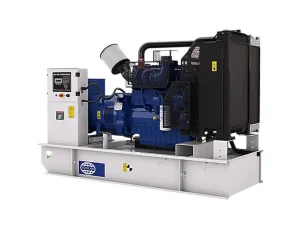
The choice between open-frame and acoustic canopies depends primarily on site geography, ambient noise regulations, and plant room civil engineering. Open frame generator sets are engineered for installation within dedicated, purpose-built generator plant rooms equipped with motorized intake/discharge air louvers, acoustic wall cladding, and external exhaust silencers. They offer unobstructed 360-degree maintenance access for major overhaul tasks.
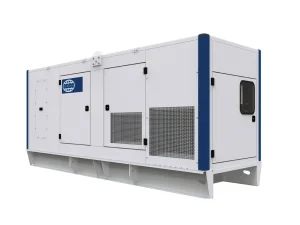
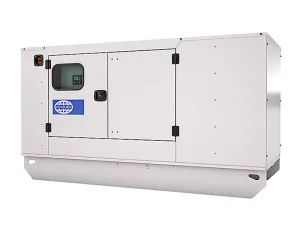
Conversely, silent enclosed units feature heavy-gauge electro-galvanized zinc-treated steel or marine-grade aluminum enclosures lined with flame-retardant, high-density acoustic rockwool. They are fully weatherproof (IP54/IP56) and attenuate noise down to 65–72 dBA at 7 meters, making them mandatory for urban hospitals, hotels, outdoor construction, and residential boundaries.
How is the power factor (cos phi) calculated and applied when converting kVA to actual usable kW?
Apparent power is stated in Kilovolt-Amperes (kVA), representing the total vector sum of real work and reactive magnetizing currents. Real power is expressed in Kilowatts (kW). In standard three-phase industrial alternating current systems, generator sets are standardized to a lagging power factor of 0.8:
Real Power (kW) = Apparent Power (kVA) × 0.8
For instance, an FG Wilson P250-5 rated at 250 kVA standby provides exactly 200 kW of real power. If your facility runs extensive LED lighting, computational equipment, or variable speed drives with power factor correction capacitors pushing power factor closer to 0.95 or 1.0 (unity), alternator thermal sizing must be verified to prevent rotor overheating.
What occurs during generator "wet stacking" and how can facility operators avoid it?
Wet stacking refers to the accumulation of unburned fuel, carbon residues, and condensed moisture in the engine exhaust manifold and turbocharger piping. This condition occurs when a diesel generator is continuously operated at light loads (under 30%–40% of its rated PRP capacity), preventing combustion chambers from reaching full operating temperature.
To prevent wet stacking and premature cylinder liner glazing, we configure automated load-banking routines or programmable multi-unit sequencing, ensuring gensets run between 60% and 80% load where thermal combustion efficiency is maximized.
Can multiple diesel generator sets be paralleled with the utility grid or with each other?
Yes. Our medium and large generator sets can be integrated with digital paralleling controllers (such as DeepSea DSE8610MKII, ComAp InteliGen, or Woodward easygen series). These controllers automatically align the generator voltage, frequency, phase rotation, and phase angle before closing the bus tie breaker.
Paralleling allows multi-megawatt N+1 redundancy, dynamic load-dependent start/stop scheduling, and peak shaving export parallel to national electricity grids.
What warranty scope and remote engineering support are provided for overseas projects?
All generator sets supplied by Beijing Xinda Creation Machinery Equipment Co., Ltd. are accompanied by a comprehensive 12-month warranty beginning from the date of site commissioning or 1,000 operational hours (whichever occurs first), with options for extended warranty packages up to 36 months.
Our Beijing-based engineering team maintains a 24-hour technical response window, providing remote SCADA diagnostics, electrical wiring schematics, and rapid global courier dispatch of genuine Perkins and FG Wilson spare parts.
High-Efficiency Commercial & Specialized Industrial Units
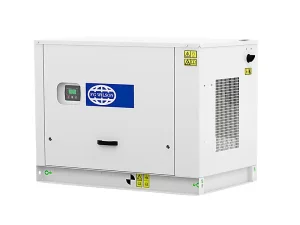
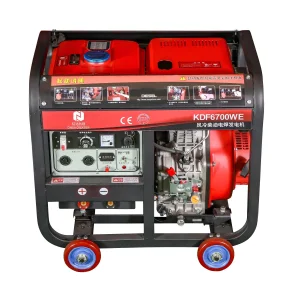
Explore our heavy-duty industrial platforms, compact silent auxiliary power packages, and specialized mobile welding diesel generation units.
Request an Engineered Sizing Proposal & Technical Quote
Connect directly with our senior power systems engineering desk. We examine your total site electrical load schedule, step-start motor profiles, and ambient installation parameters to deliver a comprehensive, guaranteed specification package within 24 hours.